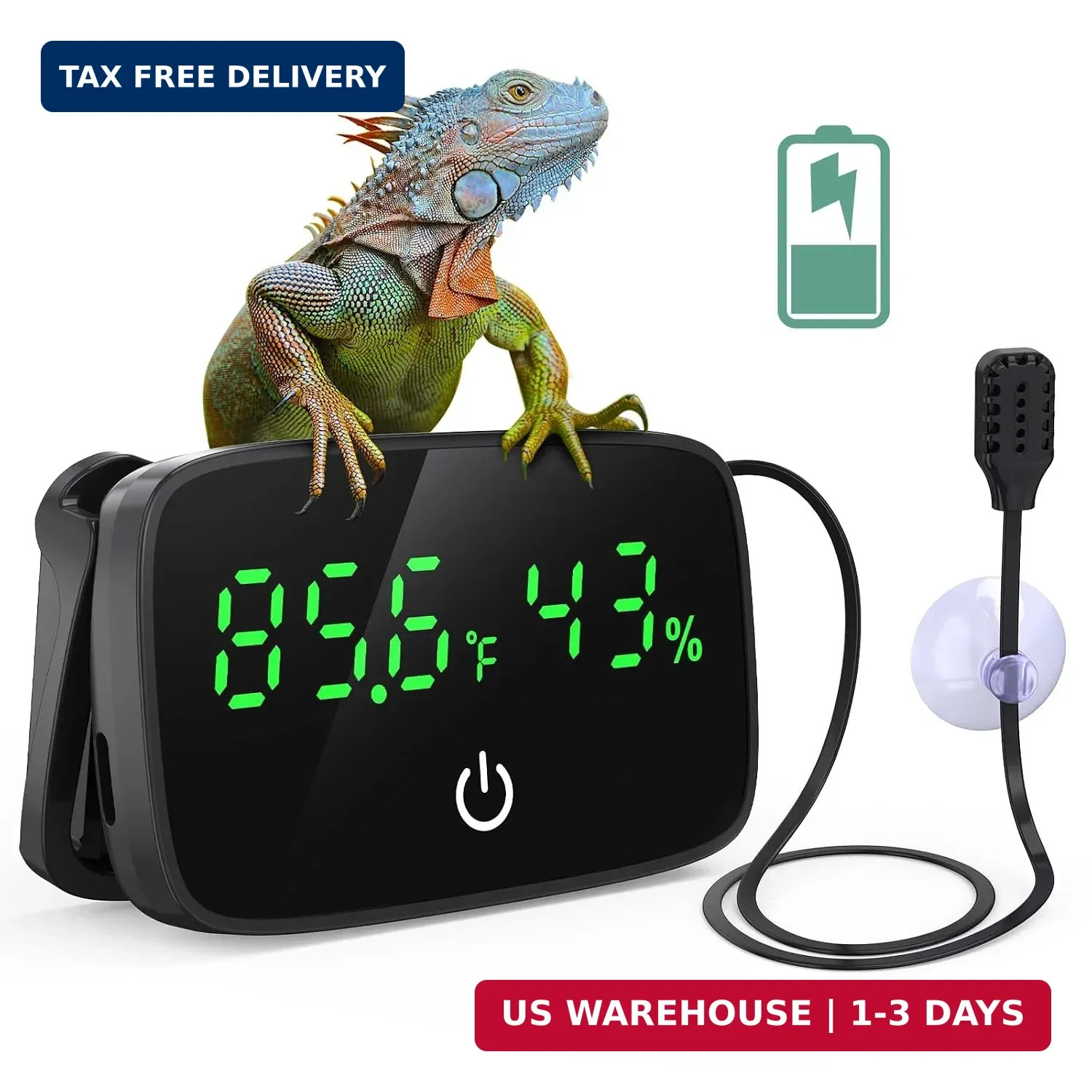

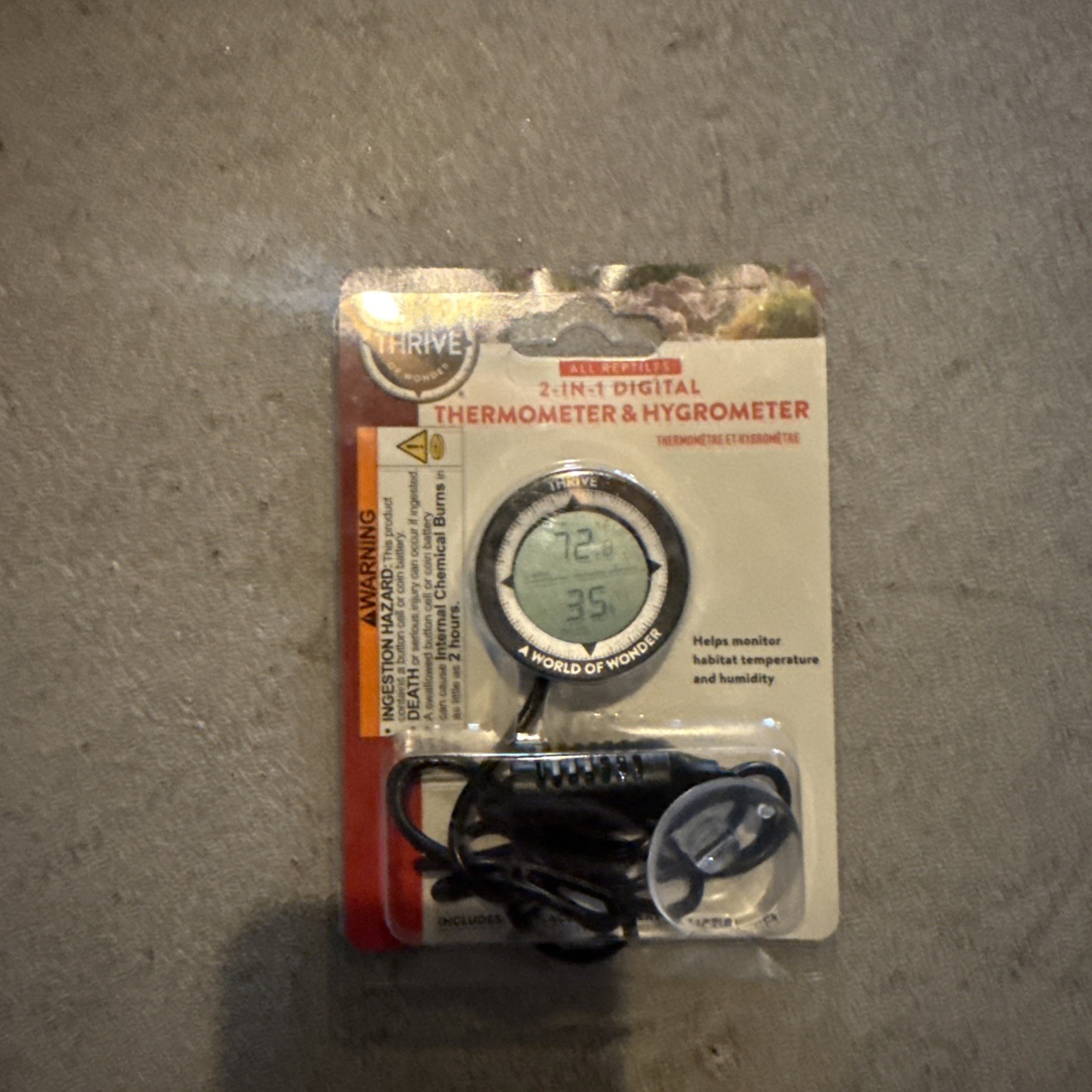
Photos from current listings. Actual item, color, and included accessories may vary.
Thermometer Hygrometer With Probe Buying Guide
A thermometer-hygrometer with probe is a dual-sensor monitor that places a remote probe in the basking zone or hide while the main unit reads ambient temperature and humidity elsewhere in the enclosure. The core trade-off is probe accuracy and cable durability versus display convenience: cheap units use unshielded thermistors that drift with moisture, while better builds use sealed stainless probes and calibrated digital sensors. Choose a unit with a sealed probe, at least 1 m of cable, and a stated ±1 °C / ±5 % RH tolerance; skip any model that lists no accuracy figure or uses an exposed bead thermistor.
Median $27.60
Key takeaways
- Probe type determines lifespan: sealed stainless-steel thermistor probes resist corrosion in high-humidity terrariums, while bare epoxy-bead probes degrade within months under misting.
- Accuracy tiers matter more than display size: ±1 °C and ±5 % RH units suit reptile husbandry, whereas ±2 °C / ±10 % RH gauges can mislead basking-spot calibration by several degrees.
- Dual-channel architecture: a single unit reading one probe plus an internal sensor covers hot zone and cool zone, but only if the internal sensor is vented and not sealed inside the display housing.
At a glance
- Category
- Reptile Thermostats & Monitoring
- Last updated
- Nov 23, 2026
Current offers
Highlights
- Probe type determines lifespan: sealed stainless-steel thermistor probes resist corrosion in high-humidity terrariums, while bare epoxy-bead probes degrade within months under misting.
- Accuracy tiers matter more than display size: ±1 °C and ±5 % RH units suit reptile husbandry, whereas ±2 °C / ±10 % RH gauges can mislead basking-spot calibration by several degrees.
- Dual-channel architecture: a single unit reading one probe plus an internal sensor covers hot zone and cool zone, but only if the internal sensor is vented and not sealed inside the display housing.
- Cable and connector quality: silicone-jacketed probe cables tolerate repeated bending and high humidity, while PVC-jacketed cables stiffen and crack at the strain relief over time.
Best use cases
- Best fit: arboreal or tropical setups needing a probe inside a bromeliad or near a misting nozzle—pick a sealed stainless probe with a 1–2 m silicone cable and ±5 % RH accuracy.
- Best fit: desert or basking-spot calibration—choose a unit with a high-temperature probe rated to at least 70 °C and ±1 °C accuracy so the hot-zone reading stays reliable.
- Wrong fit to skip: rack systems with many small tubs—one unit per tub is wasteful; use a multi-probe or handheld IR thermometer instead of buying several single-probe displays.
- Wrong fit to skip: outdoor or greenhouse enclosures—consumer terrarium probes are not UV- or weather-rated; choose a weatherproof outdoor hygrometer with a shielded probe.
Buying tips
- Match probe cable length to enclosure size: cable must reach from the display mounting point to the farthest basking or hide location without tension, so measure the diagonal and add 30 cm slack.
- For humidity accuracy, prioritize a unit stating ±5 % RH or better; ±10 % RH gauges are acceptable only for rough ambient checks, not for misting schedules.
- Check probe temperature rating against your heat source: basking spots under halogen or ceramic emitters can exceed 60 °C, so select a probe rated to 70 °C or higher.
- Prefer a unit with a separate outdoor/internal sensor channel if you need simultaneous hot-zone and cool-zone readings; single-probe units force you to move the probe to compare zones.
Specs
| Probe Type | Sealed stainless vs bare bead |
|---|---|
| Accuracy Tier | ±1 °C / ±5 % RH vs ±2 °C / ±10 % RH |
| Probe Cable | 0.8–2 m silicone vs PVC jacket |
| Temp Rating | 70 °C+ basking-rated vs 50 °C basic |
Related searches
What to check before buying
- Measure the enclosure diagonal plus 30 cm slack to confirm the probe cable reaches your target zone before choosing a cable length tier.
- Confirm the probe is rated for the maximum basking temperature of your heat emitter (70 °C+ for ceramic or halogen basking spots).
- Verify the display unit can be mounted outside the enclosure or in a dry zone, since most LCD units are not rated for direct misting or high-condensation environments.
- Check whether the unit uses a standard replaceable battery (AAA or LR44) rather than a sealed rechargeable cell, so long-term operation does not depend on a proprietary charger.
FAQ
Data sources: eBay / Amazon listings and product attribute feeds. Updated Nov 23, 2026.
Some links on this page are affiliate links. If you buy after clicking one, we may earn a commission at no extra cost to you. This does not change which products appear here or their order. Affiliate disclosure.