
Photos from current listings. Actual item, color, and included accessories may vary.
Reptile Thermostat Buying Guide
A reptile thermostat is a dedicated temperature controller that switches a heat source on and off to hold a setpoint within a narrow band, using a remote probe placed inside the enclosure. The core trade-off is control architecture and relay quality: cheap on/off units with narrow hysteresis swing temperatures and wear out mechanical relays, while proportional (pulse/dimming) controllers and higher-amperage relays hold tighter tolerances and survive years of cycling. Buy proportional control and a relay rated above your heater's running wattage for any tropical species; accept a basic on/off unit only for hardy, wide-tolerance animals or backup use.
Median $131.61 · New listings
Key takeaways
- Control mode is the primary performance differentiator: on/off units allow 1-2°F swing, while proportional pulse or dimming units hold ±0.5°F and reduce relay wear.
- Relay amperage and wattage rating must exceed the heater load; common tiers are 1000W/1100W controllers for ceramic heat emitters and heat mats, with higher-rated models needed for multi-enclosure racks.
- Probe type and placement determine accuracy: removable stainless or plastic-sheathed probes read substrate or ambient air, and 308S-style controllers use a standard NTC sensor with a detachable connector.
At a glance
- Category
- Reptile Thermostats & Monitoring
- Last updated
- Nov 23, 2026
Current offers
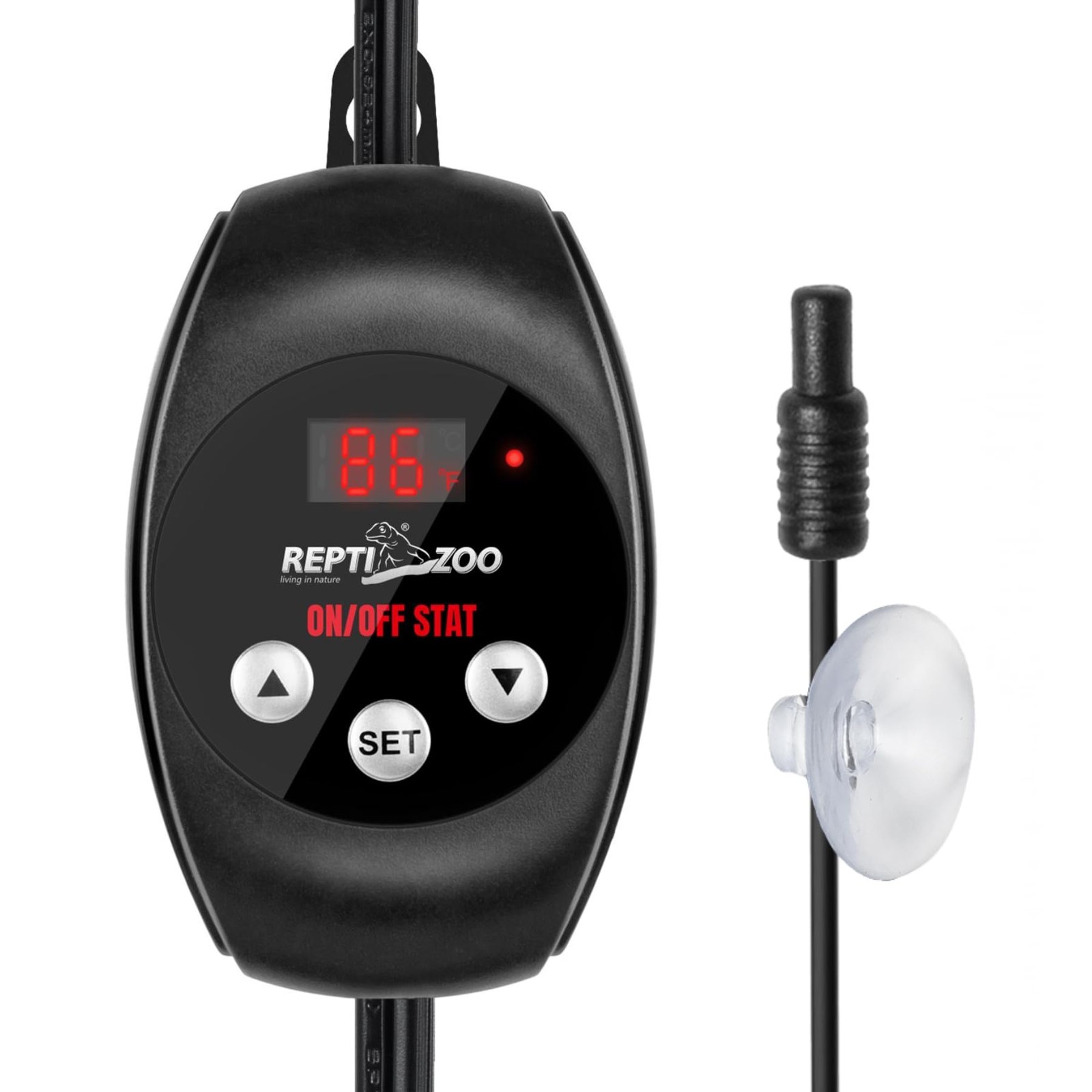 REPTI ZOO Reptile Thermostat Wide Range Temperature Controller Reptile Heat P...$23.96View on eBay
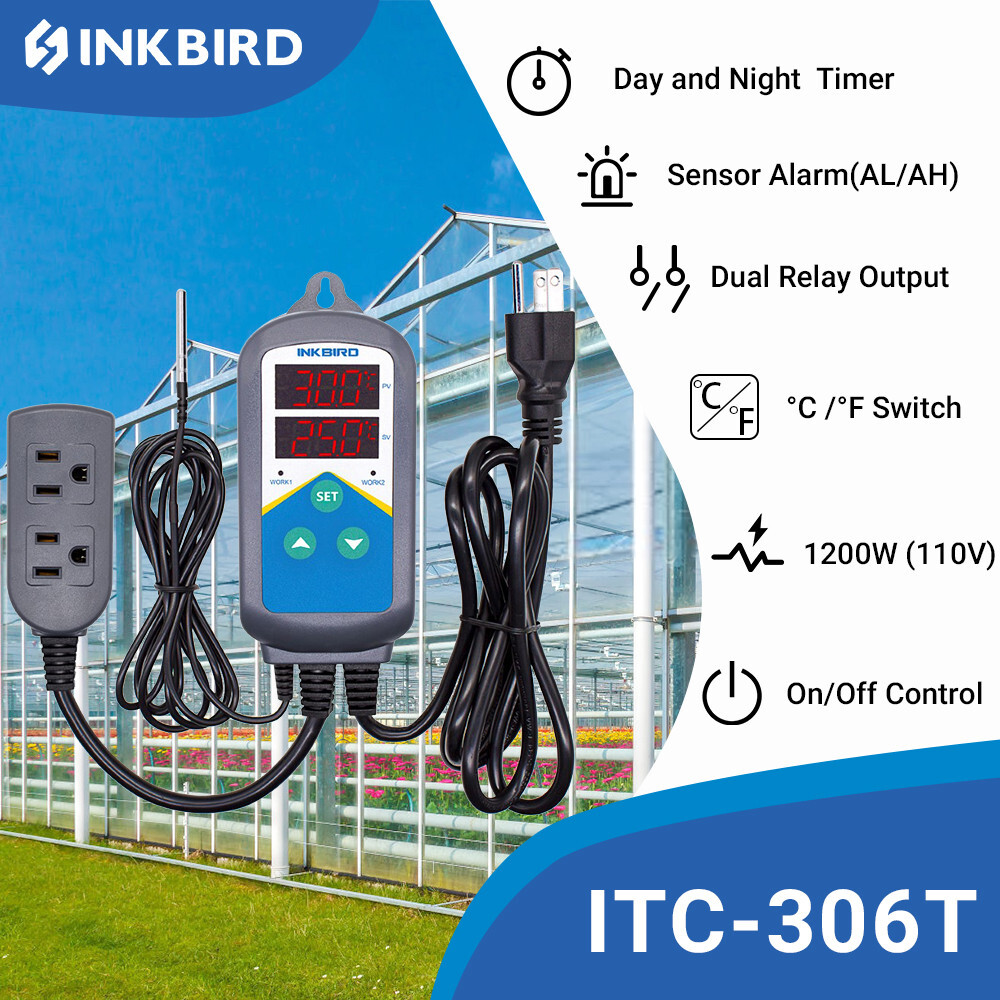 Inkbird Reptile Thermostat Temperature Controller Heater Control Incubator 1100W$27.05View on eBay
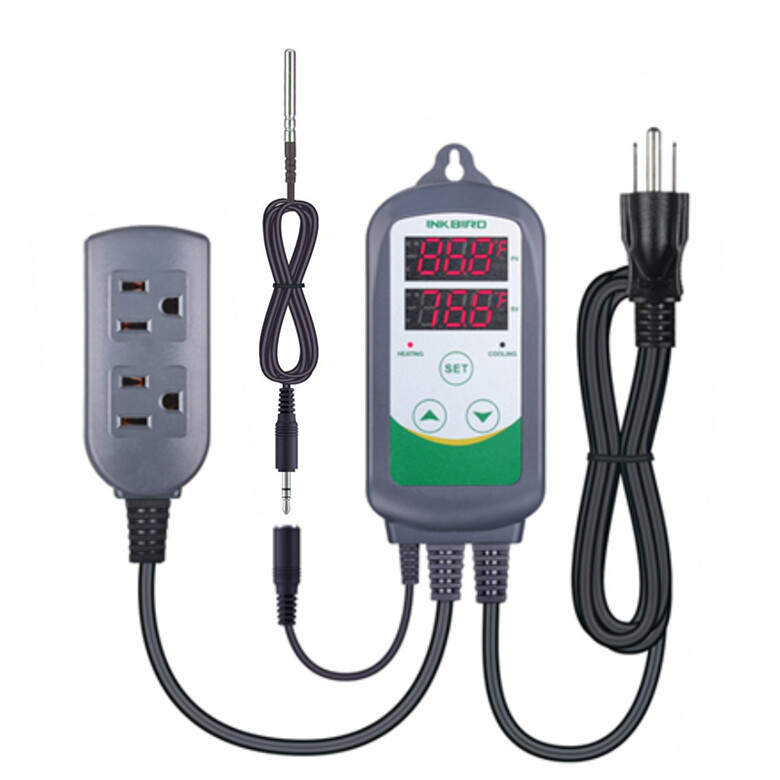 Temperature Controller Thermostat Heat Cool 308S Removable Probe Sensor Reptile$29.24View on eBay
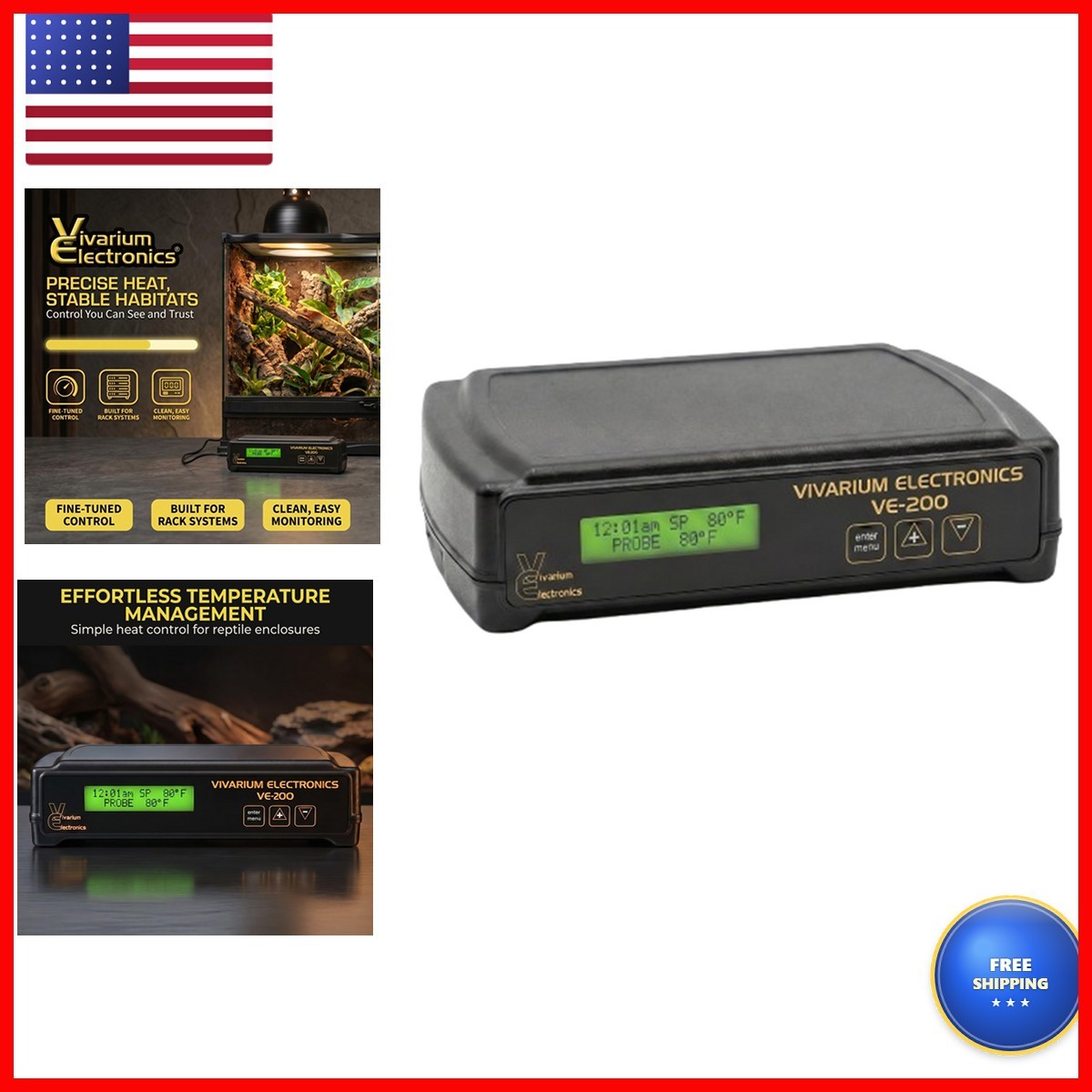 Vivarium Electronics VE-200 700W Proportional Reptile Thermostat$233.98New · Last checked Nov 18, 2026View on eBay
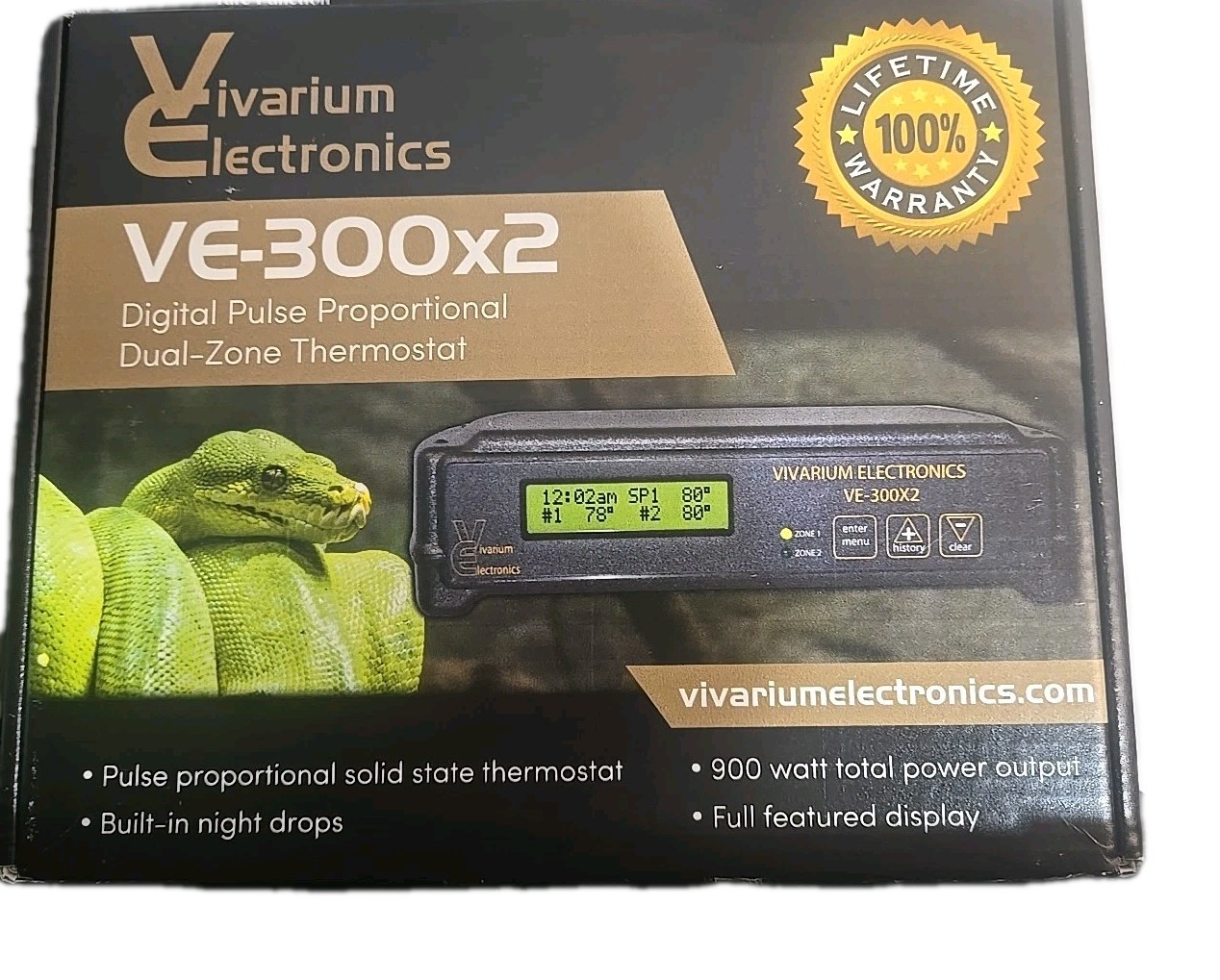 Vivarium Electronics VE-300X2 Thermostat Reptile Basics. New$265.00New · Last checked Nov 18, 2026View on eBay
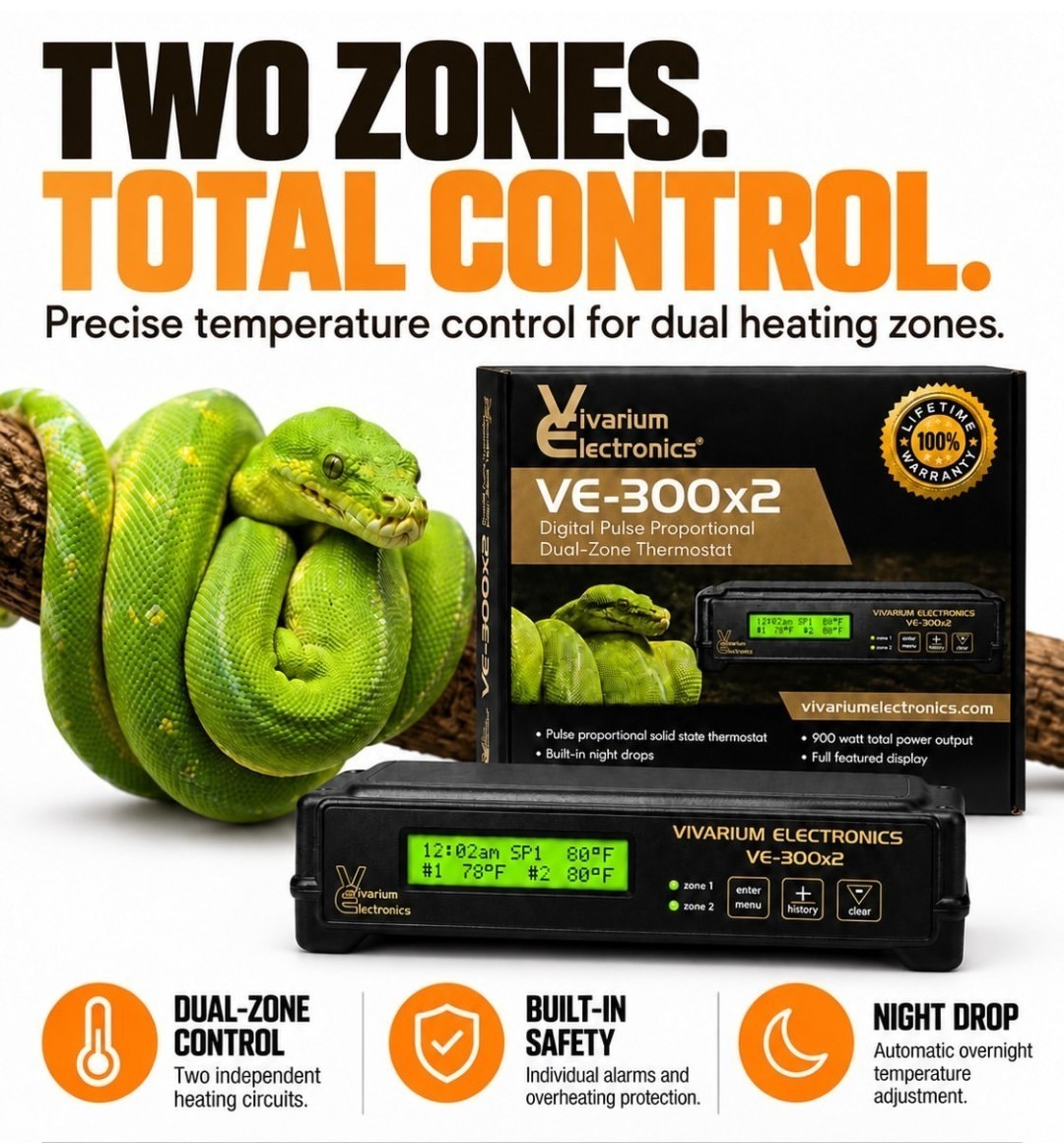 Vivarium Electronics Reptile Basics VE-300x2 Proportional Thermostats BRAND NEW$299.99New · Last checked Nov 18, 2026View on eBay
Highlights
- Control mode is the primary performance differentiator: on/off units allow 1-2°F swing, while proportional pulse or dimming units hold ±0.5°F and reduce relay wear.
- Relay amperage and wattage rating must exceed the heater load; common tiers are 1000W/1100W controllers for ceramic heat emitters and heat mats, with higher-rated models needed for multi-enclosure racks.
- Probe type and placement determine accuracy: removable stainless or plastic-sheathed probes read substrate or ambient air, and 308S-style controllers use a standard NTC sensor with a detachable connector.
- Brand tiers differ in firmware and safety: Inkbird and REPTI ZOO units include high/low alarm relays and calibration offsets, while generic 308S controllers offer bare setpoint and hysteresis adjustment only.
Best use cases
- Best fit: ball python or other tropical snake enclosure — choose a proportional thermostat rated at least 300W with a probe placed on the hot-spot substrate; skip cheap on/off units that allow 2°F+ swings.
- Best fit: incubator or multi-rack setup — pick a higher-wattage controller (1000W+) with alarm output and a removable probe for easy replacement; skip single-enclosure hobby units with fixed probes.
- Best fit: backup or quarantine bin — a basic on/off controller such as a 308S is adequate for short-term isolation of hardy species; skip it as a permanent primary controller for high-value animals.
- Wrong fit: using a thermostat as a thermometer — controllers do not log or display min/max trends; pair with a separate hygrometer/thermometer for monitoring.
Buying tips
- Match wattage: add up all heaters on the controller and choose a relay rating at least 20% above that total; a 100W ceramic heat emitter needs a controller rated 150W or higher.
- Choose proportional (pulse or dimming) control for any species requiring stable hot spots — ball pythons, chameleons, and most juveniles — because on/off cycling causes measurable temperature swings.
- Confirm probe compatibility: 308S-style controllers use NTC probes with a standard connector, so replacement probes must match the same sensor type and resistance curve.
- Prefer controllers with alarm relays and calibration offset when housing high-value reptiles; these features catch heater failure before it becomes fatal.
Specs
| Control Mode | On/off vs proportional pulse/dimming |
|---|---|
| Relay Rating | 300W to 1100W+ heater load |
| Probe Type | Removable NTC / fixed stainless |
| Alarm & Calibration | High/low alarm, offset adjust |
Related searches
What to check before buying
- Measure enclosure hot-spot and ambient zones, then confirm the probe cable reaches from the controller mounting point to the basking spot without tension.
- Total all heater wattage (heat mat, ceramic emitter, radiant heat panel) and verify the controller's rated load exceeds it by at least 20%.
- Confirm your wall voltage and plug standard (120V North America vs 230V EU/UK) matches the controller's input before purchase.
- Check whether the controller includes a mounting bracket or suction cup for the probe and a relay output for an alarm or secondary device.
FAQ
Data sources: eBay / Amazon listings and product attribute feeds. Updated Nov 23, 2026.
Some links on this page are affiliate links. If you buy after clicking one, we may earn a commission at no extra cost to you. This does not change which products appear here or their order. Affiliate disclosure.