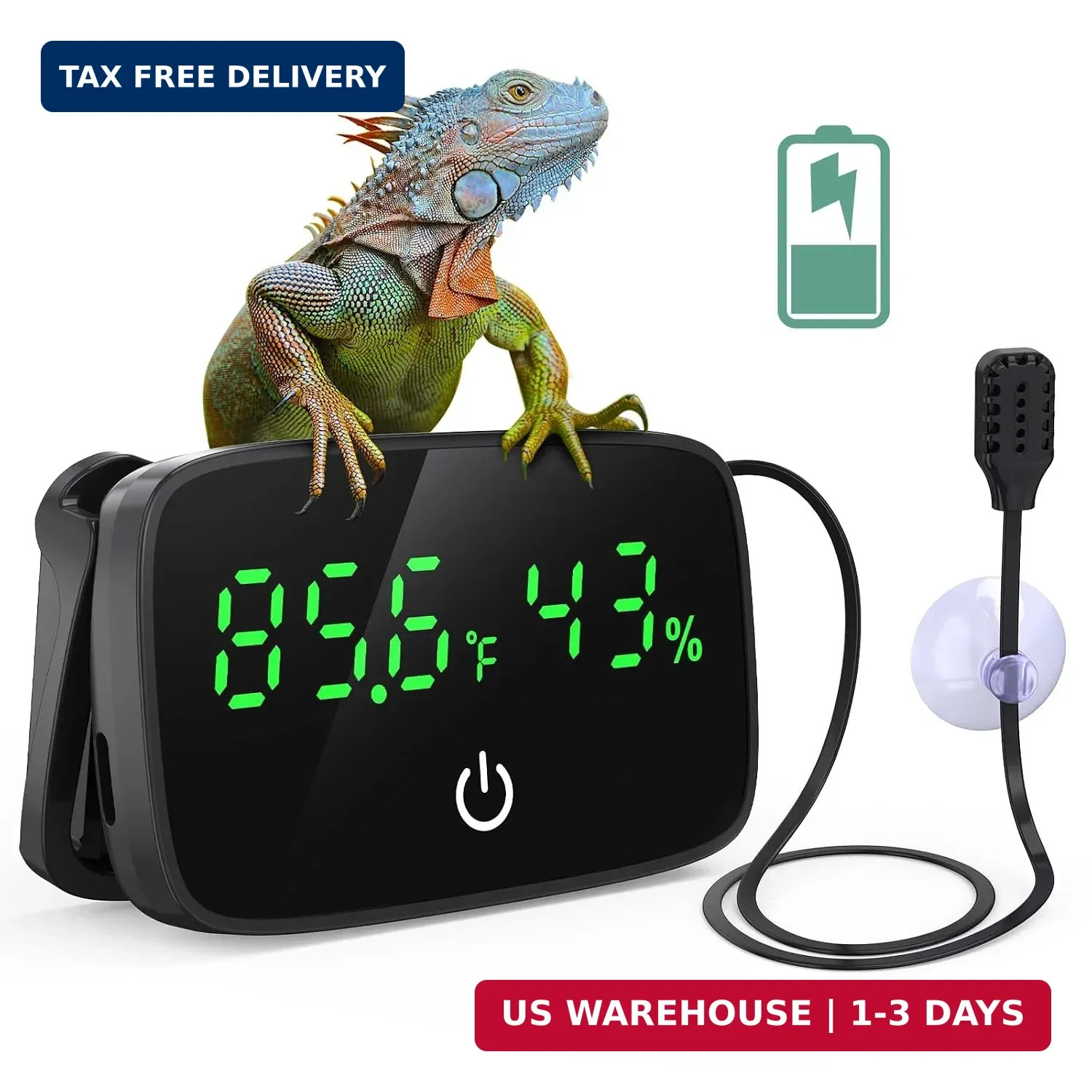

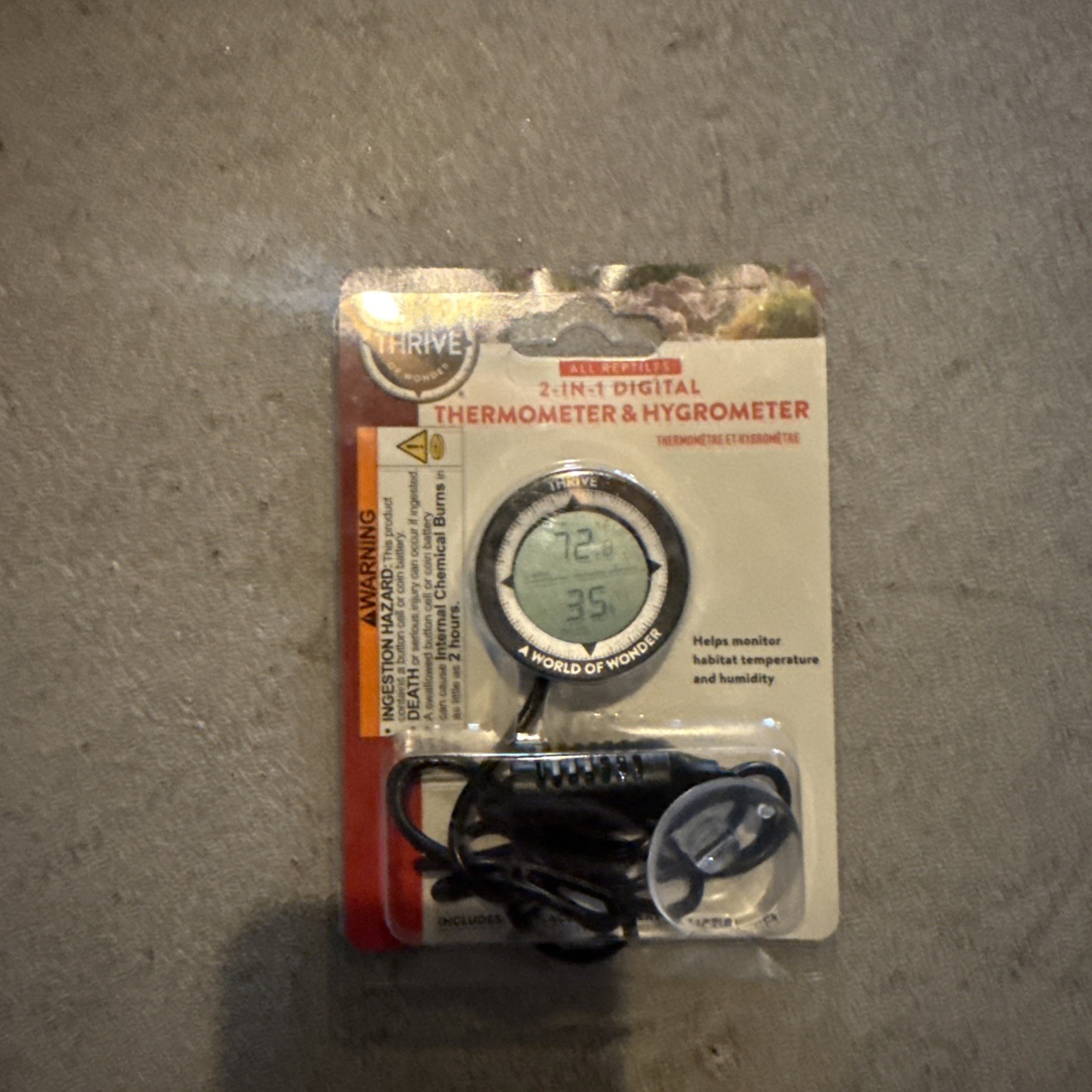
Photos from current listings. Actual item, color, and included accessories may vary.
Hygrometer With Thermometer Buying Guide
A hygrometer with thermometer is a dual-sensor environmental monitor that tracks both relative humidity and ambient temperature in a reptile enclosure. The core trade-off is between cheap resistive humidity sensors that drift and accurate capacitive or calibrated sensors with probe options. Buy a unit with a capacitive sensor, a stated accuracy of ±3% RH or better, and a probe if you need basking-spot or substrate-level readings; skip uncalibrated two-electrode units for high-humidity species.
Median $27.60
Key takeaways
- Sensor type is the durability and accuracy split: capacitive sensors hold ±2–3% RH long-term, while resistive sensors drift and fail in constantly wet terrariums.
- Display resolution versus accuracy: a 0.1% readout means nothing if the sensor is only rated ±5% RH; look for stated accuracy, not decimal places.
- Probe versus in-unit placement: a remote probe reads basking spots, hides, and substrate, while an all-in-one LCD unit only reads the wall where it is mounted.
At a glance
- Category
- Reptile Thermostats & Monitoring
- Last updated
- Nov 23, 2026
Current offers
Highlights
- Sensor type is the durability and accuracy split: capacitive sensors hold ±2–3% RH long-term, while resistive sensors drift and fail in constantly wet terrariums.
- Display resolution versus accuracy: a 0.1% readout means nothing if the sensor is only rated ±5% RH; look for stated accuracy, not decimal places.
- Probe versus in-unit placement: a remote probe reads basking spots, hides, and substrate, while an all-in-one LCD unit only reads the wall where it is mounted.
- Power and refresh: USB or battery LCD units update every 10–30 seconds; analog dials respond slowly and are best avoided for humidity-critical species.
Best use cases
- Best fit: tropical species (crested gecko, dart frog, ball python) — pick a capacitive digital hygrometer with ±3% RH accuracy and a probe for substrate-level readings.
- Best fit: arid species (bearded dragon, leopard gecko) — a basic digital thermo-hygrometer with min/max memory is enough; skip high-end probe units unless you run multiple hides.
- Wrong fit: rack systems and incubators — standard wall LCD units cannot log or alarm across zones; choose a multi-zone controller with probes instead.
- Wrong fit: outdoor or misting-heavy enclosures — skip non-waterproof resistive sensors; specify an IP-rated probe and sealed display.
Buying tips
- Match sensor to climate: capacitive ±2–3% RH for tropical and misted setups; resistive ±5% units are only adequate for dry, low-humidity species.
- Probe length decides placement: 1–1.5 m cables reach from a wall mount to substrate or basking spots; shorter probes force you to mount the display inside the enclosure.
- Min/max memory and alarm thresholds are the practical features that matter; decimal readouts and backlight colors do not improve accuracy.
- For multi-enclosure keepers, choose units with separate probes and independent displays rather than one central LCD that reads only its own location.
Specs
| Sensor Type | Capacitive vs Resistive |
|---|---|
| Humidity Accuracy | ±2–3% RH (capacitive) / ±5% RH |
| Temperature Accuracy | ±0.5–1°C (±1–2°F) |
| Probe vs In-unit | Remote probe vs wall-mount LCD |
Related searches
What to check before buying
- Measure mounting space: LCD units need roughly 6–8 cm of flat wall or glass; probe models need a cable route out of the enclosure.
- Confirm the enclosure humidity target: misted tropical setups demand a sealed, capacitive sensor; dry arid setups tolerate basic resistive units.
- Check power: battery (AAA/AA) units avoid cable clutter, while USB-powered units need a nearby outlet or power strip.
- Verify probe waterproofing if it will sit on substrate or near misting nozzles; unsealed probes corrode and drift.
FAQ
Data sources: eBay / Amazon listings and product attribute feeds. Updated Nov 23, 2026.
Some links on this page are affiliate links. If you buy after clicking one, we may earn a commission at no extra cost to you. This does not change which products appear here or their order. Affiliate disclosure.