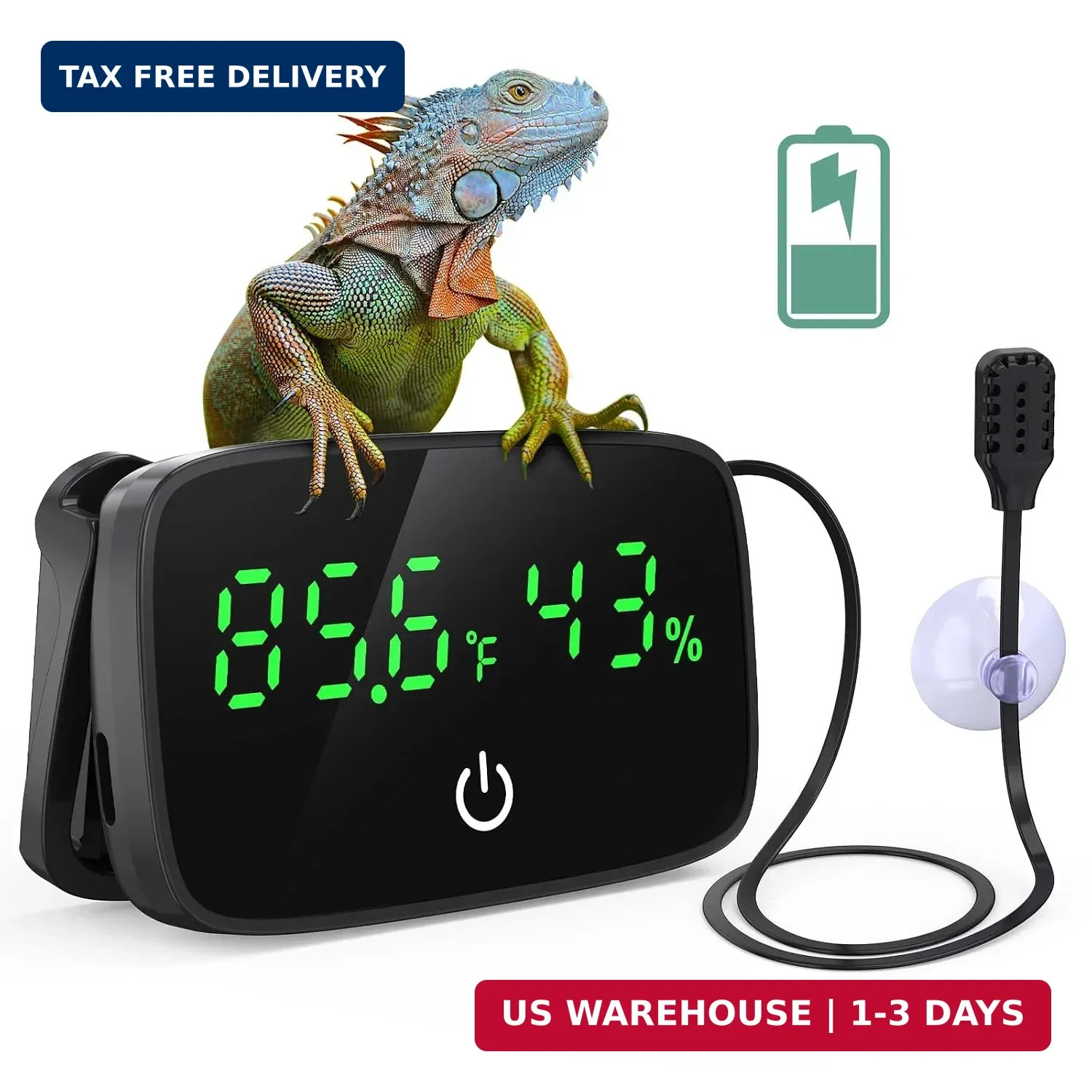

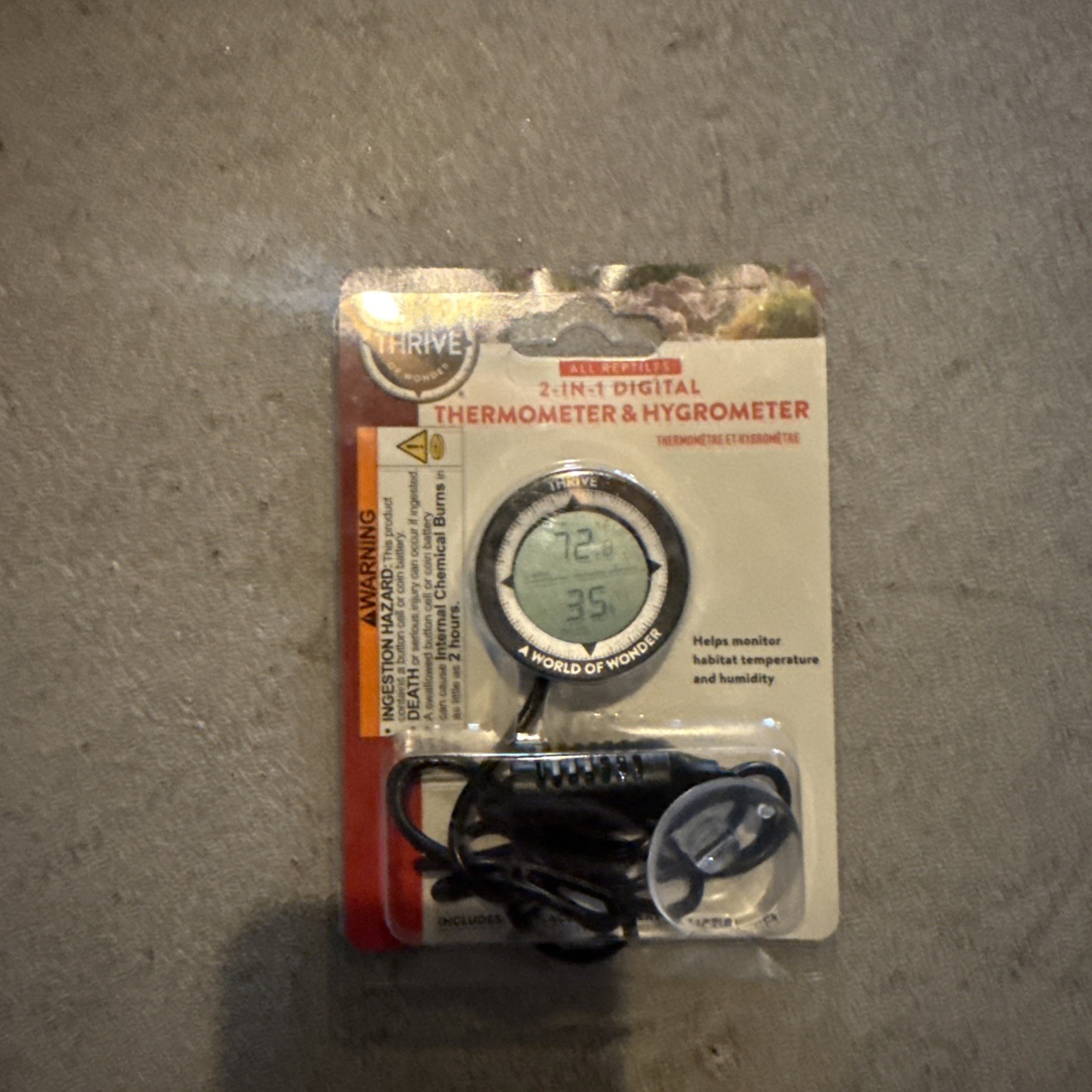
Photos from current listings. Actual item, color, and included accessories may vary.
Thermometer And Hygrometer With Probe Buying Guide
A thermometer and hygrometer with probe is a dual-sensor environmental monitor where a cabled or wireless probe reads temperature and humidity at the basking site, hide, or incubation zone while the display sits outside the enclosure. The core trade-off is probe accuracy and cable durability versus wireless convenience — wired probes beat Bluetooth/RF units on refresh rate and battery-free reliability, but limit placement. The decision rule: buy a unit with a separately specified probe accuracy (±1°C / ±3–5% RH) and a replaceable or sealed probe cable; skip any unit that only states enclosure-level accuracy or uses a permanently molded, thin-gauge probe lead.
Median $27.60
Key takeaways
- Probe accuracy is the spec that matters: ±1°C (±1.8°F) and ±3–5% RH are the credible thresholds; ±2°C / ±7% RH units are calibration-grade only.
- Wired probes use NTC thermistor beads and capacitive humidity sensors; thin 2-core leads fail at the strain relief, so sealed or replaceable probes outlast molded ones.
- Wireless (Bluetooth/RF) units trade continuous logging for placement freedom but refresh every 1–5 minutes and drop signal through thick wooden or glass terrarium walls.
At a glance
- Category
- Reptile Thermostats & Monitoring
- Last updated
- Nov 23, 2026
Current offers
Highlights
- Probe accuracy is the spec that matters: ±1°C (±1.8°F) and ±3–5% RH are the credible thresholds; ±2°C / ±7% RH units are calibration-grade only.
- Wired probes use NTC thermistor beads and capacitive humidity sensors; thin 2-core leads fail at the strain relief, so sealed or replaceable probes outlast molded ones.
- Wireless (Bluetooth/RF) units trade continuous logging for placement freedom but refresh every 1–5 minutes and drop signal through thick wooden or glass terrarium walls.
- Dual-zone displays that show probe and room readings simultaneously are essential for gradient setups; single-reading units force you to move the probe to compare basking vs cool side.
Best use cases
- Best fit: tropical or bioactive setups needing spot humidity at the substrate or hide — pick a wired probe with ±3% RH accuracy and a 1–2 m cable so the display stays dry outside the enclosure.
- Best fit: basking-spot verification on a thermostat-controlled heat lamp — choose a fast-refresh wired unit (±0.5–1°C) and zip-tie the probe at basking height, not on the glass.
- Wrong fit: large paludariums or multi-enclosure racks — a single probe unit can't cover zones; step up to a multi-channel or wireless sensor array instead.
- Wrong fit: high-humidity misting systems where the probe will be sprayed — molded probes wick water into the display; use a sealed IP-rated probe or move it out of the spray path.
Buying tips
- Match cable length to enclosure: measure from display mount to farthest zone and add 30 cm slack; 1 m suits most 60–90 cm terrariums, 2 m for 120 cm+ builds.
- Check probe sensor type — NTC thermistor for temperature and capacitive polymer for humidity; resistive humidity sensors drift faster in constant-high-RH reptile enclosures.
- Prefer units with min/max memory or logging so you can confirm night drops and misting spikes without watching the display.
- For thermostat pairing, confirm the monitor's probe is independent of the thermostat's control probe; a second read-only probe prevents control-loop errors.
Specs
| Probe Accuracy | ±1°C / ±3–5% RH (good) |
|---|---|
| Probe Type | NTC thermistor + capacitive RH |
| Connectivity | Wired probe vs Bluetooth/RF |
| Cable Length | 1–2 m typical (match enclosure) |
Related searches
What to check before buying
- Measure enclosure height and probe route: display outside, probe reaching basking spot, cool hide, and substrate — confirm cable length covers the longest run plus slack.
- Check enclosure wall thickness and material if going wireless: solid wood and double-glass reduce Bluetooth range to a few meters.
- Verify display power (AAA/AA vs USB) and whether it logs through power cuts; battery-only units lose min/max history on swap.
- Confirm probe operating range covers your species: desert basking zones reach 40–45°C, so a probe rated to 60°C+ avoids saturation.
FAQ
Data sources: eBay / Amazon listings and product attribute feeds. Updated Nov 23, 2026.
Some links on this page are affiliate links. If you buy after clicking one, we may earn a commission at no extra cost to you. This does not change which products appear here or their order. Affiliate disclosure.