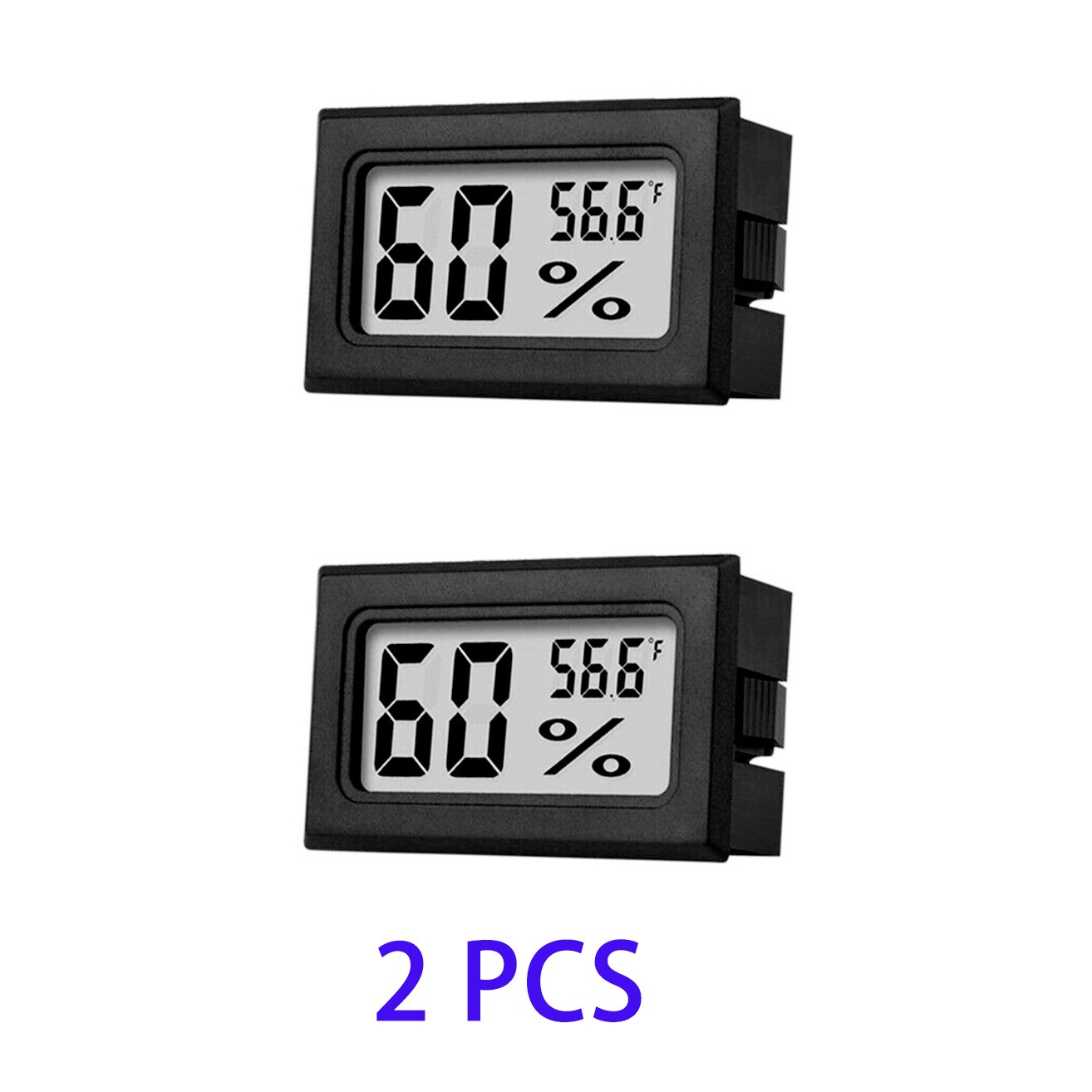

Photos from current listings. Actual item, color, and included accessories may vary.
Hygrometer Thermometer With Probe Buying Guide
A hygrometer thermometer with probe measures temperature and humidity at a specific point inside a terrarium using a remote sensor, rather than only at the device body. The core trade-off is sensor accuracy and probe cable length versus display convenience: cheap combined units drift and have short cables, while separate-sensor or calibrated digital units hold accuracy over years. Buy a unit with a wired or wireless remote probe rated for the enclosure's humidity range; skip body-only gauges if you need basking-spot or hide-level readings.
Key takeaways
- Probe type separates tiers: wired NTC thermistor + capacitive humidity sensor units are reliable; analog bimetal/coil hygrometers drift ±5-10% RH and need manual calibration.
- Accuracy tiers: hobby units typically ±1°C / ±5% RH; better digital sensors reach ±0.5°C / ±3% RH — decisive for species needing 70%+ RH or tight basking gradients.
- Probe cable length commonly 1-3 m; place the sensor at basking spot, cool end, and humidity hide — one unit cannot cover all zones, so multi-zone setups need 2-3 probes or a multi-channel station.
At a glance
- Category
- Reptile Thermostats & Monitoring
- Last updated
- Nov 23, 2026
Current offers
Highlights
- Probe type separates tiers: wired NTC thermistor + capacitive humidity sensor units are reliable; analog bimetal/coil hygrometers drift ±5-10% RH and need manual calibration.
- Accuracy tiers: hobby units typically ±1°C / ±5% RH; better digital sensors reach ±0.5°C / ±3% RH — decisive for species needing 70%+ RH or tight basking gradients.
- Probe cable length commonly 1-3 m; place the sensor at basking spot, cool end, and humidity hide — one unit cannot cover all zones, so multi-zone setups need 2-3 probes or a multi-channel station.
- Display and logging differ: basic LCD shows current reading only; min/max memory and app/Bluetooth logging reveal night drops and misting cycles that a static readout hides.
Best use cases
- Best fit: tropical arboreal or humidity-dependent species (crested gecko, chameleon, dart frog) — pick a probe unit with ±3% RH accuracy and min/max memory to track misting and night cycles.
- Best fit: desert or basking-gradient species (bearded dragon, leopard gecko) — use a wired probe at the basking spot plus a second sensor at the cool end; body-only gauges misread surface temps.
- Wrong fit: large multi-zone enclosures or rack systems — a single probe unit reads one point; choose a multi-channel station or one probe per zone instead of stretching cable across the tank.
- Wrong fit: outdoor or high-condensation paludariums — unsealed probe tips and non-waterproof cables fail; specify IP-rated or sealed probes and keep the display outside the splash zone.
Buying tips
- Match probe to placement: wired NTC probes suit fixed basking/hide points; wireless or Bluetooth sensors suit large or multi-tank rooms where cable routing is impractical.
- Check accuracy spec, not just resolution: ±5% RH units are fine for hardy species but too coarse for eggs, neonates, or species needing 80%+ RH — target ±3% RH there.
- Confirm probe cable reaches your farthest zone: measure tank length plus route to display; 1 m cables fail on 120 cm+ enclosures, so pick 2-3 m or wireless.
- Prefer units with min/max memory or logging; a current-only LCD hides nighttime humidity spikes and heat-lamp failures that cause most husbandry problems.
Specs
| Sensor Type | Wired NTC probe vs wireless/Bluetooth |
|---|---|
| Accuracy | ±0.5-1°C / ±3-5% RH typical |
| Probe Cable | 1-3 m wired; wireless range 10-30 m |
| Data Features | Current-only LCD vs min/max + logging |
Related searches
What to check before buying
- Measure enclosure length and probe route: cable must reach from display mount to farthest sensor point without tension; note 1 m vs 2-3 m options.
- Confirm humidity environment: sealed tropical tanks need splash-resistant probes; dry desert setups tolerate standard probes but require dust-free sensor tips.
- Check power and mounting: most probe units run on AAA/button cells — verify battery type and whether the display mounts magnetically, via suction cup, or stand.
- Plan zone coverage: count required measurement points (basking, cool end, humidity hide) and buy a multi-channel station or multiple single-probe units accordingly.
FAQ
Data sources: eBay / Amazon listings and product attribute feeds. Updated Nov 23, 2026.
Some links on this page are affiliate links. If you buy after clicking one, we may earn a commission at no extra cost to you. This does not change which products appear here or their order. Affiliate disclosure.