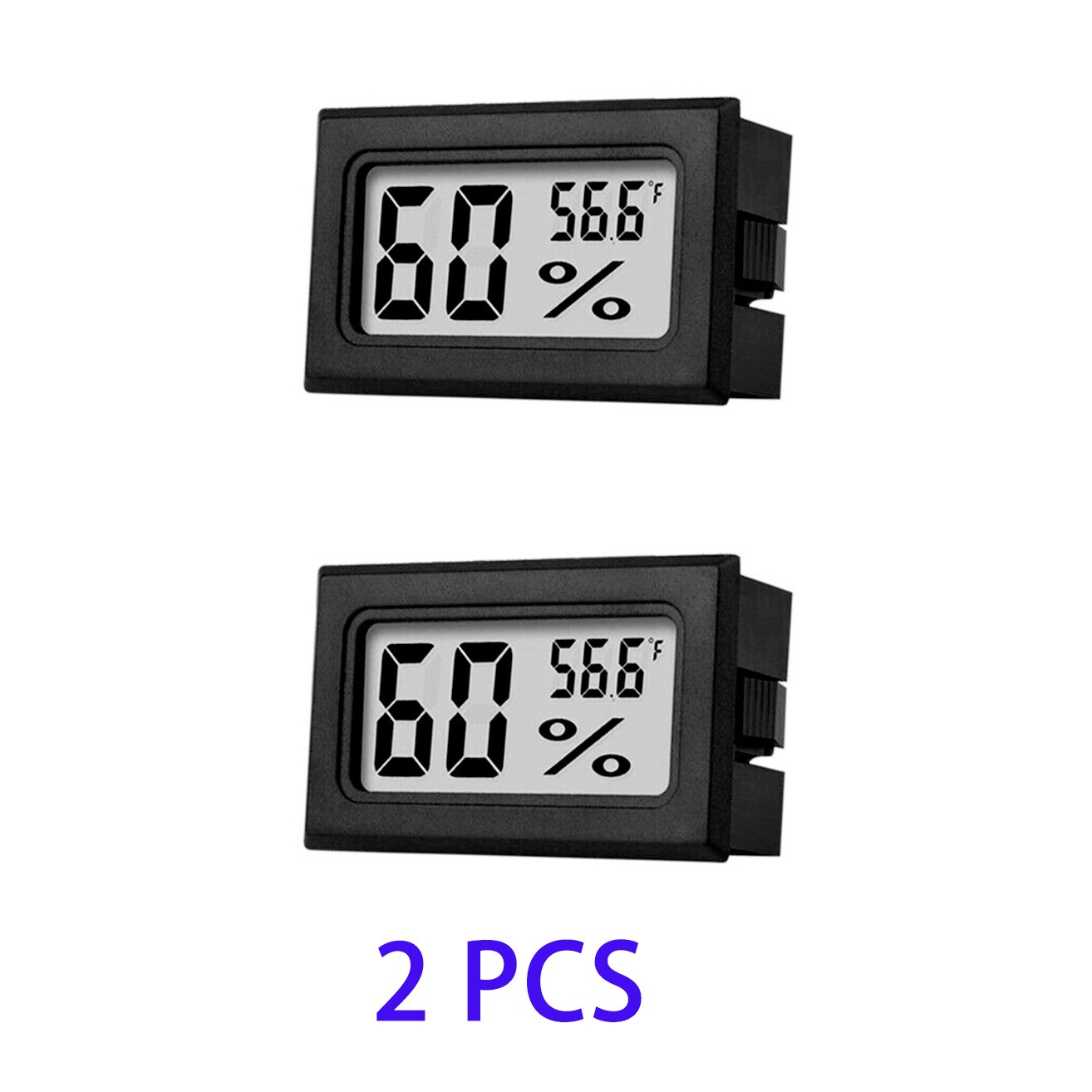

Photos from current listings. Actual item, color, and included accessories may vary.
Digital Thermometer Buying Guide
Digital thermometers for reptile enclosures are compact LCD/LED sensor units that report ambient or probe temperature and humidity, and the core trade-off is between a cheap uncalibrated all-in-one gauge and a separate calibrated probe or monitor. Buy a unit with a remote probe or a separately calibrated hygrometer when accuracy within 2°F and 5% RH matters; skip single-piece stick-on LCD gauges for basking-spot or incubation control.
Key takeaways
- Two-sensor (dual-probe) units read basking spot and cool side simultaneously; single-sensor stick-on LCD units measure only the wall air film where they are mounted.
- Accuracy tiers: consumer-grade digital units typically spec ±1.8°F/±1°C and ±5% RH; anything unrated should be treated as ±3-5°F and cross-checked against a reference.
- LCD segment displays are readable in bright enclosures but dim in low light; LED digital units need USB or battery power and stay visible at night.
At a glance
- Category
- Reptile Thermostats & Monitoring
- Last updated
- Nov 23, 2026
Current offers
Highlights
- Two-sensor (dual-probe) units read basking spot and cool side simultaneously; single-sensor stick-on LCD units measure only the wall air film where they are mounted.
- Accuracy tiers: consumer-grade digital units typically spec ±1.8°F/±1°C and ±5% RH; anything unrated should be treated as ±3-5°F and cross-checked against a reference.
- LCD segment displays are readable in bright enclosures but dim in low light; LED digital units need USB or battery power and stay visible at night.
- Probe thermometers with 3-6 ft stainless or plastic-sheathed cables reach basking rocks and hides; all-in-one hygrometers must sit at the humid microclimate rather than the enclosure wall.
Best use cases
- Best fit: a dual-zone setup (basking + cool side) — pick a two-probe digital thermometer or a thermometer/hygrometer combo with one remote probe, not a single stick-on gauge.
- Best fit: tropical species needing 60-80% RH — choose a calibrated digital hygrometer with ±5% RH spec and place the sensor in the humid hide, not on the glass.
- Wrong fit to skip: a wired probe run across the hot zone without a sheathed cable — choose a stainless or silicone-sheathed probe rated for continuous high-humidity contact.
Buying tips
- Match sensor count to zones: one probe per thermal zone (basking, cool, humid hide); a single all-in-one unit cannot read three microclimates at once.
- Demand a stated accuracy spec of ±1.8°F (±1°C) and ±5% RH; unrated units routinely drift 3-5°F and 10% RH, which is outside safe basking tolerance.
- For LED display units, confirm power source — USB adapter or AAA batteries — and that the display unit sits outside the enclosure while only the probe enters.
- Choose a probe cable length that reaches from the display to the farthest hide; 3 ft covers most 40-gallon setups, 6 ft covers 4x2x2 ft enclosures.
Specs
| Sensor Type | Remote probe vs all-in-one ambient |
|---|---|
| Accuracy | ±1.8°F / ±5% RH rated |
| Display Type | LCD segment vs LED digital |
| Probe Cable | 3 ft vs 6 ft sheathed probe |
Related searches
What to check before buying
- Measure enclosure interior height and probe run distance: display mounts outside, probe must reach basking spot and cool hide without pinching at the lid.
- Confirm the unit reads in °F or switches between °F/°C — many imports default to °C only.
- Check probe sheath material against your humidity level: stainless or silicone for 70%+ RH, bare plastic-sheathed probes degrade in constant misting.
- Verify display power: battery-only units need access for replacement; USB units need a free outlet or power strip near the enclosure.
FAQ
Data sources: eBay / Amazon listings and product attribute feeds. Updated Nov 23, 2026.
Some links on this page are affiliate links. If you buy after clicking one, we may earn a commission at no extra cost to you. This does not change which products appear here or their order. Affiliate disclosure.