
Photos from current listings. Actual item, color, and included accessories may vary.
Pond Filter Buying Guide
Pond filters remove suspended solids and process ammonia via biological media, and the core trade-off is pressurized canister convenience versus open gravity systems. Pressurized units tolerate buried or below-grade plumbing and allow pump-fed installation, while gravity units need a higher elevation and larger footprint. Choose a filter rated for at least 1.5x your pond's true volume and match UV wattage to volume; skipping either guarantees green water or pump burnout.
Median $243.89 · New listings
Key takeaways
- Pressurized canister filters use sealed chambers to push water through mechanical foam then bio media, allowing installation below water level and pump-fed flow.
- UV-C clarifiers are sized by flow rate and pond volume; a 13W lamp suits roughly 1,000-2,000 gal, while 25-40W is needed for larger or sun-exposed ponds.
- Bio media surface area drives ammonia processing; look for at least 0.5-1 sq ft of media surface per 100 gal of pond volume.
At a glance
- Category
- Aquarium Filters & Pumps
- Last updated
- Nov 27, 2026
Current offers
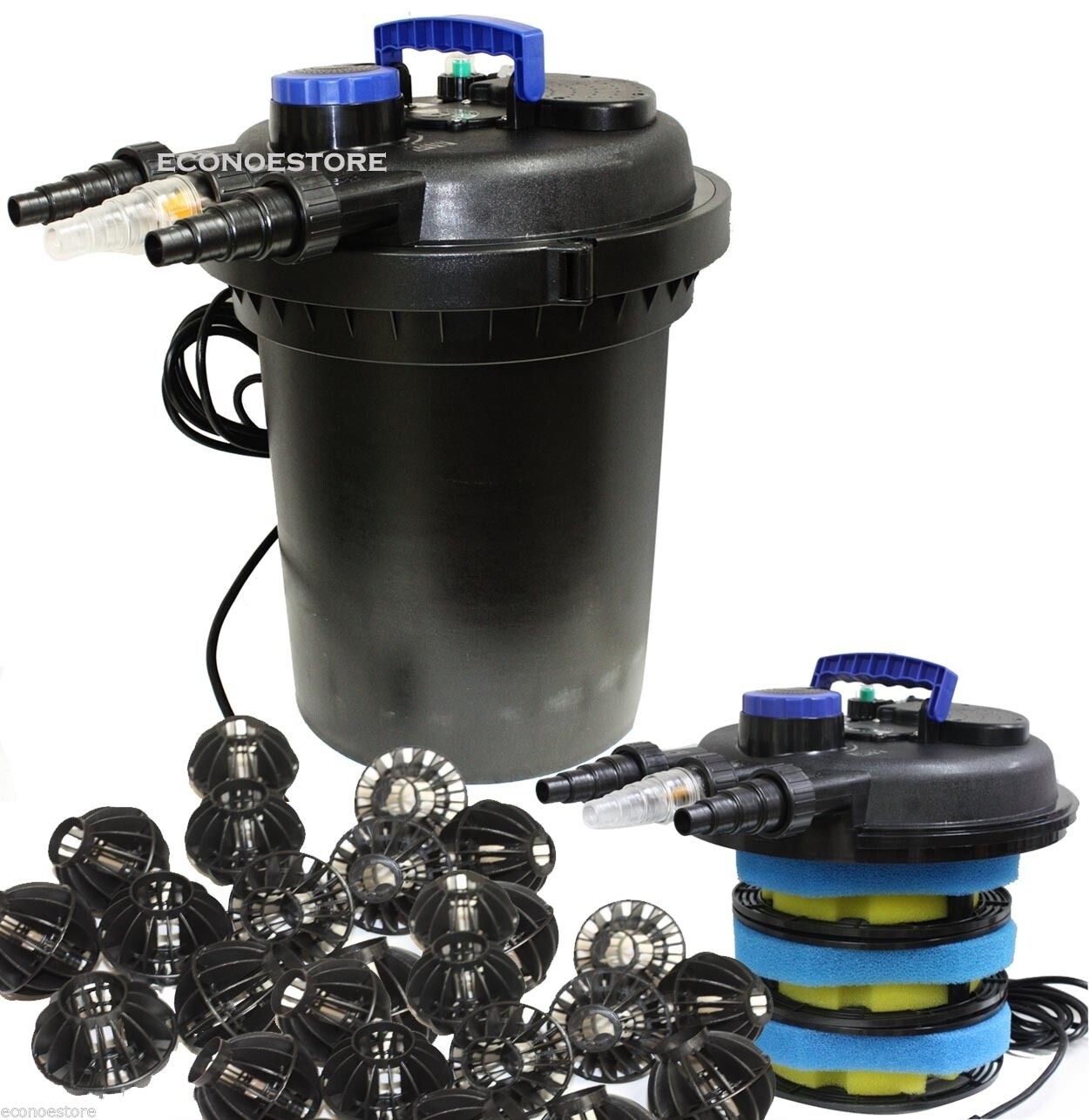 10000L koi Pond Pressurized Bio Filter & UV Sterilizer 4000G Filtration System$182.99View on eBay
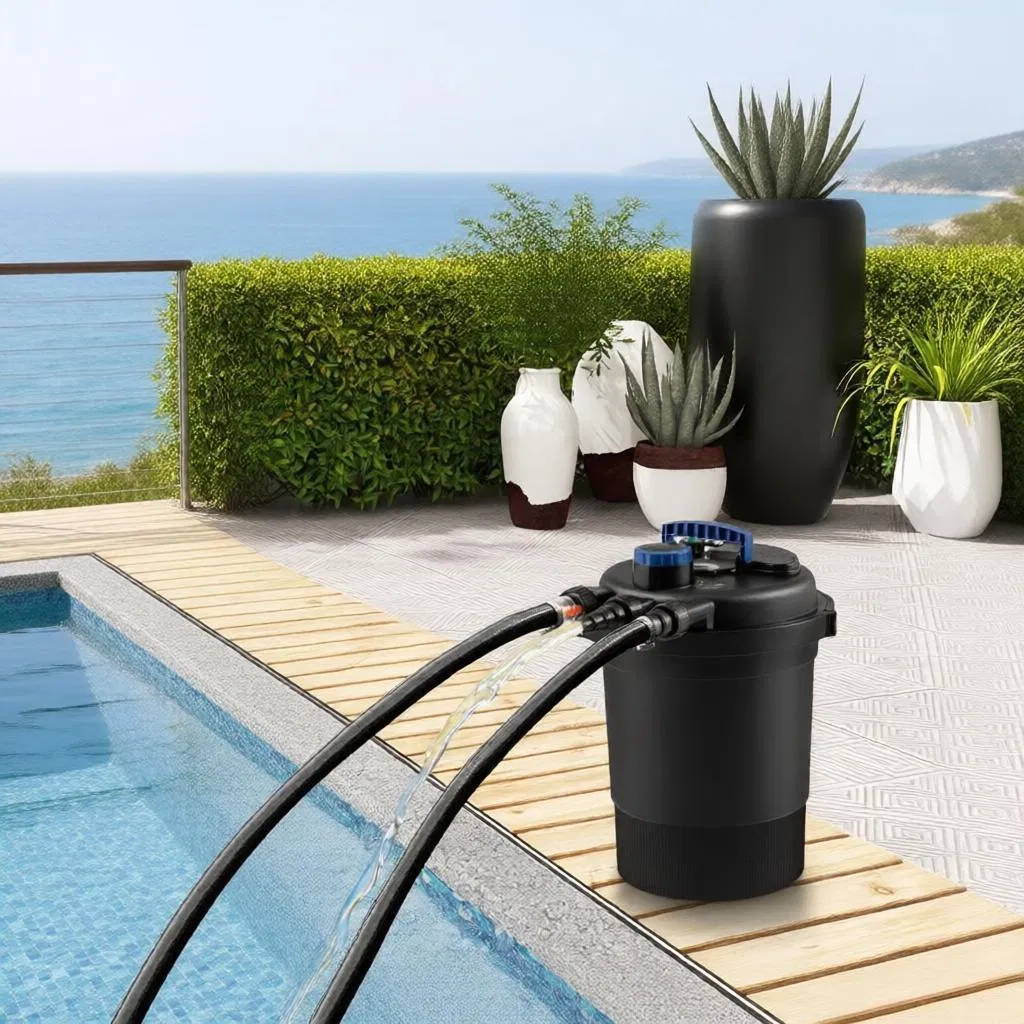 2642 GPH Bio Pressure Pond Filter System with 13W UV-C Light - Efficient Water Purification for Your Outdoor Oasis$307.99View on Mallflare
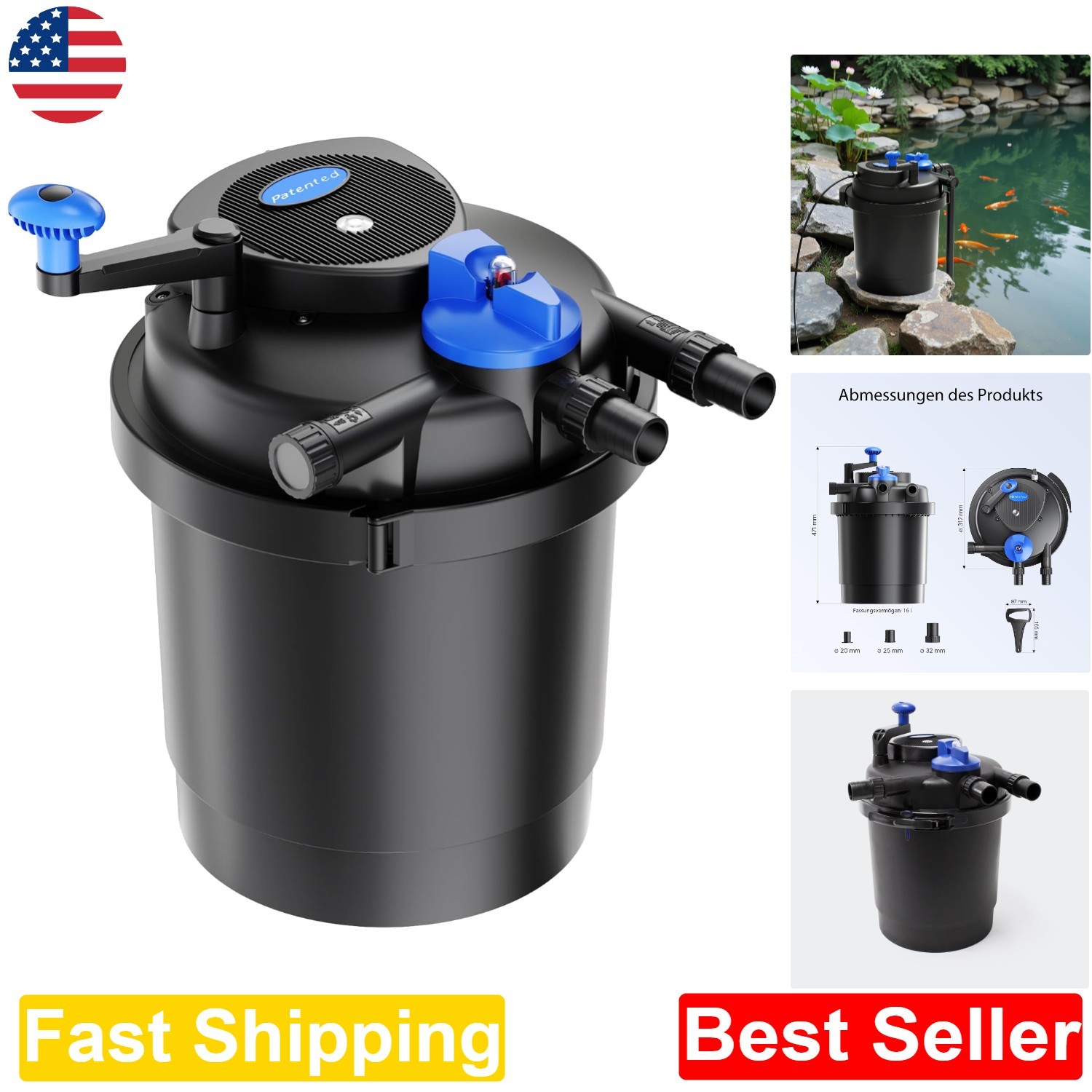 SUN CPF-2500 1600 Gal Pond Canister Filter, 13W UVC, Mech, Fast Clean$243.89New · Last checked Nov 17, 2026View on eBay
Highlights
- Pressurized canister filters use sealed chambers to push water through mechanical foam then bio media, allowing installation below water level and pump-fed flow.
- UV-C clarifiers are sized by flow rate and pond volume; a 13W lamp suits roughly 1,000-2,000 gal, while 25-40W is needed for larger or sun-exposed ponds.
- Bio media surface area drives ammonia processing; look for at least 0.5-1 sq ft of media surface per 100 gal of pond volume.
- Canister flow ratings are measured at zero head; real-world flow drops 30-50% once plumbing, UV, and lift height are added.
Best use cases
- Best fit: pump-fed, below-grade or buried plumbing with a pressurized canister (e.g., 1600-2642 GPH class) plus integrated UV for year-round clarity in 1,000-2,500 gal koi ponds.
- Wrong fit: open gravity-fed systems installed below water level without a sealed canister; these require a raised filter pit and will overflow if buried.
- Best fit: small ponds under 500 gal or quarantine tanks using cut-to-fit bio sponge pads in a simple box or waterfall filter; cheap, serviceable, and low head loss.
- Wrong fit: oversized 4000G-rated pressurized systems on tiny ponds; the pump will cycle water too fast for bio contact time, wasting power and media capacity.
Buying tips
- Size the filter to 1.5x pond volume: a 1,000 gal pond needs a filter rated for 1,500 gal, because koi bioload and summer feeding spike ammonia.
- Match UV wattage to volume and sun exposure: 13W for up to 2,000 gal shaded, 25W+ for 2,000-4,000 gal or full-sun exposure.
- Confirm pump flow at your actual head height, not the filter's max rating; a 2,642 GPH filter needs a pump delivering at least that at 3-5 ft of lift.
- Choose cut-to-fit foam pads in 20-30 PPI (pores per inch) for mechanical filtration and 10-15 PPI for biological; replace or rinse weekly in pond water, not tap.
Specs
| Filter Type | Pressurized canister vs gravity/open |
|---|---|
| UV Clarifier | 13W-40W UV-C by pond volume |
| Max Flow Rate | 1600-4000 GPH zero-head rated |
| Media Type | Bio foam pads / bio balls / beads |
Related searches
What to check before buying
- Measure pond volume (L x W x D x 7.48 for gallons) and confirm the filter's rated capacity is at least 1.5x that number.
- Verify your pump's flow at the filter's inlet height; pressurized canisters need positive pressure and will not siphon-feed from below.
- Check plumbing compatibility: most canisters use 1.5-2 inch barbed or threaded fittings; confirm adapters exist for your pump outlet.
- Confirm UV lamp voltage and plug standard (120V US vs 230V EU) and that replacement lamps are available in the same wattage and base type.
FAQ
Data sources: eBay / Amazon listings and product attribute feeds. Updated Nov 27, 2026.
Some links on this page are affiliate links. If you buy after clicking one, we may earn a commission at no extra cost to you. This does not change which products appear here or their order. Affiliate disclosure.