
Photos from current listings. Actual item, color, and included accessories may vary.
Fish Tank Filter Buying Guide
A fish tank filter is the life-support system that moves water through mechanical, biological, and chemical media to keep ammonia and nitrite at zero. The core trade-off is flow rate versus media volume: undersized hang-on-back and sponge units clog and starve beneficial bacteria, while oversized canisters deliver stable cycles but demand priming, hose routing, and regular impeller service. Choose by bioload and species first — a turtle or goldfish tank needs 8–10x turnover and large media volume, not a decorative waterfall box.
Median $211.23 · New listings
Key takeaways
- Canister filters (CF1400, CF2000, C-1600) pack 3–5 media trays and handle 100–200+ gallon tanks, but require gravity priming and periodic zirconia-shaft/impeller replacement.
- Hang-on-back and internal waterfall filters use drop-in cartridges; their thin polyurethane foam and polyester floss clog in 2–4 weeks and hold little nitrifying media.
- Sponge and undergravel filters rely on air-lift or powerhead circulation; coarse 20–30 ppi foam supports bacteria but cannot polish water clarity without added floss.
At a glance
- Category
- Aquarium Filters & Pumps
- Last updated
- Nov 28, 2026
Current offers
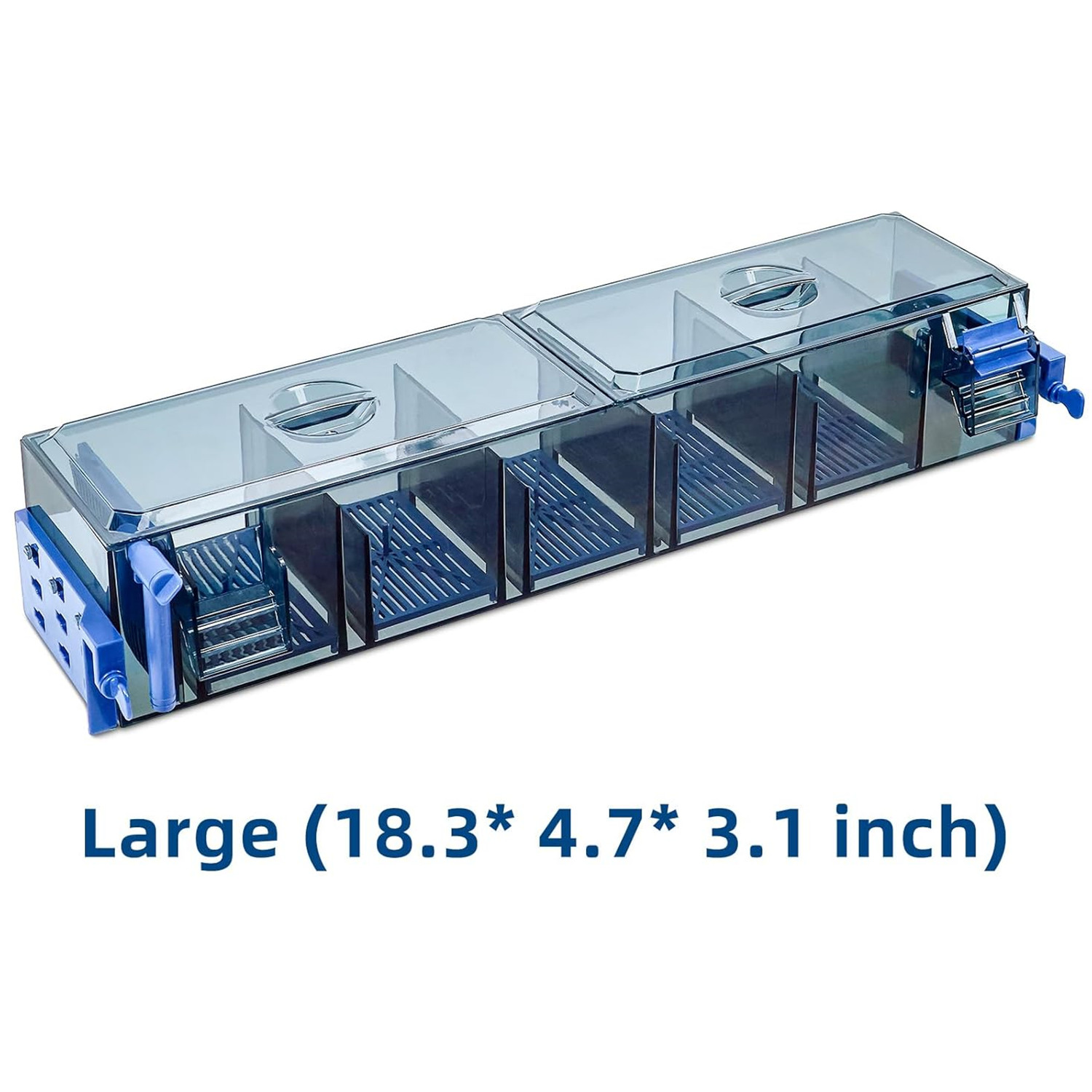 Aquarium Fish Tank Filter with Waterfall Oxygenation Suitable Multi Layer Filter$29.99View on eBay
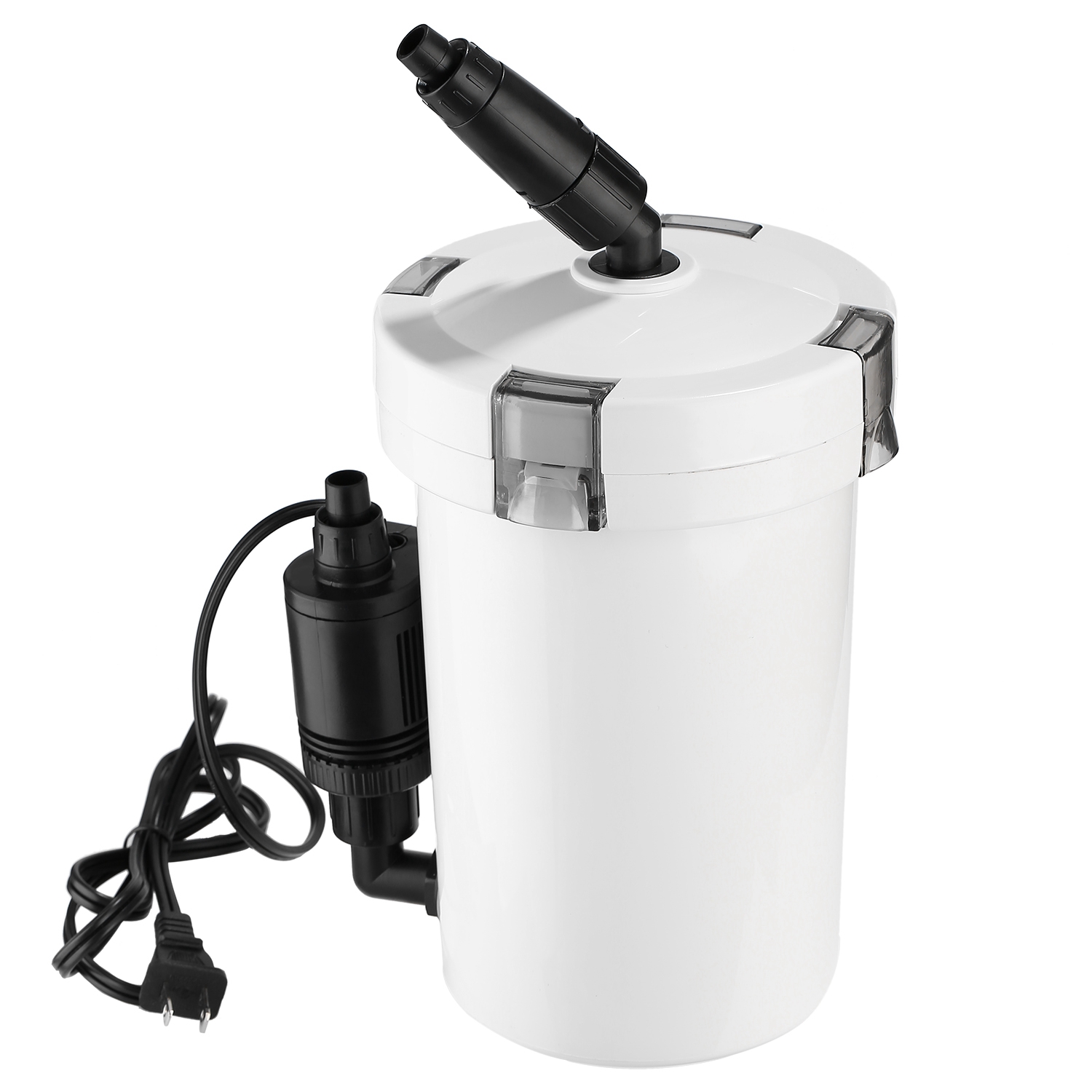 1Pc 3-Stage External Canister Filter For 28 Gallon Aquarium Fish Tank 105gph 6W Easy Installation Silent$63.99View on Mallflare
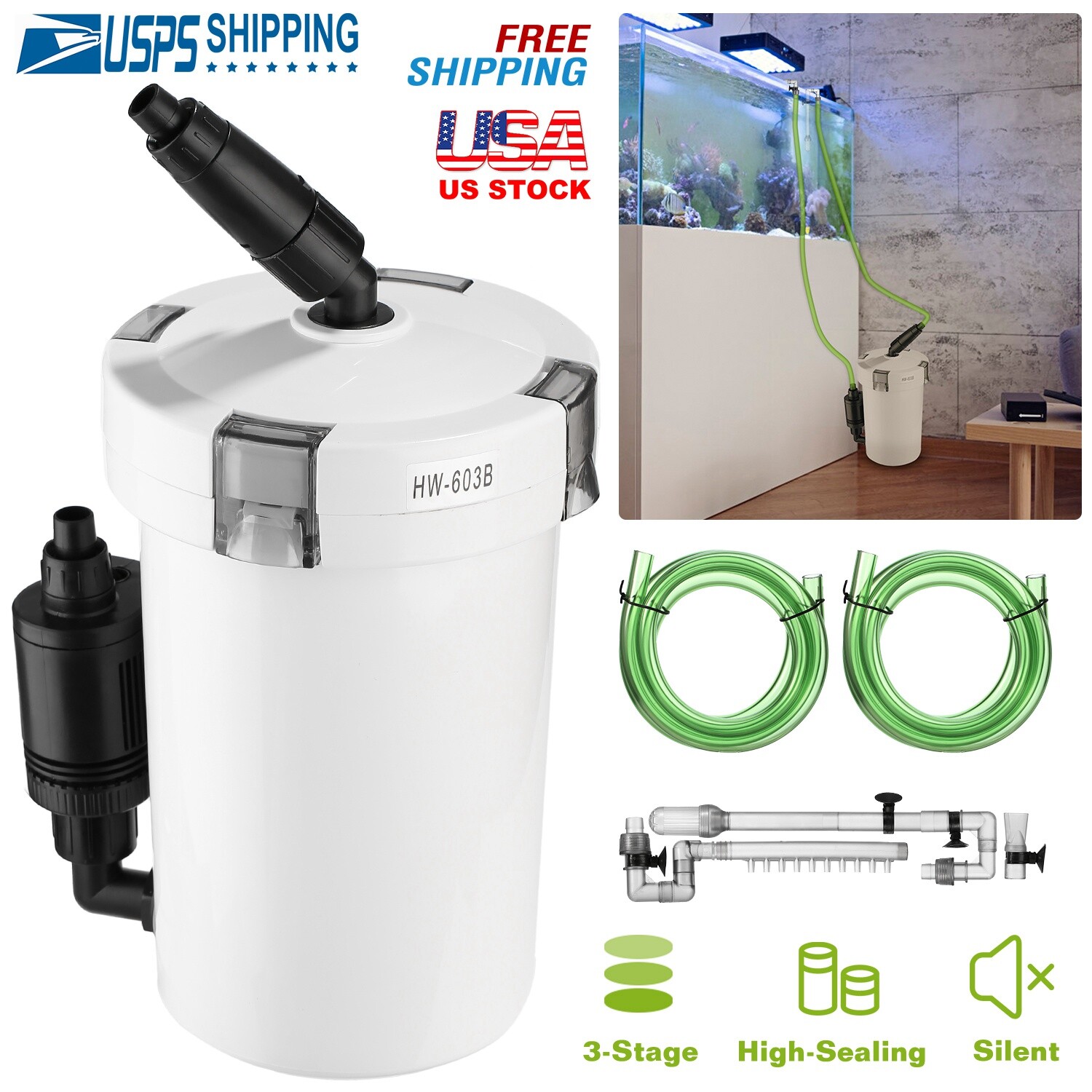 Aquarium External Canister Filter Fish Tank with Pump Table Mute Filters Bucket$38.94View on eBay
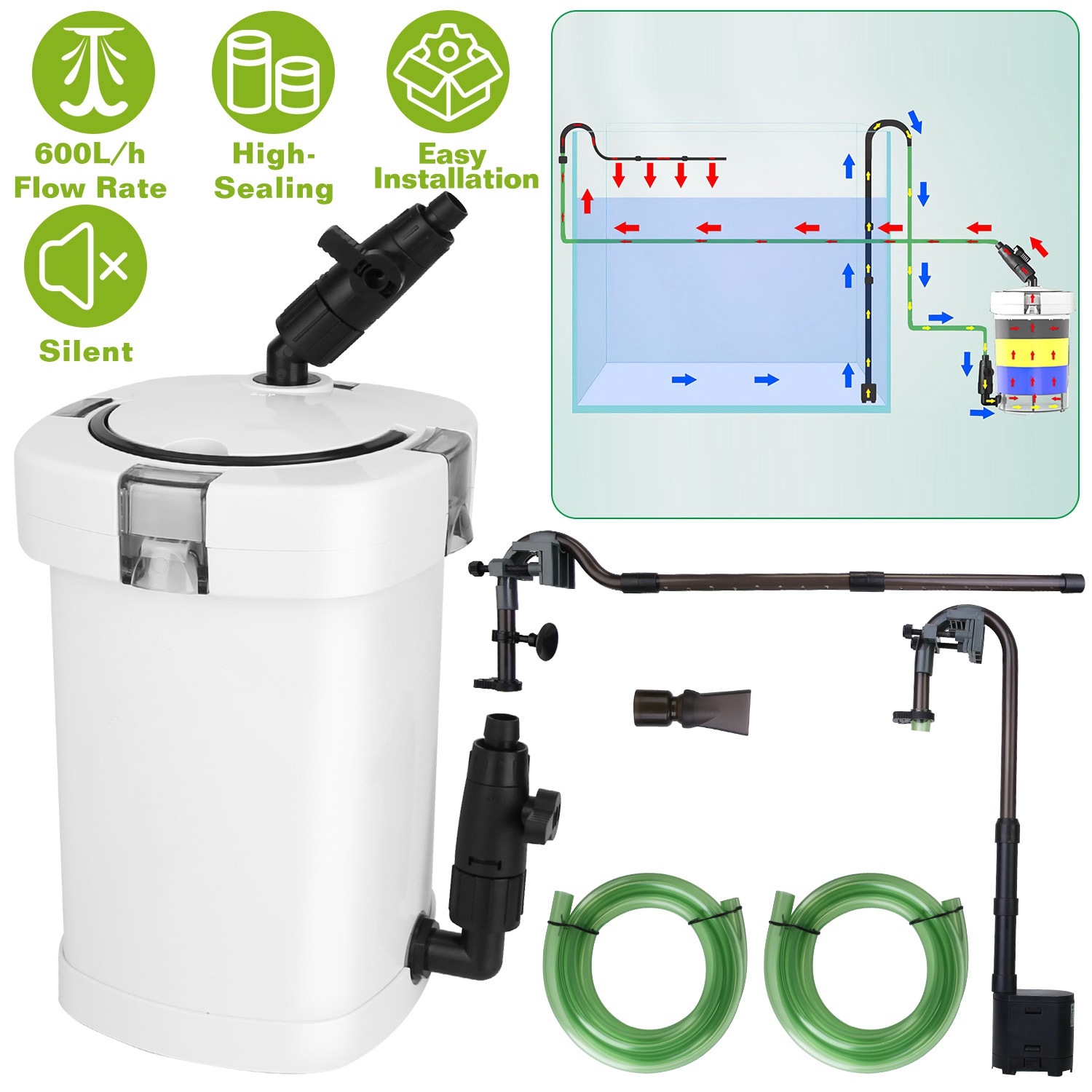 1Pc 3-Stage External Canister Filter For Aquarium Fish Tank With 600L-H Flow Rate 35.4in Max Height 6W Easy Installation Silent$70.99View on Mallflare
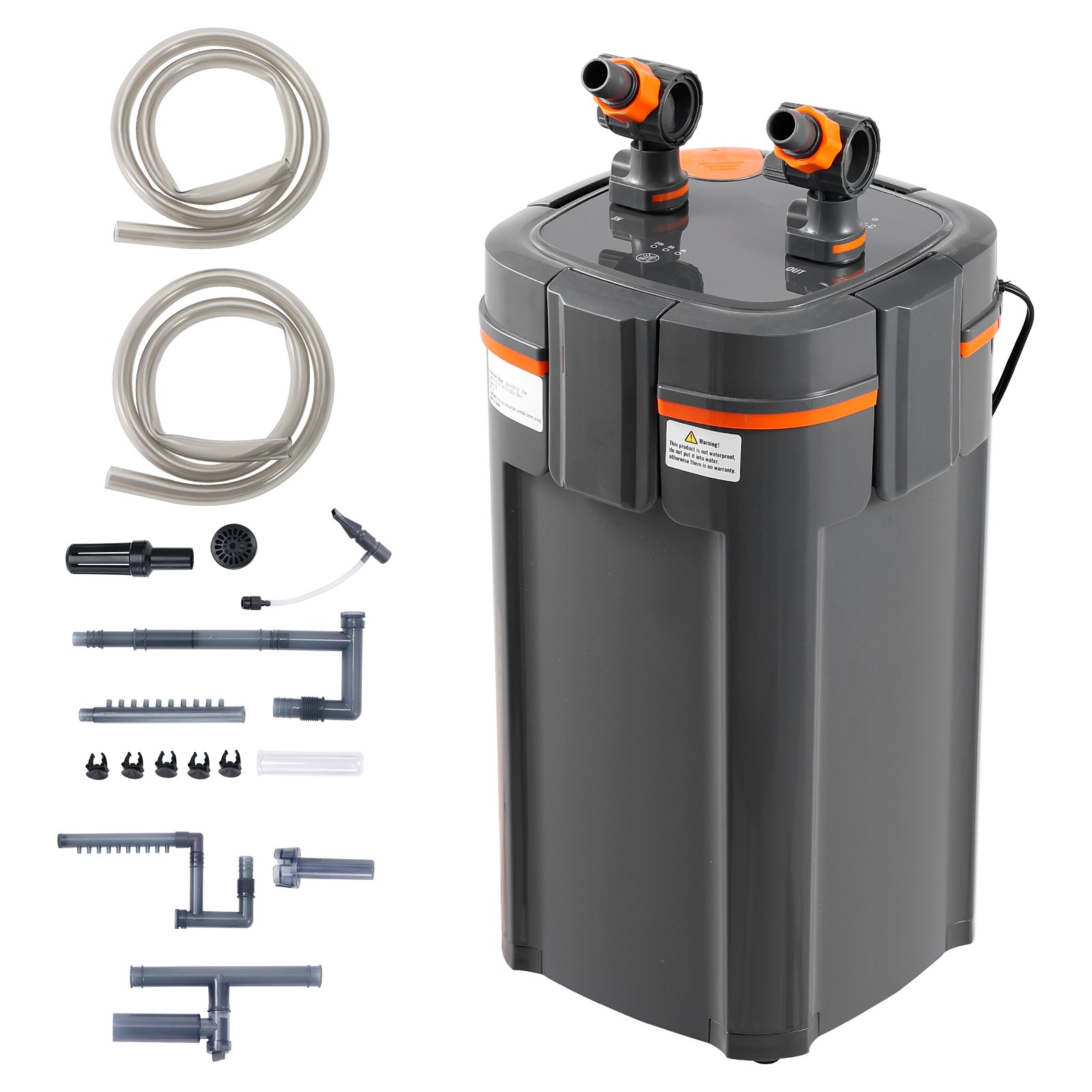 Uimoso 75 Gallon 3 Stage Aquarium Canister Filter 9w UV 264GPH Fish Tank w/ Pump$55.79View on eBay
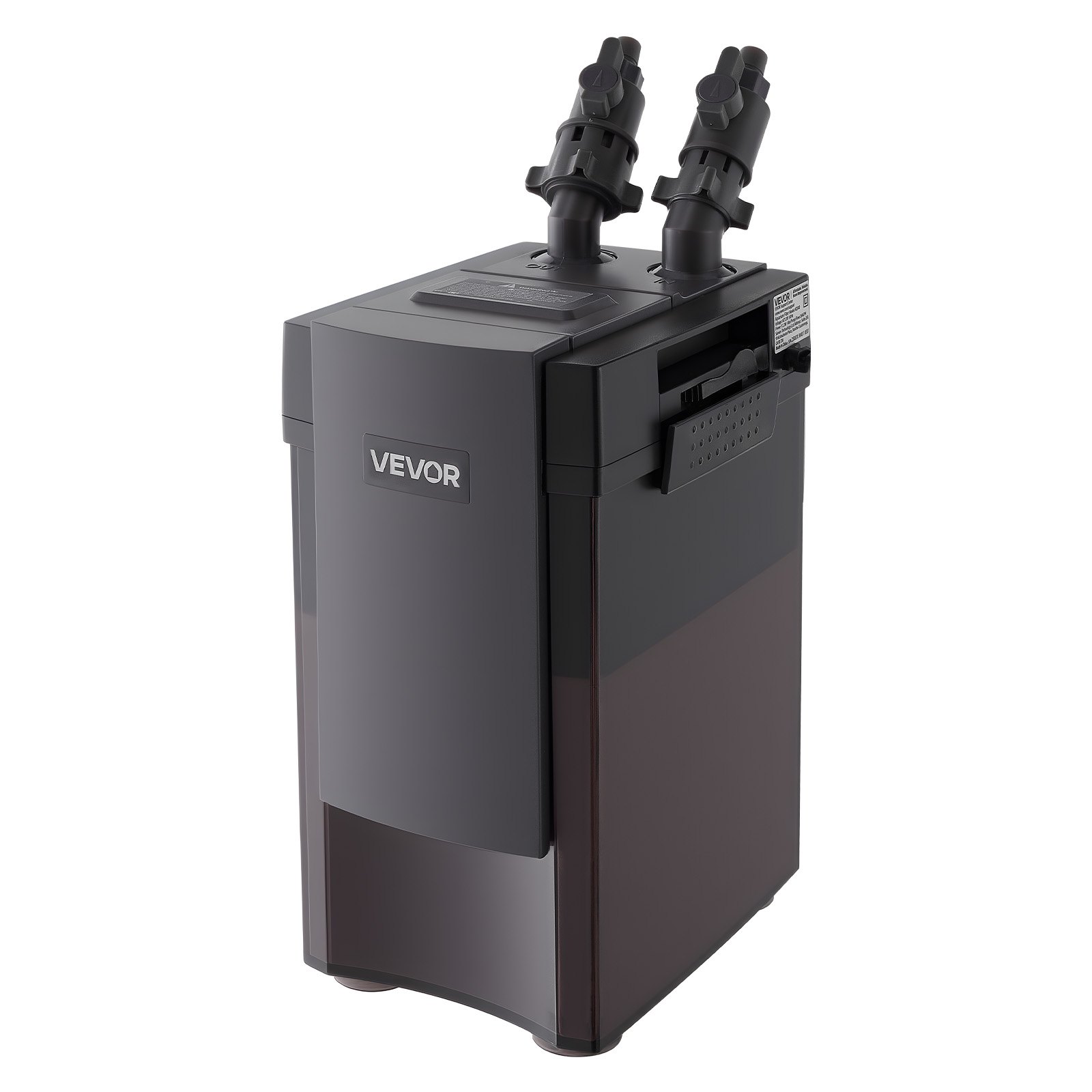 264GPH Canister Filter, 2-Stage External Aquarium With Powerful Pump, Quite Water Circulation Cleaning Machine Media For Fish Tanks And Aquariums Up To 75 Gallons, For Freshwater$75.99View on Mallflare
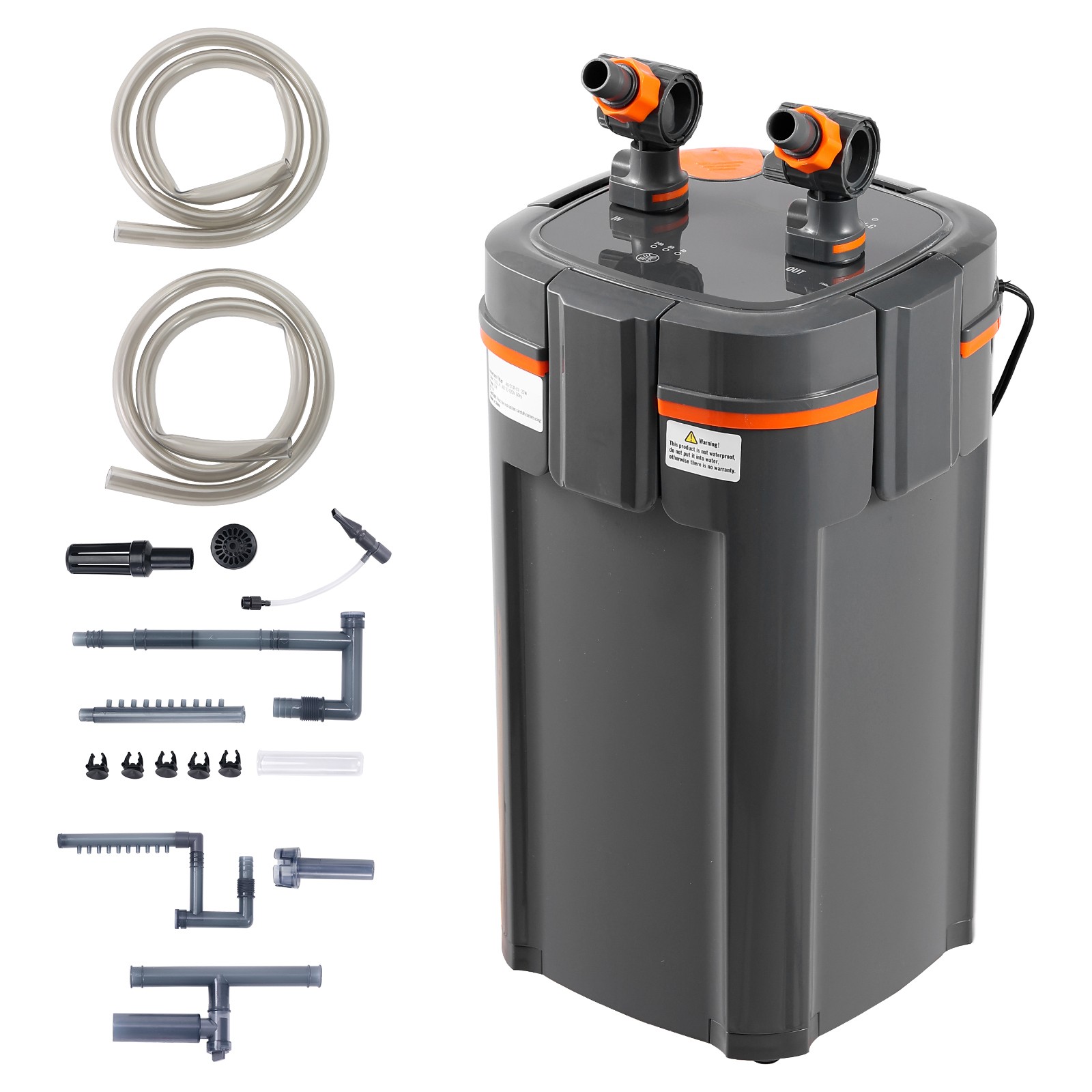 Uimoso 100 Gallon 4 Stage Aquarium Canister Filter 9w UV 317GPH Fish Tank w/Pump$69.99View on eBay
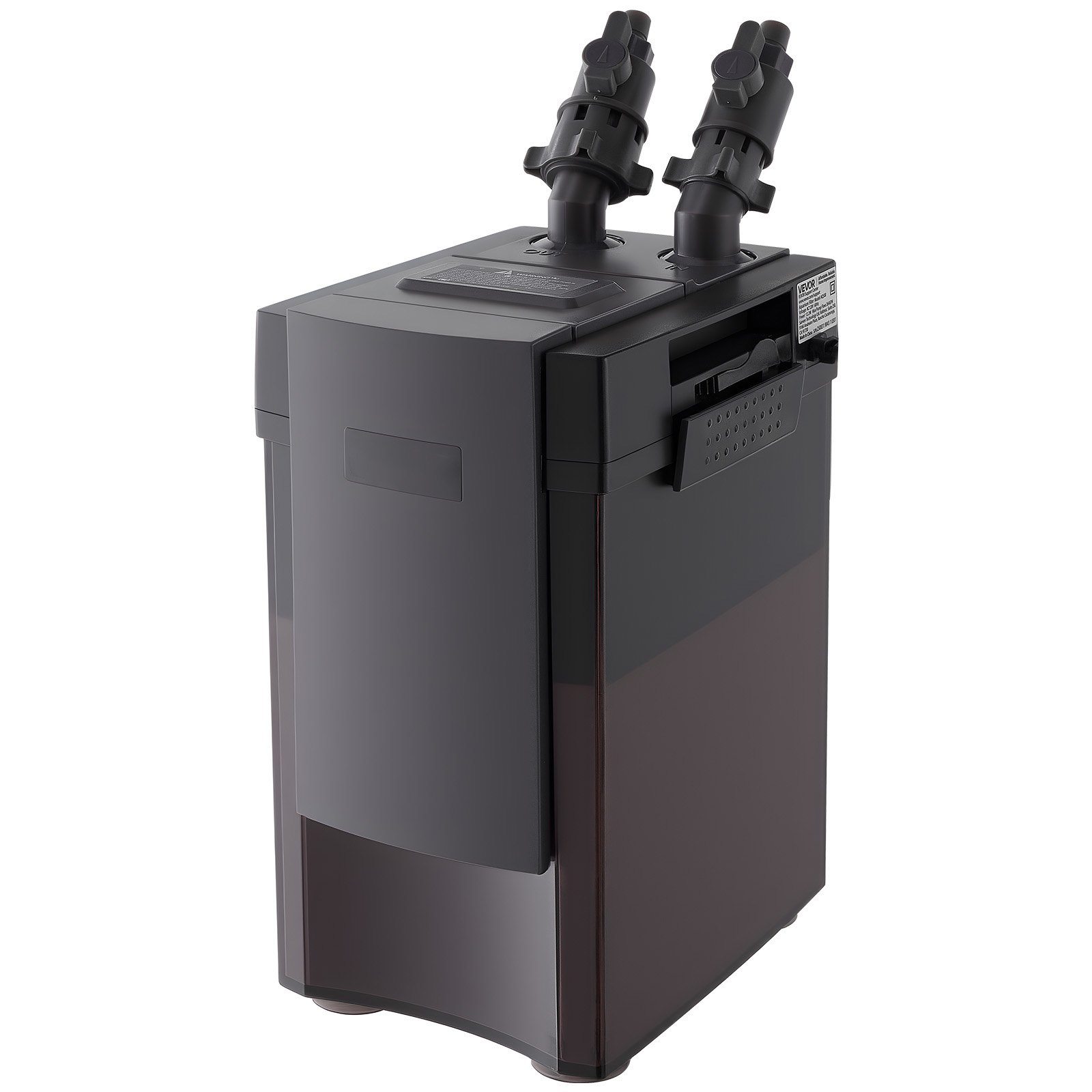 162.7GPH Canister Filter, 3-Stage External Aquarium With Powerful Pump, Water Circulation Cleaning Machine Media For Large Fish Tanks And Aquariums Up To 100 Gallons, For Freshwater$80.99View on Mallflare
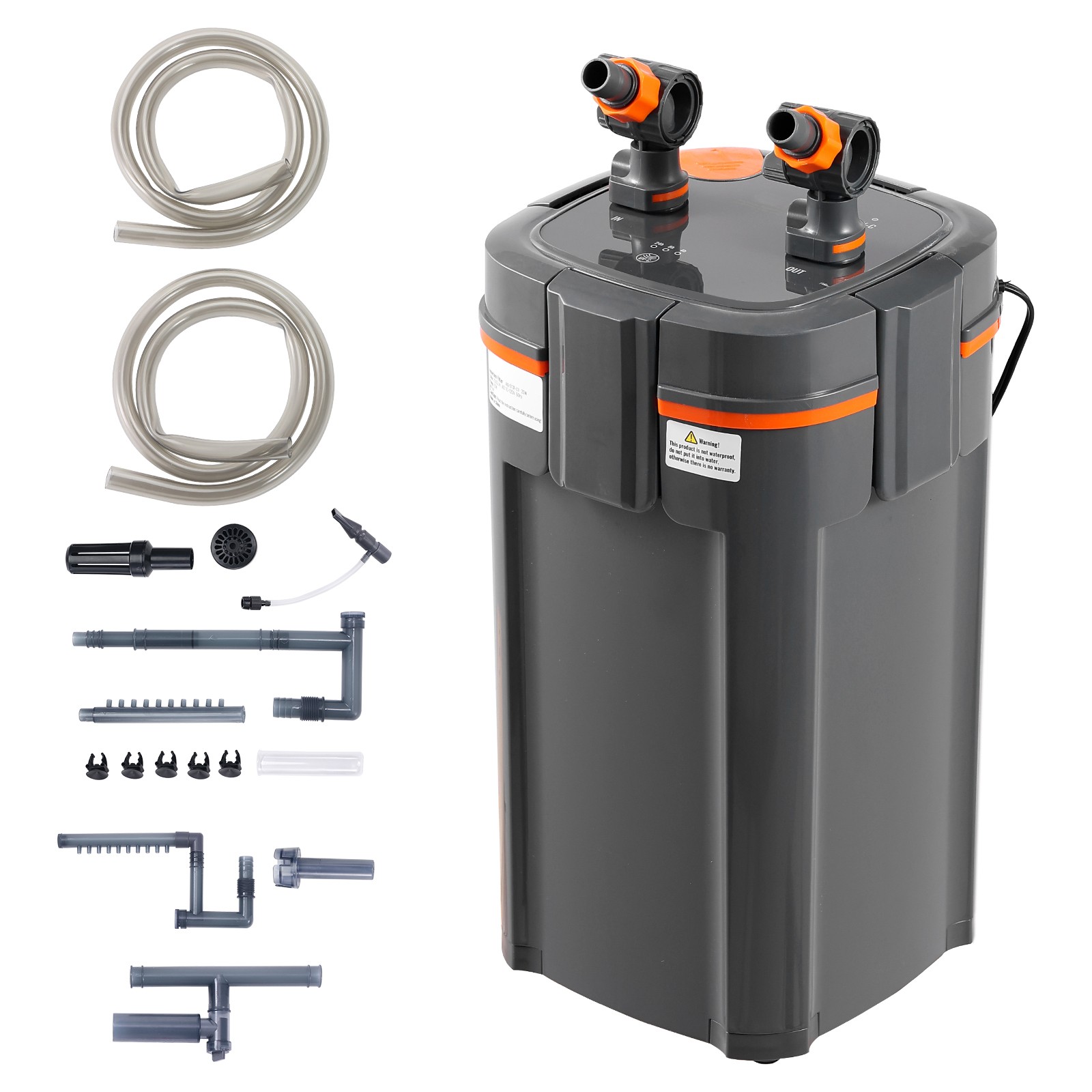 Uimoso 200 Gallon 5 Stage Aquarium Canister Filter 9w UV 528GPH Fish Tank Pump$91.99View on eBay
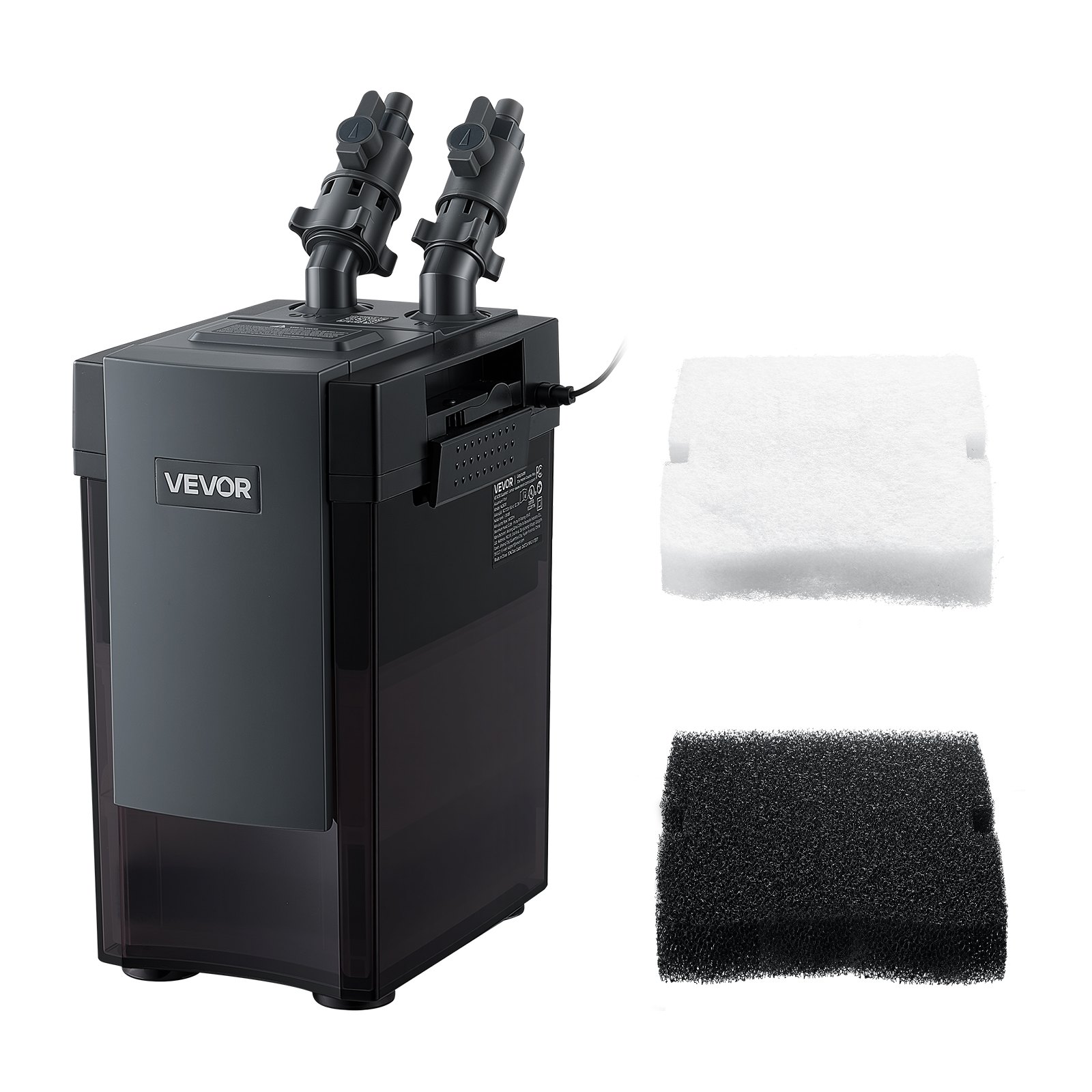 Canister Filter 264 GPH 2-Stage External Aquarium Copper Motor, for Fish Tanks, Aquariums, Adjustable Flow, Leak Protection, Powerful Water Circulation Cleaning Machine, Quite Operation$92.99View on Mallflare
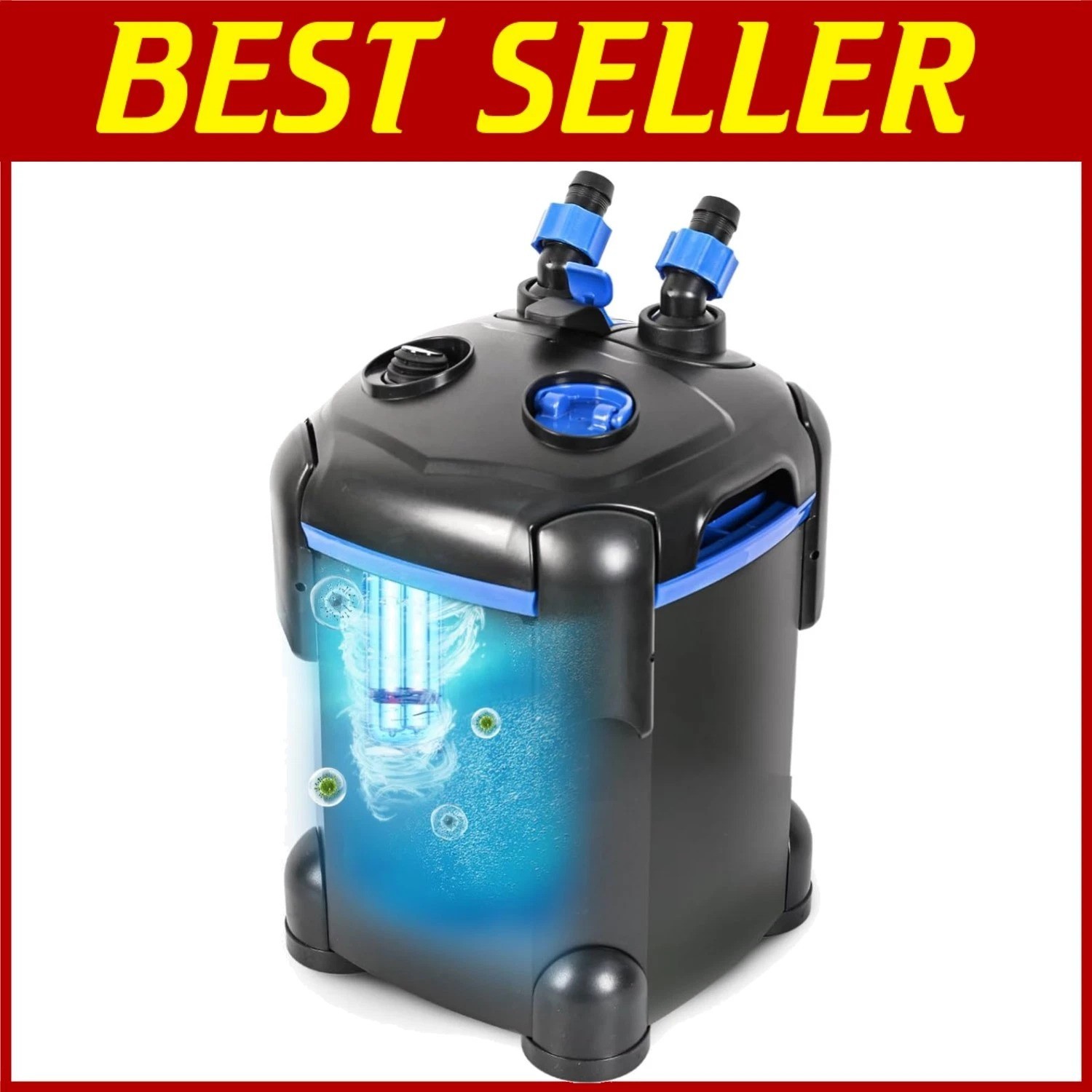 Ultra-Quiet 172GPH Canister Filter for Large Fish Tanks*"$93.58View on eBay
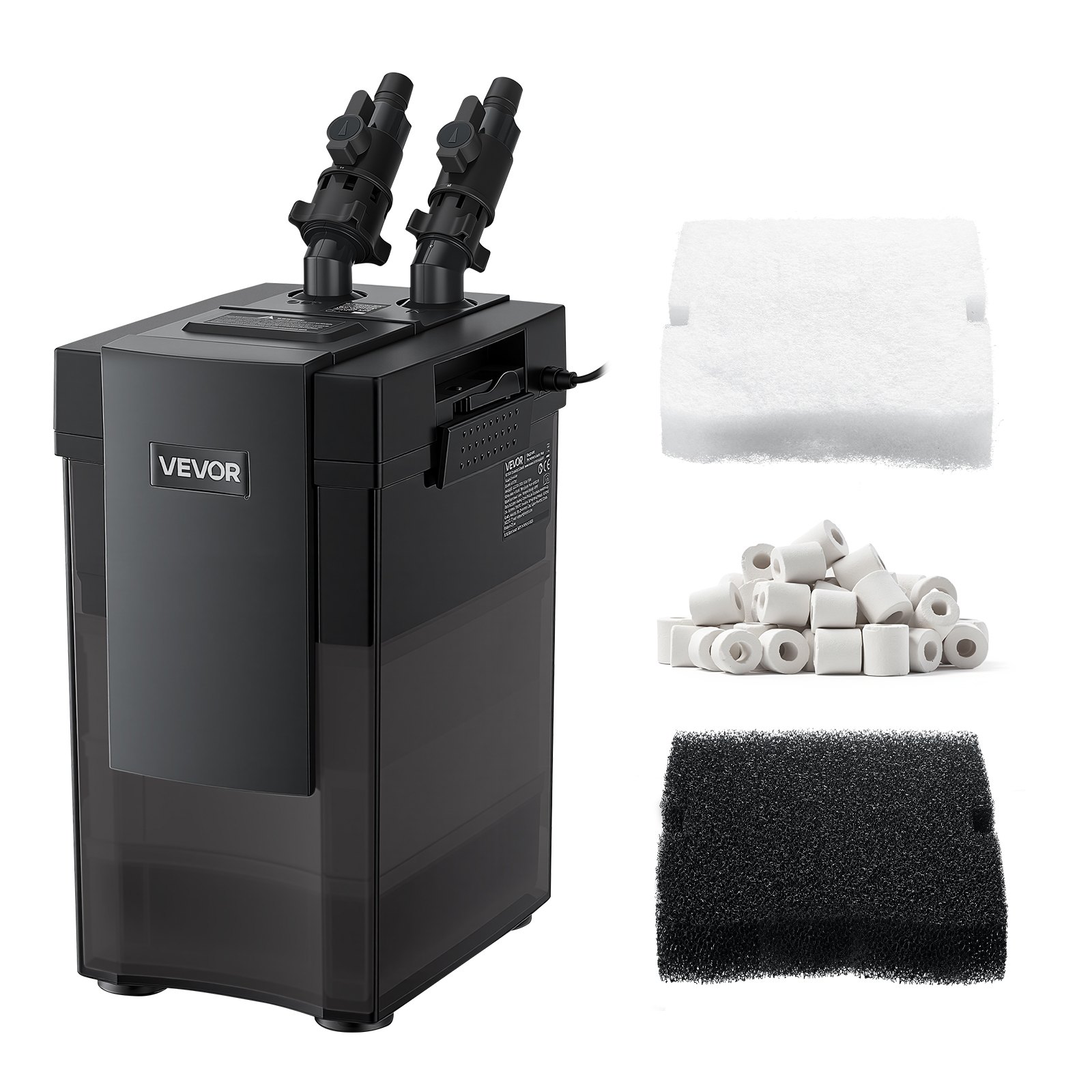 Canister Filter 314 GPH 3-Stage External Aquarium Copper Motor, for Fish Tanks, Aquariums, Adjustable Flow, Leak Protection, Powerful Water Circulation Cleaning Machine, Quite Operation$106.99View on Mallflare
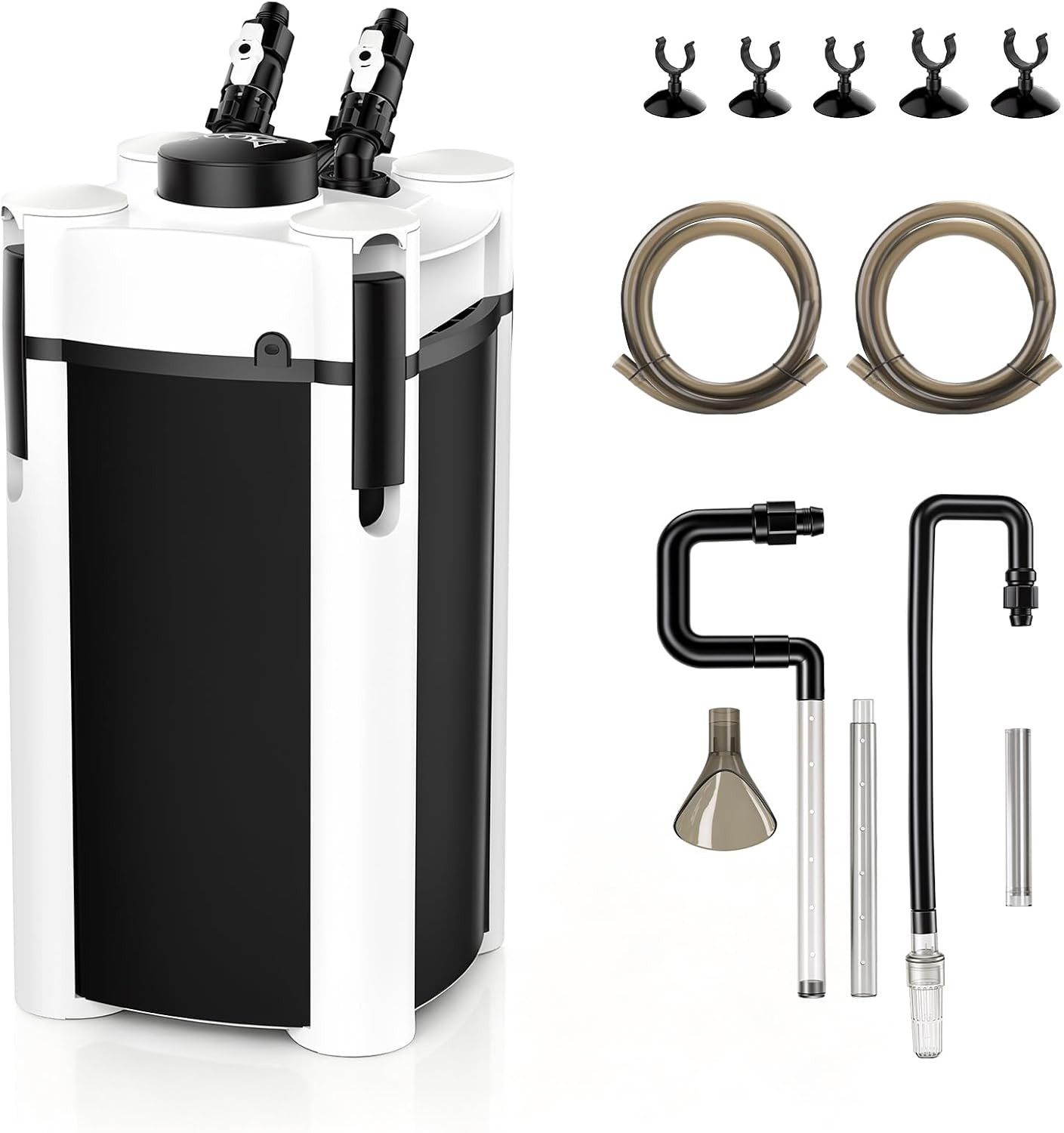 600 GPH Aquarium Canister Filter, 3 Stage Filtration Fish Tank Filter$211.23New · Last checked Nov 27, 2026View on eBay
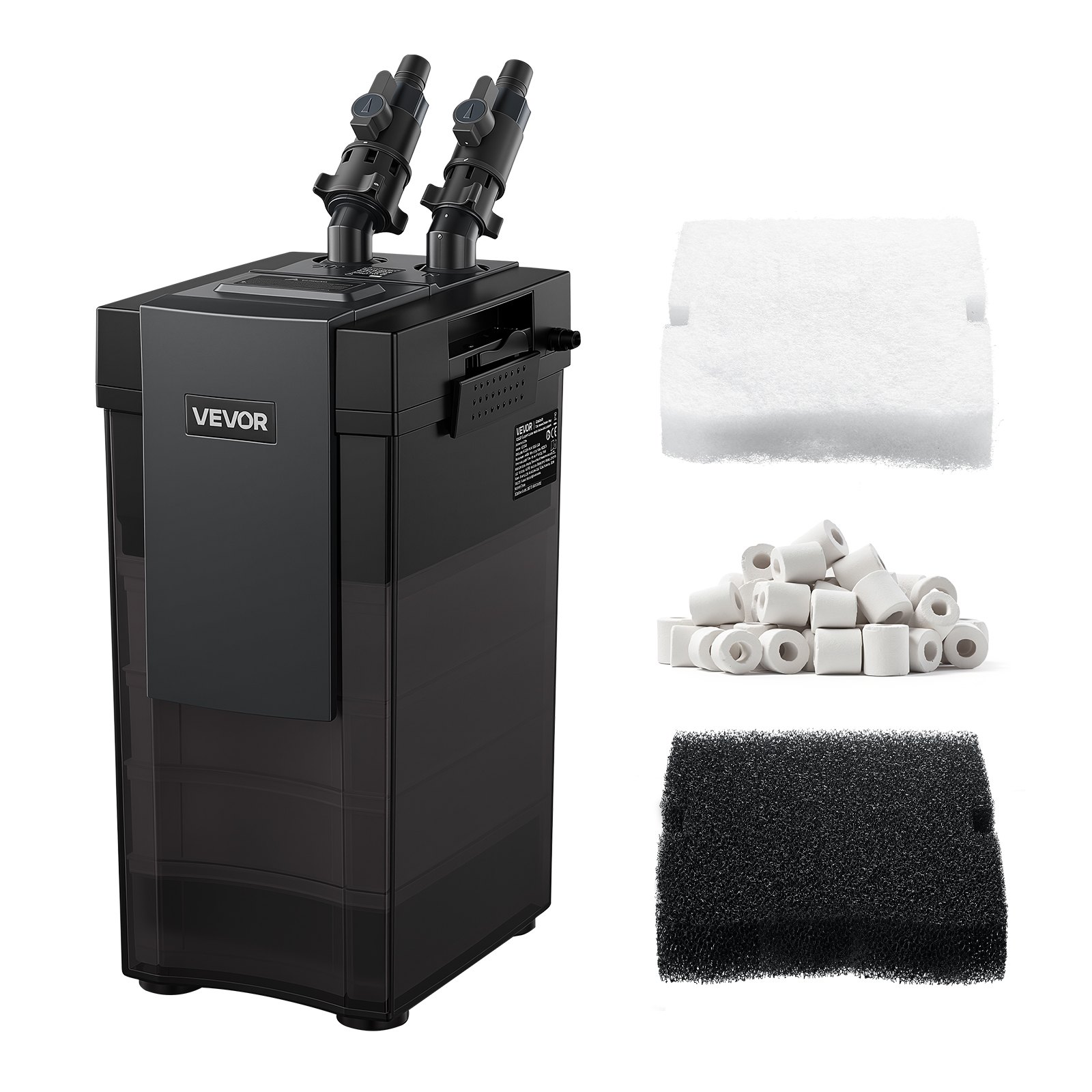 Canister Filter 492 GPH 4-Stage External Aquarium Copper Motor, for Fish Tanks, Aquariums, Adjustable Flow, Leak Protection, Powerful Water Circulation Cleaning Machine, Quite Operation$113.99View on Mallflare
- 600 GPH Aquarium Canister Filter, 3 Stage Filtration Fish Tank Filter$211.93New · Last checked Nov 27, 2026View on eBay
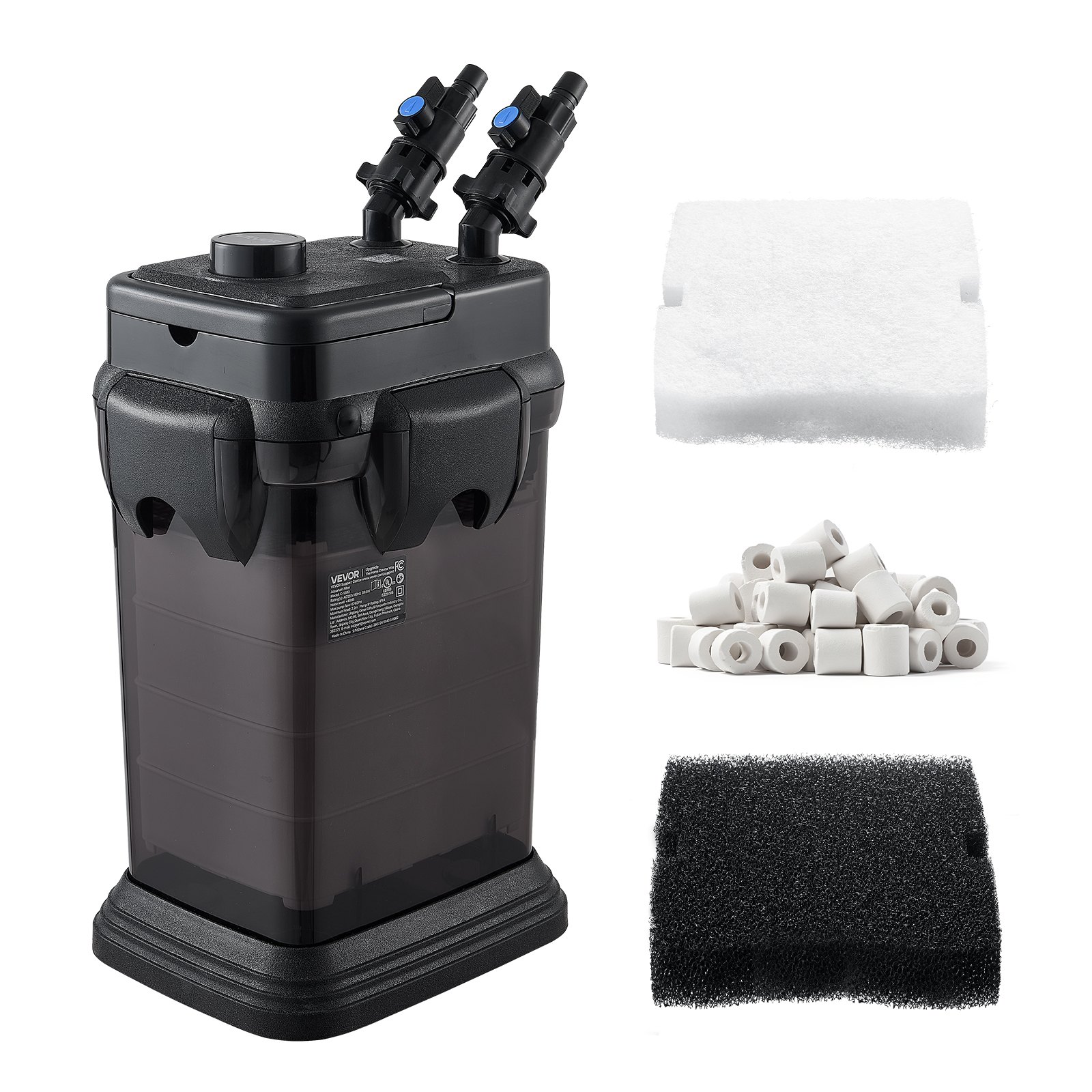 Canister Filter 700 GPH 5-Stage External Aquarium Copper Motor, for Fish Tanks, Aquariums, Adjustable Flow, Leak Protection, Powerful Water Circulation Cleaning Machine, Quite Operation$134.99View on Mallflare
- 600 GPH Aquarium Canister Filter, 3 Stage Filtration Fish Tank Filter$212.95New · Last checked Nov 27, 2026View on eBay
- 600 GPH Aquarium Canister Filter, 3 Stage Filtration Fish Tank Filter$213.09New · Last checked Nov 27, 2026View on eBay
- 600 GPH Aquarium Canister Filter, 3 Stage Filtration Fish Tank Filter$213.36New · Last checked Nov 27, 2026View on eBay
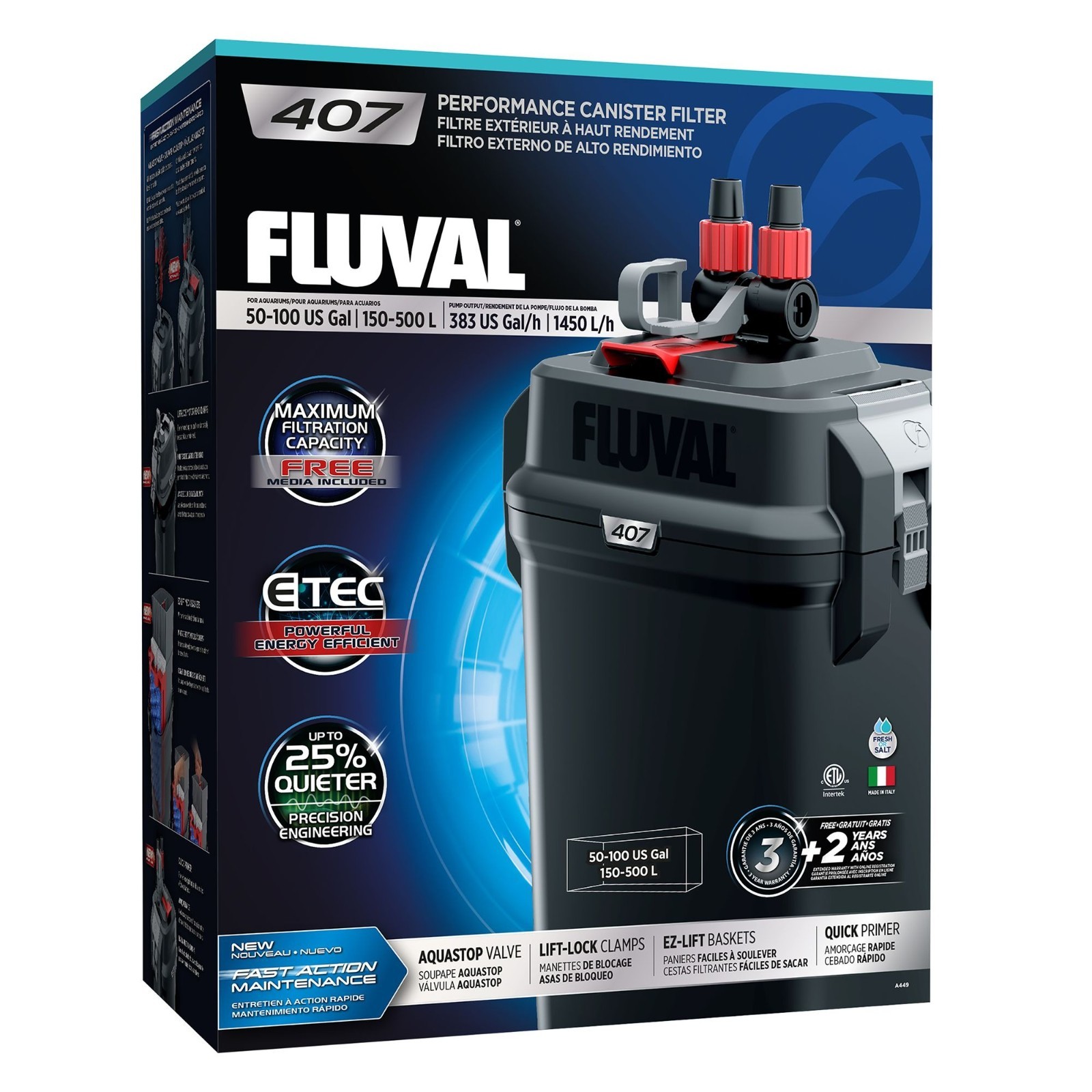 Fluval 407 Performance Aquarium Canister Filter for Fish Tank Filtration$214.99New · Last checked Nov 17, 2026View on eBay
Highlights
- Canister filters (CF1400, CF2000, C-1600) pack 3–5 media trays and handle 100–200+ gallon tanks, but require gravity priming and periodic zirconia-shaft/impeller replacement.
- Hang-on-back and internal waterfall filters use drop-in cartridges; their thin polyurethane foam and polyester floss clog in 2–4 weeks and hold little nitrifying media.
- Sponge and undergravel filters rely on air-lift or powerhead circulation; coarse 20–30 ppi foam supports bacteria but cannot polish water clarity without added floss.
- Turtle and goldfish waste demands 8–10x tank-volume-per-hour turnover and reusable coarse foam plus biomedia — cartridge-only filters crash under that bioload.
Best use cases
- Turtle or large goldfish tank: pick a canister rated at 8–10x your tank volume per hour with at least three media trays; skip cartridge hang-on-backs, which foul within weeks.
- Planted community tank under 40 gallons: a quality hang-on-back or sponge filter with adjustable flow is ideal; skip high-flow canisters that strip CO2 and batter fry.
- Breeding/quarantine or shrimp tank: use a dual sponge filter driven by an air pump; skip undergravel and power filters that suck in shrimplets and fry.
- Koi pond or large sump setup: choose a large external canister or media-reactor design with 1-inch hose fittings; skip internal filters that cannot handle solids.
Buying tips
- Match flow to tank volume: target 4–5x turnover for community fish, 8–10x for turtles and goldfish, measured in gallons per hour at the rated head height.
- Prefer canisters with standard 1/2- or 5/8-inch hoses and modular trays so generic polyurethane foam, polyester floss, and ceramic rings fit without proprietary cartridges.
- Inspect the impeller assembly: zirconia ceramic shafts outlast steel and resist wear; buy spare impeller/foam sets at the same time to avoid cycle crashes.
- For air-driven sponge filters, size the air pump to 1–2 liters per minute per sponge and use 20–30 ppi open-cell foam for bacterial colonization.
Specs
| Filter Type | Canister / HOB / Sponge / UGF |
|---|---|
| Flow Rating | 4–10x tank volume per hour |
| Media Stages | Mechanical + biological + chemical |
| Impeller Shaft | Zirconia ceramic vs steel |
Related searches
What to check before buying
- Measure tank length and rim: hang-on-back filters need 2–3 inches of clearance behind the tank and a level rim; canisters need 10–12 inches of cabinet height for hose loops.
- Confirm tank volume in gallons and species bioload before selecting gph; a turtle tank needs roughly double the filter rating of a same-size community tank.
- Check floor and cabinet strength for filled canisters (5–15 lbs dry, much more wet) and route hoses so they cannot siphon onto the floor during power loss.
- Verify media availability: standard cut-to-fit foam pads and ceramic biomedia keep long-term costs low; proprietary cartridges lock you into ongoing replacements.
FAQ
Data sources: eBay / Amazon listings and product attribute feeds. Updated Nov 28, 2026.
Some links on this page are affiliate links. If you buy after clicking one, we may earn a commission at no extra cost to you. This does not change which products appear here or their order. Affiliate disclosure.