
Photos from current listings. Actual item, color, and included accessories may vary.
External Tank Filter Buying Guide
External tank filters — almost always canister filters — are the go-to choice when you need serious mechanical and biological filtration without stealing space inside the tank. The two real architectures are plastic canisters with integrated pumps and stainless-steel canisters that use separate external pumps, and picking the wrong one for your tank volume, cabinet clearance, and hose routing is where most buyers go wrong. Get the flow rating and media volume right and these filters run silently for years; undersize them and you will fight algae and water clarity from day one.
Median $193.37 · New listings
Key takeaways
- Canister filters are sealed external units that pull water through intake and return hoses; plastic bodies dominate the market and stainless-steel canisters are the premium, higher-pressure alternative.
- Flow rate is rated free-flow at zero head height — every inch of vertical lift and every bend in the hose reduces actual turnover, so size the filter above the tank's nominal liters-per-hour needs.
- Media volume and tray count matter more than raw flow for biological filtration; multi-stage trays let you layer mechanical sponge, biological media, and chemical media separately.
At a glance
- Category
- Aquarium Filters & Pumps
- Last updated
- Nov 28, 2026
Current offers
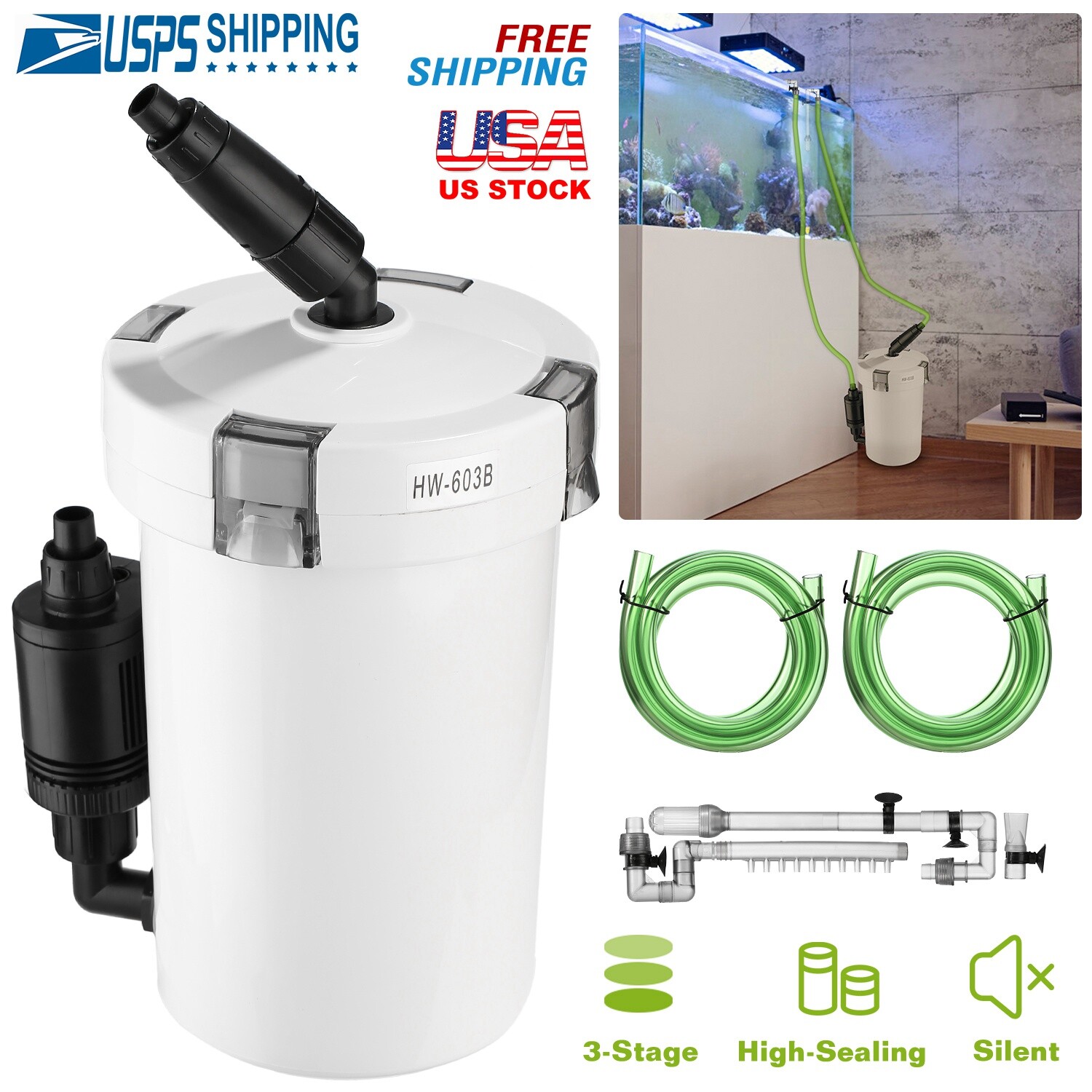 Aquarium External Canister Filter Fish Tank with Pump Table Mute Filters Bucket$38.94View on eBay
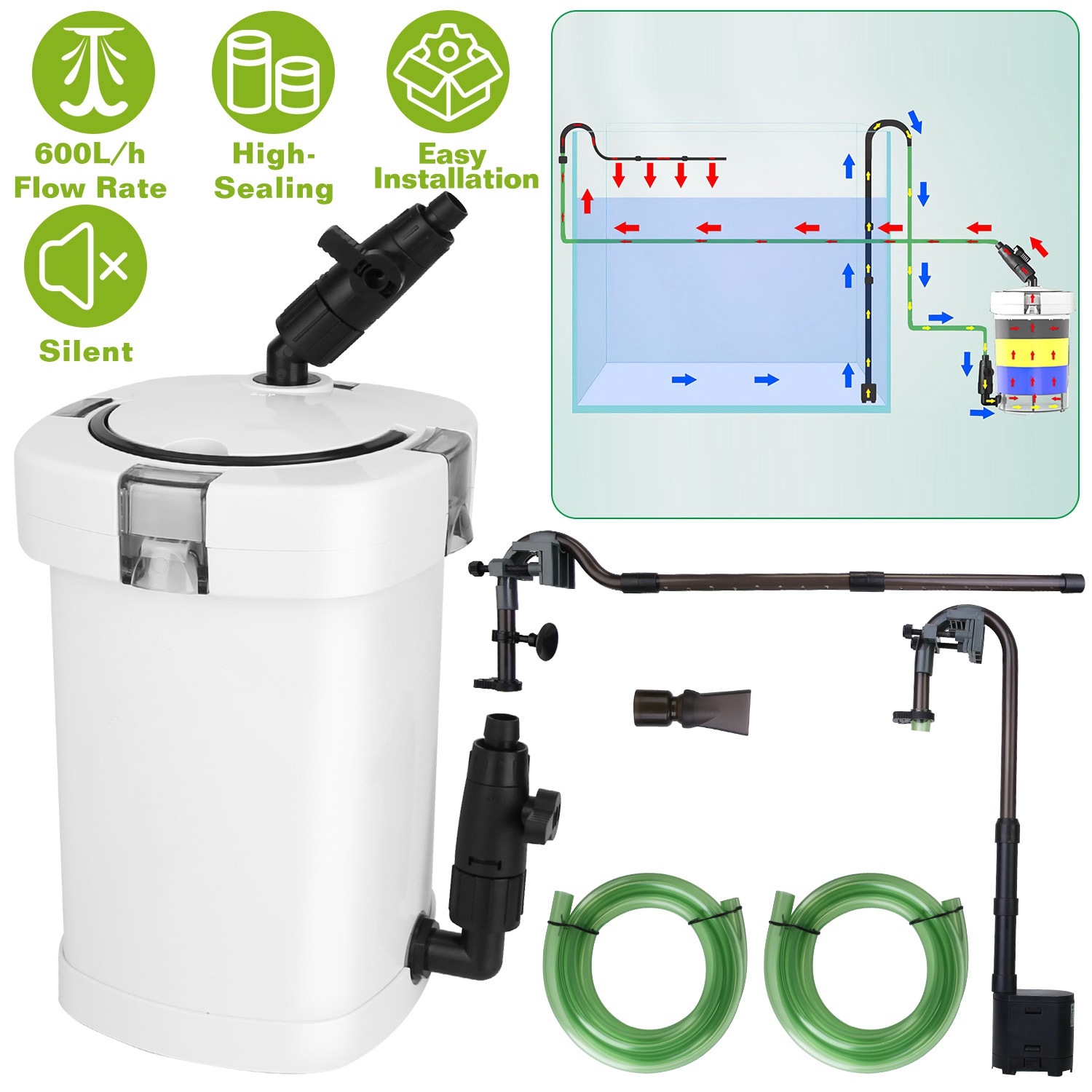 1Pc 3-Stage External Canister Filter For Aquarium Fish Tank With 600L-H Flow Rate 35.4in Max Height 6W Easy Installation Silent$70.99View on Mallflare
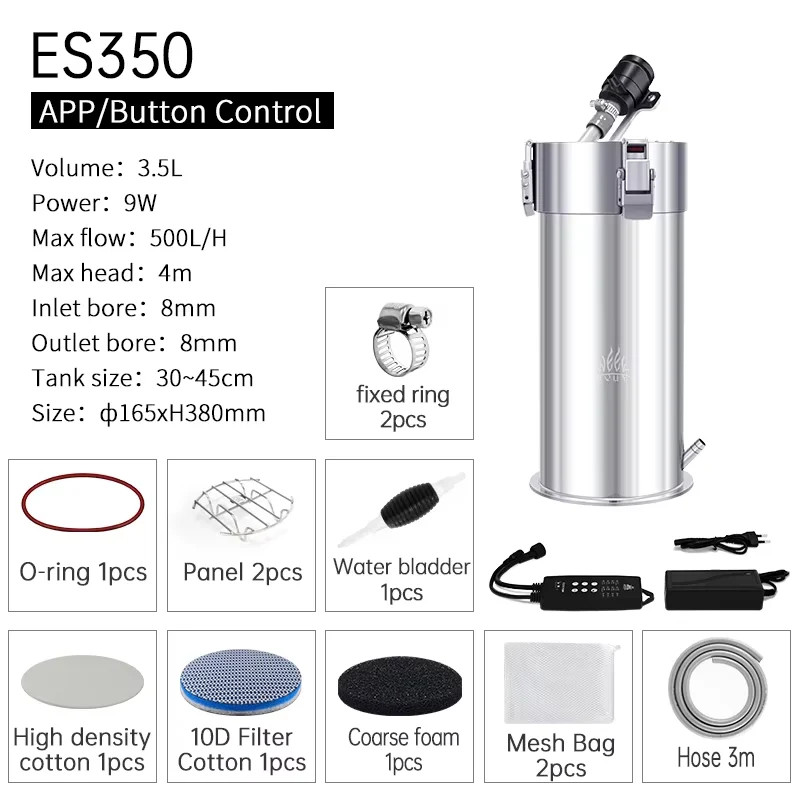 WEEK AQUA Stainless Steel External Canister Filter Fish Tank Aquarium Pump$315.74New · Last checked Nov 17, 2026View on eBay
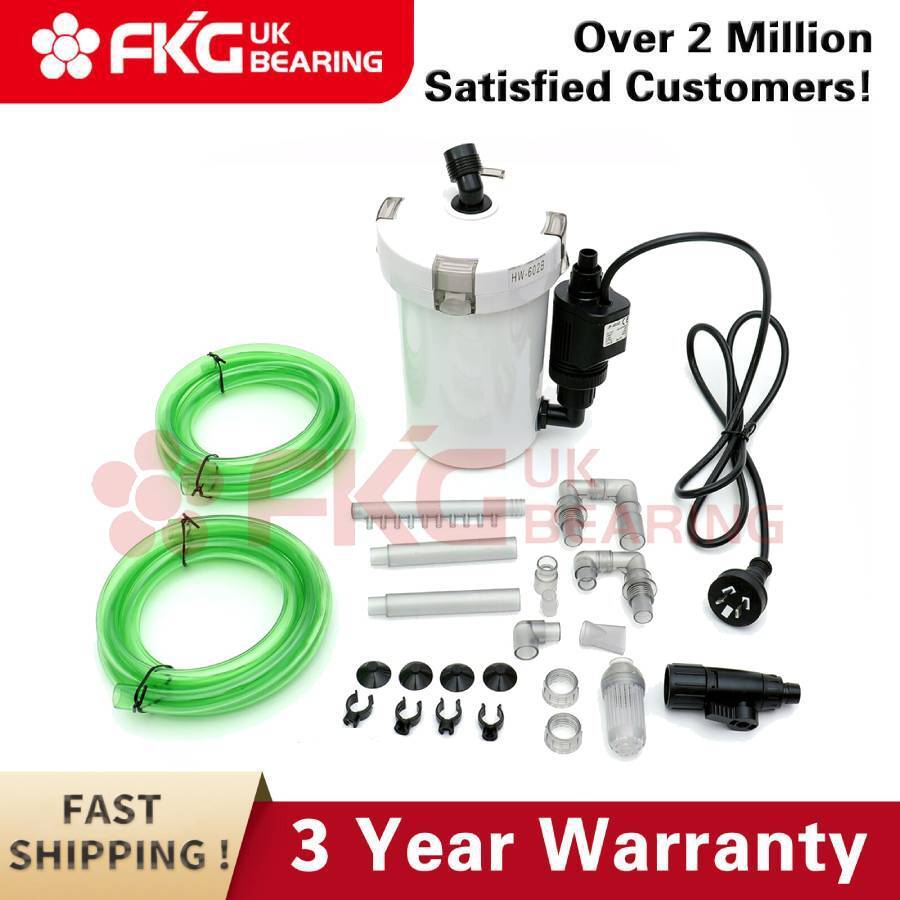 Aquarium External Filter Canister Fish Tank Water Pump Sponge Media Kit 220-240V$536.99New · Last checked Nov 27, 2026View on eBay
Highlights
- Canister filters are sealed external units that pull water through intake and return hoses; plastic bodies dominate the market and stainless-steel canisters are the premium, higher-pressure alternative.
- Flow rate is rated free-flow at zero head height — every inch of vertical lift and every bend in the hose reduces actual turnover, so size the filter above the tank's nominal liters-per-hour needs.
- Media volume and tray count matter more than raw flow for biological filtration; multi-stage trays let you layer mechanical sponge, biological media, and chemical media separately.
- Stainless-steel canisters are sold without a pump and require a separate external pump matched to the canister's rated pressure and flow, while plastic units ship with the pump integrated.
Best use cases
- Best fit: freshwater community tanks in the 100–300 L range — choose a plastic canister with integrated pump, 3–4 media trays, and a flow rating comfortably above the tank volume per hour.
- Best fit: large or heavily stocked setups and saltwater systems where you want maximum media capacity and long service intervals — choose a stainless-steel canister paired with an external pump rated for the canister's pressure.
- Wrong fit: nano tanks under roughly 40 L — a canister's hose diameter and flow will overwhelm the tank; a small internal or hang-on-back filter is the correct choice.
- Wrong fit: tanks without cabinet space or drilled hose access — canisters need vertical clearance below the tank and a route for two hoses, so skip them if the stand is sealed.
Buying tips
- Size flow to tank volume: aim for a rated turnover several times the tank's liters per hour, then derate for head height and hose bends rather than trusting the box number.
- Choose plastic canisters for plug-and-play freshwater use and stainless-steel canisters when you need higher pressure, larger media volume, or a separate pump for redundancy.
- Prioritize tray count and media volume over advertised flow — more trays mean you can separate mechanical, biological, and chemical stages and clean them independently.
- Inspect hose diameter and included fittings before buying; the intake and return hoses must match your tank's openings or you will need adapters.
Specs
| Body Material | Plastic vs stainless steel |
|---|---|
| Pump Configuration | Integrated vs separate external pump |
| Flow Rating | Free-flow L/H, derate for head height |
| Media Stages | 2-4 trays: mechanical/bio/chemical |
Related searches
What to check before buying
- Measure cabinet interior height and width below the tank — the canister plus hose loops needs vertical clearance and a stable floor.
- Confirm the tank's liters and stocking level so the filter's rated flow, after head-height derating, exceeds the tank's hourly turnover target.
- Check hose routing: you need two clear paths from the canister to the tank rim without kinking, plus space for the intake strainer and return nozzle.
- For stainless-steel canisters, verify you have a separate external pump with matching flow and pressure ratings, plus the correct hose and clamp sizes.
FAQ
Data sources: eBay / Amazon listings and product attribute feeds. Updated Nov 28, 2026.
Some links on this page are affiliate links. If you buy after clicking one, we may earn a commission at no extra cost to you. This does not change which products appear here or their order. Affiliate disclosure.