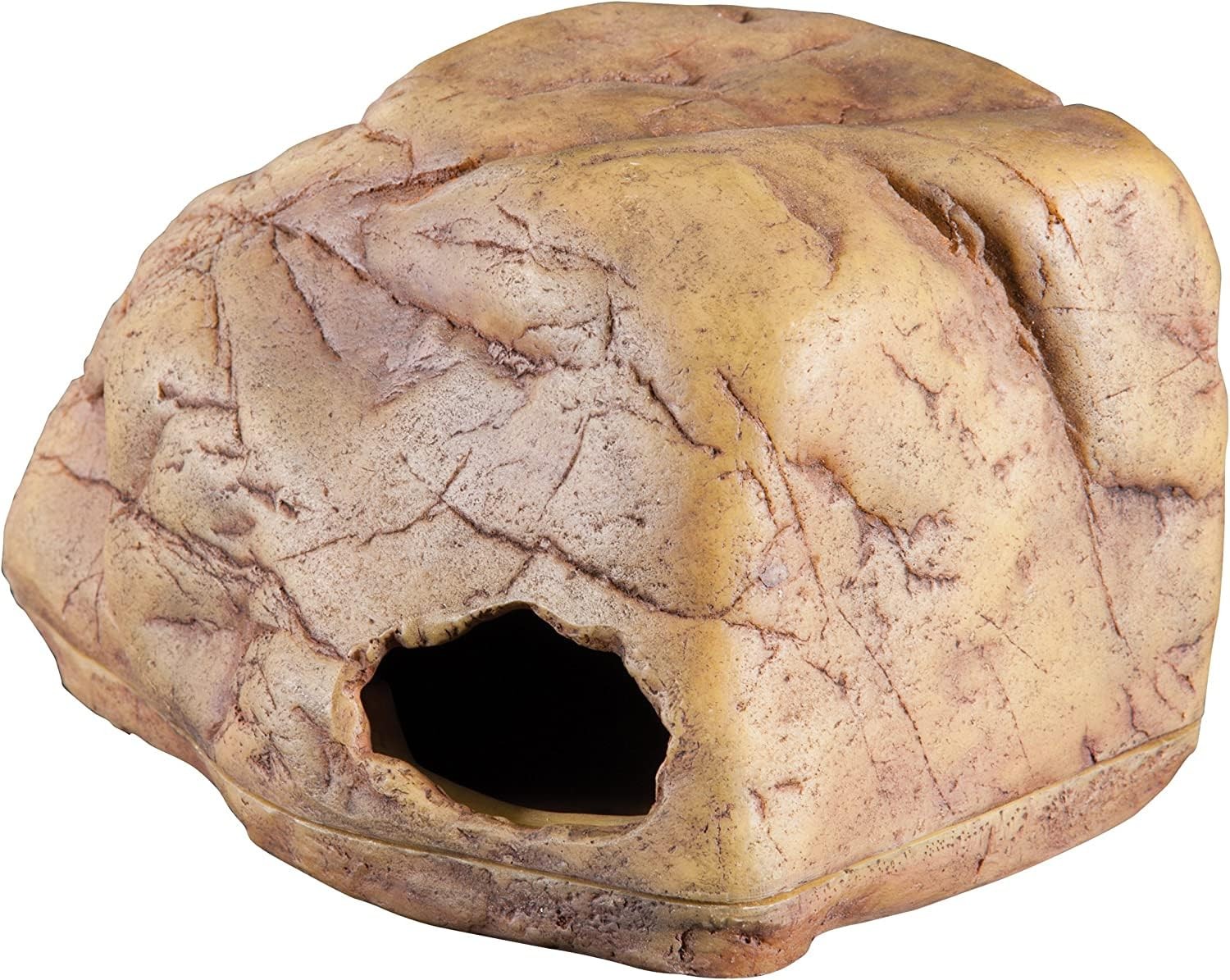

Photos from current listings. Actual item, color, and included accessories may vary.
Reptile Lounge Buying Guide
Reptile lounges are enclosed hides and caves that give captive reptiles a secure, humidity-controlled retreat, and the decisive trade-off is between hollow resin/plastic shells (easy to clean, low humidity retention) and porous natural materials like cork or unsealed wood (better microclimate, harder to disinfect). Choose a solid molded resin cave with a single large opening for arid species, and a grooved or damp-retaining hide for tropical species that need shedding support.
Median $45.75
Key takeaways
- Molded resin hides are non-porous and dishwasher-safe at low heat, resisting bacterial buildup far better than unsealed wood or cork bark.
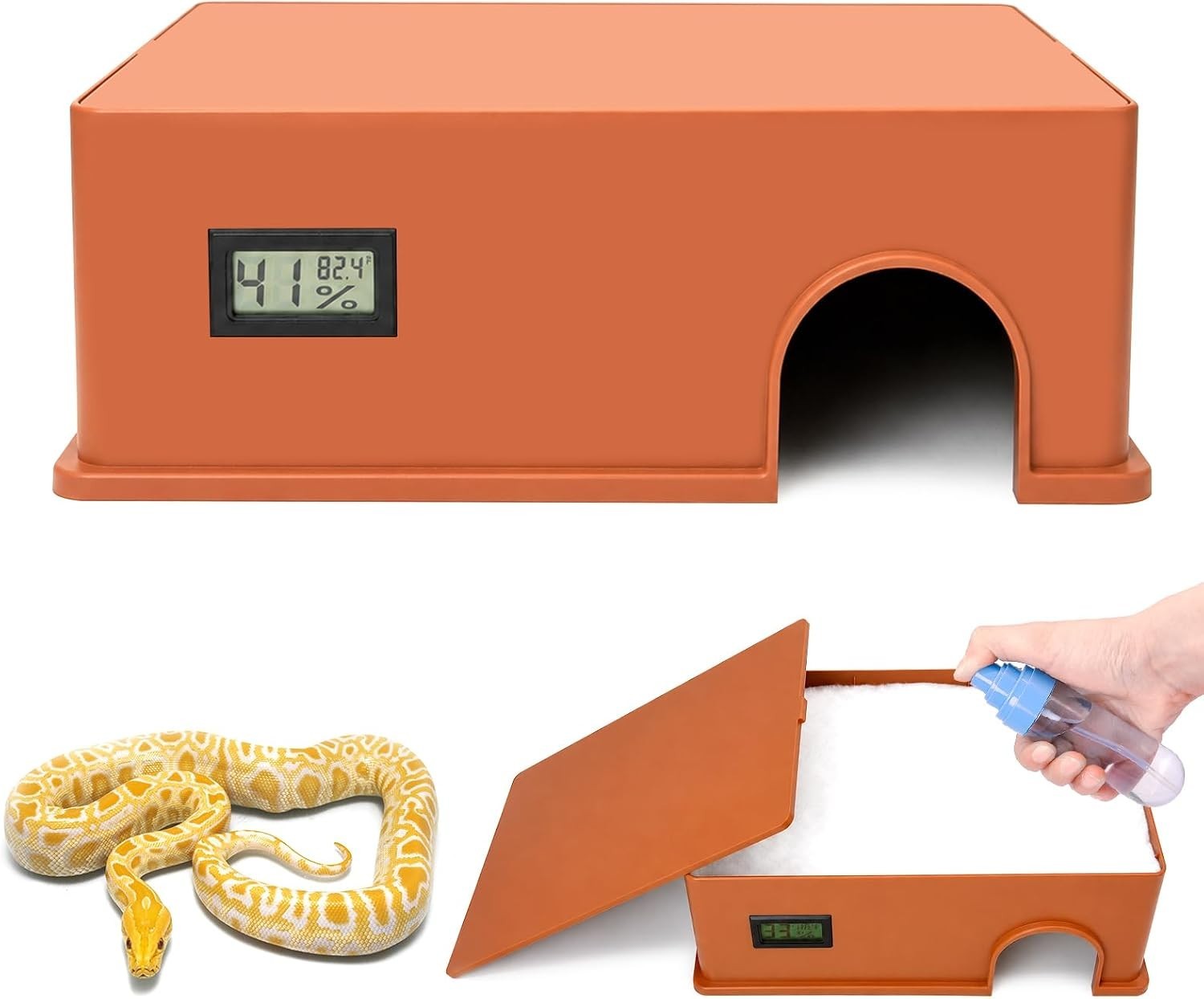
- Hides with a humidification groove or damp moss chamber raise internal relative humidity 15-25% over room ambient, critical for geckos and snakes in shed.
- Opening diameter should be roughly 1.5-2x the animal's widest body girth; oversized single openings cause stress, undersized openings cause abrasion.
At a glance
- Category
- Reptile Substrate, Decor & Hides
- Last updated
- Nov 28, 2026
Current offers
Highlights
- Molded resin hides are non-porous and dishwasher-safe at low heat, resisting bacterial buildup far better than unsealed wood or cork bark.
- Hides with a humidification groove or damp moss chamber raise internal relative humidity 15-25% over room ambient, critical for geckos and snakes in shed.
- Opening diameter should be roughly 1.5-2x the animal's widest body girth; oversized single openings cause stress, undersized openings cause abrasion.
- Natural-looking textured resin (rock or wood grain) provides grip for climbing geckos, while smooth plastic boxes suit terrestrial snakes and burrowers.
Best use cases
- Best fit: arid species (bearded dragons, leopard geckos, uromastyx) — pick a solid resin cave with one opening and a flat basking shelf; skip humid grooved hides that trap moisture.
- Best fit: tropical species (crested geckos, ball pythons, dart frogs) — pick a hide with a humidification groove or moss chamber; skip open-bottom natural wood that molds in high humidity.
- Best fit: fossorial and burrowing species (king snakes, sand boas) — pick a low-profile cave partially buried in substrate; skip tall arboreal boxes that waste floor space.
- Wrong fit: large tortoises and monitors — standard resin caves crack under heavy claws; choose heavy-duty ceramic or custom-built wooden hide boxes instead.
Buying tips
- Measure your reptile's widest girth (not length) and pick a hide with an opening 1.5-2x that measurement; a 4-inch girth snake needs a 6-8 inch opening.
- For tropical setups, choose a hide with a built-in humidification groove or removable moss tray; plain plastic boxes without grooves dry out within hours under heat lamps.
- Resin hides with a removable bottom tray clean faster and allow substrate changes without disturbing the animal; one-piece hollows require full removal.
- Match hide material to heat source: resin under a basking lamp can overheat surface temperatures, so place resin caves on the cool side and natural wood under basking spots.
Specs
| Material | Molded resin / plastic / natural wood |
|---|---|
| Humidity Feature | Groove or moss chamber vs plain shell |
| Opening Style | Single large vs dual or side entry |
| Cleaning | Non-porous rinse vs porous soak |
Related searches
What to check before buying
- Measure enclosure floor space and subtract water dish and basking zone; a hide should occupy no more than 25-30% of the footprint for active species.
- Check substrate depth: burrowing species need 4-6 inches of substrate, so choose a hide tall enough to sit above that depth without burying the opening.
- Confirm the hide fits under your heat lamp or ceramic heat emitter without blocking the beam; resin surfaces directly under a 100W lamp can exceed safe temperatures.
- Verify the hide has no sharp mold seams or rough interior edges; run a finger inside the opening and along the floor to check for abrasion risks.
FAQ
Data sources: eBay / Amazon listings and product attribute feeds. Updated Nov 28, 2026.
Some links on this page are affiliate links. If you buy after clicking one, we may earn a commission at no extra cost to you. This does not change which products appear here or their order. Affiliate disclosure.