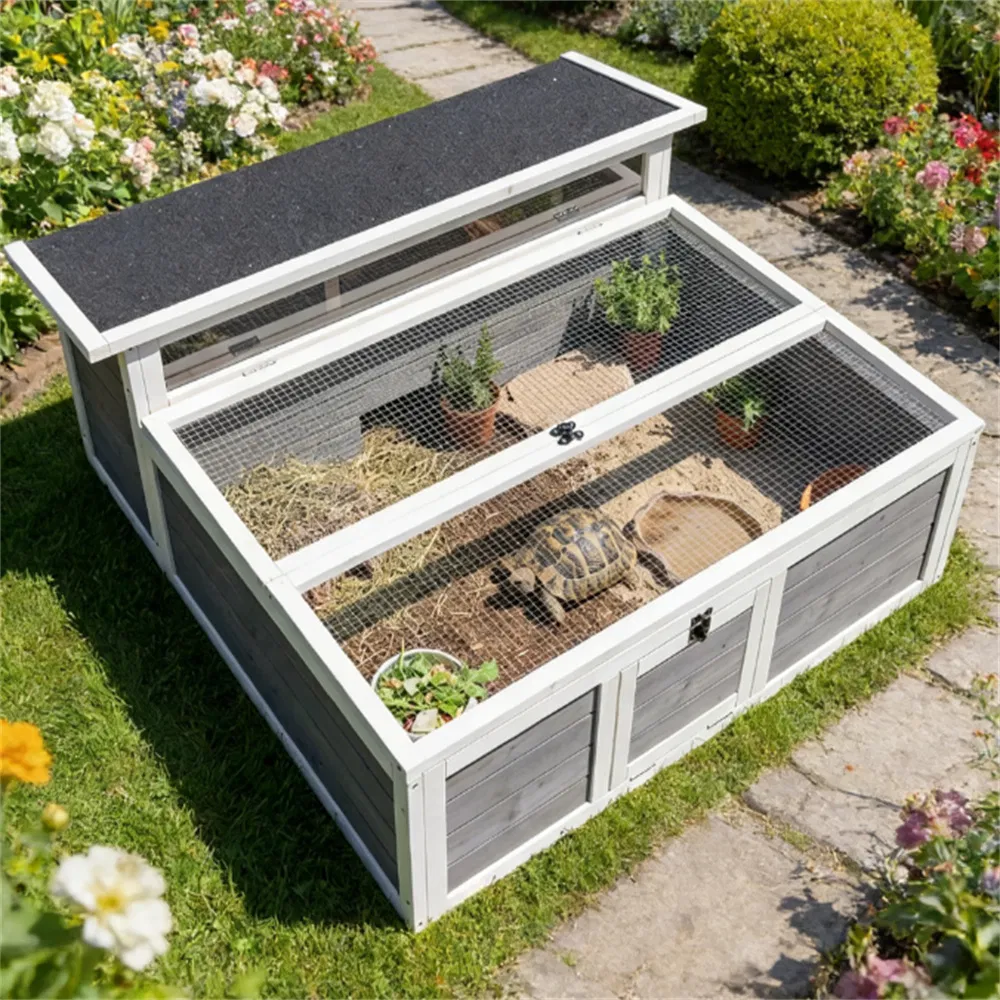

Photos from current listings. Actual item, color, and included accessories may vary.
Turtle Tank Buying Guide
A turtle tank is a complete aquatic or semi-aquatic habitat combining a watertight basin, basking platform, filtration, heating, and UVB lighting sized to the species' adult shell length. The core trade-off is between glass/acrylic aquariums with external canister filtration and molded plastic tubs or wooden enclosures with integrated ramps and doors. Buy durable when the enclosure meets the 10-gallons-per-inch-of-shell rule with a dry basking dock and species-correct UVB; skip any kit that omits a dry dock or undersizes filtration.
Key takeaways
- Glass aquariums resist scratching and hold heat evenly; acrylic is lighter and clearer but scratches easily and yellows under continuous UVB.
- Molded plastic tubs and wooden enclosures with waterproof liners suit indoor/outdoor use but need a separate basking ramp and external filtration.
- Canister filters rated 2-3x tank volume per hour handle turtle waste; internal or hang-on filters clog quickly with high-bioload species.
At a glance
- Category
- Reptile Substrate, Decor & Hides
- Last updated
- Nov 28, 2026
Current offers
Highlights
- Glass aquariums resist scratching and hold heat evenly; acrylic is lighter and clearer but scratches easily and yellows under continuous UVB.
- Molded plastic tubs and wooden enclosures with waterproof liners suit indoor/outdoor use but need a separate basking ramp and external filtration.
- Canister filters rated 2-3x tank volume per hour handle turtle waste; internal or hang-on filters clog quickly with high-bioload species.
- UVB output must be 5-10% for aquatic turtles with a basking spot at 90-95°F and water at 75-80°F depending on species.
Best use cases
- Best fit: glass aquarium 75-125 gallons for adult sliders, painted turtles, or cooters needing 10 gallons per inch of shell with a canister filter.
- Wrong fit: small molded plastic 'starter kits' under 20 gallons for juvenile turtles that will outgrow them within a year; skip unless temporary quarantine.
- Best fit: wooden or plastic outdoor enclosure with land/water split for box turtles and semi-aquatic species in mild climates with a shaded hide.
- Wrong fit: open-top tubs without a screened lid for musk or mud turtles prone to climbing; choose a locking screen or tall-sided design.
Buying tips
- Size the tank at 10 gallons per inch of adult shell length: a 6-inch slider needs 60 gallons minimum, and a 10-inch female needs 100 gallons.
- Choose a canister filter rated for at least twice the tank volume per hour; a 75-gallon tank needs 150+ GPH turnover.
- Select a 5.0-10.0% UVB linear fluorescent or T5 HO bulb mounted 12-18 inches from the basking dock, replaced every 6-12 months.
- For wooden enclosures, confirm sealed or marine-grade plywood and a removable waterproof liner; bare wood warps and harbors bacteria.
Specs
| Tank Volume | 40-125 gal for adults |
|---|---|
| Tank Material | Glass / Acrylic / Plastic / Wood |
| Filtration Turnover | 2-3x tank volume per hour |
| UVB & Basking | 5-10% UVB; 90-95°F dock |
Related searches
What to check before buying
- Measure the intended floor or stand footprint and confirm the filled weight: water is 8.34 lb per gallon, so a 75-gallon tank weighs 625+ lb before substrate.
- Verify a dedicated dry basking area at least 1.5x the turtle's shell length with a ramp the turtle can grip and a heat/UVB lamp mount.
- Confirm the enclosure fits a species-appropriate water depth: hatchlings need 4-6 inches, adults of most basking species need 12-18 inches.
- Check room ambient temperature and humidity; wooden and plastic tubs need a screened lid and external heater in rooms below 70°F.
FAQ
Data sources: eBay / Amazon listings and product attribute feeds. Updated Nov 28, 2026.
Some links on this page are affiliate links. If you buy after clicking one, we may earn a commission at no extra cost to you. This does not change which products appear here or their order. Affiliate disclosure.