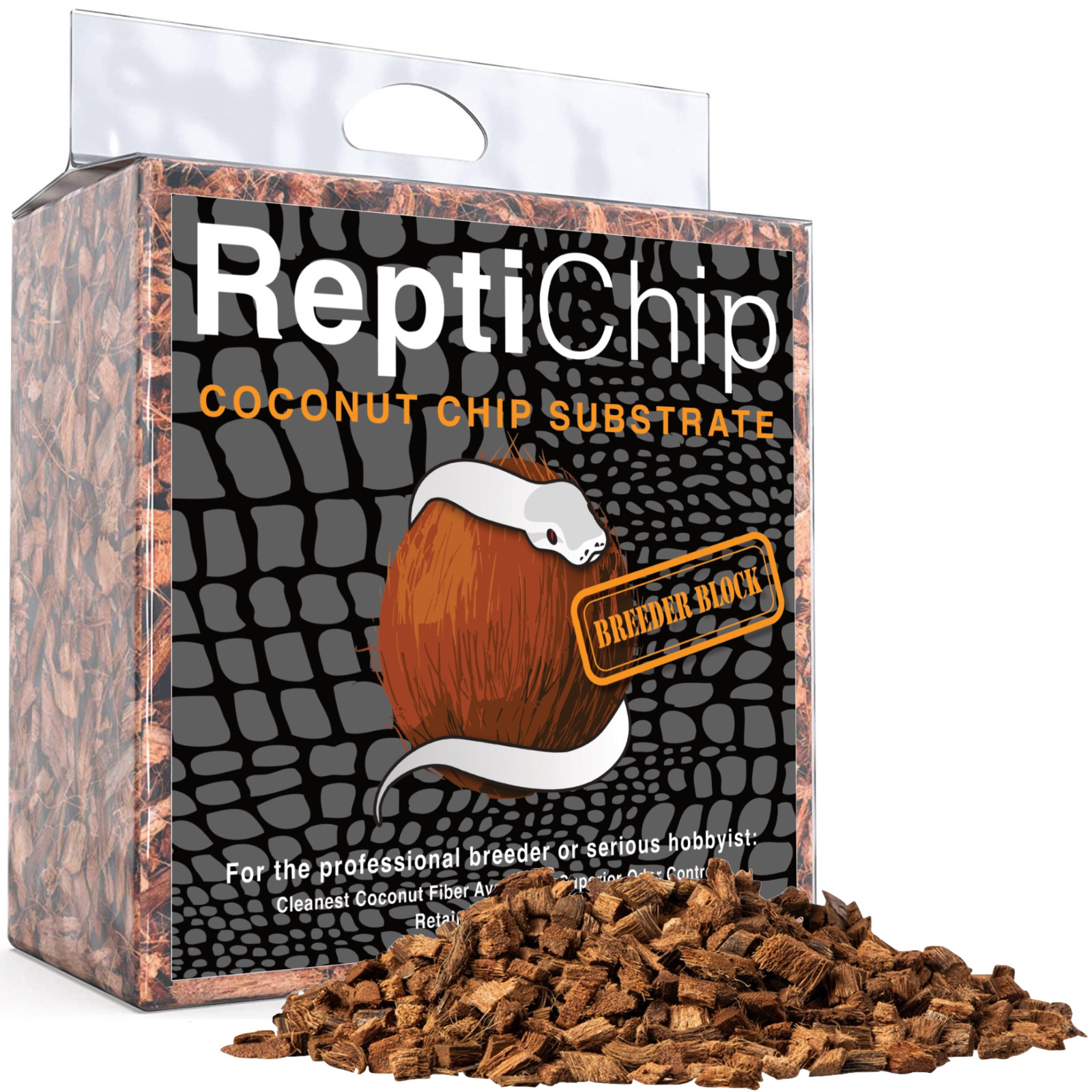

Photos from current listings. Actual item, color, and included accessories may vary.
Reptile Substrate Buying Guide
Reptile substrate is the bedding layer that controls humidity, burrowing depth, and waste management for captive reptiles, and the core trade-off is moisture retention versus dryness and impaction risk. Loose organic substrates (coconut chip, coco coir, cypress) hold humidity and support digging but must be species-appropriate, while arid species need dry, low-dust options and tropical species need moisture-retentive media. The decision rule: match substrate to the species' natural humidity and burrowing behavior first, then buy compressed blocks by volume and expand them yourself rather than paying for pre-expanded bags.
Key takeaways
- Coconut chip substrates like ReptiChip expand roughly 2-3x in volume when hydrated, so a 72-quart compressed block yields far more usable bedding than its dry size suggests.
- Chip size matters: medium coconut chips drain and resist packing, making them better for high-humidity tropical setups than fine coir, which compacts and holds water longer.
- Arid species such as bearded dragons and leopard geckos do best on solid or low-dust dry substrates; loose coconut chip is a humidity tool, not a default for dry-climate reptiles.
At a glance
- Category
- Reptile Substrate, Decor & Hides
- Last updated
- Nov 28, 2026
Current offers
Highlights
- Coconut chip substrates like ReptiChip expand roughly 2-3x in volume when hydrated, so a 72-quart compressed block yields far more usable bedding than its dry size suggests.
- Chip size matters: medium coconut chips drain and resist packing, making them better for high-humidity tropical setups than fine coir, which compacts and holds water longer.
- Arid species such as bearded dragons and leopard geckos do best on solid or low-dust dry substrates; loose coconut chip is a humidity tool, not a default for dry-climate reptiles.
- Organic coconut husk is mold-resistant relative to soil mixes but still requires spot-cleaning and full replacement every few weeks to prevent bacterial buildup.
Best use cases
- Best fit: tropical snakes, crested geckos, and humidity-dependent lizards — use expanded coconut chip at 2-4 inches depth to hold 60-80% humidity.
- Best fit: bearded dragons and leopard geckos — choose solid tile, paper, or a dry low-dust mix; skip damp coconut chip except in a humid hide box.
- Wrong fit: burrowing species like uromastyx or sand-skimming geckos on coconut chip — they need sand-clay or dry packed substrate, not loose husk.
- Wrong fit: hatchlings and juveniles of any species on loose chip — use paper towel first to avoid ingestion risk until the animal is established.
Buying tips
- Buy compressed blocks and expand them: a 72-quart block rehydrates to roughly double the loose volume, cutting cost per liter versus pre-bagged substrate.
- For a 40-gallon breeder (36x18 inches), plan 2-4 inches of substrate depth, which is roughly 2-4 cubic feet of loose material — about one expanded 72-quart block.
- Choose medium coconut chips over fine coir for drainage and airflow; reserve fine coir for mixing into humidity-retentive soil blends.
- Avoid dyed or scented substrates and calcium sand, which encourages ingestion; plain organic coconut husk or cypress is the safer standard.
Specs
| Substrate Material | Coconut chip / coir / cypress / sand-clay |
|---|---|
| Chip Grade | Fine coir vs medium chip vs chunky husk |
| Humidity Target | Arid 30-40% vs tropical 60-80% |
| Pack Format | Compressed block vs loose bag |
Related searches
What to check before buying
- Measure the enclosure floor and target substrate depth: length x width x depth in inches, then divide by 1728 for cubic feet needed.
- Confirm the species' required humidity range — 60-80% tropical versus 30-40% arid — before choosing a moisture-holding substrate.
- Check enclosure ventilation and drainage: high-humidity substrates in sealed glass tanks grow mold without cross-ventilation.
- Verify you have a soaking container and dechlorinated water to expand compressed blocks, plus a spare dry bin for storage.
FAQ
Data sources: eBay / Amazon listings and product attribute feeds. Updated Nov 28, 2026.
Some links on this page are affiliate links. If you buy after clicking one, we may earn a commission at no extra cost to you. This does not change which products appear here or their order. Affiliate disclosure.