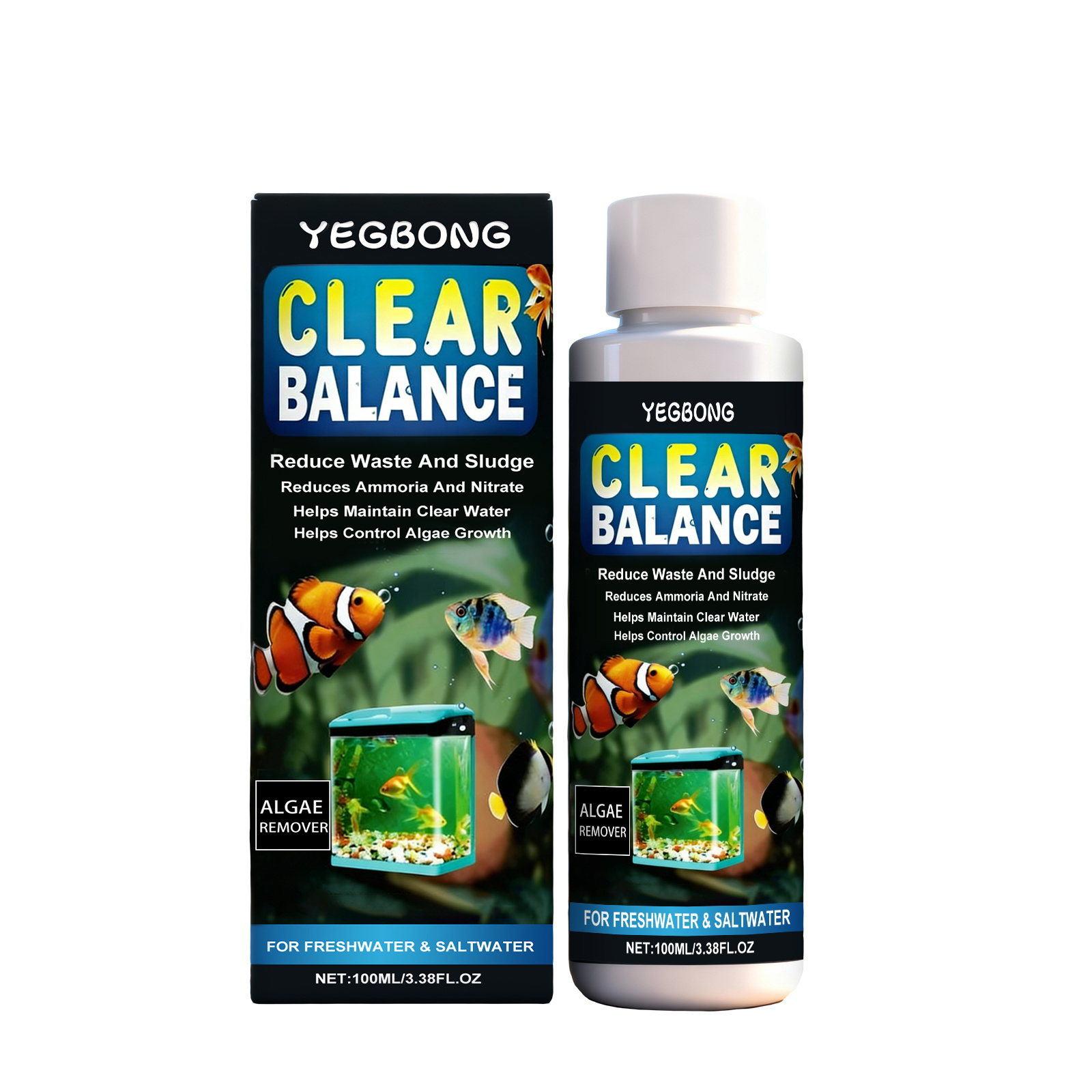

Photos from current listings. Actual item, color, and included accessories may vary.
Aquarium Fish Tank Cleaner Buying Guide
Aquarium fish tank cleaners are liquid additives that clarify water, remove algae, or neutralize contaminants—not mechanical scrubbers. The core trade-off is chemical action versus biological safety: clarifiers flocculate particles but can deplete oxygen, while algaecides kill growth but stress livestock and plants. Choose a product whose labeled active mechanism matches your specific problem (cloudiness, algae, or organic waste) and whose dosing is compatible with your tank volume and inhabitants.
Key takeaways
- Clarifying agents use flocculants (e.g., chitosan or polyacrylamide) to bind suspended particles for filter removal; they do not kill algae or remove dissolved organics.
- Algaecides typically rely on glutaraldehyde or copper compounds—glutaraldehyde degrades to oxygen-consuming byproducts, so surface agitation is mandatory during treatment.
- Biological cleaners contain live nitrifying or heterotrophic bacteria; they require dechlorinated water and a cycled filter to colonize, and are ineffective in chlorinated tap water.
At a glance
- Category
- Aquarium Water Testing & Treatment
- Last updated
- Nov 28, 2026
Current offers
Highlights
- Clarifying agents use flocculants (e.g., chitosan or polyacrylamide) to bind suspended particles for filter removal; they do not kill algae or remove dissolved organics.
- Algaecides typically rely on glutaraldehyde or copper compounds—glutaraldehyde degrades to oxygen-consuming byproducts, so surface agitation is mandatory during treatment.
- Biological cleaners contain live nitrifying or heterotrophic bacteria; they require dechlorinated water and a cycled filter to colonize, and are ineffective in chlorinated tap water.
- Dosing concentration varies widely: most retail liquids specify 5–10 mL per 10 gallons (38 L), but concentrated formulations can be 4x stronger—never assume a standard dropper rate.
Best use cases
- Best fit: a planted community tank with mild green water—use a flocculant clarifier and rinse filter floss daily; skip algaecides that harm invertebrates.
- Best fit: a goldfish or cichlid tank with persistent organic haze—choose a bacterial sludge remover and increase mechanical filtration; skip clarifiers that only mask particles.
- Wrong fit: a reef or shrimp tank with copper-sensitive invertebrates—avoid any copper-based algaecide entirely; use manual removal and UV sterilization instead.
- Wrong fit: an uncycled or medicated hospital tank—skip bacterial cleaners because antibiotics and chlorinated water kill the cultures; perform water changes instead.
Buying tips
- Match dose to net water volume, not tank rating: subtract 10–15% for substrate and decor, then calculate mL using the label’s gallons-per-mL ratio.
- For algae, distinguish green water (flocculant), string/hair algae (glutaraldehyde-based algaecide), and cyanobacteria (manual removal plus adjusted flow).
- Choose a bacterial cleaner with a stated CFU count (minimum 1×10^7 CFU/mL) and a sealed, date-stamped bottle; live cultures die off after opening.
- Avoid products listing copper sulfate for any tank containing snails, shrimp, or scaleless fish; even 0.1 ppm copper can be lethal to invertebrates.
Specs
| Active Mechanism | Flocculant / Algaecide / Bacteria |
|---|---|
| Dose Rate | 5–10 mL per 10 gal (38 L) |
| Invertebrate Safety | Copper-free required for shrimp/snails |
| Water Volume Basis | Net gallons after 10–15% displacement |
Related searches
What to check before buying
- Measure net water volume: length × width × height in inches ÷ 231 = gross gallons; subtract 10–15% for displacement.
- Confirm filter type: flocculants require fine mechanical media (filter floss or 100-micron pads) to trap clumps; without it, particles recirculate.
- Test baseline water: ammonia, nitrite, nitrate, and pH—clarifiers and algaecides do not fix ammonia or nitrite spikes and can worsen oxygen depletion.
- Verify livestock sensitivity: check for copper warnings on any product if you keep shrimp, snails, or scaleless fish; choose bacterial or flocculant alternatives.
FAQ
Data sources: eBay / Amazon listings and product attribute feeds. Updated Nov 28, 2026.
Some links on this page are affiliate links. If you buy after clicking one, we may earn a commission at no extra cost to you. This does not change which products appear here or their order. Affiliate disclosure.