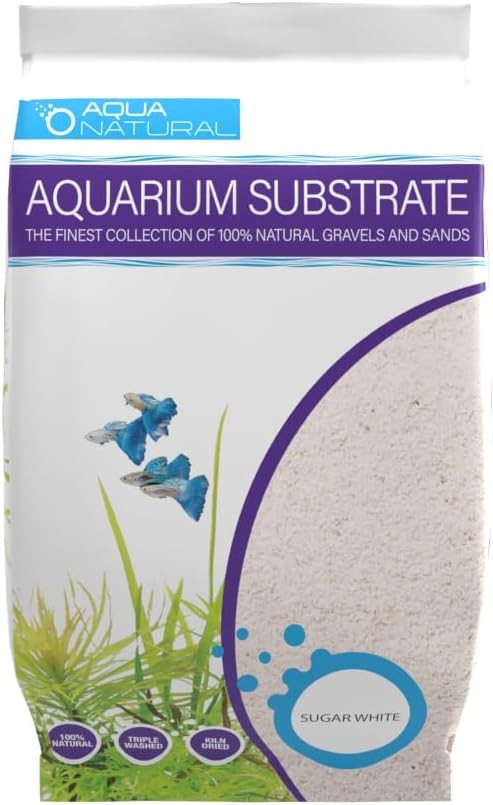

Photos from current listings. Actual item, color, and included accessories may vary.
Natural Sand Buying Guide
Natural sand aquarium substrate is a inert, granular bottom layer chosen for its appearance and compatibility with bottom-dwelling fish and live plants. The core trade-off is between fine, cosmetically clean sand that compacts and lacks nutrients versus coarser, mineral-rich sand that supports rooting but may cloud water or alter pH. Choose washed, graded natural sand with a narrow grain size for display tanks, and avoid sharp or unwashed construction sand that traps debris and harms gill-feeding species.
Key takeaways
- Grain size 0.5–2 mm suits most community tanks; finer sand compacts and risks anaerobic pockets, coarser grades suit cichlids and digging species.
- Inert silica or quartz sand does not buffer pH or hardness; aragonite or coral-based sands raise carbonate hardness and suit African cichlids or marine setups.
- Washed, kiln-dried sand reduces initial clouding; unwashed construction sand carries fines and organic matter that require repeated rinsing before use.
At a glance
- Category
- Aquarium Substrate, Plants & Decor
- Last updated
- Nov 27, 2026
Current offers
Highlights
- Grain size 0.5–2 mm suits most community tanks; finer sand compacts and risks anaerobic pockets, coarser grades suit cichlids and digging species.
- Inert silica or quartz sand does not buffer pH or hardness; aragonite or coral-based sands raise carbonate hardness and suit African cichlids or marine setups.
- Washed, kiln-dried sand reduces initial clouding; unwashed construction sand carries fines and organic matter that require repeated rinsing before use.
- Sugar-white and off-white sands reflect light and showcase fish color; dark sands reduce glare and hide detritus but absorb more heat from lighting.
Best use cases
- Best fit: community tanks with corydoras, loaches, or shrimp—pick rounded 0.5–1 mm natural sand to protect barbels and gill filaments during sifting.
- Best fit: planted tanks needing root support—choose a 1–2 mm coarse sand layer capped over a nutrient-rich base, or a mineralized sand that holds root tabs without floating.
- Wrong fit: high-flow African cichlid or marine tanks—skip inert fine sand and use aragonite or crushed coral to maintain carbonate hardness and stable pH.
- Wrong fit: bare-bottom quarantine or breeding racks—skip decorative sand entirely; use glass-bottom or egg-crate to simplify sterilization and egg collection.
Buying tips
- Calculate volume: length × width × desired depth in cm ÷ 1000 gives liters; 2–3 cm depth suits most tanks, while 5 cm or more requires a coarse grade or periodic stirring to prevent anaerobic compaction.
- Choose rounded grains over angular or sharp sand; rolled natural quartz is safer for bottom-sitters and reduces abrasion on plant stems and fish fins.
- Verify inertness before use: place a sample in vinegar—fizzing indicates carbonate content that will raise pH and hardness, which is wrong for soft-water Amazonian species.
- Match color to lighting and stock: off-white and sugar-white sands brighten the tank and show color, while tan or dark natural sands reduce glare and hide waste between cleanings.
Specs
| Grain Size | 0.5–2 mm (fine to medium) |
|---|---|
| Mineral Type | Inert silica/quartz vs carbonate |
| Color | Off-white, sugar-white, tan, dark |
| Prep | Pre-washed vs unwashed; rinse required |
Related searches
What to check before buying
- Measure tank footprint and rim to confirm the bag volume reaches your target 2–3 cm depth without overfilling; a 10 lb bag covers roughly a 10-gallon footprint at shallow depth.
- Confirm your filter intake sits above the sand line or add a pre-filter sponge to prevent fine grains from entering the impeller.
- Check livestock requirements: soft-water fish and shrimp need inert sand, while shell-dwellers and African cichlids need carbonate-based sand or crushed coral.
- Plan rinsing space and drying area; washed sand still needs a bucket rinse until runoff clears, and unwashed sand may need multiple rinses before it stops clouding.
FAQ
Data sources: eBay / Amazon listings and product attribute feeds. Updated Nov 27, 2026.
Some links on this page are affiliate links. If you buy after clicking one, we may earn a commission at no extra cost to you. This does not change which products appear here or their order. Affiliate disclosure.