
Photos from current listings. Actual item, color, and included accessories may vary.
Heavy Dog Bowl Buying Guide
A heavy dog bowl is a weight-anchored or elevated feeding station designed to stop sliding, tipping, and gulping in large breeds. The core trade-off is mass versus manageability: heavier steel or stone bases resist nosing and spillage but complicate cleaning and relocation, while lightweight plastic bowls need a weighted rim or locking frame to stay put. The decision rule is simple: buy a bowl whose dry weight plus non-slip base exceeds your dog's push force, and skip any feeder that relies on suction cups or thin plastic for large-dog stability.
Median $48.99
Key takeaways
- Elevated stations with 17–23 inch frame heights align the bowl rim with a large dog's lower neck, reducing swallowed air and joint strain versus floor-level bowls.
- Stainless steel bowls resist bacteria and odors better than plastic, which scratches and harbors biofilm; weighted stainless bases add 2–5 lb of tip resistance.
- Wooden elevated frames with double-bowl cutouts distribute load across a wide footprint, preventing the station from sliding on tile or hardwood.
At a glance
- Category
- Pet Bowls & Feeders
- Last updated
- Nov 27, 2026
Current offers
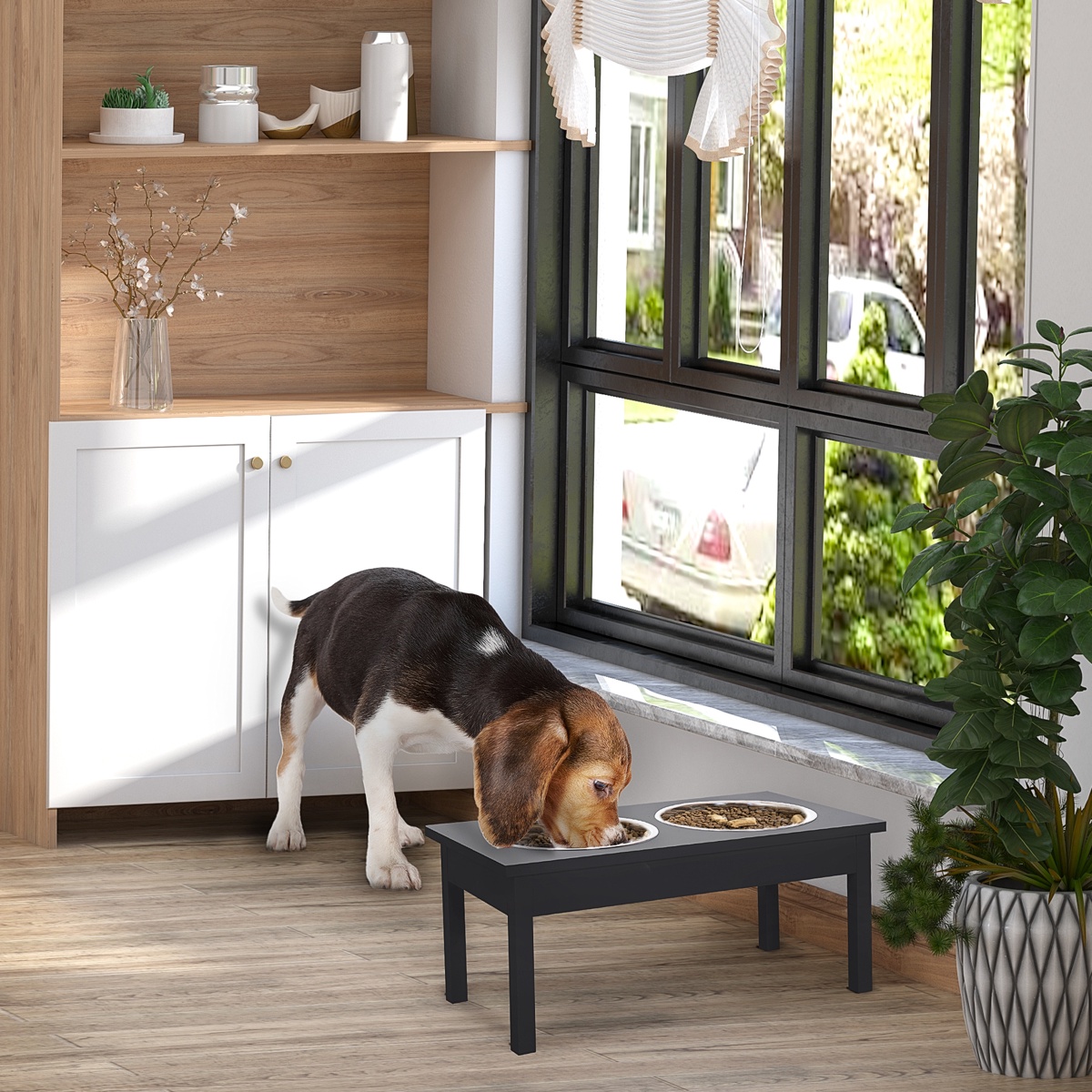 23" Wooden Heavy Duty Dog Food Bowls Pet Elevated Feeding Station -Black$47.99View on Mallflare
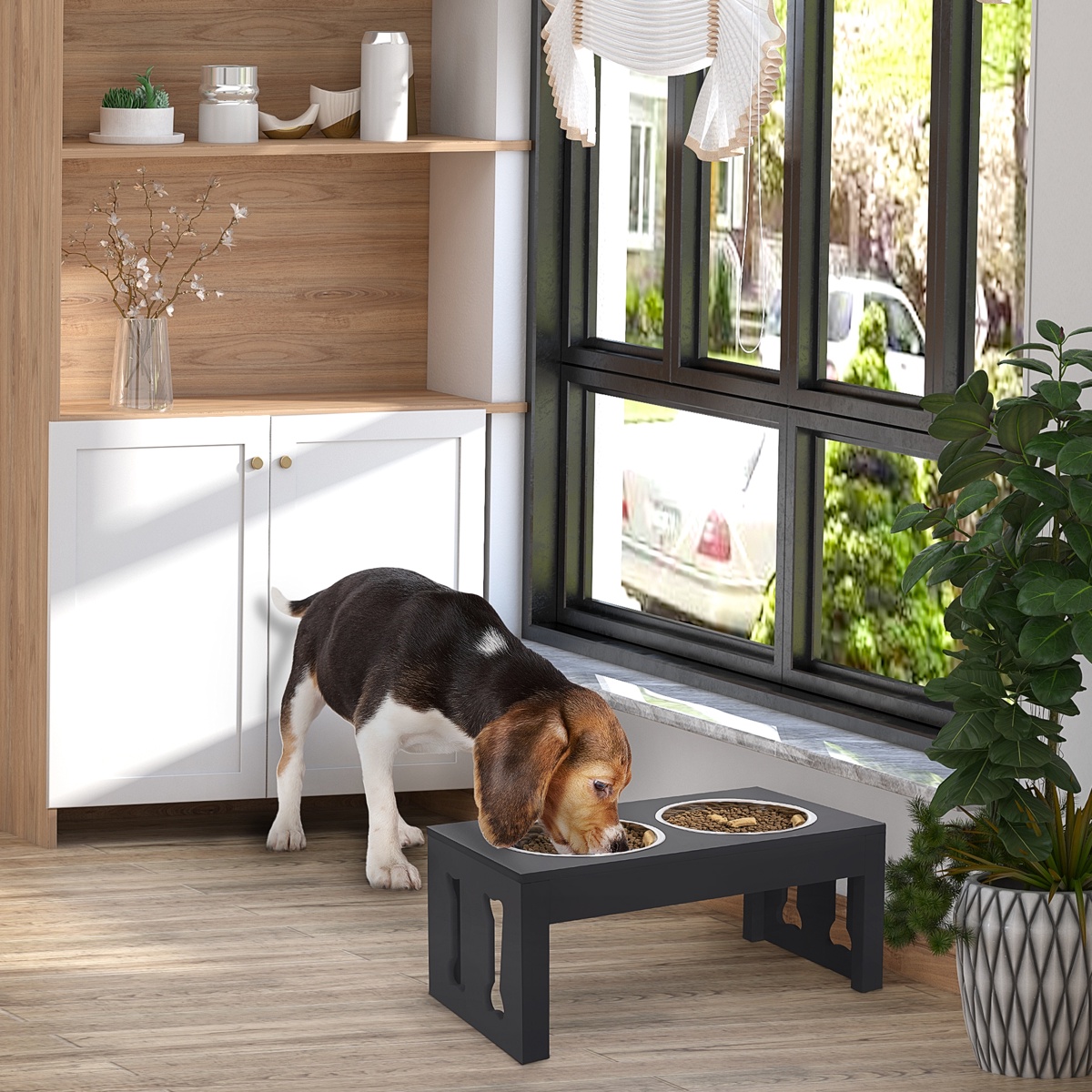 23" Modern Decorative Raised Dog Bowls, Wooden Heavy Duty Pet Food and Water Bowl, Elevated Feeding Station, Black$47.99View on Mallflare
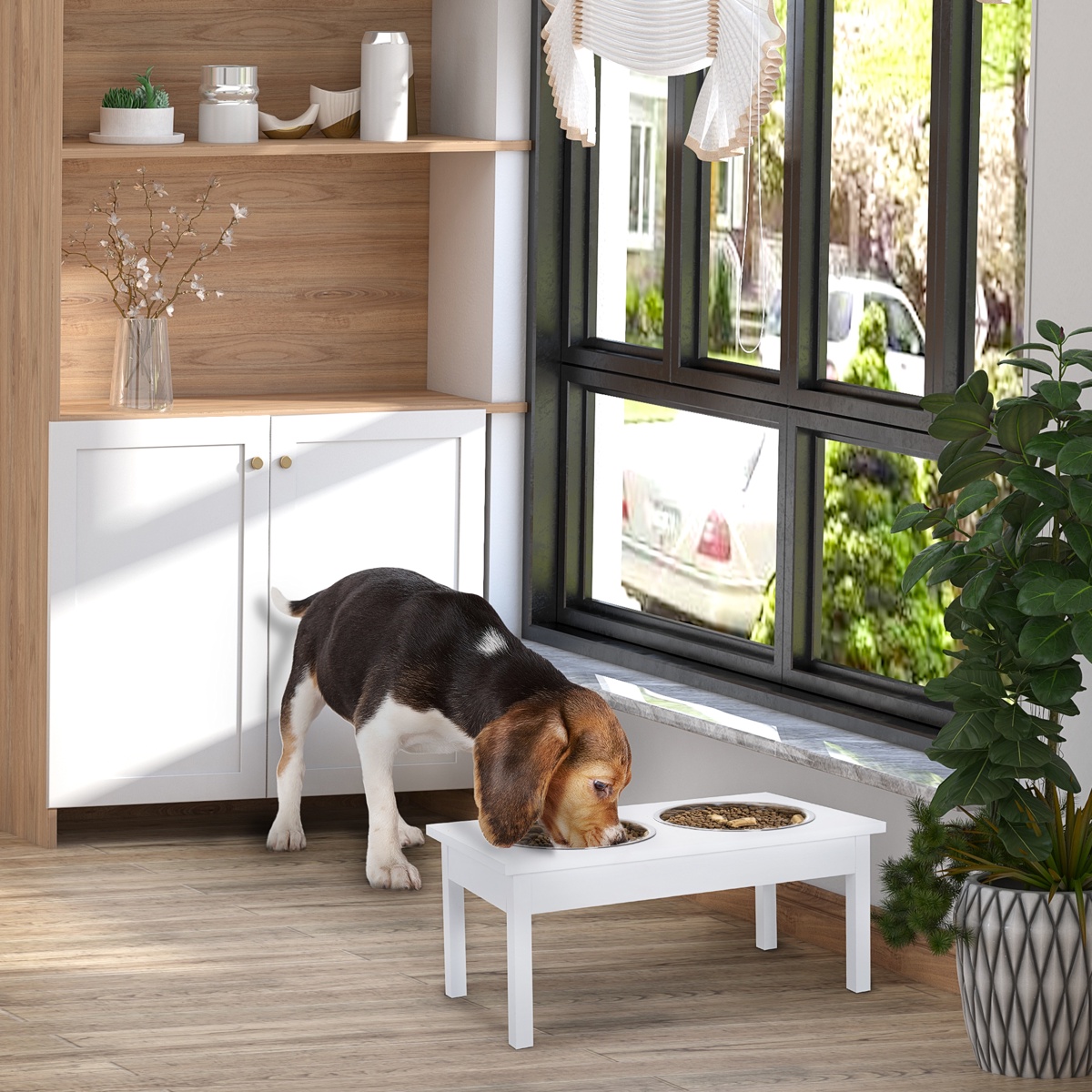 23" Wooden Heavy Duty Dog Food Bowls Pet Elevated Feeding Station -White$48.99View on Mallflare
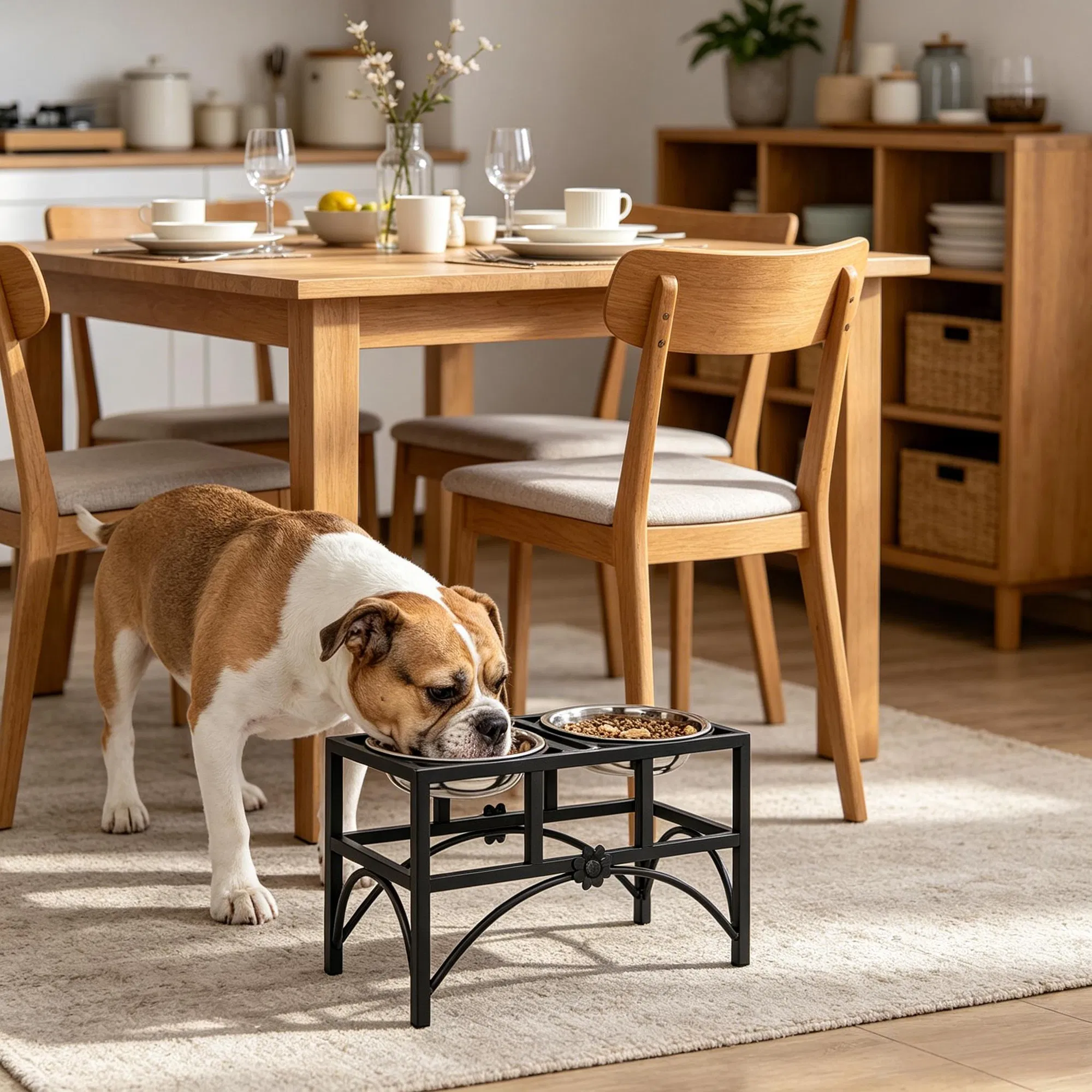 Heavy Duty Double Dog Food Bowl 17 Inch Stainless Steel Elevated Pet Feeding Station for Dogs$60.99View on Mallflare
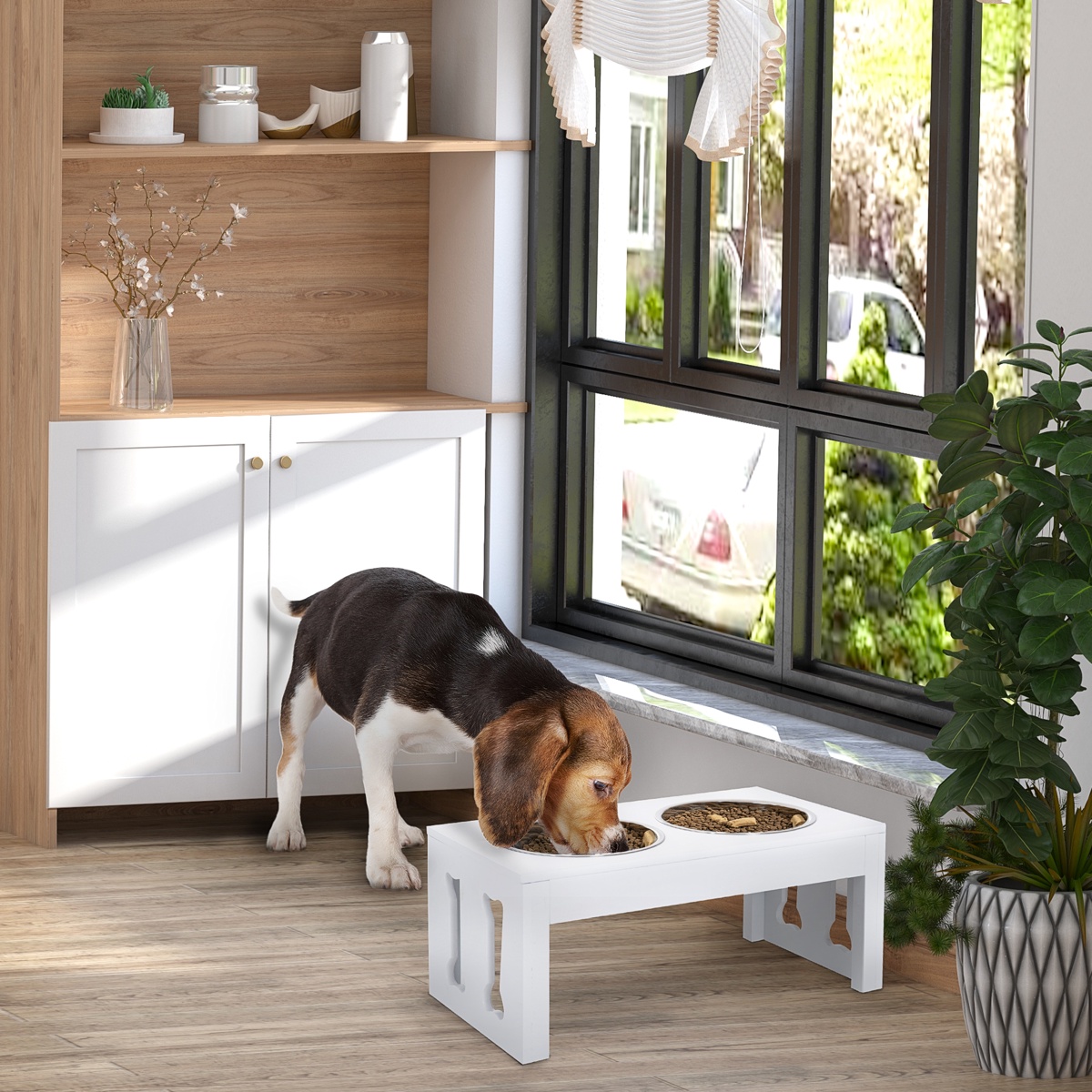 23" Modern Decorative Raised Dog Bowls, Wooden Heavy Duty Pet Food And Water Bowl, Elevated Feeding Station, White$78.99View on Mallflare
Highlights
- Elevated stations with 17–23 inch frame heights align the bowl rim with a large dog's lower neck, reducing swallowed air and joint strain versus floor-level bowls.
- Stainless steel bowls resist bacteria and odors better than plastic, which scratches and harbors biofilm; weighted stainless bases add 2–5 lb of tip resistance.
- Wooden elevated frames with double-bowl cutouts distribute load across a wide footprint, preventing the station from sliding on tile or hardwood.
- Non-slip rubber gaskets and weighted rims are the two mechanisms that keep a bowl stationary; plastic bowls without either slide freely on smooth floors.
Best use cases
- Best fit: large-breed owners with tile or hardwood floors — choose a 17–23 inch elevated wooden or stainless station with rubber feet to stop sliding and improve feeding posture.
- Best fit: fast eaters and gulpers — pick a heavy stainless bowl set in a weighted frame; the mass slows nosing and the elevated height reduces air intake.
- Wrong fit: travel, crating, or multi-dog households needing portability — skip heavy wooden stations and choose a lightweight stainless bowl with a removable rubber base.
- Wrong fit: small or toy breeds — a 23 inch elevated station is too tall; choose a low-profile weighted bowl or a 6–10 inch raised feeder instead.
Buying tips
- Match frame height to your dog's leg length: the bowl rim should sit at roughly elbow height, so a 17 inch station suits medium-large dogs and 23 inch suits giant breeds.
- Choose 304 stainless steel bowls over plastic for durability and hygiene; check that the bowl gauge is thick enough to resist denting under a large dog's paw.
- For plastic bowls, require a weighted base or locking rim of at least 2 lb; unweighted plastic bowls slide and tip under enthusiastic eaters.
- Confirm the station footprint is wider than your dog's stance; a base narrower than the chest width will tip when the dog pushes forward to eat.
Specs
| Bowl Material | 304 stainless steel / BPA-free plastic |
|---|---|
| Station Height | 6–10 in low / 17–23 in elevated |
| Bowl Capacity | 4–10 cups per bowl |
| Anti-Slip Base | Rubber gasket or weighted rim |
Related searches
What to check before buying
- Measure your dog's elbow height standing on the feeding surface; select a station whose bowl rim lands within 2 inches of that height.
- Measure the floor space where the station will sit; ensure the base footprint clears walls and mats so the dog can approach from the front.
- Check bowl capacity against your dog's daily portion; large breeds typically need 6–10 cup capacity per bowl to avoid refills.
- Verify the bowls are dishwasher-safe and removable from the frame for daily cleaning and sanitation.
FAQ
Data sources: eBay / Amazon listings and product attribute feeds. Updated Nov 27, 2026.
Some links on this page are affiliate links. If you buy after clicking one, we may earn a commission at no extra cost to you. This does not change which products appear here or their order. Affiliate disclosure.