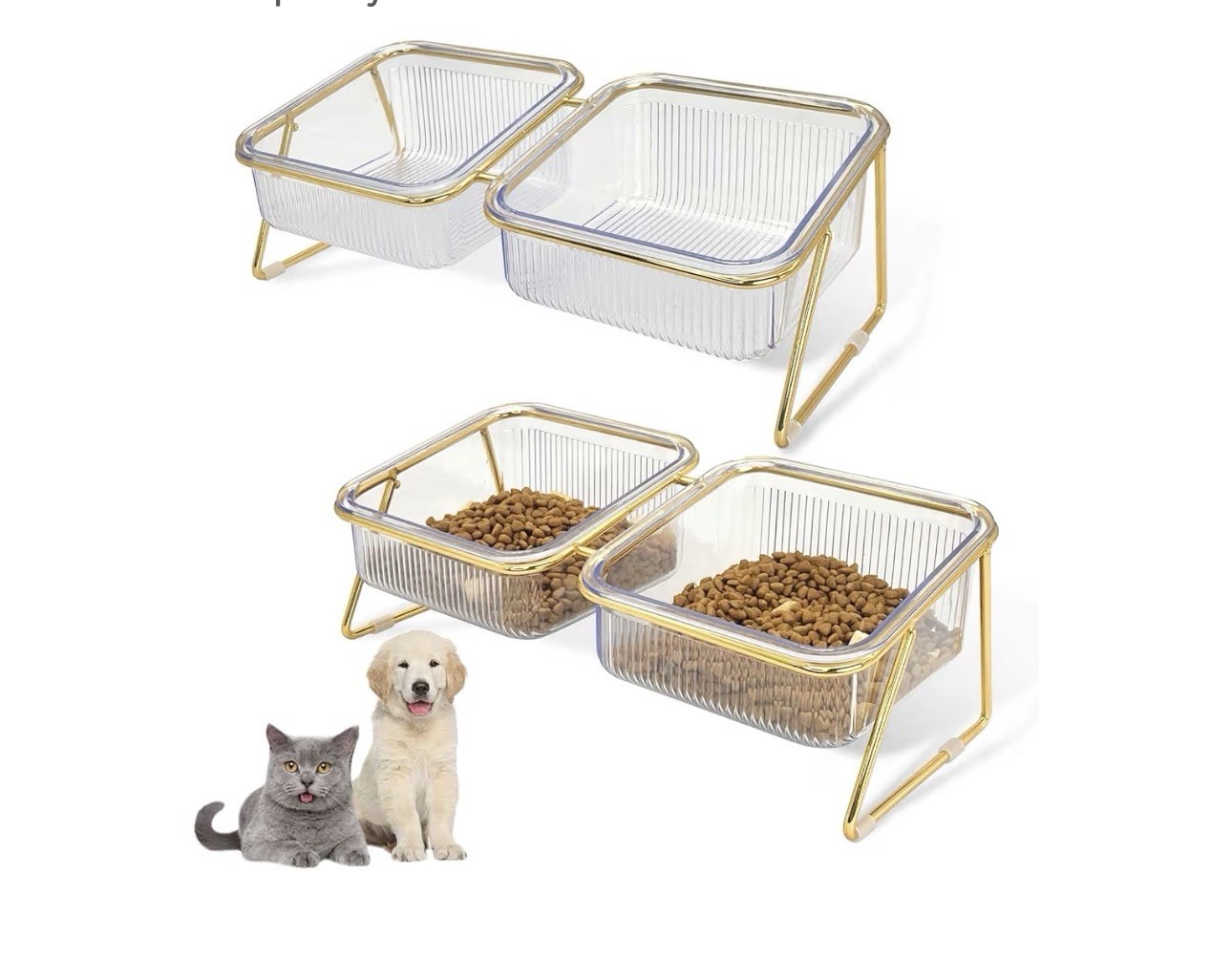

Photos from current listings. Actual item, color, and included accessories may vary.
Elevated Cat Bowl Buying Guide
Elevated cat bowls raise food and water to a height that reduces neck strain and improves digestion for cats, especially seniors or those with arthritis. The main trade-off is between adjustability and stability: fixed-height bowls are sturdy but fit only one cat size, while tilted or adjustable stands ease reach but can wobble or spill if the base is too light. Choose a stand whose bowl rim sits roughly at chest height for your cat, with a wide non-slip base and dishwasher-safe bowls, and skip ultra-light decorative risers that slide or tip.
Median $13.61
Key takeaways
- Bowl rim height should land near the cat's lower chest—typically 3–6 inches for average adults, 2–4 inches for kittens and seniors.
- Stainless steel bowls (304 food grade) resist bacteria and odors; ceramic is heavy and stable but chips; plastic scratches and harbors oils.
- A 15° tilted bowl improves reach for flat-faced or arthritic cats but reduces capacity and can spill if the stand lacks a weighted base.
At a glance
- Category
- Pet Bowls & Feeders
- Last updated
- Nov 28, 2026
Current offers
Highlights
- Bowl rim height should land near the cat's lower chest—typically 3–6 inches for average adults, 2–4 inches for kittens and seniors.
- Stainless steel bowls (304 food grade) resist bacteria and odors; ceramic is heavy and stable but chips; plastic scratches and harbors oils.
- A 15° tilted bowl improves reach for flat-faced or arthritic cats but reduces capacity and can spill if the stand lacks a weighted base.
- Wide, rubber-footed bases resist sliding; double-bowl stands need at least 1–2 inches of spacing so whiskers don't brush the sides.
Best use cases
- Best for seniors or arthritic cats: pick a low fixed stand (3–4 inch rim) with shallow stainless bowls and a non-slip base; skip tall raised feeders meant for large dogs.
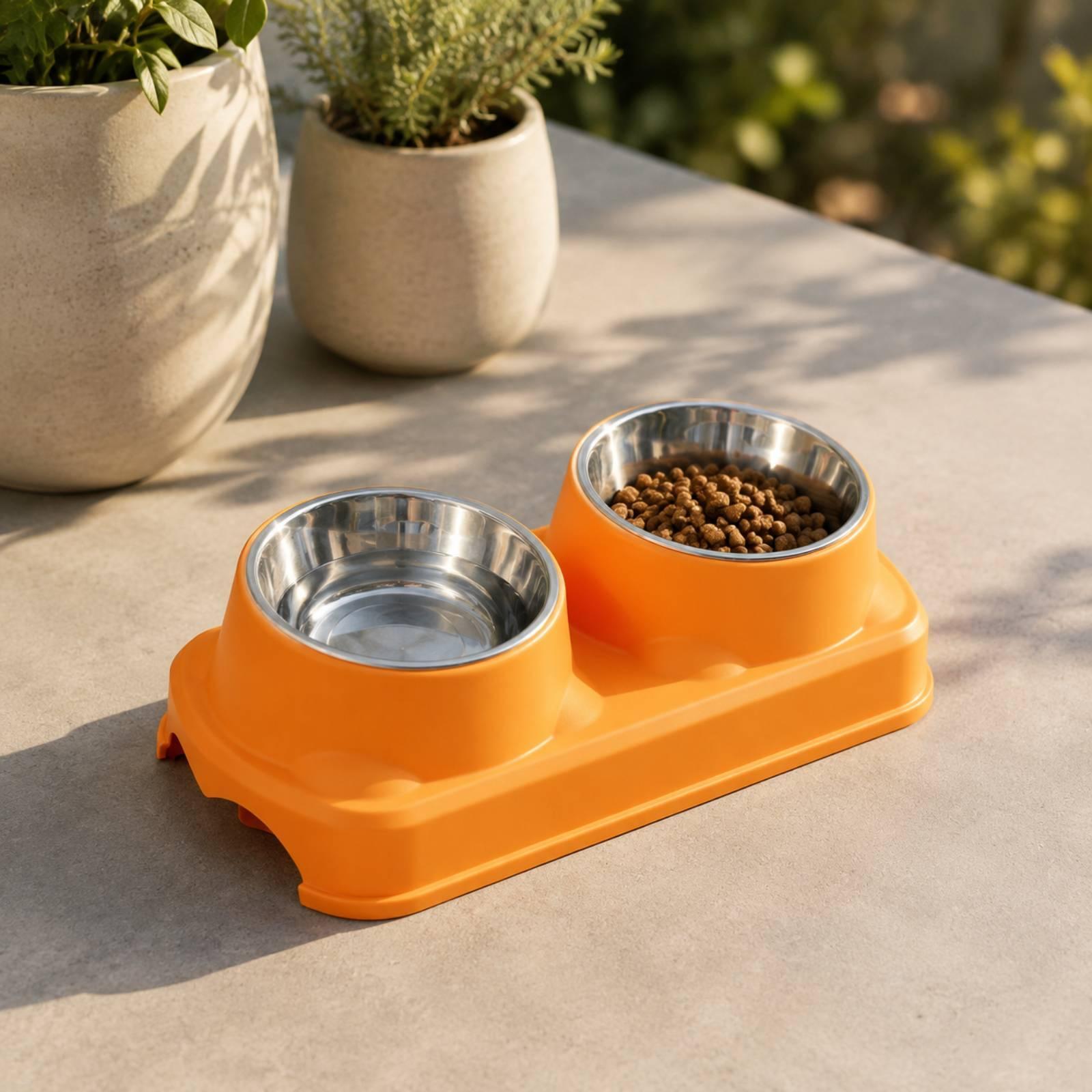
- Best for multi-cat homes: choose a double-bowl stand with separate removable stainless inserts so you can feed wet and dry simultaneously and wash daily; skip connected twin bowls that can't be separated.
- Best for flat-faced breeds (Persian, Scottish Fold): select a 15° tilted bowl with a wide lip and weighted stand; skip deep narrow bowls that force whisker contact.
- Wrong fit for cats that eat fast or gulp: elevated bowls can increase intake speed—skip if your cat has a history of vomiting; a shallow puzzle feeder at floor level is safer.
Buying tips
- Measure from floor to your cat's lower chest while standing; choose a stand whose bowl rim sits within 1 inch of that height, not above the shoulder.
- Prefer 304 stainless steel or glazed ceramic bowls over plastic; plastic scratches and can cause feline acne around the chin.
- Check the stand footprint: at least 8×8 inches for a single bowl and 14×8 inches for a double, with rubber feet on all corners.
- For tilted bowls, confirm the tilt is 15° or less and the bowl locks into the stand; steeper angles spill water and kibble.
Specs
| Bowl Material | 304 stainless / ceramic / plastic |
|---|---|
| Rim Height | 2-6 in (chest-level) |
| Tilt Angle | 0° flat / 15° tilted |
| Bowl Capacity | 5-12 oz per bowl |
Related searches
What to check before buying
- Measure your cat's chest height (floor to sternum) and compare to the stand's rim height before buying.
- Verify bowl capacity: 5–8 oz per meal for dry food and 8–12 oz for water; double bowls should each hold at least 6 oz.
- Check your floor type—tile and hardwood need rubber feet; carpet may require a wider base to prevent tipping.
- Confirm bowls are top-rack dishwasher safe and replacement bowls are sold separately for long-term use.
FAQ
Data sources: eBay / Amazon listings and product attribute feeds. Updated Nov 28, 2026.
Some links on this page are affiliate links. If you buy after clicking one, we may earn a commission at no extra cost to you. This does not change which products appear here or their order. Affiliate disclosure.