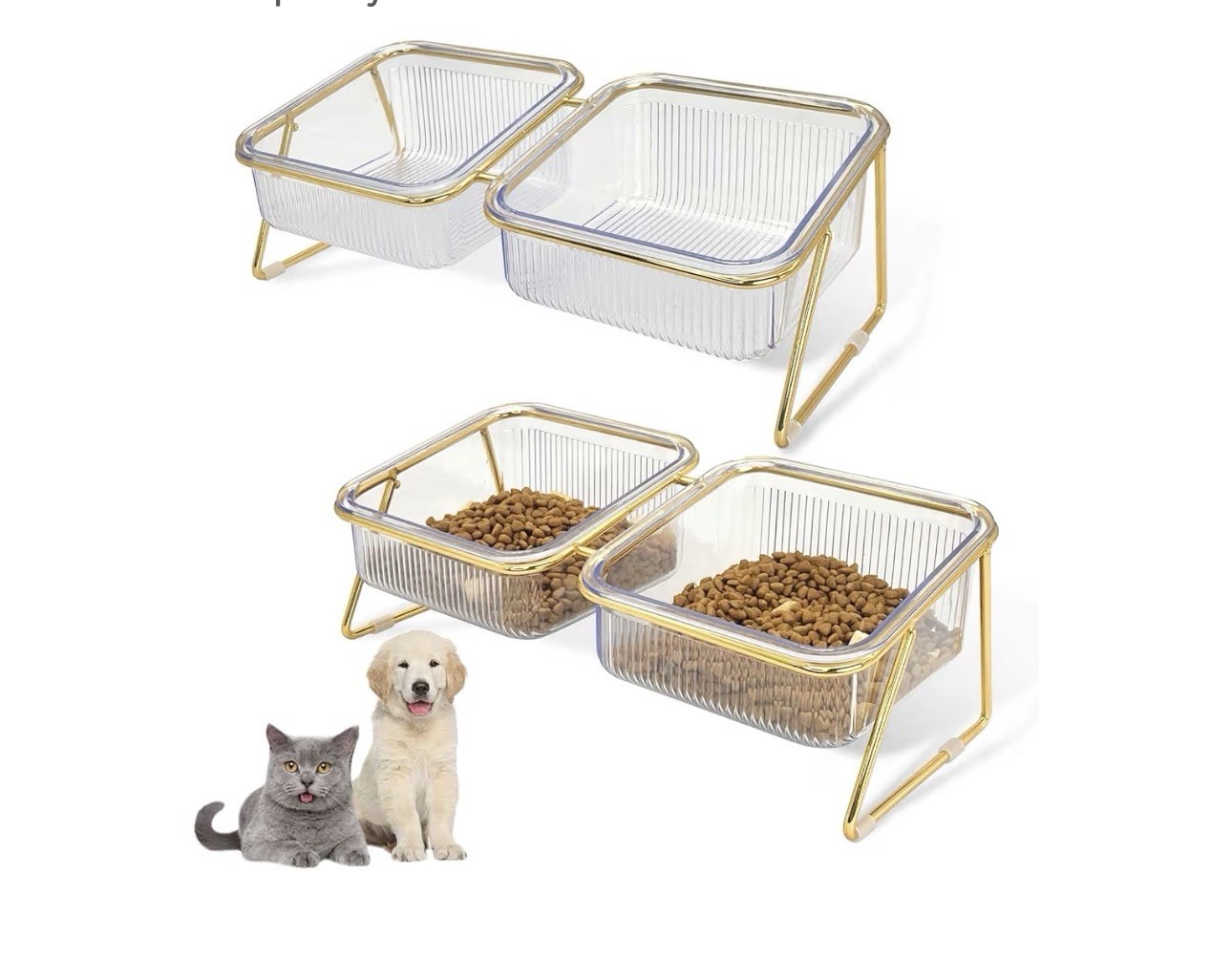

Photos from current listings. Actual item, color, and included accessories may vary.
Elevated Tilted Cat Bowl Buying Guide
Elevated tilted cat bowls combine a raised feeding platform with an angled basin (typically 15–20°) to reduce neck strain and improve digestion for cats. The decisive trade-off is between stable, easy-clean construction (ceramic or stainless in a weighted frame) and flimsy plastic tilts that slide, tip, or harbor bacteria. Buy ceramic or 304 stainless with a non-slip base and a wide mouth; skip thin acrylic or unweighted plastic tilts.
Key takeaways
- Tilt angle of 15–20° is the functional sweet spot: it shortens the reach to the food while keeping kibble from spilling over the rim.
- Bowl material decides hygiene and durability: glazed ceramic and 304 stainless resist scratching and biofilm; acrylic and PP plastic scratch and retain oils.
- A weighted base or rubber feet are mandatory — a tilted bowl shifts the cat's center of pressure forward and will slide without friction.
At a glance
- Category
- Pet Bowls & Feeders
- Last updated
- Nov 28, 2026
Current offers
Highlights
- Tilt angle of 15–20° is the functional sweet spot: it shortens the reach to the food while keeping kibble from spilling over the rim.
- Bowl material decides hygiene and durability: glazed ceramic and 304 stainless resist scratching and biofilm; acrylic and PP plastic scratch and retain oils.
- A weighted base or rubber feet are mandatory — a tilted bowl shifts the cat's center of pressure forward and will slide without friction.
- Double-bowl configurations suit wet/dry or food/water pairs, but each basin should be individually removable for daily washing.
Best use cases
- Best fit: senior cats, flat-faced breeds, or cats that vomit after fast eating — pick a 15° ceramic tilt with a wide, shallow basin and non-slip feet.
- Best fit: multi-cat households needing food and water together — choose a double-bowl tilted stand with two removable 304 stainless inserts.
- Wrong fit: kittens or cats that paw and drag bowls — a tall tilted stand tips easily; use a low-profile weighted bowl until the cat outgrows the behavior.
- Wrong fit: raw or wet-food-only diets left out for hours — unglazed ceramic and porous plastic absorb odor; choose glazed ceramic or stainless and wash daily.
Buying tips
- Match bowl rim height to your cat's chest: standing height should put the rim roughly at the lower chest so the cat does not stretch its neck down or up.
- For the 15° tilt, the basin's back rim should sit 2–3 cm higher than the front; if the stand offers no angle adjustment, confirm the fixed tilt is between 15° and 20°.
- Choose 304 (18/8) stainless or fully vitrified glazed ceramic — both are dishwasher-safe and non-porous; avoid painted or printed interiors where glaze can chip.
- Check base footprint: a tilted stand needs a base at least as wide as the bowl diameter plus 2 cm to resist tipping when the cat pushes forward.
Specs
| Tilt Angle | 15–20° fixed / adjustable |
|---|---|
| Bowl Material | Glazed ceramic / 304 stainless |
| Base Stability | Weighted base + rubber feet |
| Basin Capacity | 200–350 ml per bowl |
Related searches
What to check before buying
- Measure your cat's standing chest height and compare it to the stand's rim height — the rim should land at lower-chest level, not at the throat or floor.
- Confirm the bowl capacity: 200–350 ml per basin suits most adult cats; larger basins suit multi-cat or dry-food grazing.
- Verify the base has rubber or silicone feet and that the stand's footprint fits your feeding mat without overhanging tile grout lines or carpet edges.
- Check whether the bowls are top-rack dishwasher safe and whether replacement inserts are sold separately for long-term use.
FAQ
Data sources: eBay / Amazon listings and product attribute feeds. Updated Nov 28, 2026.
Some links on this page are affiliate links. If you buy after clicking one, we may earn a commission at no extra cost to you. This does not change which products appear here or their order. Affiliate disclosure.