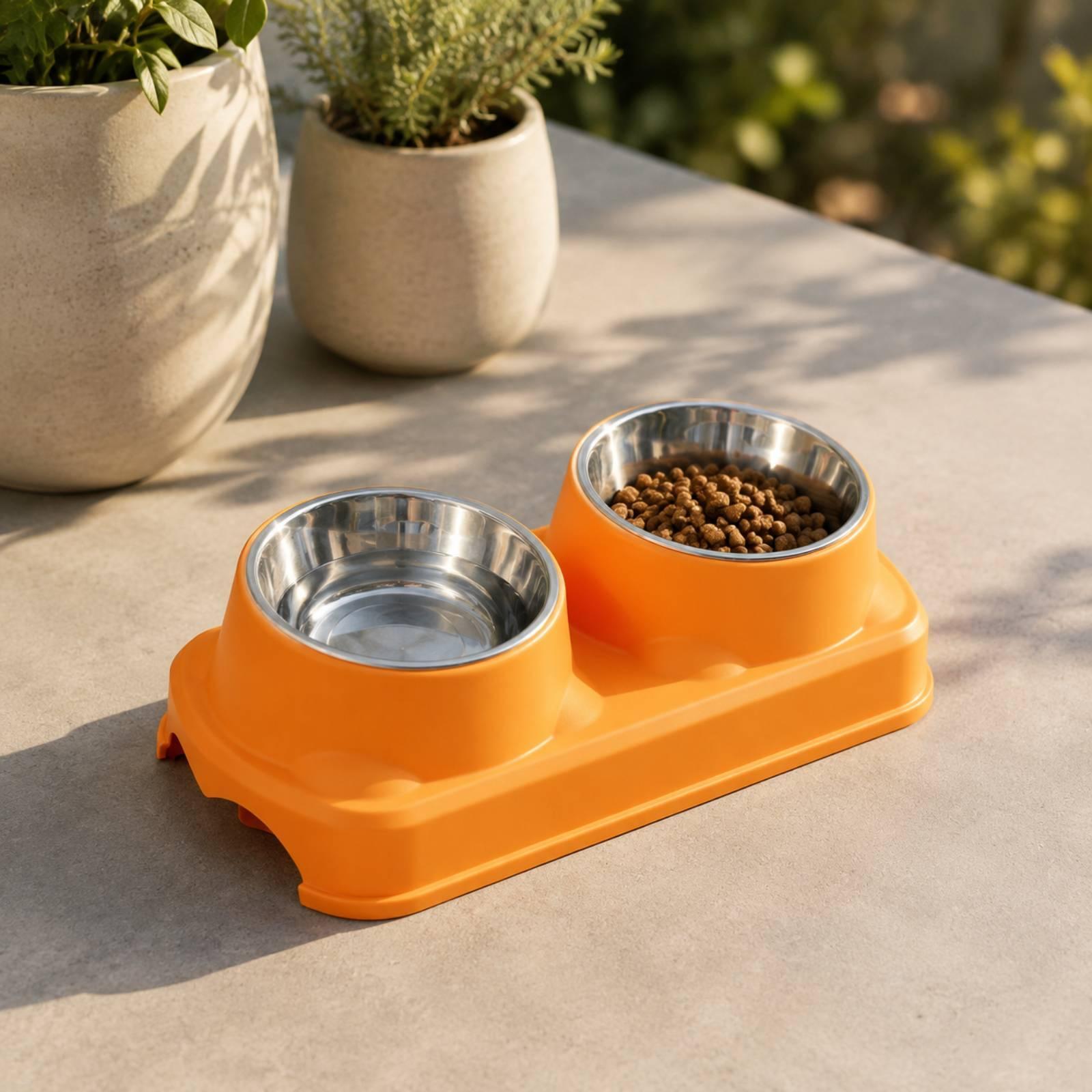

Photos from current listings. Actual item, color, and included accessories may vary.
Elevated Stainless Steel Cat Bowl Buying Guide
Elevated stainless steel cat bowls pair a raised eating height with a corrosion-resistant, bacteria-shedding metal surface, solving two separate problems: neck strain from floor-level bowls and plastic odor/biofilm buildup. The defining trade-off is between a thin stamped bowl on a lightweight frame and a heavier-gauge bowl seated in a stable, chew-resistant stand. Buyers should pick a bowl with a 304 (18/8) stainless basin at least 0.6 mm thick and a stand weighted or wide enough that a cat cannot tip it; thin 201-grade bowls in plastic frames are the compromise tier.
Key takeaways
- 304 (18/8) stainless steel resists pitting and odor; 201-grade and 'stainless-look' zinc alloys rust at the waterline and are the main downgrade.
- Bowl gauge matters: 0.6–0.8 mm press-formed basins hold shape through dishwashing, while under-0.5 mm stamped bowls dent and warp over time.
- Elevation of roughly 3–6 inches (7–15 cm) suits most adult cats; adjustable-leg stands cover kittens through seniors by changing tilt and height.
At a glance
- Category
- Pet Bowls & Feeders
- Last updated
- Nov 28, 2026
Current offers
Highlights
- 304 (18/8) stainless steel resists pitting and odor; 201-grade and 'stainless-look' zinc alloys rust at the waterline and are the main downgrade.
- Bowl gauge matters: 0.6–0.8 mm press-formed basins hold shape through dishwashing, while under-0.5 mm stamped bowls dent and warp over time.
- Elevation of roughly 3–6 inches (7–15 cm) suits most adult cats; adjustable-leg stands cover kittens through seniors by changing tilt and height.
- A wide, low-center-of-gravity base or non-skid feet prevents 'bowl surfing' — the common failure of lightweight raised feeders with eager eaters.
Best use cases
- Best fit: adult or senior cats with arthritis or whisker fatigue — choose a 3–5 inch raised single or double bowl in 304 stainless with a tilted basin.
- Best fit: multi-cat homes — pick a double-bowl stand with separate removable basins so one can be washed while the other is in use.
- Wrong fit: kittens under about 4 months or flat-faced (brachycephalic) breeds — skip tall stands and use a shallow, low-profile bowl instead.
- Wrong fit: cats that chew or flip bowls — avoid thin stamped basins and plastic clips; choose a weighted ceramic-base or bolted stainless stand.
Buying tips
- Confirm the steel grade: 304/18-8 is food-safe and dishwasher-safe; 201 or unmarked 'stainless' is the budget tier and pits faster.
- Measure bowl depth against your cat's muzzle: shallow 1.5–2 inch basins suit flat-faced breeds; deep 2.5–3 inch basins suit long-nosed cats.
- Match stand footprint to your cat's shoulder width — a base at least 1.5× the bowl diameter stops tipping during enthusiastic eating.
- For wet food, choose a removable basin with rounded interior corners; square-seamed bowls trap residue and are harder to sanitize.
Specs
| Steel Grade | 304 (18/8) vs 201 alloy |
|---|---|
| Bowl Gauge | 0.6–0.8 mm food-grade |
| Elevation Height | 3–6 in (7–15 cm) adjustable |
| Base Stability | Weighted/non-skid wide base |
Related searches
What to check before buying
- Measure your cat's elbow-to-floor height while standing; the bowl rim should sit near the lower chest, usually 3–6 inches for adults.
- Check the feeding spot: a non-skid base needs a flat, non-carpeted surface; carpeted areas require weighted feet or a heavier stand.
- Verify the bowl is top-rack dishwasher safe and the stand material (powder-coated steel, bamboo, or ceramic) won't swell or rust.
- Confirm replacement basins are sold separately or the bowl diameter matches standard 5–6 inch inserts so you aren't locked into one unit.
FAQ
Data sources: eBay / Amazon listings and product attribute feeds. Updated Nov 28, 2026.
Some links on this page are affiliate links. If you buy after clicking one, we may earn a commission at no extra cost to you. This does not change which products appear here or their order. Affiliate disclosure.