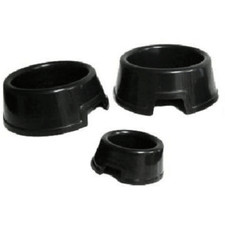

Photos from current listings. Actual item, color, and included accessories may vary.
Reptile Food Bowl Buying Guide
Reptile food bowls are shallow, escape-resistant dishes designed for insect, fresh, and prepared diets in terrariums and vivariums. The primary trade-off is between smooth, easily sanitized surfaces that insects and feeders can climb out of versus textured or lipped designs that contain live prey and resist tipping. Choose a heavy, textured ceramic or high-grade resin bowl for live insects and messy eaters; skip thin, smooth plastic cups that tip and let crickets escape.
Median $13.49
Key takeaways
- Ceramic and stone-resin bowls at 300–600 g resist tipping by large lizards and snakes; thin plastic dishes under 50 g slide and flip.
- Textured or stepped interior walls slow live crickets and roaches; smooth polished walls let climbers escape within minutes.
- Food-grade, lead-free glazes and BPA-free resins are essential because reptiles tongue-flick and drink from bowl surfaces daily.
At a glance
- Category
- Reptile Feeding Dishes
- Last updated
- Nov 23, 2026
Current offers
Highlights
- Ceramic and stone-resin bowls at 300–600 g resist tipping by large lizards and snakes; thin plastic dishes under 50 g slide and flip.
- Textured or stepped interior walls slow live crickets and roaches; smooth polished walls let climbers escape within minutes.
- Food-grade, lead-free glazes and BPA-free resins are essential because reptiles tongue-flick and drink from bowl surfaces daily.
- Dish depth of 1–1.5 in suits most geckos and small lizards; 2–3 in depth is needed for aquatic turtles and large monitors to submerge food.
Best use cases
- Best fit: textured ceramic or resin bowl 3–5 in wide for leopard geckos, bearded dragon juveniles, and crested geckos eating live insects or prepared gel diets.
- Best fit: heavy 6–8 in shallow dish or combined food-and-water bowl for adult bearded dragons, blue-tongue skinks, and tortoises that push dishes around.
- Wrong fit: smooth, lightweight plastic cups for live crickets or roaches in arboreal or small terrestrial setups—feeders climb out and the dish tips.
- Wrong fit: deep narrow bowls beyond 3 in depth for small geckos and hatchlings—they cannot reach the bottom and risk drowning in water dishes.
Buying tips
- Match bowl diameter to animal length: 3–4 in for hatchlings and small geckos, 5–7 in for juvenile to adult bearded dragons, 8–12 in for tortoises and large monitors.
- Pick high-fired ceramic or dense resin over thin thermoformed plastic; ceramic resists scratching and bacterial film far longer under daily washing.
- Choose bowls with a non-slip base ring or weighted foot—flat-bottomed lightweight dishes slide across tile and paper substrate.
- For live feeders, select bowls with an inward-curving lip or vertical textured ribs at least 0.5 in tall to stop climbing insects.
Specs
| Bowl Material | Ceramic / dense resin / plastic |
|---|---|
| Weight Class | Under 50 g light vs 300–600 g weighted |
| Live-Prey Control | Textured ribbed wall vs smooth wall |
| Bowl Depth | 1–1.5 in small / 2–3 in large |
Related searches
What to check before buying
- Measure enclosure floor space and door opening: the bowl must fit through the access door and sit flat without blocking the basking zone.
- Check substrate depth: a bowl sunk into loose substrate needs a wider rim to prevent collapse and spillover.
- Confirm the bowl is top-rack dishwasher safe or boil-washable if a high-humidity or quarantine setup requires frequent disinfection.
- For aquatic or semi-aquatic turtles, pick a shallow but weighted dish that stays put on wet tank bottoms and is easy to lift for water changes.
FAQ
Data sources: eBay / Amazon listings and product attribute feeds. Updated Nov 23, 2026.
Some links on this page are affiliate links. If you buy after clicking one, we may earn a commission at no extra cost to you. This does not change which products appear here or their order. Affiliate disclosure.