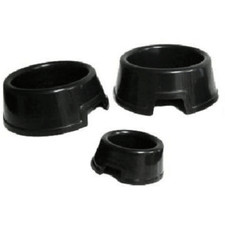

Photos from current listings. Actual item, color, and included accessories may vary.
Reptile Water Dish Buying Guide
A reptile water dish is a shallow, stable basin that provides drinking and soaking water for reptiles and amphibians. The critical trade-off is between heavy, textured, resin/ceramic dishes that resist tipping and bacterial film, and lightweight plastic bowls that tip, scratch, and harbor biofilm. Choose a dish with a wide footprint, rough ramp/textured interior, and 1–2 inch water depth for the animal's size; skip thin, smooth-sided bowls that flip under a basking lizard's weight.
Key takeaways
- Resin and glazed ceramic dishes weighing 1–2 lb resist tipping and scratching; thin plastic bowls under 0.15 inch wall thickness flip and develop micro-scratches that harbor bacteria.
- Textured interior ramps or step-outs let arboreal and terrestrial species grip and exit safely; smooth polished interiors cause slipping and drowning risk for small amphibians.
- Water depth should be no more than 1–2 inches for most lizards and snakes; deep dishes (3+ inches) suit large monitors, turtles, and soaking species but require a ramp or rock escape.
At a glance
- Category
- Reptile Feeding Dishes
- Last updated
- Nov 23, 2026
Current offers
Highlights
- Resin and glazed ceramic dishes weighing 1–2 lb resist tipping and scratching; thin plastic bowls under 0.15 inch wall thickness flip and develop micro-scratches that harbor bacteria.
- Textured interior ramps or step-outs let arboreal and terrestrial species grip and exit safely; smooth polished interiors cause slipping and drowning risk for small amphibians.
- Water depth should be no more than 1–2 inches for most lizards and snakes; deep dishes (3+ inches) suit large monitors, turtles, and soaking species but require a ramp or rock escape.
- BPA-free, food-grade polyethylene and kiln-fired ceramic are inert and dishwasher-safe; avoid painted or glazed dishes with lead/cadmium risk and porous unsealed terracotta that leaches minerals.
Best use cases
- Best fit: bearded dragons, leopard geckos, and corn snakes — pick a heavy resin or ceramic dish 6–8 inches wide with 1-inch depth and textured ramp; skip flimsy plastic deli cups.
- Best fit: large monitors, tegus, and aquatic turtles — choose a 12–16 inch wide, 3–4 inch deep soaking dish with a molded ramp; skip shallow food bowls that cannot hold soak depth.
- Wrong fit: arboreal geckos and chameleons — do not use large floor dishes; select a small 2–4 oz magnetic or suction-cup water cup mounted at perch height.
- Best fit: communal juvenile racks — use multiple small 3–4 inch dishes (one per 2–3 animals) rather than one large dish to prevent competition and contamination.
Buying tips
- Size the dish to at least 1.5× the animal's snout-to-vent length in width so it can enter, turn, and exit without flipping the bowl.
- Choose kiln-fired ceramic or heavy resin (1 lb+) for basking species; lightweight plastic is acceptable only for non-climbing, small species in quarantine setups.
- Match depth to species: 0.5–1 inch for hatchlings and small geckos, 1–2 inches for adult bearded dragons and snakes, 3–4 inches for monitors and turtles.
- Confirm the dish has a textured ramp or stepped interior and a non-slip base ring; smooth interiors and flat bottoms are the top cause of drowning and tipping.
Specs
| Material Grade | Kiln-fired ceramic / heavy resin vs thin plastic |
|---|---|
| Water Depth | 0.5–1 in small / 1–2 in medium / 3–4 in large |
| Dish Width | 3–4 in small / 6–8 in medium / 12–16 in large |
| Base & Interior | Non-slip base + textured ramp vs smooth flat |
Related searches
What to check before buying
- Measure enclosure floor space and basking spot footprint — the dish must sit flat without blocking the heat gradient or overlapping the basking zone.
- Check substrate depth and type: heavy dishes sink into loose substrate; place on tile or a slate platform for stability.
- Verify water volume fits your misting/refill routine — a 16 oz dish needs daily refills for large lizards; 4 oz cups suit small geckos.
- Confirm dishwasher-safe or boil-safe material if you sanitize weekly; unsealed wood and porous stone cannot be disinfected effectively.
FAQ
Data sources: eBay / Amazon listings and product attribute feeds. Updated Nov 23, 2026.
Some links on this page are affiliate links. If you buy after clicking one, we may earn a commission at no extra cost to you. This does not change which products appear here or their order. Affiliate disclosure.