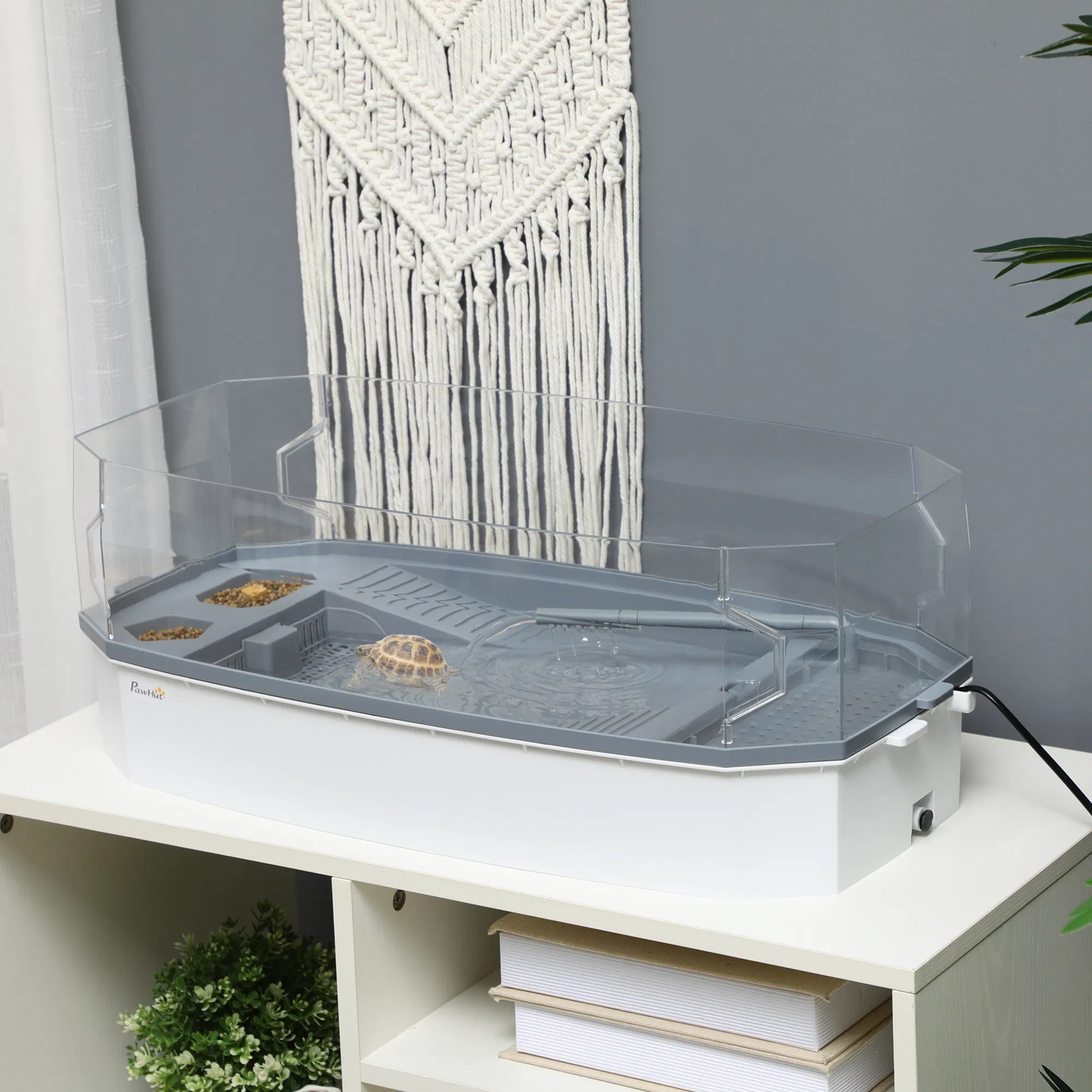

Photos from current listings. Actual item, color, and included accessories may vary.
Turtle Habitat Buying Guide
Turtle habitats range from open-top tubs with basking platforms to fully enclosed wooden vivariums, and the primary trade-off is between aquatic filtration volume and terrestrial dry-space. Durable options use thick, waterproofed wood or high-grade plastics with dedicated filter chambers and sealed basking zones, while compromises skimp on pump flow, filtration layers, or escape-proofing.
Median $94.99
Key takeaways
- Aquatic kits require a filter turnover of at least 4x total water volume per hour and a basking dock rated above the turtle's weight.
- Wooden terrariums need sealed, moisture-resistant panels (melamine or epoxy-coated plywood) to survive 60–80% humidity without swelling.
- Sliding glass or acrylic doors must have a locking mechanism; turtles are strong enough to push open unlatched panels.
At a glance
- Category
- Reptile Enclosures & Terrariums
- Last updated
- Nov 27, 2026
Current offers
Highlights
- Aquatic kits require a filter turnover of at least 4x total water volume per hour and a basking dock rated above the turtle's weight.
- Wooden terrariums need sealed, moisture-resistant panels (melamine or epoxy-coated plywood) to survive 60–80% humidity without swelling.
- Sliding glass or acrylic doors must have a locking mechanism; turtles are strong enough to push open unlatched panels.
- Multi-level tortoise houses need ramp width of at least 1.5x shell width and a slope no steeper than 30 degrees for safe climbing.
Best use cases
- Best fit: aquatic turtle tank kits with integrated filter layer and pump for red-eared sliders, painted turtles, and cooters needing 75% water volume.
- Best fit: wooden terrariums with sliding doors for box turtles, tortoises, and semi-aquatic species requiring 60–80% humidity and dry basking areas.
- Wrong fit: fabric or soft-sided habitats for any turtle—claws and beaks shred fabric within days; choose rigid plastic or sealed wood instead.
- Wrong fit: open-top tubs without a screen lid for species that climb; turtles escape and cats or dogs can access the habitat.
Buying tips
- Match enclosure length to 4–5x shell length: a 6-inch turtle needs at least 30 inches of straight swimming length, so choose a 36-inch or larger tank.
- For aquatic setups, pick a filter rated for 2–3x the tank's water volume; a 40-gallon water section needs a filter rated for 80–120 gallons.
- Wooden enclosures must specify waterproof or moisture-resistant construction; unsealed pine or MDF warps within months under reptile humidity.
- Check basking platform dimensions: the dry area should be at least 1.5x the turtle's shell length in both directions for full-body drying.
Specs
| Habitat Type | Aquatic kit / Wooden vivarium / Tub |
|---|---|
| Construction Material | Sealed wood / Rigid plastic / Glass |
| Filtration Stages | 1–2 (sponge) / 3+ (mech+bio+chem) |
| Basking Platform | Integrated dock / Ramp / External |
Related searches
What to check before buying
- Measure your available floor or stand space and add 4 inches on all sides for access doors, ventilation, and heat lamp clearance.
- Confirm your stand or table holds the filled weight: water weighs 8.3 lb per gallon, so a 40-gallon water section adds over 330 lb.
- Verify your room's ambient temperature and humidity range; wooden enclosures need a room below 80°F to avoid overheating without a thermostat.
- Check that the enclosure includes or accommodates a lid or screen top sized for your UVB and heat bulb fixtures, and that cord ports exist for pump and heater.
FAQ
Data sources: eBay / Amazon listings and product attribute feeds. Updated Nov 27, 2026.
Some links on this page are affiliate links. If you buy after clicking one, we may earn a commission at no extra cost to you. This does not change which products appear here or their order. Affiliate disclosure.