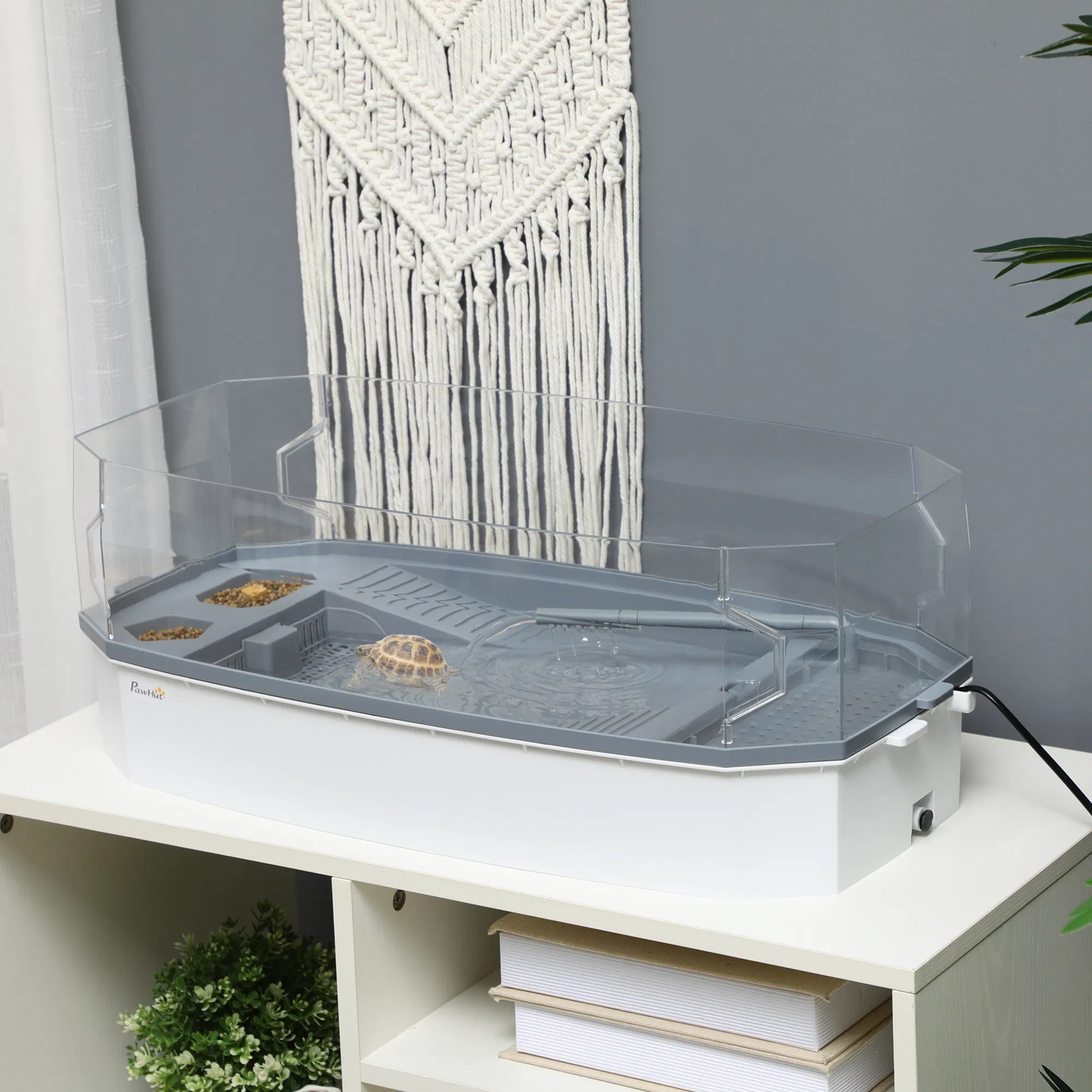

Photos from current listings. Actual item, color, and included accessories may vary.
Turtle Tank Buying Guide
A turtle tank is an aquatic or semi-aquatic enclosure combining swim space, a dry basking platform, and filtration sized to the animal's adult mass. The trade-off is between glass/acrylic aquariums with true water volume and molded plastic or wooden kits that simplify access but limit swimming depth and filtration capacity. Durable options meet species-specific water depth and footprint needs with external canister or sump filtration; compromises force frequent water changes and undersized basking zones.
Median $94.99
Key takeaways
- Glass aquariums from 40 to 125 gallons provide the water volume and clarity needed for adult sliders, painted turtles, and cooters; acrylic resists cracking but scratches easily.
- Molded plastic kit tanks typically top out at 20-40 gallons and include weak internal filters; they suit hatchlings only and require upgrade within two years.
- Basking platforms must support the turtle's full shell out of water with a 10-12 inch distance from a heat/UVB bulb; open-screen tops reduce UVB output by 30-50%.
At a glance
- Category
- Reptile Enclosures & Terrariums
- Last updated
- Nov 27, 2026
Current offers
Highlights
- Glass aquariums from 40 to 125 gallons provide the water volume and clarity needed for adult sliders, painted turtles, and cooters; acrylic resists cracking but scratches easily.
- Molded plastic kit tanks typically top out at 20-40 gallons and include weak internal filters; they suit hatchlings only and require upgrade within two years.
- Basking platforms must support the turtle's full shell out of water with a 10-12 inch distance from a heat/UVB bulb; open-screen tops reduce UVB output by 30-50%.
- Canister filters rated for 2-3x the tank volume handle turtle waste; internal power filters clog within weeks in high-bio-load turtle water.
Best use cases
- Best fit: adult red-eared slider or cooter — choose a 75-125 gallon glass aquarium with a heavy-duty external canister filter and a floating or above-tank basking dock rated for the turtle's adult shell length.
- Best fit: hatchling or small juvenile — a 20-40 gallon glass tank with a screened lid and internal filter works for the first year, then upgrade to a 75+ gallon before the shell reaches 4 inches.
- Wrong fit: wooden terrarium cabinets and tortoise houses — these are for terrestrial species and cannot hold standing water; skip them for any turtle that swims.
- Best fit: indoor/outdoor seasonal setup — a stock tank or large plastic tub (100+ gallons) with a pond filter and a floating dock provides volume at lower cost than glass; pair with a secure screen top.
Buying tips
- Sizing rule: 10 gallons of water per inch of adult shell length; a 10-inch slider needs a 100-gallon tank minimum, so buy the largest footprint you can fit rather than upgrading twice.
- Filtration rule: choose a canister filter rated for at least 2x the tank volume; for 100 gallons, select a unit rated for 200-300 gallons and plan monthly media rinses.
- Material rule: 1/4-inch glass or 3/8-inch acrylic for tanks over 55 gallons; molded plastic kits crack under UV and cannot be drilled for external filtration.
- Lighting rule: a T5 HO 10.0 UVB tube plus a halogen heat bulb on a screened or open top; compact coil UVB bulbs deliver uneven output and are not suitable for large tanks.
Specs
| Tank Material | Glass / Acrylic / Molded plastic |
|---|---|
| Volume Range | 20-40 gal kits; 55-125 gal aquariums |
| Filtration Type | Canister (2-3x volume) vs internal |
| Basking Platform | Floating dock / Above-tank / Built-in |
Related searches
What to check before buying
- Measure the adult shell length and multiply by 10 to get minimum gallons; measure floor space for a tank footprint at least 4x the shell length by 2x the shell width.
- Confirm the stand or floor can support 10 lbs per gallon of water plus tank and substrate weight; a 100-gallon setup exceeds 1,000 lbs.
- Check room ambient temperature and humidity; glass tanks lose heat quickly, so plan a 75-80°F water heater and a 90-95°F basking spot.
- Verify electrical access for filter, heater, UVB fixture, and pump; use a GFCI outlet within cord reach and a drip loop on all cords.
FAQ
Data sources: eBay / Amazon listings and product attribute feeds. Updated Nov 27, 2026.
Some links on this page are affiliate links. If you buy after clicking one, we may earn a commission at no extra cost to you. This does not change which products appear here or their order. Affiliate disclosure.