
Photos from current listings. Actual item, color, and included accessories may vary.
PVC Reptile Enclosure Buying Guide
PVC reptile enclosures are modular, humidity-retaining habitats built from expanded PVC foam panels, typically 1/4 to 1/2 inch thick, with sliding glass or acrylic doors. The core trade-off is panel thickness and frame rigidity versus cost: thin 1/4-inch walls flex and sag under heat and humidity, while 3/8 to 1/2-inch walls hold shape and seal humidity for tropical species. The decision rule is simple: buy the thickest PVC you can afford with a rigid aluminum or PVC frame, and skip any enclosure that uses 1/4-inch panels without bracing.
Median $203.49 · New listings
Key takeaways
- Panel thickness drives durability: 1/2-inch expanded PVC resists warping and holds screw threads, while 1/4-inch panels require internal bracing to prevent bowing under heat lamps.
- Sliding glass doors on tracked rails provide the best humidity seal and visibility; acrylic doors scratch easily and should be avoided for active species like monitors.
- Expanded PVC is naturally waterproof and mold-resistant, unlike wood enclosures that require sealing and degrade under high humidity.
At a glance
- Category
- Reptile Enclosures & Terrariums
- Last updated
- Nov 27, 2026
Current offers
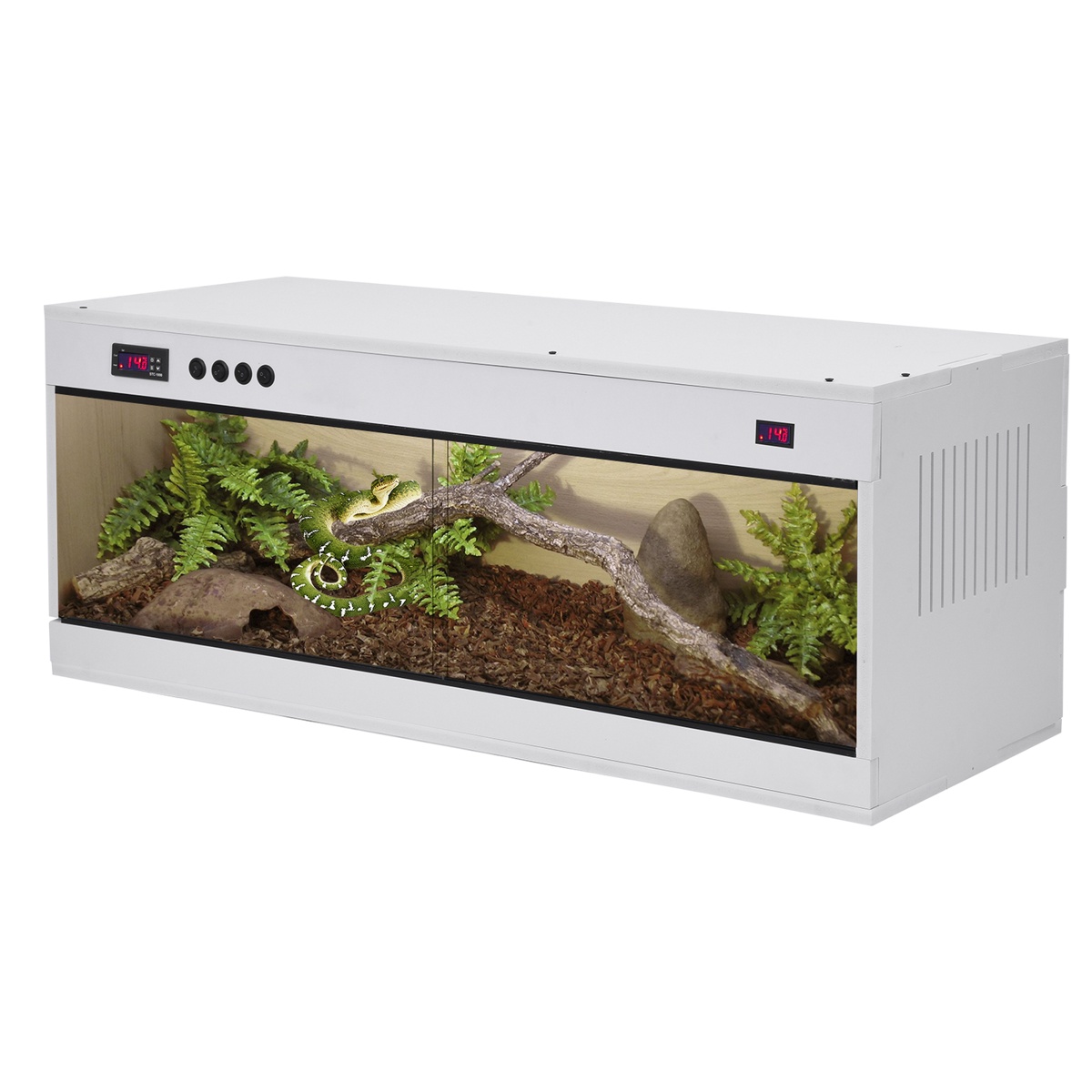 Reptile Enclosure up to 40x16x16in Stackable Terrarium Snake Tank 44 Gallon Cage$103.96View on eBay
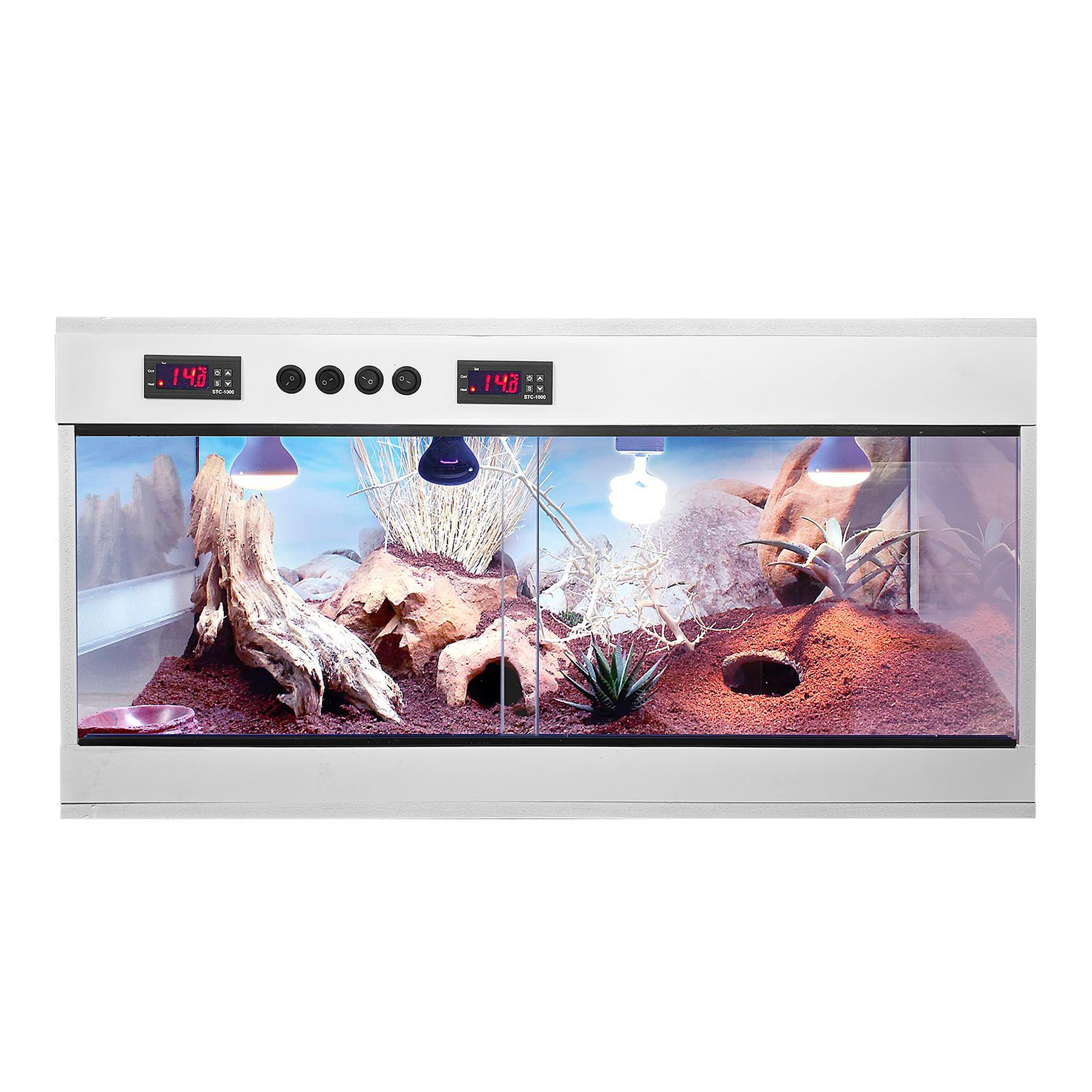 Reptile Enclosure up to 40x16x16in Stackable Terrarium Snake Tank 44 Gallon Cage$113.46View on eBay
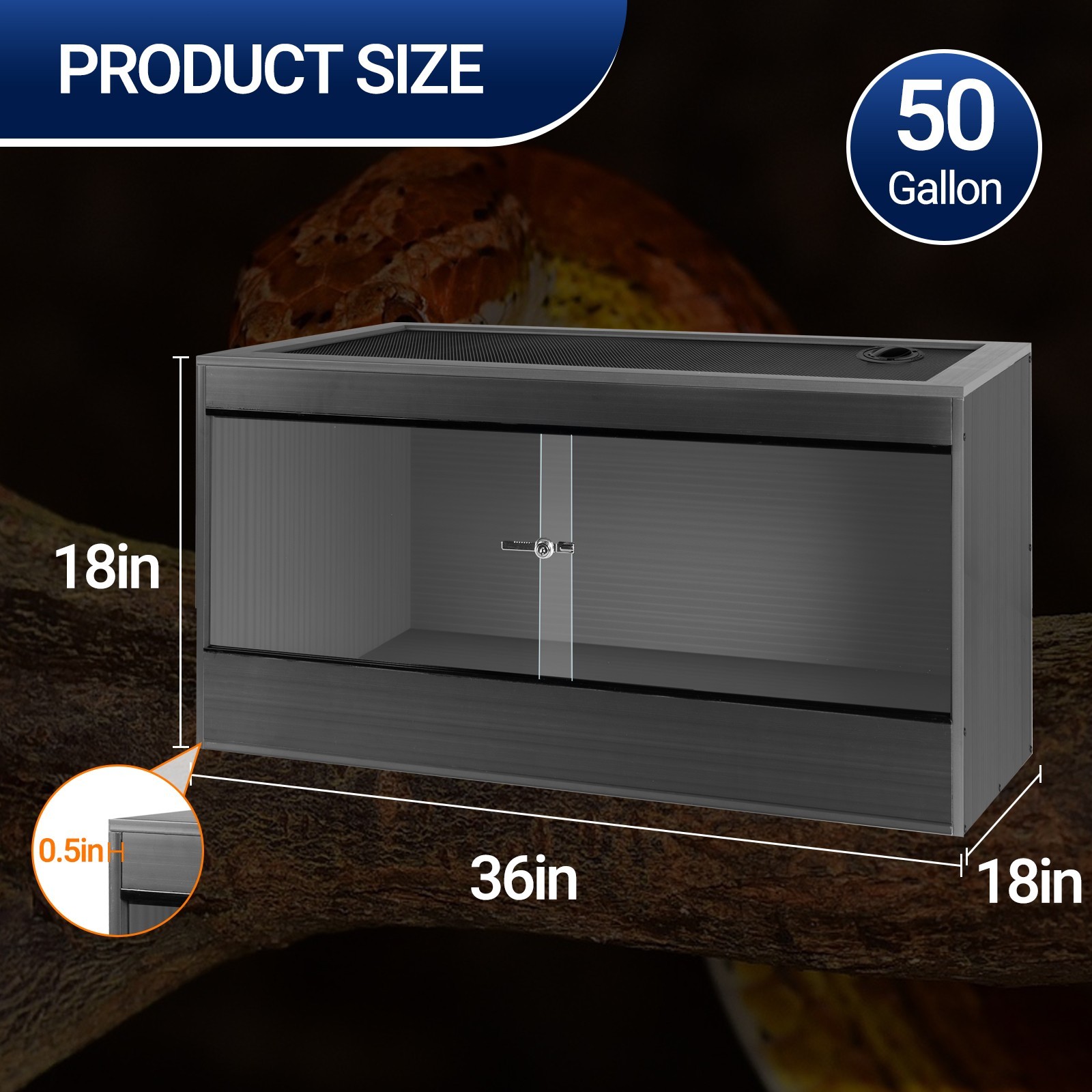 50/68 Gallon PVC Reptile Enclosure Snake Tank Sliding Doors Bearded Dragon Habit$156.39View on eBay
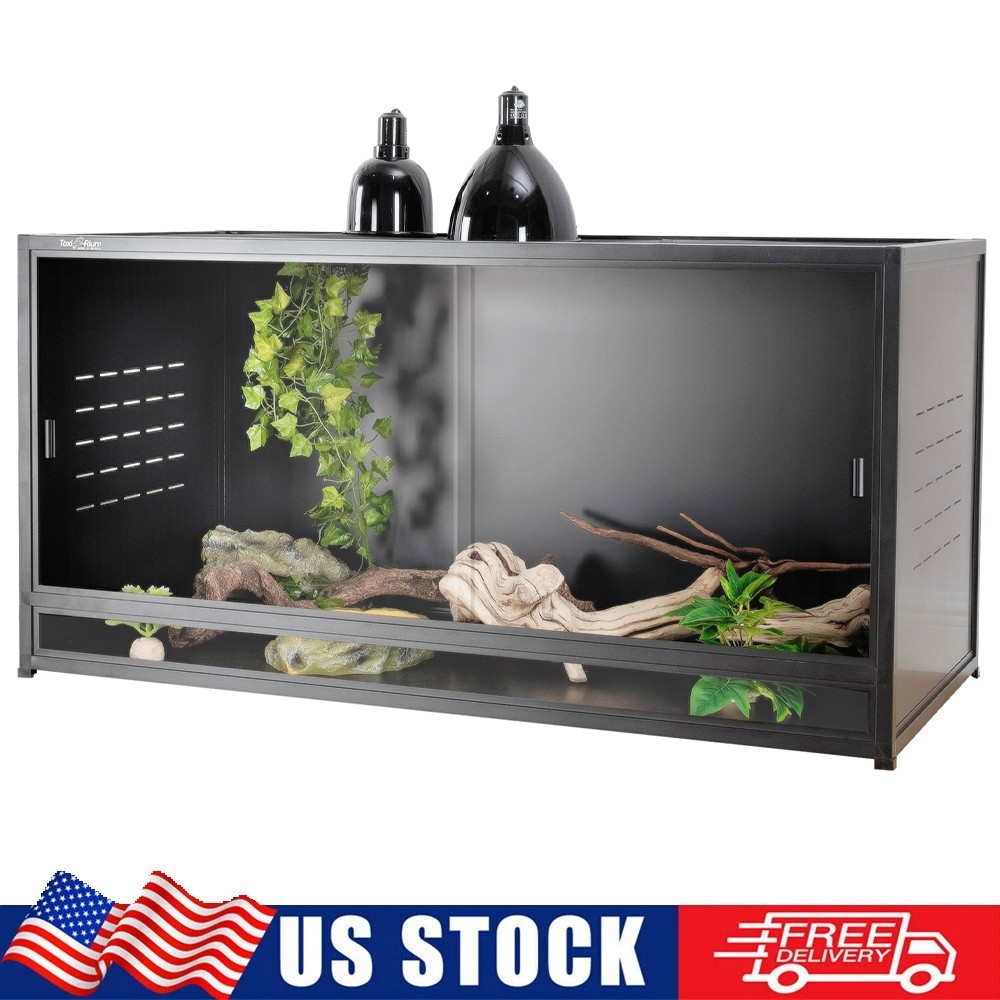 Bearded Dragon PVC Reptile Enclosure 40" x 16" x 16" Black Low Habitat 44 Gallon$199.99View on eBay
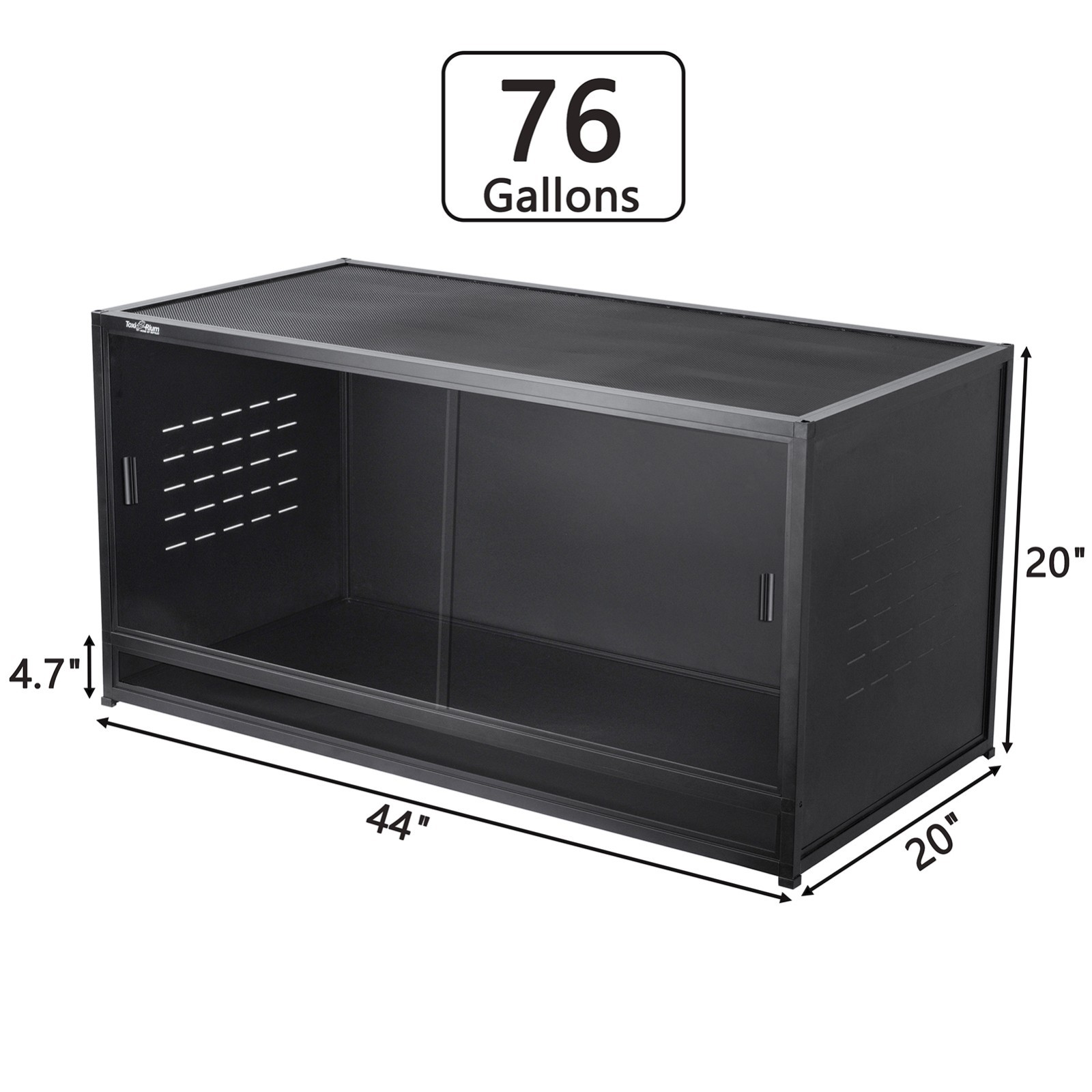 Toxirium PVC Reptile Enclosure Stackable Snake Terrarium Tank Up to 120 Gallon$206.99New · Last checked Nov 24, 2026View on eBay
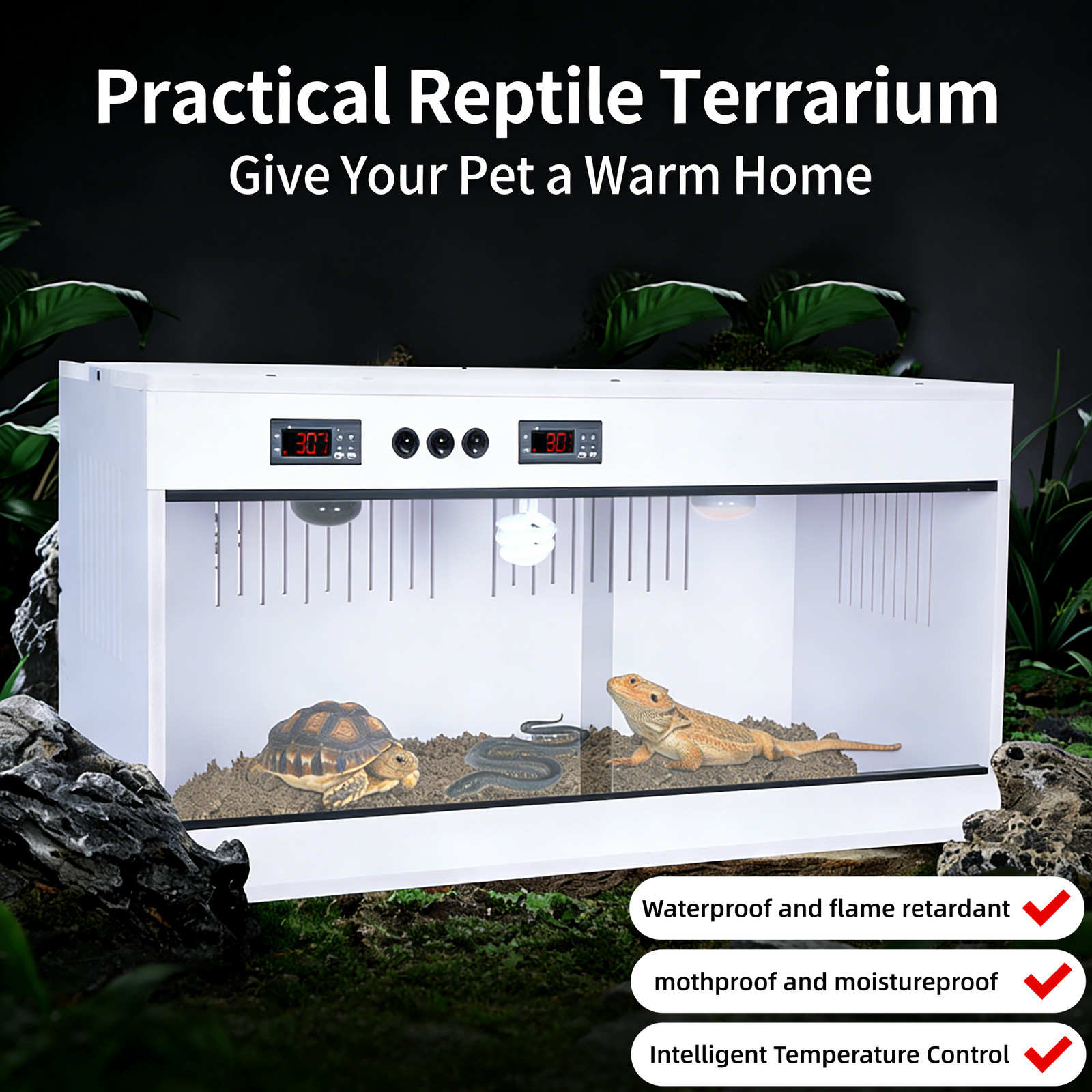 Reptile Terrarium Enclosure with Temperature control 47x23x23" Reptile Tank PVC$216.99New · Last checked Nov 24, 2026View on eBay
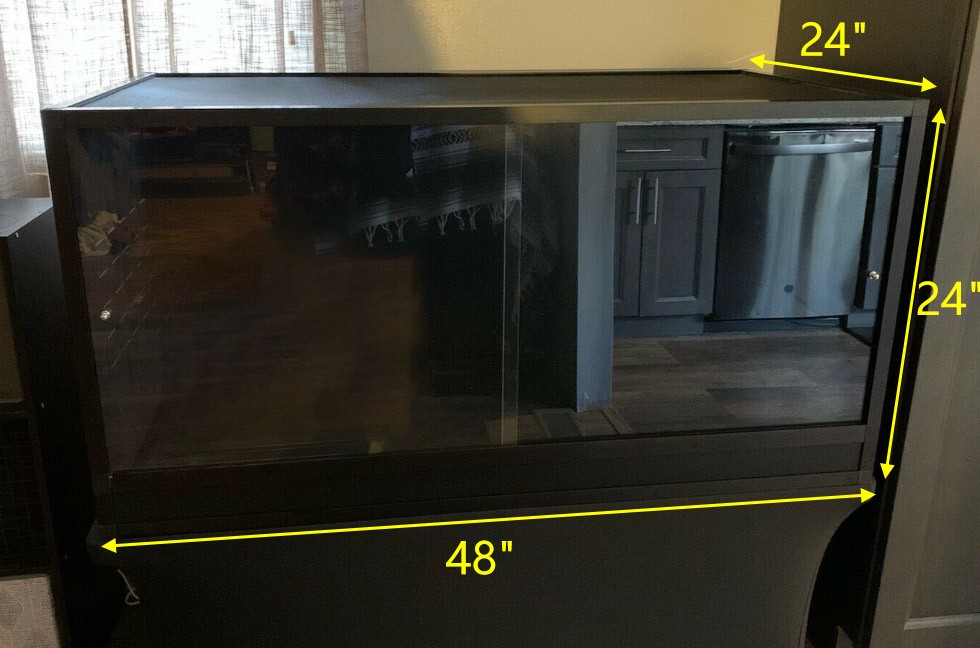
 120 Gallon Reptile Terrarium Enclosure 48X24X24" Reptile Tank PVC$219.99New · Last checked Nov 24, 2026View on eBay
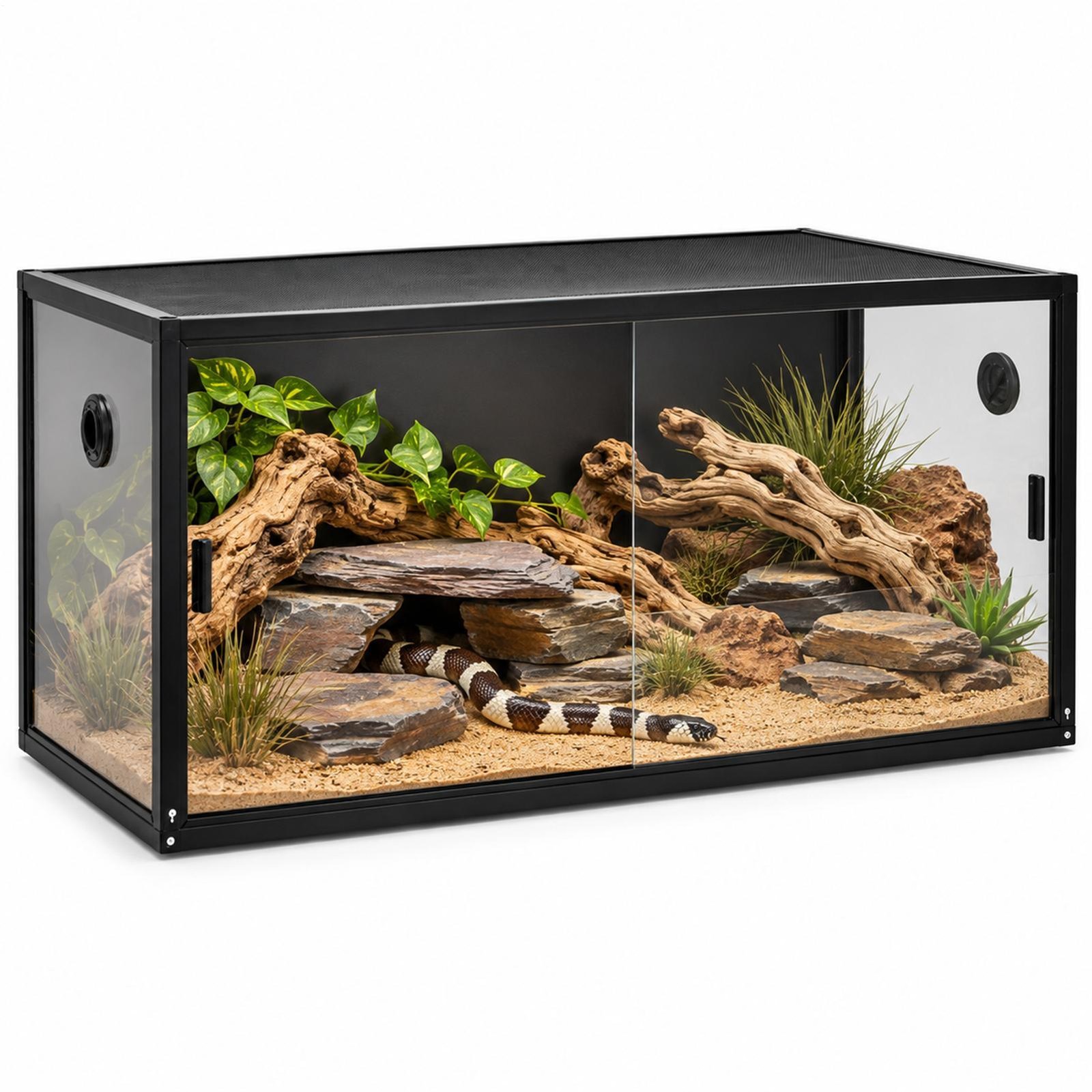
 Toxirium 120 Gallon 48x24x24 PVC Reptile Enclosure Sliding Glass Doors Stackable$305.99New · Last checked Nov 24, 2026View on eBay
Highlights
- Panel thickness drives durability: 1/2-inch expanded PVC resists warping and holds screw threads, while 1/4-inch panels require internal bracing to prevent bowing under heat lamps.
- Sliding glass doors on tracked rails provide the best humidity seal and visibility; acrylic doors scratch easily and should be avoided for active species like monitors.
- Expanded PVC is naturally waterproof and mold-resistant, unlike wood enclosures that require sealing and degrade under high humidity.
- Stackable modular designs use aluminum extrusion frames or interlocking PVC panels, allowing multi-unit racks without custom carpentry.
Best use cases
- Best fit for tropical species (ball pythons, crested geckos, dart frogs): choose a 1/2-inch PVC enclosure with sliding glass doors and sealed seams to hold 70-90% humidity.
- Best fit for bearded dragons and desert species: pick a 40-inch or larger low-profile PVC enclosure with a screen top for ventilation and UVB penetration, avoiding fully sealed tubs.
- Wrong fit for large monitors or adult iguanas: skip PVC entirely and choose a reinforced wooden or aluminum-framed enclosure with 1/2-inch or thicker panels and locking doors.
- Wrong fit for budget temporary setups: cheap 1/4-inch PVC kits without bracing will sag within months under a heat lamp; instead use a glass aquarium with a screen lid for short-term housing.
Buying tips
- Calculate floor space first: a 4x2x2-foot enclosure (48x24x24 inches) is the minimum for an adult bearded dragon; a 40x16x16-inch model is only suitable for juveniles or small species.
- Check panel thickness: 3/8-inch (10mm) PVC is the minimum for stacked or heated enclosures; 1/2-inch (12mm) is preferred for large panels over 36 inches wide.
- Specify sliding glass doors over acrylic: glass resists scratching from claws and cleaning, and 1/4-inch tempered glass is standard for 48-inch-wide enclosures.
- Match ventilation to species: desert setups need a full screen top or circular vents totaling at least 20% of the roof area; tropical setups need only 2-4 small vents to retain humidity.
Specs
| Panel Thickness | 1/4 in vs 3/8 in vs 1/2 in |
|---|---|
| Door Type | Sliding glass vs hinged acrylic |
| Frame Material | Aluminum extrusion vs PVC only |
| Ventilation | Screen top vs side vents vs sealed |
Related searches
What to check before buying
- Measure your available floor space and doorway clearance: a 48x24-inch enclosure will not fit through a standard 30-inch door without disassembly.
- Confirm your heat source compatibility: PVC softens above 200°F, so ceramic heat emitters and basking bulbs must be mounted with a standoff or mesh guard to prevent direct contact.
- Check the plug and voltage standard: all heat mats, thermostats, and UVB fixtures for a PVC enclosure should match your local 120V/60Hz or 230V/50Hz supply.
- Plan for companion parts: a thermostat, hygrometer, and LED or UVB fixture are required; ensure the enclosure has grommeted ports or a cutout for probe wires.
FAQ
Data sources: eBay / Amazon listings and product attribute feeds. Updated Nov 27, 2026.
Some links on this page are affiliate links. If you buy after clicking one, we may earn a commission at no extra cost to you. This does not change which products appear here or their order. Affiliate disclosure.