
Photos from current listings. Actual item, color, and included accessories may vary.
Indoor Tortoise Habitat Buying Guide
Indoor tortoise habitats are enclosed or open-top wooden tables designed to provide a controlled microclimate, UVB access, and secure footing for tortoises kept indoors year-round. The critical trade-off is between decorative furniture-style enclosures (with shelves and lamp stands) and true husbandry-first builds that prioritize floor area, ventilation, substrate depth, and heat/UVB mounting. Choose a habitat whose footprint matches the adult size of your species and whose materials resist moisture; skip any enclosure that locks in humidity without airflow or cannot support a proper basking lamp.
Median $120.99
Key takeaways
- Two-room and four-room wooden models are furniture-style enclosures with pull-out trays and acrylic windows, not sealed vivariums; they suit open-air species but need added humidity control.
- Built-in lamp stands support basking and UVB fixtures, but the stand height and clamp compatibility determine whether you can hit the correct basking temperature.
- Solid wood construction with openable roofs allows daily access and cleaning, but untreated pine or fir will warp and mold under damp substrate unless sealed.
At a glance
- Category
- Reptile Enclosures & Terrariums
- Last updated
- Nov 27, 2026
Current offers
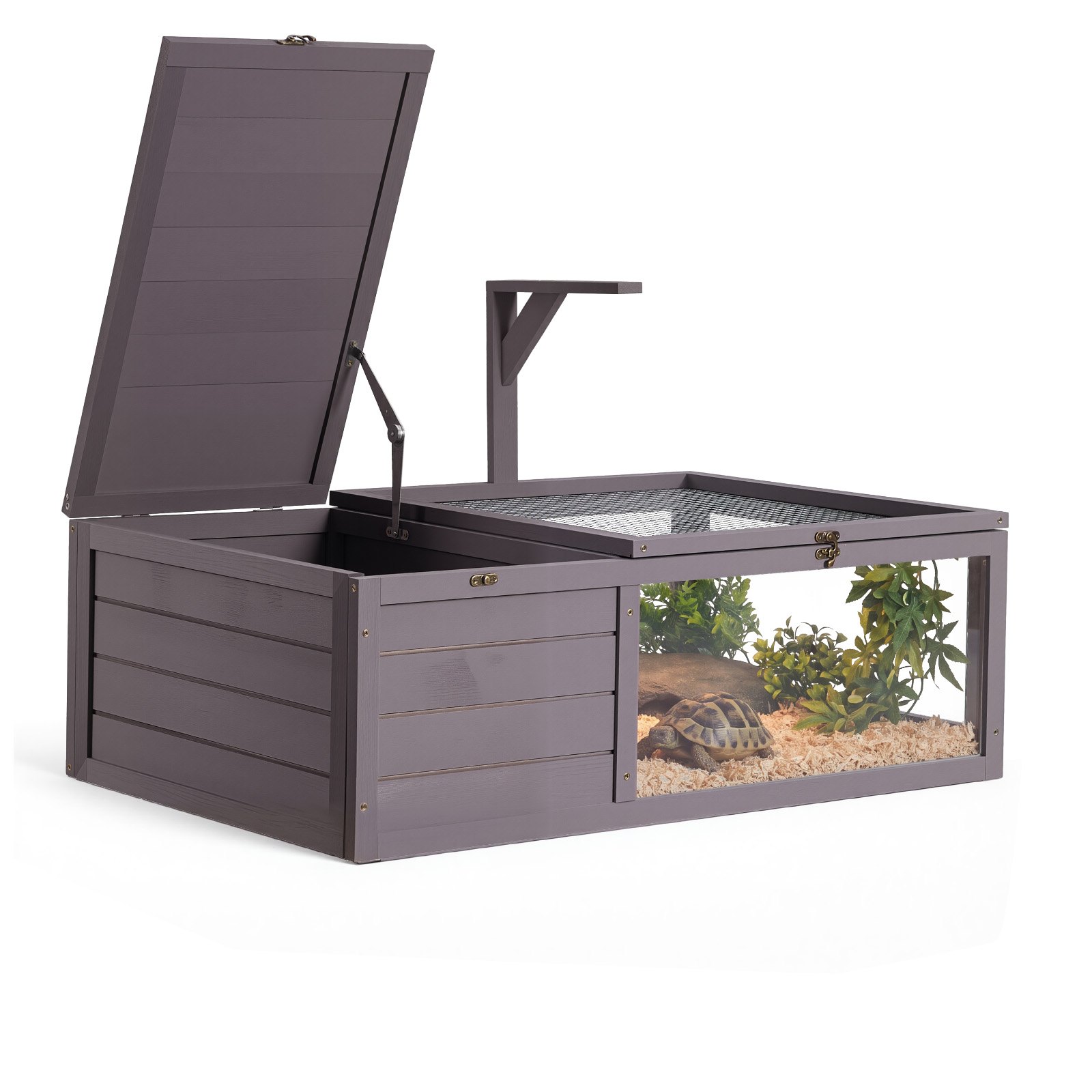 Tortoise Habitat 2-Room Wooden House with Pull-Out Tray, for Small Animals Indoor Outdoor, Lamp Stand, Large Turtle Enclosure Reptile Cage Openable Roof, Acrylic Viewing Window$103.99View on Mallflare
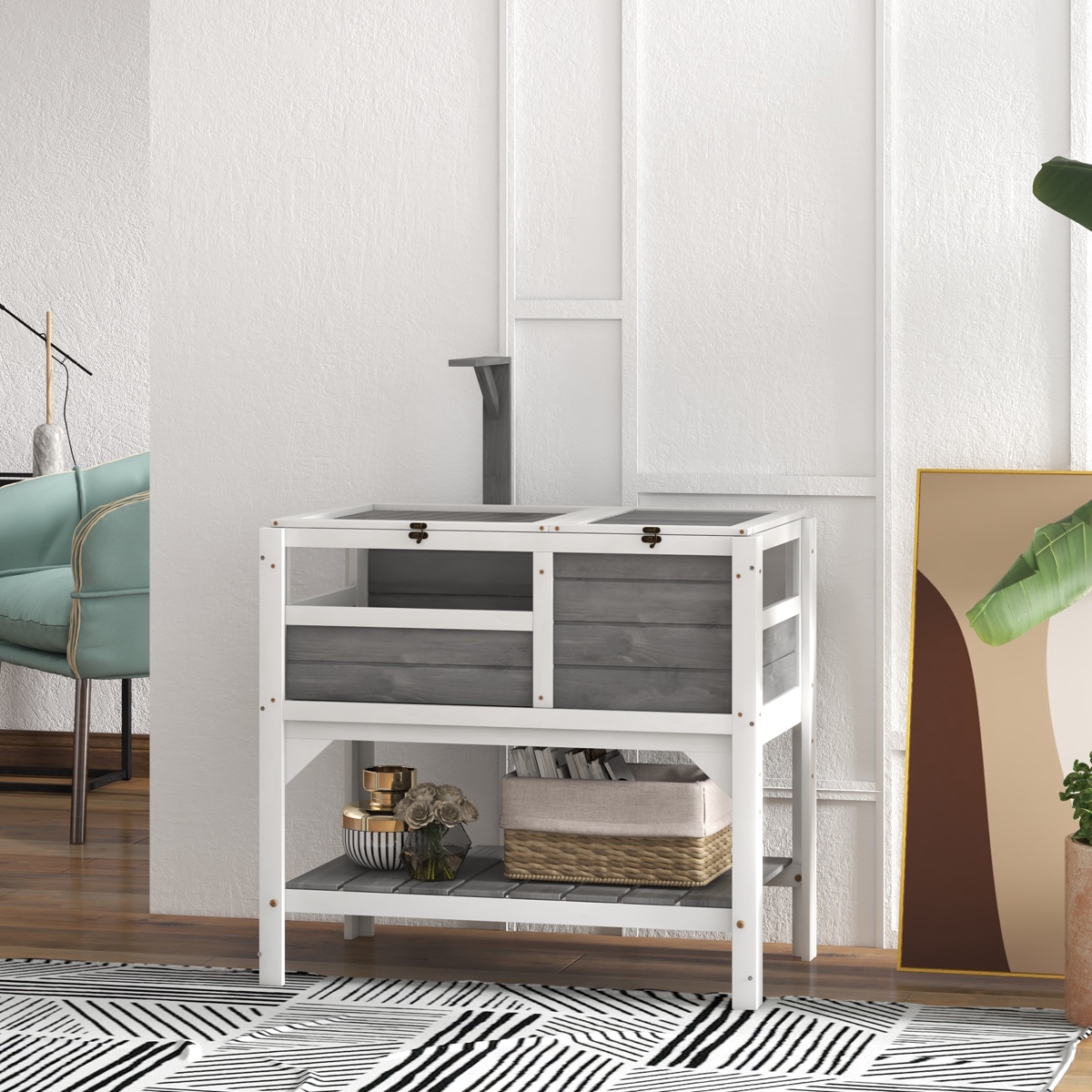 Tortoise Habitat with Shelf Storage Gift Accessory Weather Protection for Indoor, Light Gray$113.99View on Mallflare
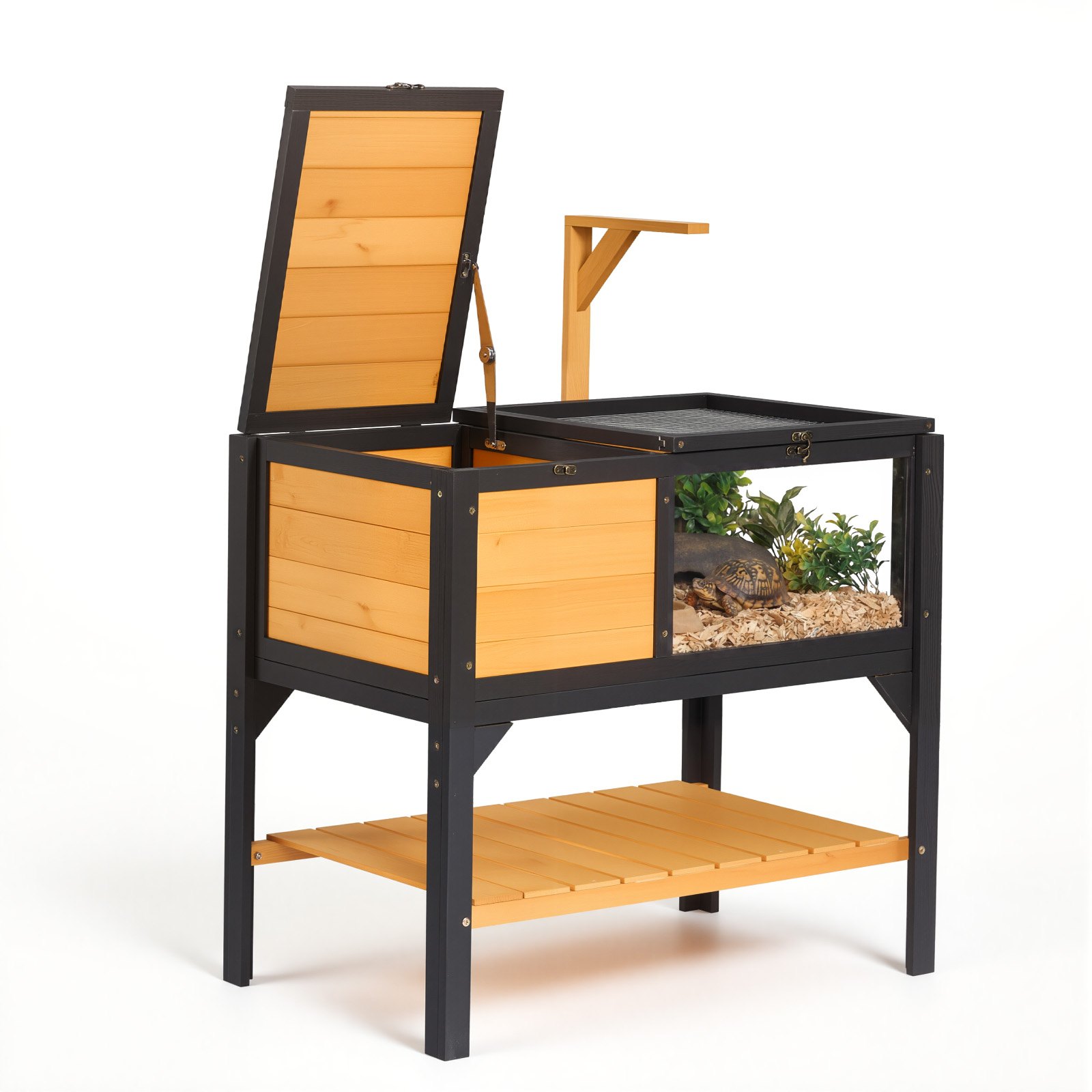 Tortoise Habitat 2-Room Wooden House with Storage Shelf, for Small Animals Indoor Outdoor, Lamp Stand, Large Turtle Enclosure Reptile Cage Openable Roof, Acrylic Viewing Window$120.99View on Mallflare
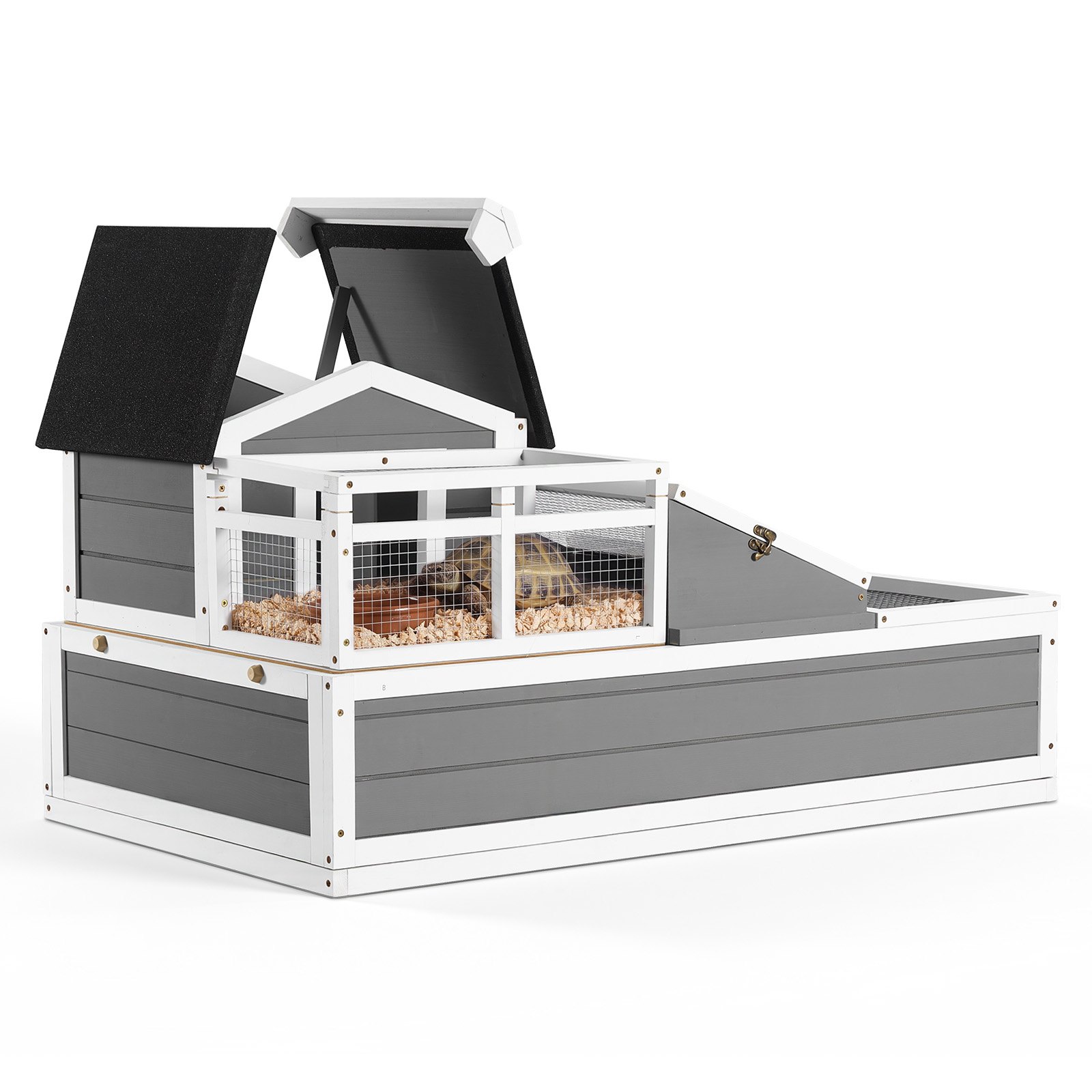 Tortoise Habitat 4-Room Wooden House with Balcony 2 Stories, for Small Animals Indoor Outdoor, Built-in Ramp, Large Turtle Enclosure Reptile Cage Openable Roof, Viewing Area$142.99View on Mallflare
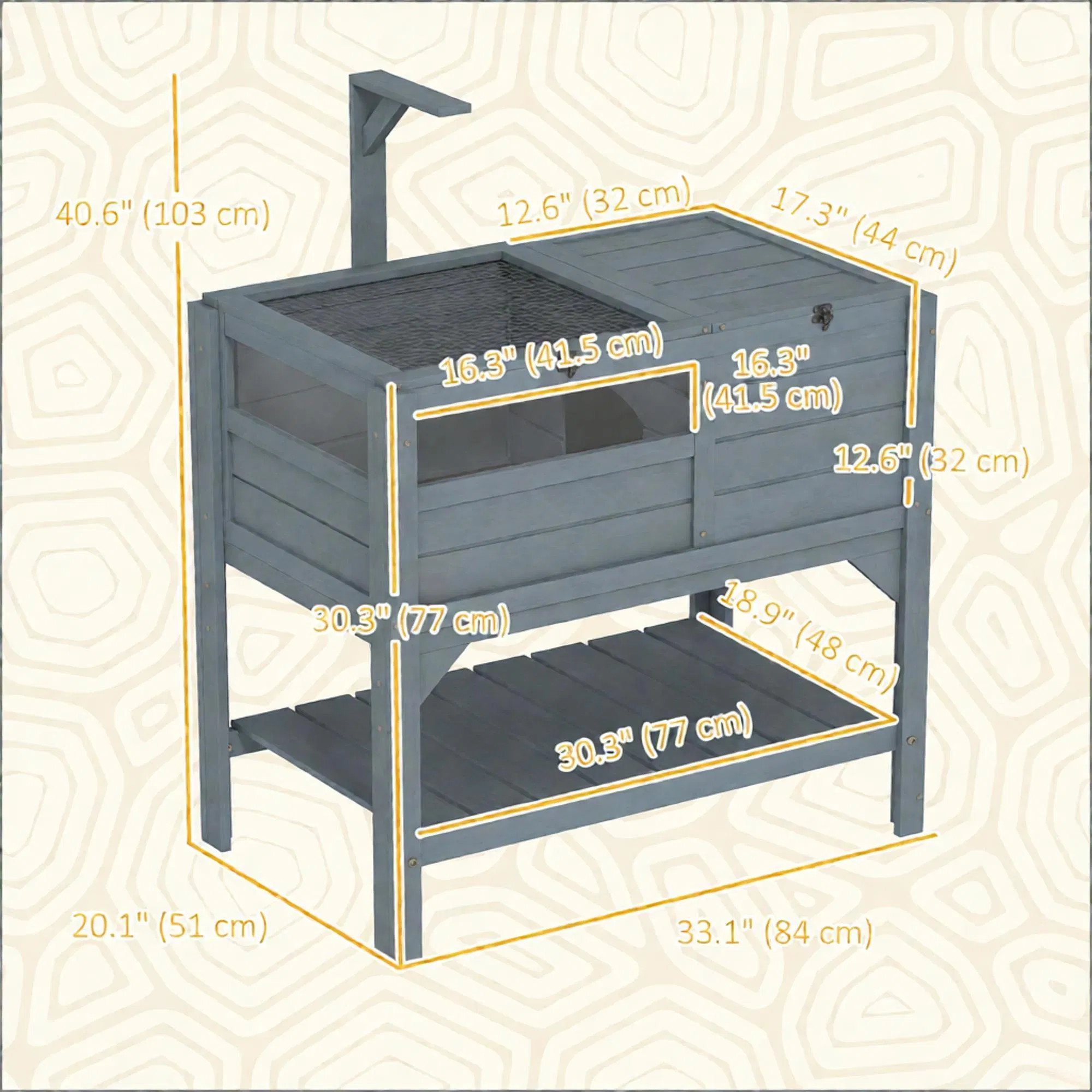 Wooden Tortoise Habitat House with Shelf Indoor Use Light Support Frame Tray 33 L X 20 W X 41 H$213.99View on Mallflare
Highlights
- Two-room and four-room wooden models are furniture-style enclosures with pull-out trays and acrylic windows, not sealed vivariums; they suit open-air species but need added humidity control.
- Built-in lamp stands support basking and UVB fixtures, but the stand height and clamp compatibility determine whether you can hit the correct basking temperature.
- Solid wood construction with openable roofs allows daily access and cleaning, but untreated pine or fir will warp and mold under damp substrate unless sealed.
- Fabric or soft-sided habitats provide weather protection and portability but offer no thermal insulation or UVB transparency and are unsuitable as permanent indoor housing.
Best use cases
- Best fit: a two-room wooden house with lamp stand for a juvenile or small species such as a Hermann's or Russian tortoise in a climate-controlled room where you can add a basking bulb and UVB tube.
- Best fit: a four-room two-story model with ramp and balcony only if the lower level provides at least 4 square feet of uninterrupted floor space and the ramp is shallow enough for the species to climb safely.
- Wrong fit: fabric or soft-sided habitats for any tortoise requiring UVB or a heat gradient; these are transport or outdoor shade structures, not primary indoor enclosures.
- Wrong fit: a decorative shelf-and-lamp-stand unit for a species that needs high humidity (e.g., red-footed or pancake tortoise) unless you line the interior and cover part of the top to retain moisture.
Buying tips
- Match floor area to adult size: small species need at least 4 sq ft, medium species 8 sq ft, and large species 12+ sq ft; two-story ramps do not count toward usable floor area.
- Choose solid wood at least 1/2 inch thick and sealed with a pet-safe waterproof coating; thin plywood or untreated pine warps within months under moist substrate.
- Verify the lamp stand can hold a dome fixture at the height needed to reach a 90-95°F basking spot; fixed-height stands often sit too low or too high for the species.
- For humidity-dependent species, pick an enclosure with a partially covered top and deep substrate tray (4+ inches) rather than an open two-room design with pull-out trays.
Specs
| Enclosure Type | Wooden open-top table vs fabric soft-sided |
|---|---|
| Floor Area | 4-12+ sq ft by species size |
| Lamp Stand | Built-in vs adjustable vs none |
| Substrate Depth | 4+ in for burrowing species |
Related searches
What to check before buying
- Measure the intended wall or floor space and confirm the habitat footprint plus clearance for the lamp stand and openable roof swing.
- Check room ambient temperature and draft sources; wooden open-top enclosures rely on room heat and need a nearby thermostat-controlled heat source.
- Confirm the enclosure interior can hold a substrate depth of at least 4 inches for burrowing species and that the tray or base is waterproof.
- Verify you have a properly rated thermostat, ceramic heat emitter or basking bulb, and a UVB tube sized to the enclosure length before assembly.
FAQ
Data sources: eBay / Amazon listings and product attribute feeds. Updated Nov 27, 2026.
Some links on this page are affiliate links. If you buy after clicking one, we may earn a commission at no extra cost to you. This does not change which products appear here or their order. Affiliate disclosure.