
Photos from current listings. Actual item, color, and included accessories may vary.
Glass Terrarium With Lid Buying Guide
A glass terrarium with lid is a sealed or semi-sealed glass enclosure topped with a removable or hinged screen/mesh cover, used for reptiles, amphibians, and invertebrates. The core trade-off is between glass thickness/toughening (durability and thermal retention) and lid mesh size (ventilation vs. humidity and escape-proofing). The decision rule: pick a lid with fine stainless or aluminum mesh and a secure locking mechanism for small or climbing species, and a coarser mesh with partial solid sections for high-humidity tropical setups.
Median $159.99 · New listings
Key takeaways
- Toughened (tempered) glass at 4-6 mm resists impact and thermal shock; standard annealed glass at 3-4 mm chips and cracks under heat-lamp hotspots.
- Lid mesh aperture determines species suitability: ≤1 mm stainless mesh contains hatchlings and fruit flies; 2-3 mm aluminum mesh suits adult lizards but not small inverts.
- Front-opening doors with double hinges allow safe maintenance without lifting a heat lamp; top-opening lids suit arboreal species needing overhead access.
At a glance
- Category
- Reptile Enclosures & Terrariums
- Last updated
- Nov 27, 2026
Current offers
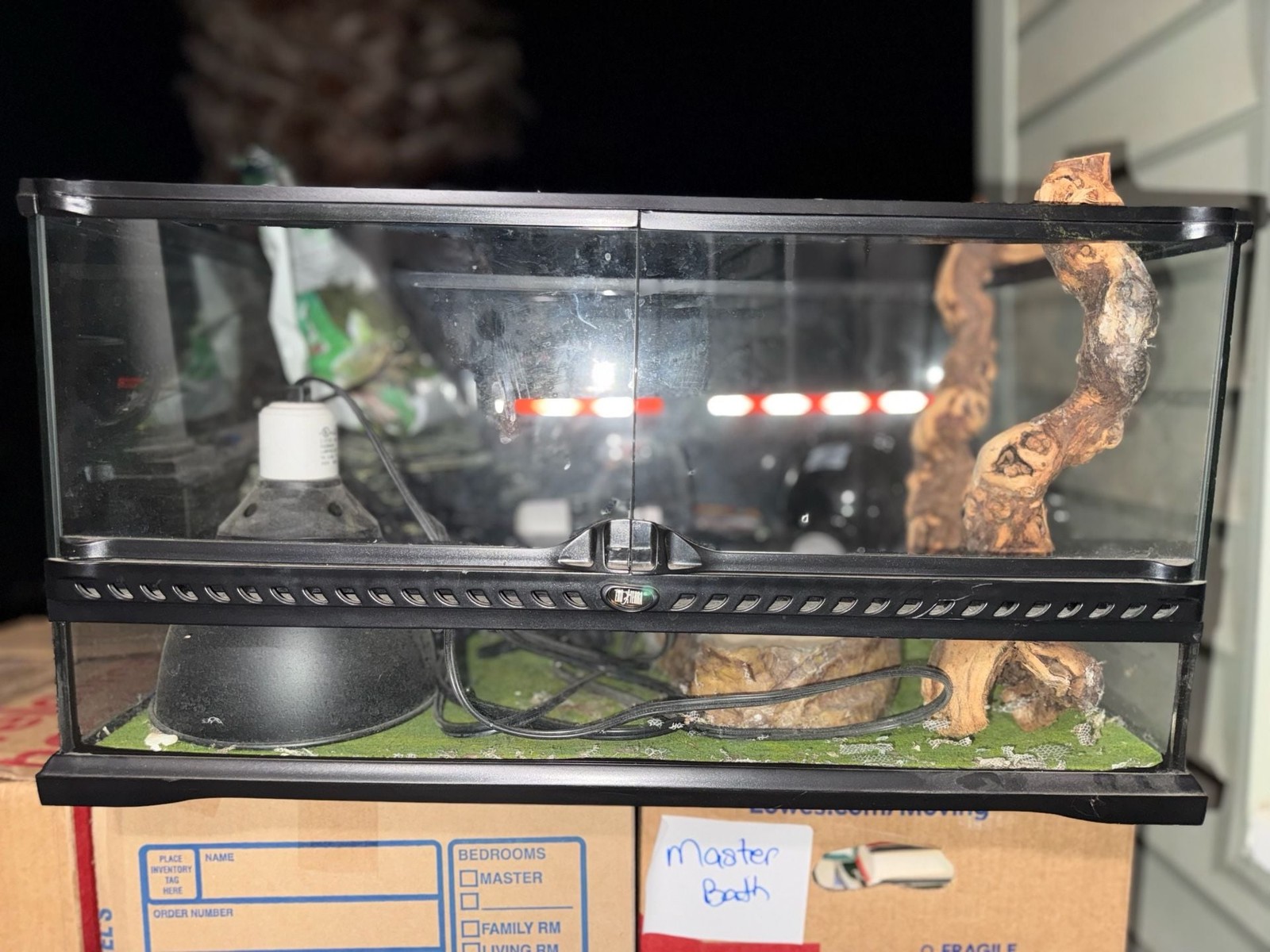 Exo Terra Glass Front-Opening Reptile Terrarium Full Setup with Accessories$125.00View on eBay
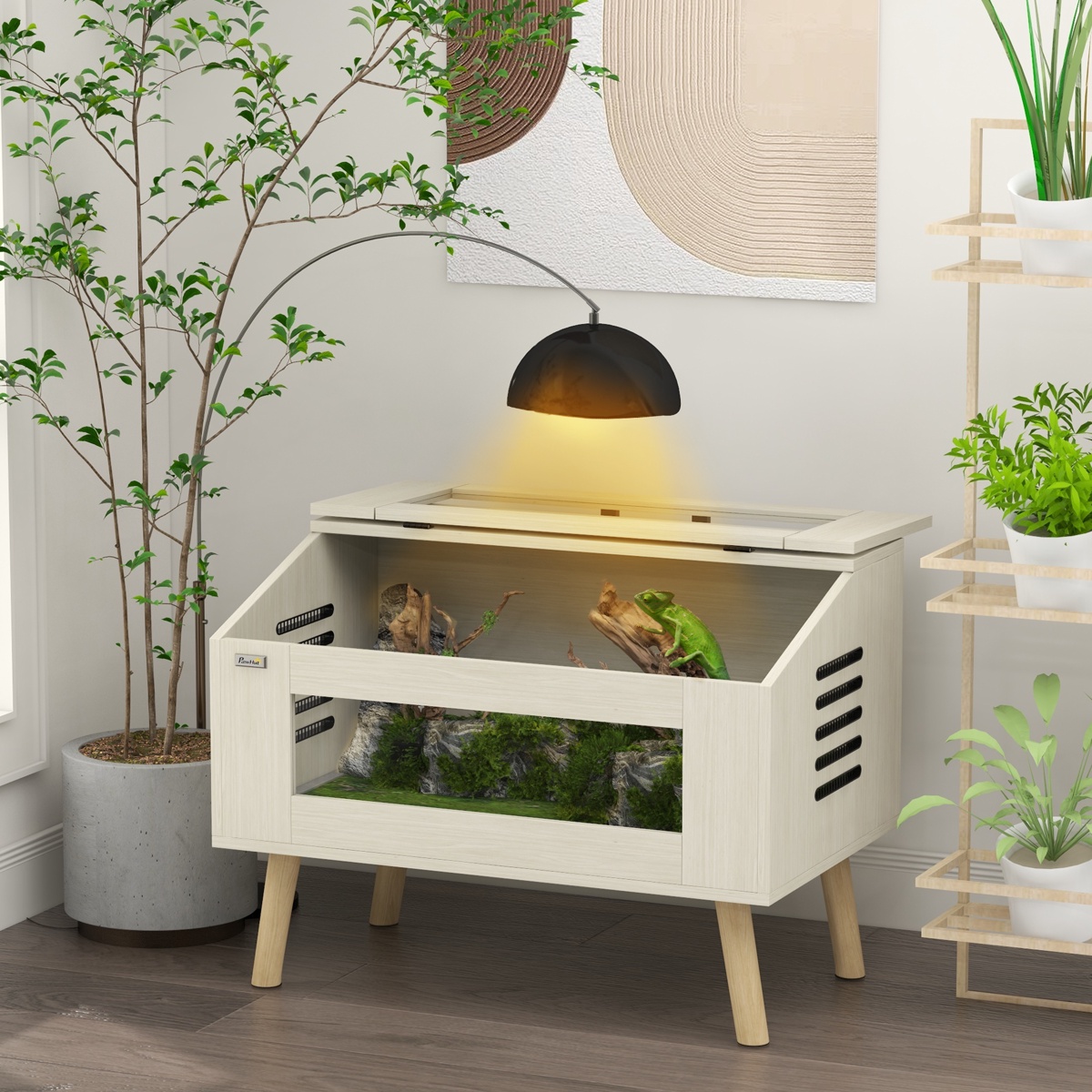 30 Gallon Reptile Tank, Top Opening Enclosure with Glass Windows for Snakes, Lizards Horned Frogs & Chameleons$130.99View on Mallflare
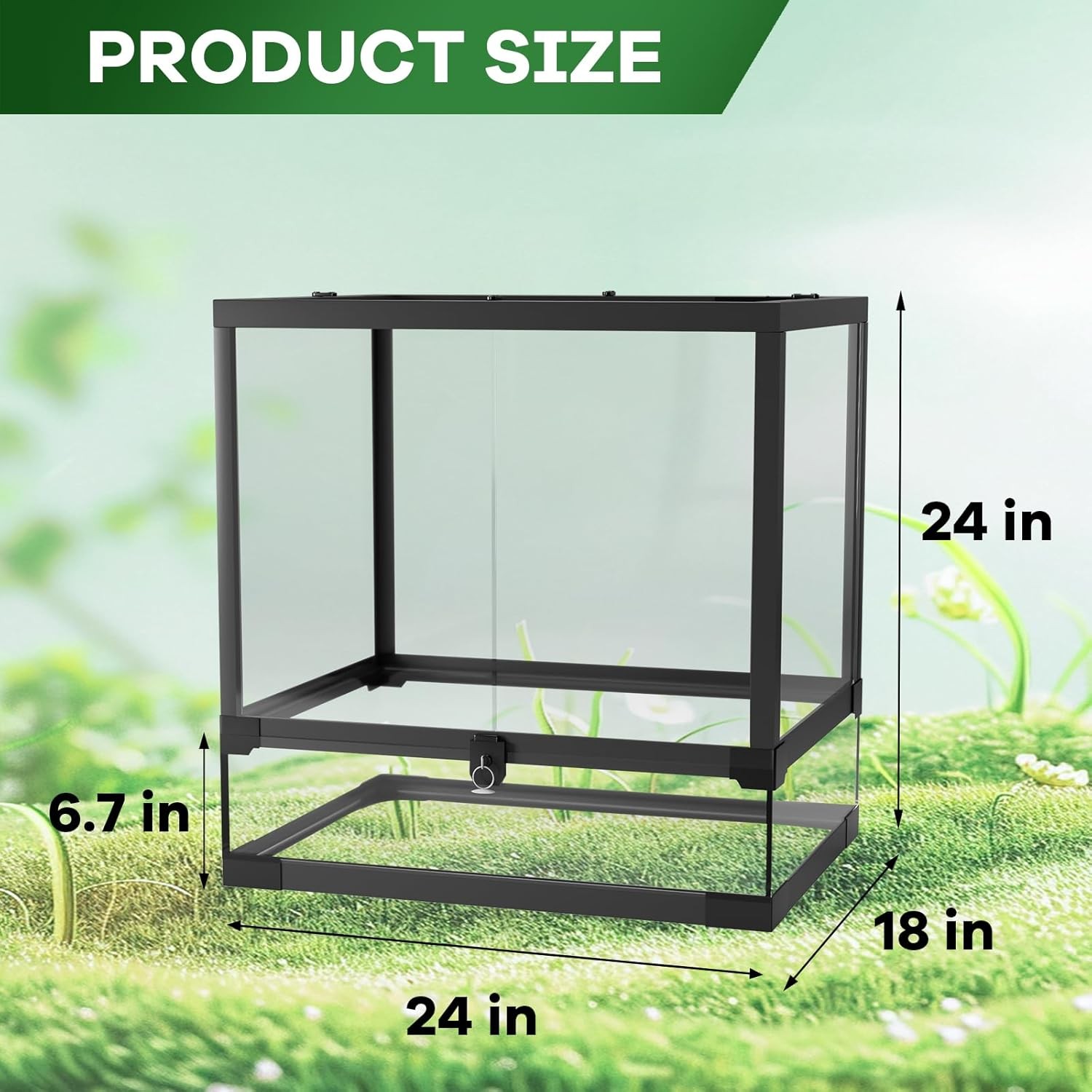 34/45/67 Gallon Reptile Tall Glass Terrarium, Toughened Glass, Double Hinge Door$149.99View on eBay
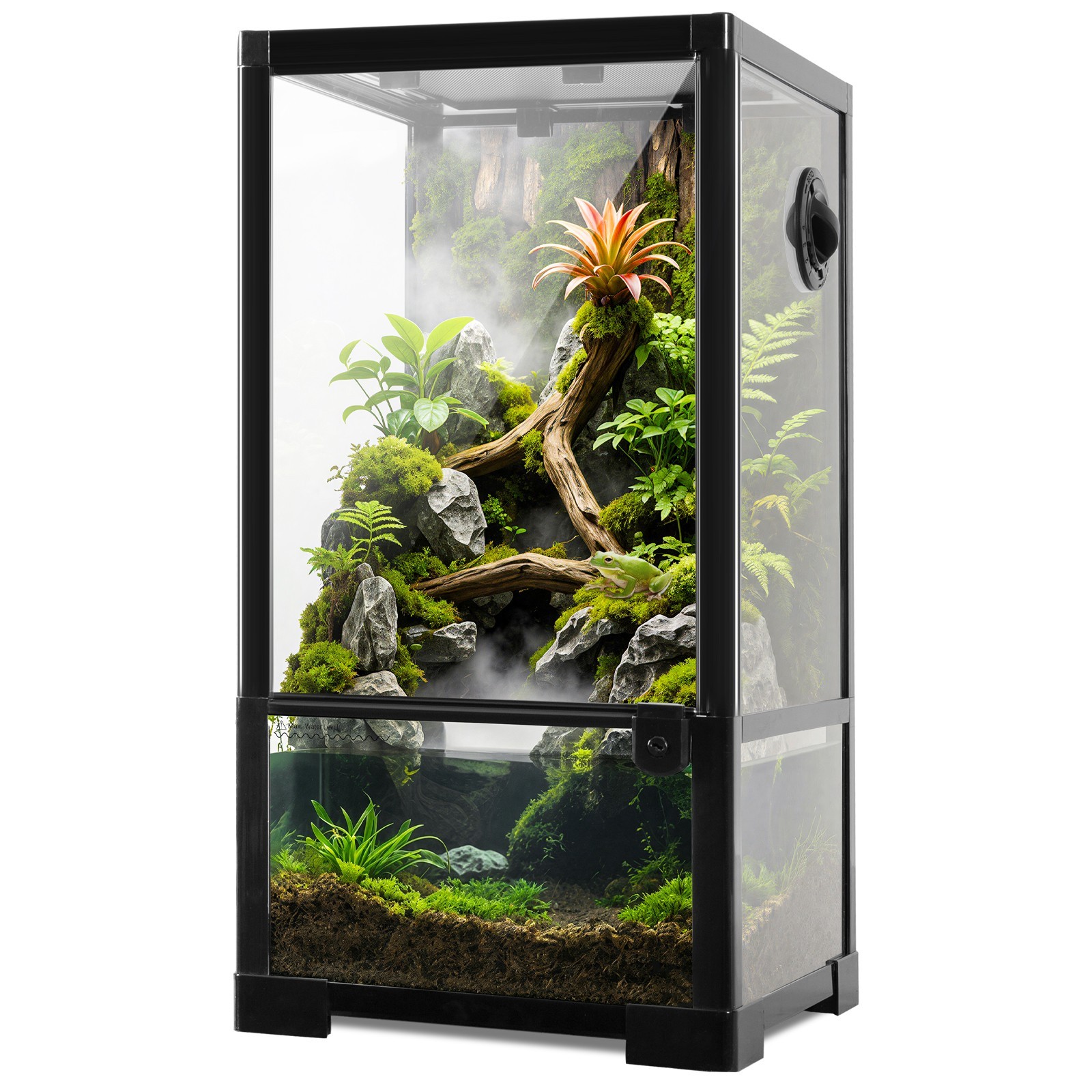 15 Gallon Full Glass Reptile Terrarium 12" x 12" x 24" Knock-Down Glass Tank$159.99View on eBay
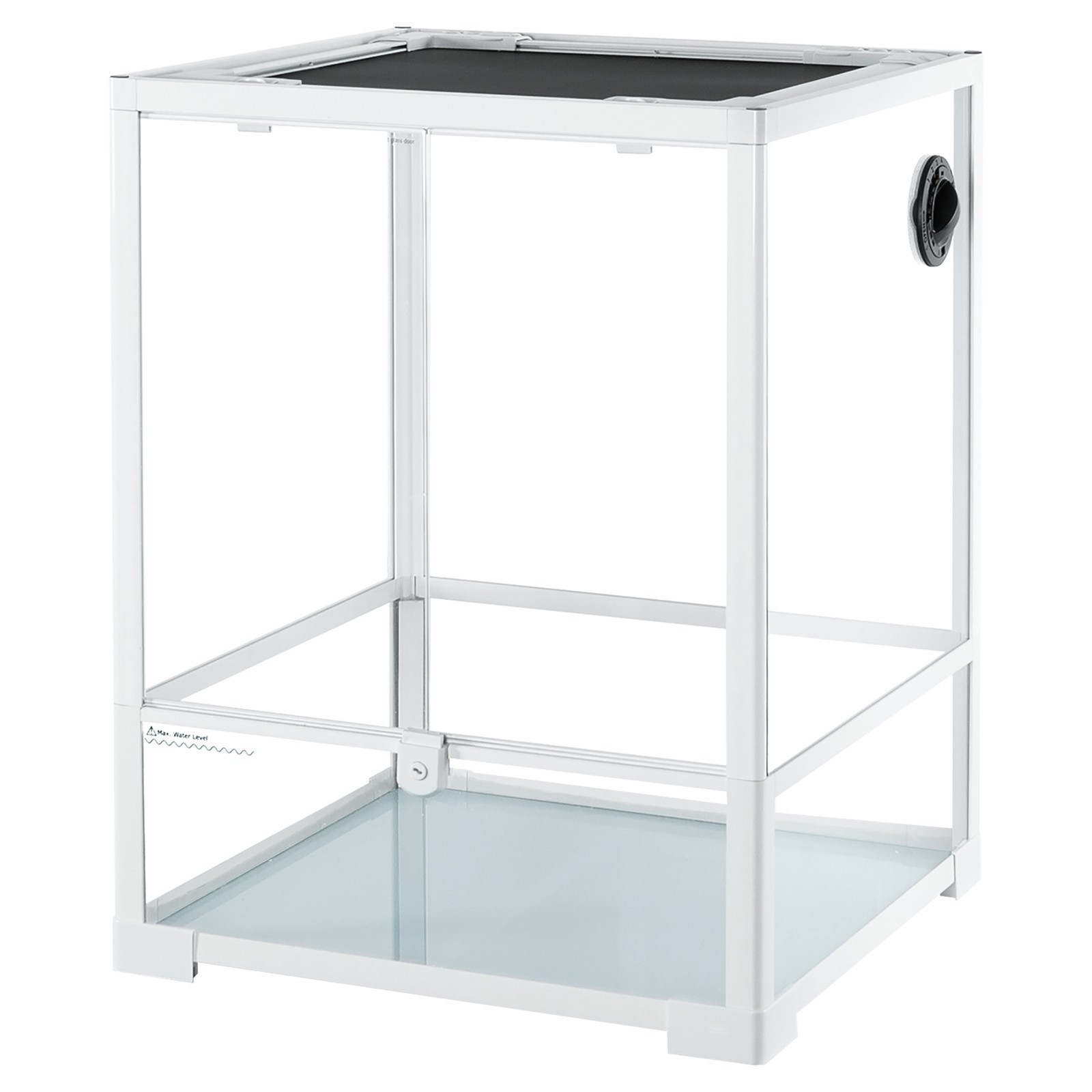 30 Gallon Glass Reptile Terrarium 18" x 18" x 24" Enclosure Bearded Dragon Tank$178.99View on eBay
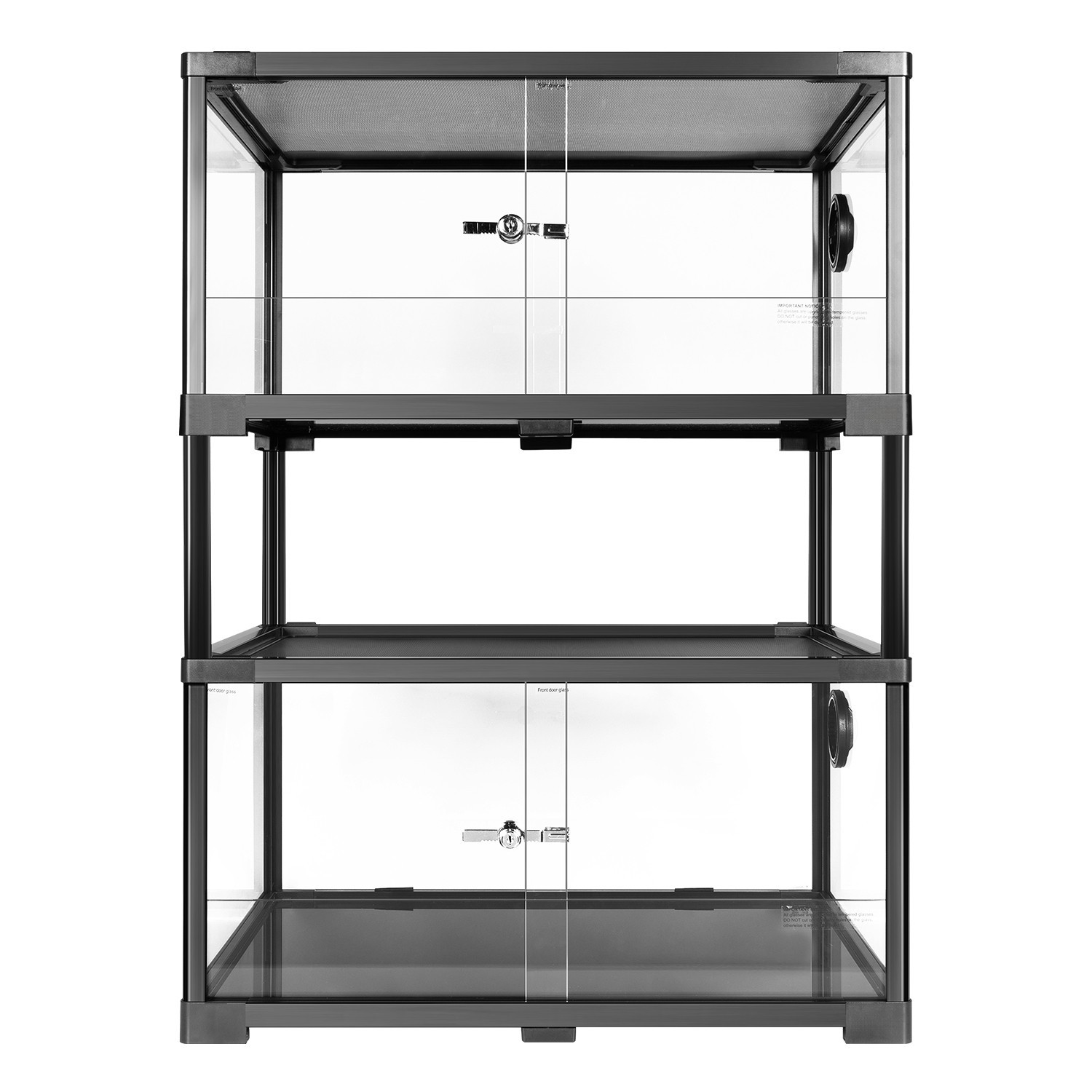 Glass Reptile Tank Enclosure Double Stacked 24" x 18"x 32" Stacked Snake Tank$269.99New · Last checked Nov 24, 2026View on eBay
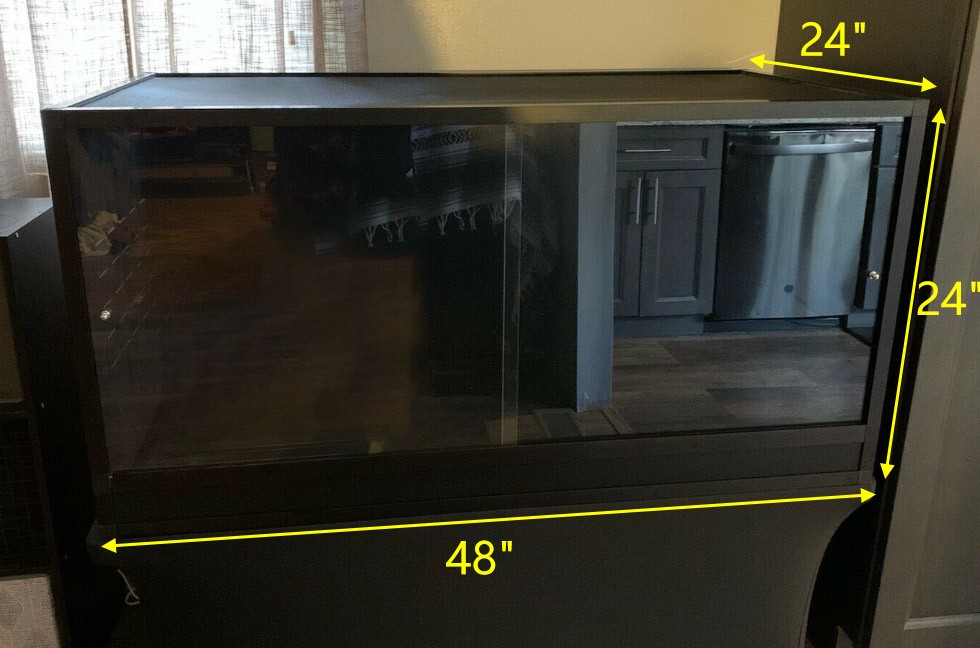 Toxirium 120 Gallon 48x24x24 PVC Reptile Enclosure Sliding Glass Doors Stackable$305.99New · Last checked Nov 24, 2026View on eBay
Highlights
- Toughened (tempered) glass at 4-6 mm resists impact and thermal shock; standard annealed glass at 3-4 mm chips and cracks under heat-lamp hotspots.
- Lid mesh aperture determines species suitability: ≤1 mm stainless mesh contains hatchlings and fruit flies; 2-3 mm aluminum mesh suits adult lizards but not small inverts.
- Front-opening doors with double hinges allow safe maintenance without lifting a heat lamp; top-opening lids suit arboreal species needing overhead access.
- Knock-down (flat-pack) glass tanks use silicone-sealed edge joints; factory-built units use continuous extruded frames for higher structural rigidity.
Best use cases
- Best fit: tropical amphibians and humidity-dependent species — choose a glass lid with partial solid acrylic or glass panel plus fine mesh vents to hold 70-90% humidity.
- Best fit: desert and arid species (bearded dragons, leopard geckos) — choose a full-screen aluminum mesh lid for maximum airflow and UVB penetration.
- Wrong fit: large climbing snakes or monitors — skip thin 3-4 mm glass lids and specify 6 mm toughened glass with metal locking clips rated for the animal's push force.
- Wrong fit: hatchling invertebrates or small geckos — skip wide 5 mm+ mesh lids that allow escape; use 1 mm stainless mesh or a secondary fine mesh screen.
Buying tips
- Match lid mesh to animal size: mesh opening must be smaller than the width of the smallest body part (typically head width) — 1 mm for hatchlings, 3 mm for adults.
- For heat lamps, specify toughened glass of at least 4 mm and a lid frame that supports the lamp clamp; annealed glass under a 100 W basking spot can crack from thermal gradient.
- Calculate ventilation: screen lids provide near-100% open area; glass lids with vents provide 10-30%. Tropical setups need 30-50% vented area, arid setups 80%+.
- Check lid retention: hinged lids need a locking latch or sliding pin; removable lids need a friction fit or clips — snakes and monitors can lift unsecured lids.
Specs
| Glass Type | Toughened 4-6 mm vs Annealed 3-4 mm |
|---|---|
| Lid Mesh Aperture | 1 mm fine / 2-3 mm standard / 5 mm+ coarse |
| Lid Style | Hinged front-door / Removable top / Sliding |
| Vent Open Area | 10-30% tropical / 80%+ arid full mesh |
Related searches
What to check before buying
- Measure the tank's outside rim dimensions and lid recess depth — lids are sized to the inner lip, not the outer footprint, so a 12x12x24 in tank needs a lid cut to the 11.5 in inner opening.
- Confirm glass thickness with a caliper or spec sheet: 3 mm is fragile for anything above 15 gallons; 4-6 mm toughened is required for 30+ gallon tall tanks.
- Verify light fixture compatibility: lid mesh must support clamp lamps without sagging, and glass lids need a heat-resistant frame if using ceramic heat emitters.
- Check floor and stand flatness — a knock-down glass tank on an uneven surface concentrates stress at silicone joints and can fail; use a level mat or foam pad.
FAQ
Data sources: eBay / Amazon listings and product attribute feeds. Updated Nov 27, 2026.
Some links on this page are affiliate links. If you buy after clicking one, we may earn a commission at no extra cost to you. This does not change which products appear here or their order. Affiliate disclosure.