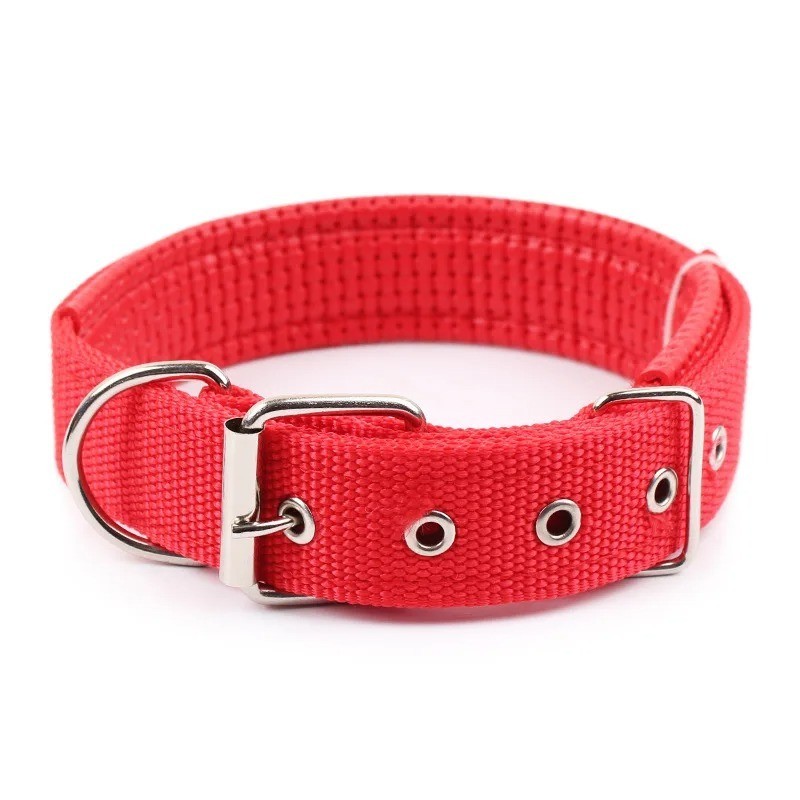

Photos from current listings. Actual item, color, and included accessories may vary.
Nylon Collar Buying Guide
A nylon collar is a webbing-based restraint or training strap, where durability hinges on webbing denier/thickness, hardware metal grade, and buckle architecture rather than color or pattern. The primary trade-off is between lightweight comfort webbing with plastic hardware for daily ID/walking versus dense webbing with welded-steel D-rings and martingale or chain-limited slip geometry for training and escape-prone dogs. Buy standard buckles for relaxed dogs, martingale or limited-slip for narrow-skulled and strong-pulling dogs, and skip thin craft-grade webbing for any dog over 25 lb.
Median $9.99
Key takeaways
- Webbing strength differs by denier and thickness: 1-inch (25 mm) × 1.5–2 mm nylon webbing is the practical minimum for medium dogs; 3/4-inch (19 mm) suits small breeds and 1.5-inch (38 mm) for giant breeds.
- Hardware grade determines safety: welded steel D-rings and cast buckles outlast stamped steel and molded plastic, which crack under load in cold weather or strong pullers.
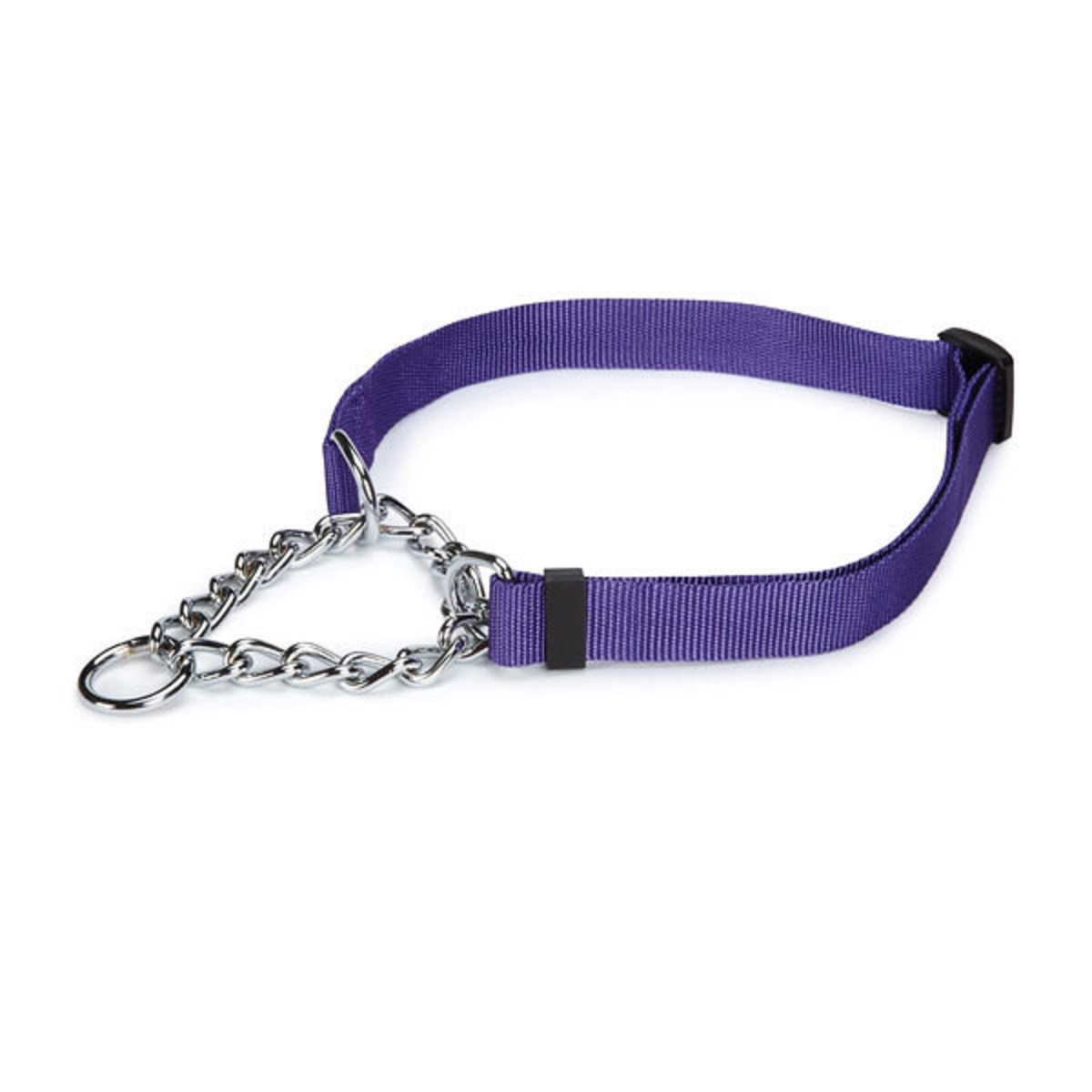
- Martingale and limited-slip collars tighten only to a preset limit, preventing escape by narrow-skulled breeds (Greyhounds, Whippets, Salukis) without choking; chain-loop versions add audible correction for training.
At a glance
- Category
- Pet Training Gear
- Last updated
- Nov 28, 2026
Current offers
Highlights
- Webbing strength differs by denier and thickness: 1-inch (25 mm) × 1.5–2 mm nylon webbing is the practical minimum for medium dogs; 3/4-inch (19 mm) suits small breeds and 1.5-inch (38 mm) for giant breeds.
- Hardware grade determines safety: welded steel D-rings and cast buckles outlast stamped steel and molded plastic, which crack under load in cold weather or strong pullers.
- Martingale and limited-slip collars tighten only to a preset limit, preventing escape by narrow-skulled breeds (Greyhounds, Whippets, Salukis) without choking; chain-loop versions add audible correction for training.
- Buckle type changes fit and safety: quick-release side buckles speed on/off but add a plastic failure point, while metal belt-style buckles with rivets are the durable choice for heavy pullers and training lines.
Best use cases
- Best fit — daily walking and ID for calm dogs: 3/4–1 inch flat nylon with quick-release buckle and welded steel D-ring; skip martingale geometry and chain loops for non-escape dogs.
- Best fit — training and strong pullers: 1-inch or 1.5-inch dense webbing with metal buckle, riveted D-ring, and martingale or chain-limited slip; skip plastic buckles for dogs over 25 lb.
- Best fit — sighthounds and escape artists: martingale collar in 1-inch webbing with chain or fabric loop; skip standard flat buckle collars that slip over narrow skulls.
- Wrong fit — tie-out or leash-substitute use: nylon collars are not load-rated for tethering; use a harness or tie-out rated for the dog's weight instead.
Buying tips
- Measure the neck at the widest point and add two fingers of slack (roughly 1–2 inches); collar sizing ranges are usually 10–14 in (S), 14–18 in (M), 18–22 in (L), 22–26 in (XL).
- Select webbing by dog weight: under 15 lb use 3/4-inch; 15–60 lb use 1-inch; over 60 lb use 1.5-inch or 1-inch reinforced webbing with welded hardware.
- For training, choose martingale or limited-slip designs that tighten only to the size of the dog's neck; for sighthounds pair with a chain loop to prevent backing out.
- Prefer welded steel D-rings and riveted construction over stamped or glued hardware; check that the buckle matches the webbing width (1-inch buckle for 1-inch webbing) for load transfer.
Specs
| Webbing Width | 3/4 in (S) · 1 in (M) · 1.5 in (L/XL) |
|---|---|
| Hardware Grade | Welded steel vs stamped steel vs plastic |
| Buckle Type | Quick-release plastic vs metal riveted |
| Closure Style | Flat buckle vs martingale limited-slip |
Related searches
What to check before buying
- Neck circumference measured snug at the widest point, plus 1–2 inches of comfort slack for the collar to sit correctly.
- Hardware match: D-ring and buckle width equal to webbing width, with welded (not stamped) steel for dogs over 25 lb.
- Climate and coat check: plastic buckles become brittle below freezing; dense-coated or long-haired dogs benefit from rolled or padded nylon to prevent matting.
- Companion gear: a fixed-length nylon or leather leash (4–6 ft) with a swivel snap rated for the dog's weight; harness for pullers instead of collar-only control.
FAQ
Data sources: eBay / Amazon listings and product attribute feeds. Updated Nov 28, 2026.
Some links on this page are affiliate links. If you buy after clicking one, we may earn a commission at no extra cost to you. This does not change which products appear here or their order. Affiliate disclosure.