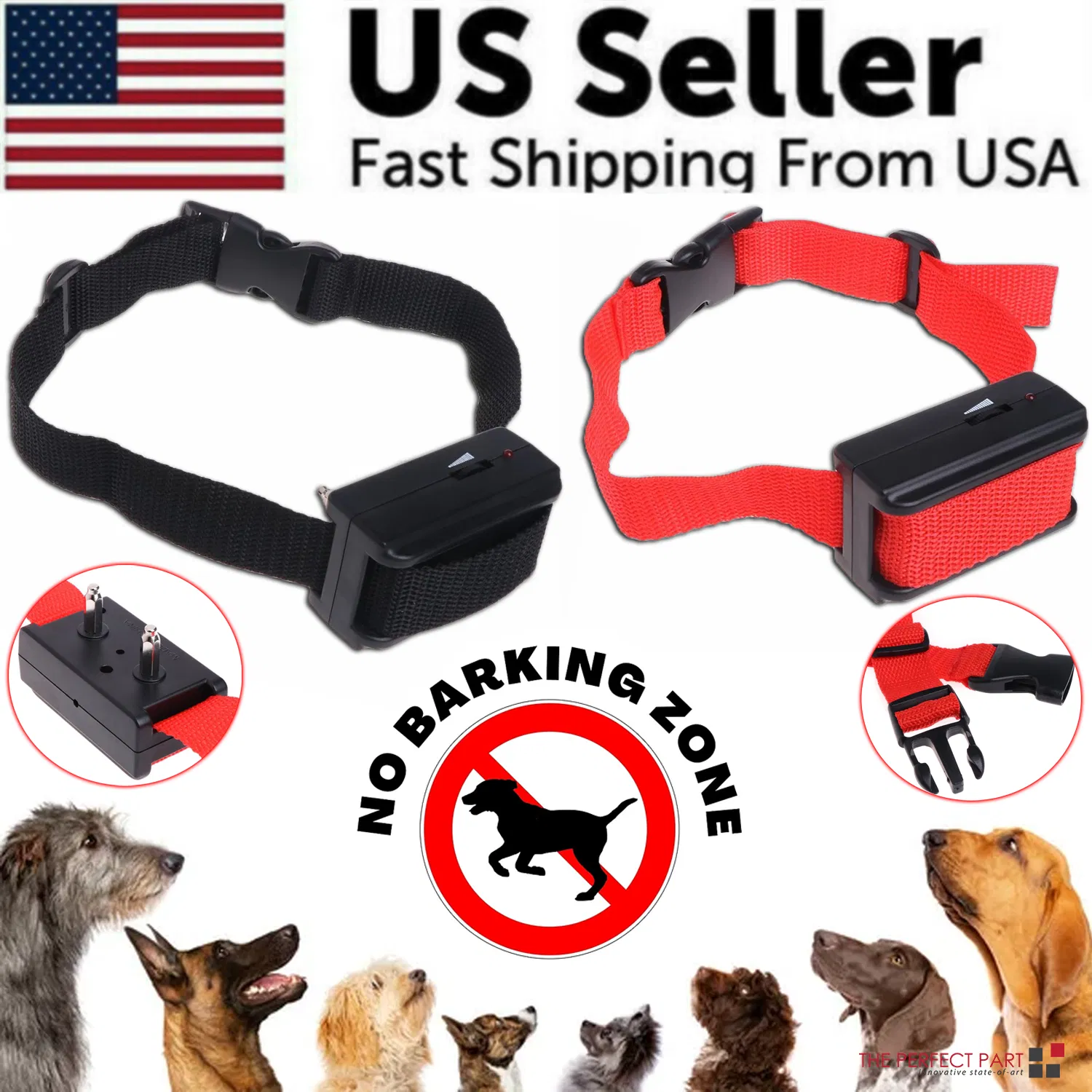

Photos from current listings. Actual item, color, and included accessories may vary.
Automatic Dog Shock Collar Buying Guide
An automatic dog shock collar is a bark-triggered e-collar that pairs a vibration sensor with contact probes to deliver a corrective static pulse without a handheld remote. The core trade-off is between adjustable, fail-safe stimulation circuitry and cheap always-on receivers that misfire on environmental noise or collar jingle. Buy only units with stepped intensity plus a vibration-only mode and probe-free test path; skip any collar that fires on sound alone with no sensitivity or duration adjustment.
Key takeaways
- Bark detection runs on a vibration sensor or microphone: vibration sensors resist kennel noise and wind, while mic-based units can false-trigger on other dogs barking.
- Stimulation is delivered through two contact probes that must touch skin, so coat length and probe length determine whether correction reaches the dog at all.
- Static output is measured in levels (typically 1-7 or 1-100 steps) with pulse duration fixed; stepped adjustment is the single biggest safety and training-progress factor.
At a glance
- Category
- Pet Training Gear
- Last updated
- Nov 28, 2026
Current offers
Highlights
- Bark detection runs on a vibration sensor or microphone: vibration sensors resist kennel noise and wind, while mic-based units can false-trigger on other dogs barking.
- Stimulation is delivered through two contact probes that must touch skin, so coat length and probe length determine whether correction reaches the dog at all.
- Static output is measured in levels (typically 1-7 or 1-100 steps) with pulse duration fixed; stepped adjustment is the single biggest safety and training-progress factor.
- Rechargeable lithium receivers (USB) outlast and out-seal disposable-button-cell models; IPX7 waterproofing is the minimum for outdoor and wet-coat use.
Best use cases
- Best fit: nuisance-barking households with one dog and a fenced yard—choose a vibration-sensor collar with 5+ intensity steps and a vibration-only first mode for safe introduction.
- Best fit: multi-dog homes where only one dog barks—pick a collar with narrow vibration-sensitivity settings so a second dog's barking or collar jingle does not trigger correction on the wrong animal.
- Wrong fit: puppies under 6 months, dogs under roughly 8-10 lb, or dogs with trachea issues—skip shock entirely and use a citronella or vibration-only no-bark unit instead.
- Wrong fit: off-leash recall or field training—an automatic bark collar has no remote and cannot be used for command training; choose a remote e-collar system instead.
Buying tips
- Match probe length to coat: short probes for smooth-coated dogs, long probes for double coats; probes must contact skin, not fur, or the correction is silently skipped.
- Choose at least 5 discrete intensity levels and a vibration-only mode; single-level or continuous-dial collars remove the ramp-up period every dog needs.
- Confirm the receiver is rechargeable USB and rated IPX7; button-cell receivers cost more over time and corrode at the probe base in wet climates.
- Check the collar strap fits neck circumference with 2-3 inches of adjustment spare, and that the receiver weighs under about 3 oz so it does not drag or rotate on small necks.
Specs
| Trigger Sensor | Vibration vs microphone |
|---|---|
| Intensity Levels | 5-100 stepped settings |
| Receiver Power | USB rechargeable vs button cell |
| Waterproof Rating | IPX7 or better |
Related searches
What to check before buying
- Measure the dog's neck circumference at the narrowest point and confirm the strap range covers it with room for two-finger fit under the probes.
- Inspect coat thickness at the throat: double coats and thick ruff need long probes or the collar will not deliver correction reliably.
- Confirm a 110-240V USB charger is available and the receiver uses USB-C or micro-USB rather than proprietary docks.
- Verify the yard or home environment: kennel noise, wind, and other dogs favor vibration-sensor detection over microphone-based bark triggers.
FAQ
Data sources: eBay / Amazon listings and product attribute feeds. Updated Nov 28, 2026.
Some links on this page are affiliate links. If you buy after clicking one, we may earn a commission at no extra cost to you. This does not change which products appear here or their order. Affiliate disclosure.