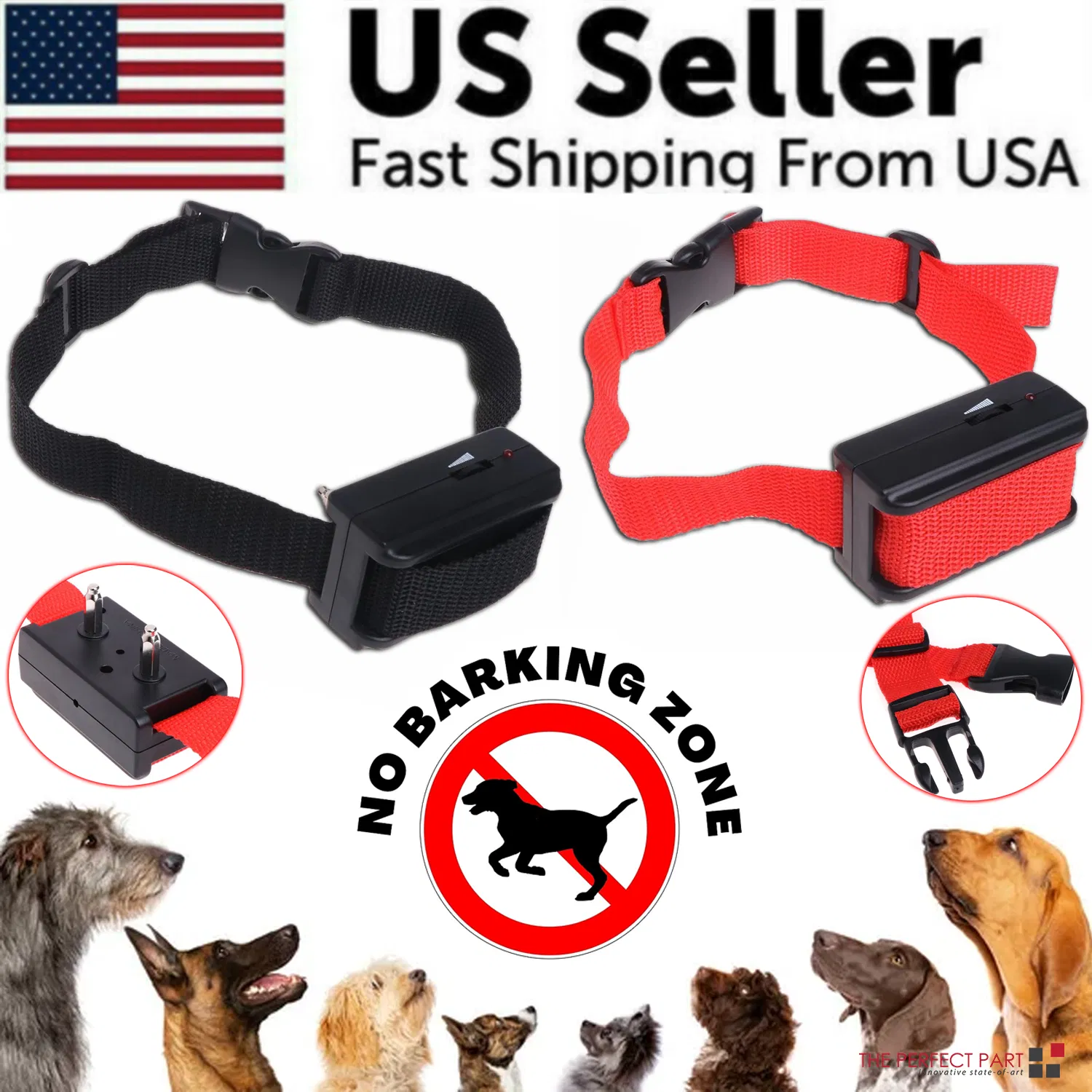

Photos from current listings. Actual item, color, and included accessories may vary.
Automatic Anti Bark Device Buying Guide
Automatic anti-bark devices are either collar-mounted correction units (static, vibration, or ultrasonic) or stationary ultrasonic emitters that trigger on barking. The core trade-off is between correction intensity and humaneness: static collars work fastest but risk misuse, while ultrasonic and vibration-only models are safer but less reliable in noisy or multi-dog homes. The decision rule: choose a collar with adjustable static levels and a vibration warning mode only if you can supervise and fit it correctly; otherwise pick a stationary ultrasonic unit or a vibration-only collar.
Key takeaways
- Collar correction types: static (e-shock), vibration, and ultrasonic — static levels typically range from 1–7 or 1–10, with vibration-only as the humane entry tier.
- Stationary ultrasonic emitters cover 20–50 ft and trigger on sound thresholds; they are ineffective through walls and lose potency in multi-dog or high-ambient-noise environments.
- Collar fit is critical: contact points must touch skin on the neck, so a snug fit (two-finger rule) is required; loose collars cause inconsistent correction and skin irritation.
At a glance
- Category
- Pet Training Gear
- Last updated
- Nov 28, 2026
Current offers
Highlights
- Collar correction types: static (e-shock), vibration, and ultrasonic — static levels typically range from 1–7 or 1–10, with vibration-only as the humane entry tier.
- Stationary ultrasonic emitters cover 20–50 ft and trigger on sound thresholds; they are ineffective through walls and lose potency in multi-dog or high-ambient-noise environments.
- Collar fit is critical: contact points must touch skin on the neck, so a snug fit (two-finger rule) is required; loose collars cause inconsistent correction and skin irritation.
- Battery and recharge differ by tier: static collars usually use USB-rechargeable lithium packs (5–10 day runtime), while basic ultrasonic units take AA batteries (weeks to months).
Best use cases
- Best fit: single-dog household with nuisance barking and an owner present for supervised training — pick an adjustable static collar with vibration warning and a safety lockout.
- Best fit: apartment or indoor barking triggered by hallway noise — pick a plug-in stationary ultrasonic emitter aimed at the barking zone, not a collar.
- Wrong fit: multi-dog homes or dog parks — skip ultrasonic and static collars; they trigger on the wrong dog or ambient noise and cause confusion.
- Wrong fit: puppies under 6 months or dogs with health issues — skip static entirely; use vibration-only or behavioral training instead.
Buying tips
- Match correction type to temperament: static for stubborn, high-drive dogs; vibration for sensitive or small breeds; ultrasonic only for indoor, single-dog setups.
- Check static level range and whether it has a vibration-only mode — a collar with 7+ levels and a warning vibration gives safer escalation than a fixed-level unit.
- Verify collar strap size range against your dog's neck circumference (measure with a soft tape): small 8–12 in, medium 12–18 in, large 18–26 in.
- For stationary units, confirm trigger range (20–50 ft) and whether it is wall-plug or battery; plug-in models avoid battery drain but limit placement.
Specs
| Correction Type | Static / Vibration / Ultrasonic |
|---|---|
| Static Levels | 1-7 or 1-10 adjustable |
| Collar Neck Size | 8-26 in (S/M/L) |
| Power Source | USB rechargeable / AA battery |
Related searches
What to check before buying
- Measure your dog's neck circumference and weight — collar tiers are sized by neck fit, not breed label.
- Confirm your home's ambient noise level: ultrasonic units fail in noisy households or near street traffic.
- Check if the collar uses proprietary or standard batteries (USB-C vs AA) and whether spares are included.
- For static collars, ensure the unit has rubber contact covers or a test mode to verify level before putting it on the dog.
FAQ
Data sources: eBay / Amazon listings and product attribute feeds. Updated Nov 28, 2026.
Some links on this page are affiliate links. If you buy after clicking one, we may earn a commission at no extra cost to you. This does not change which products appear here or their order. Affiliate disclosure.