
Photos from current listings. Actual item, color, and included accessories may vary.
Dog Travel Harness Car Buying Guide
A dog travel harness for car use is a crash-tested restraint system that distributes force across the chest and sternum instead of the neck, unlike a simple seat-belt clip that only restrains a dog from roaming. The core trade-off is between a certified crash-tested harness (dynamic load rated, wide webbing, metal hardware) versus a basic nylon strap or bungee clip that offers containment but no impact protection. The decision rule: buy a harness that passes a dynamic crash test standard (FMVSS 213 or a recognized equivalent) with a wide, padded chest plate and metal buckles; skip any thin-strap or elastic-buffer-only product for crash safety.
Median $11.99
Key takeaways
- Crash-tested harnesses are dynamically pull-tested to FMVSS 213 or an equivalent standard; basic seat-belt clips and bungee leads are containment-only and carry no crash rating.
- Webbing width and stitching density drive strength: 1-inch (25 mm) or wider nylon with box-X stitching and bar-tack reinforcement outperforms 3/4-inch straps.
- Hardware grade matters: welded steel D-rings and aluminum or steel buckles survive impact loads; molded plastic quick-release buckles can shear under dynamic force.
At a glance
- Category
- Pet Travel & Safety
- Last updated
- Nov 26, 2026
Current offers
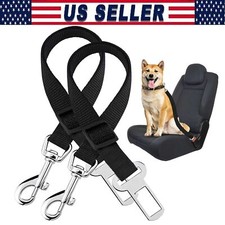 2× Pet Dog Seat Belt Adjustable Travel Car Safety Harnesses Lead Restraint USA$8.63Last checked Nov 23, 2026View on eBay
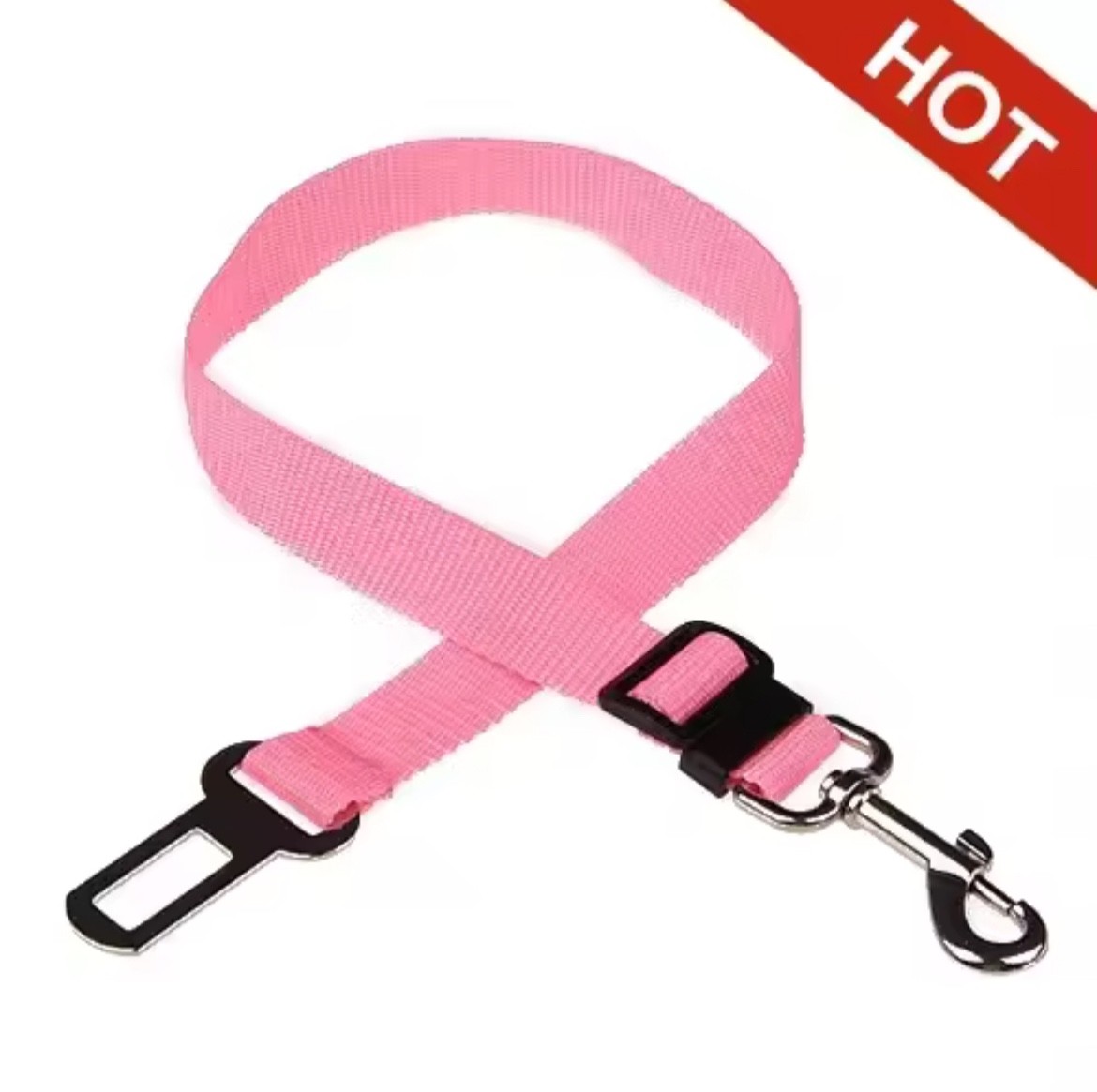 Dog Car Safety Harness Seat Belt Adjustable Pet Travel Restraint Reflective$8.88Last checked Nov 23, 2026View on eBay
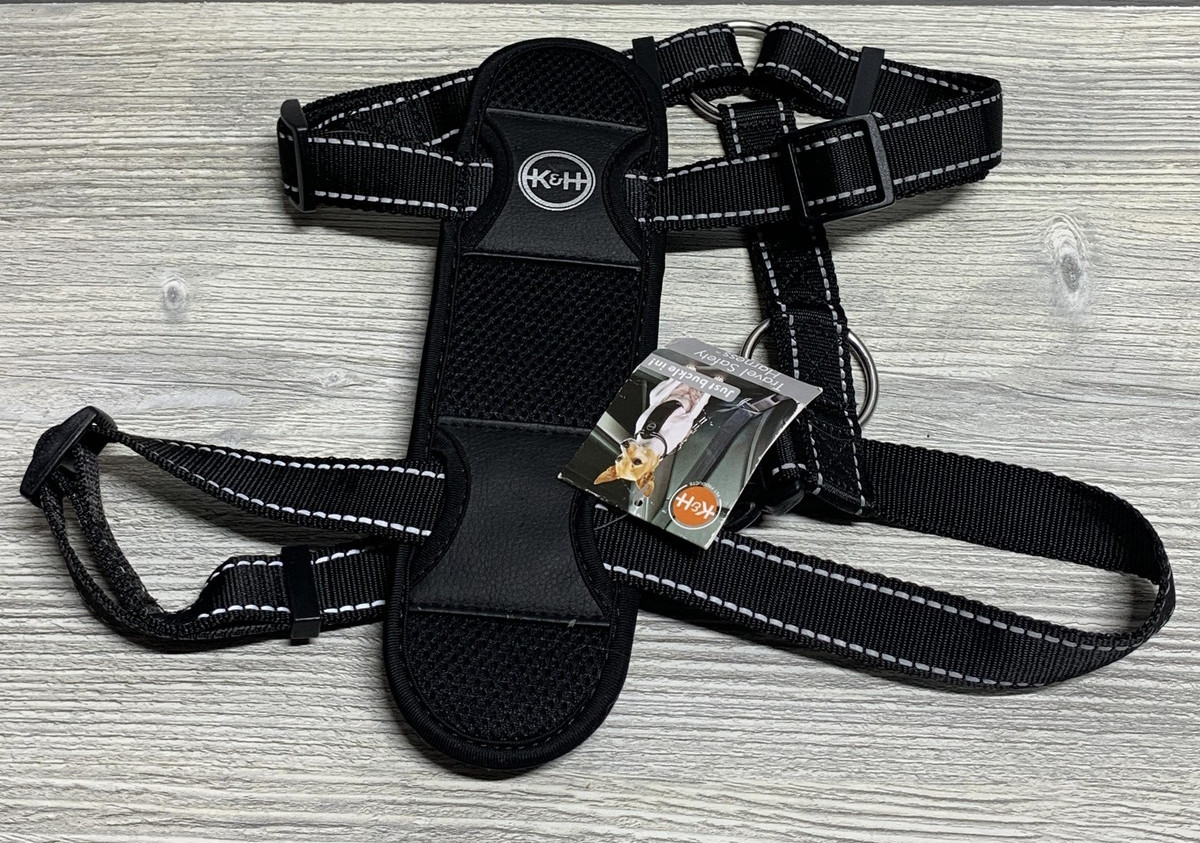 K&H Pet Products Travel Safety Dog Car Harness Large Black Nylon No Leash$11.99Last checked Nov 20, 2026View on eBay
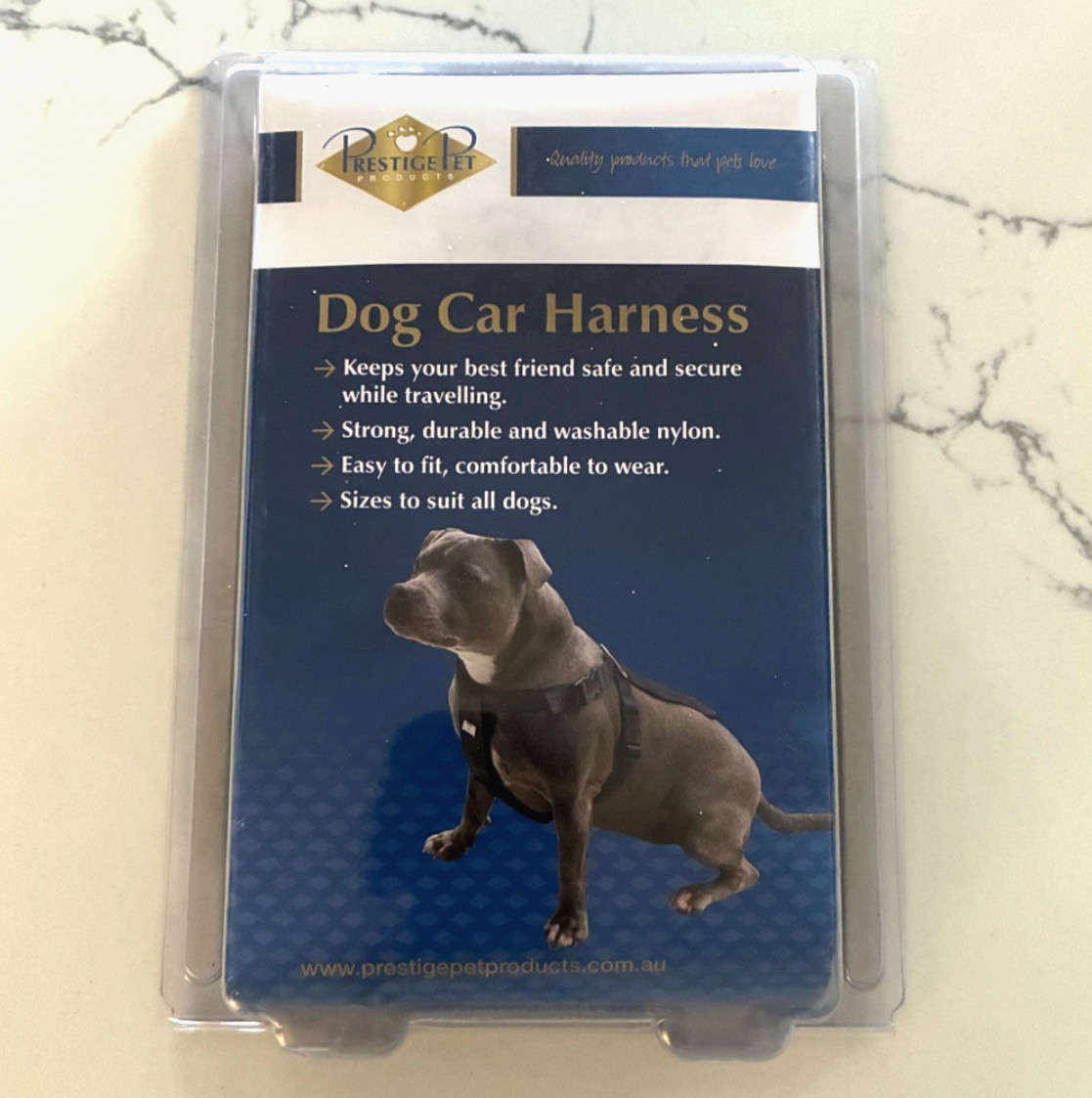 Prestige Pet Dog Car Harness Large 60-70cm Black Nylon Safety Travel Harness NOS$16.94View on eBay
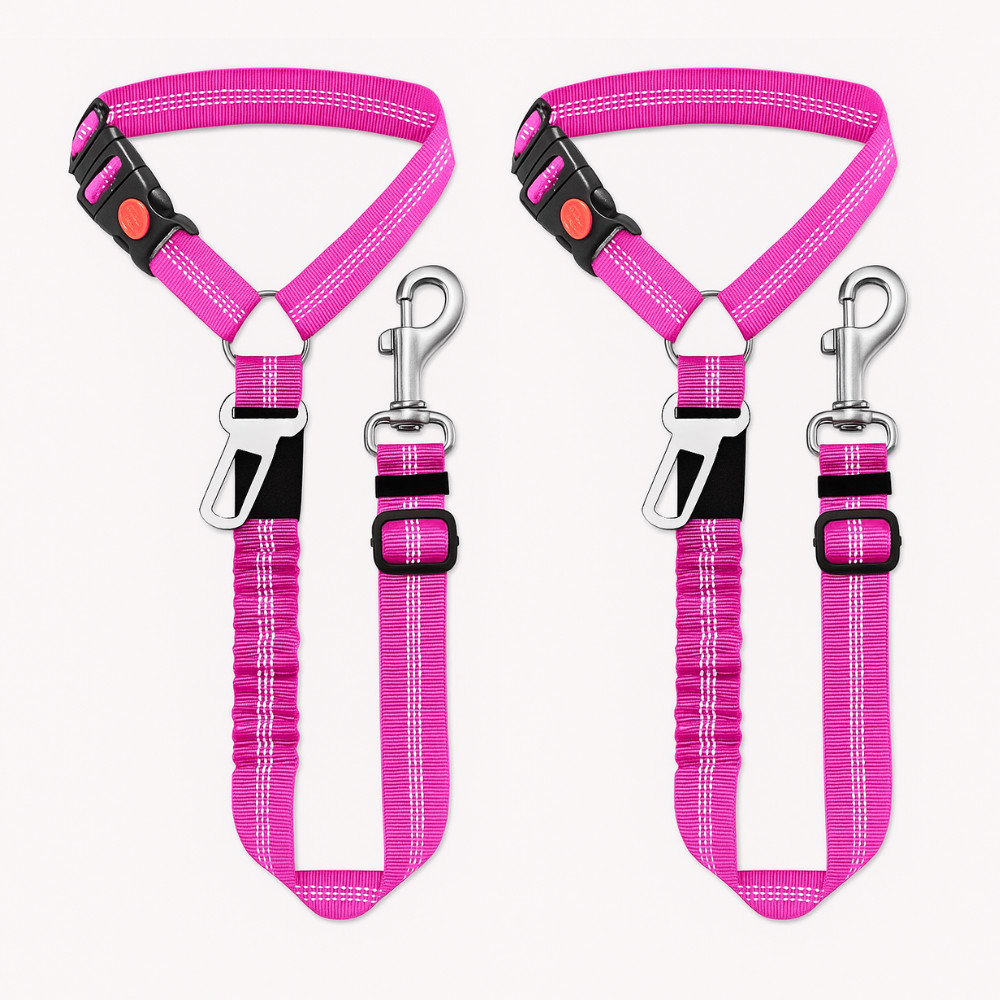 Dog Seat Belt Pet Travel Car Safety Harness Lead Adjustable Restraint$16.99Last checked Nov 24, 2026View on eBay
Highlights
- Crash-tested harnesses are dynamically pull-tested to FMVSS 213 or an equivalent standard; basic seat-belt clips and bungee leads are containment-only and carry no crash rating.
- Webbing width and stitching density drive strength: 1-inch (25 mm) or wider nylon with box-X stitching and bar-tack reinforcement outperforms 3/4-inch straps.
- Hardware grade matters: welded steel D-rings and aluminum or steel buckles survive impact loads; molded plastic quick-release buckles can shear under dynamic force.
- Fit architecture: a 5-point or 3-point harness with a padded chest plate distributes load across the sternum; strap harnesses with a single belly band concentrate force and can slip.
Best use cases
- Best fit: daily car rides and highway travel — pick a crash-tested harness with a wide padded chest plate, metal D-ring, and a tether that clicks into the seat belt, sized to your dog's girth.
- Best fit: short trips or temporary restraint — a basic adjustable nylon seat-belt clip works for keeping a dog in the back seat, but only if the dog is also in a crash-rated harness.
- Wrong fit: skip elastic bungee leads and retractable seat-belt clips for crash safety — they introduce slack and stretch that defeat restraint in a collision.
- Wrong fit: skip a harness sized by weight alone — girth and chest depth determine fit, and a loose harness can allow the dog to slip out or load the neck in a crash.
Buying tips
- Measure girth around the widest part of the ribcage and chest depth from sternum to withers; match to the harness size chart rather than weight, and allow two fingers of slack under straps.
- Choose 1-inch (25 mm) or wider nylon webbing with box-X stitching and bar-tack reinforcement at load points; thinner straps and single-stitch seams are the first failure point.
- Require metal hardware — welded steel D-ring and steel or aluminum buckles; molded plastic buckles are acceptable only on non-load-bearing adjustment points.
- Confirm the tether connection: a seat-belt loop or clip that locks the harness to the vehicle belt, plus a crash-tested harness, is the minimum safe configuration; bungee and retractable clips are not crash-rated.
Specs
| Crash Rating | FMVSS 213 tested vs containment-only |
|---|---|
| Webbing Width | 1 in (25 mm)+ vs 3/4 in thin strap |
| Hardware | Welded steel D-ring vs plastic buckle |
| Harness Type | Padded chest-plate vs strap/belly-band |
Related searches
What to check before buying
- Measure your dog's girth (widest ribcage) and chest depth, then compare to the harness size chart; weight alone is not a reliable sizing metric.
- Check your vehicle seat belt type (lap-only, lap-shoulder, or LATCH) and confirm the harness tether or loop is compatible with that belt path.
- Verify the harness has a crash-test certification (FMVSS 213 or equivalent) and metal load-bearing hardware before purchase.
- Ensure the harness allows a two-finger gap under each strap and does not restrict shoulder movement or press on the throat when the dog sits or lies down.
FAQ
Data sources: eBay / Amazon listings and product attribute feeds. Updated Nov 26, 2026.
Some links on this page are affiliate links. If you buy after clicking one, we may earn a commission at no extra cost to you. This does not change which products appear here or their order. Affiliate disclosure.