
Photos from current listings. Actual item, color, and included accessories may vary.
Airline Pet Carrier Buying Guide
An airline pet carrier is a soft-sided or hard-shell enclosure sized to fit under an aircraft seat, and the core trade-off is between compressible soft-sided fabric (fits more sizers, less crush protection) and rigid hard-shell (better structure, less cabin flexibility). The decisive rule: buy a soft-sided carrier with a rigid internal frame or PE board base that matches your airline's under-seat dimensions, and skip any carrier marketed only as 'airline style' without published exterior dimensions.
Median $26.23
Key takeaways
- Soft-sided carriers typically use 600D Oxford polyester with mesh ventilation panels; higher denier (900D-1200D) resists claw tears and sagging better than thin 300D nylon.
- A PE (polyethylene) board or reinforced base plate is what keeps the carrier from collapsing on your pet; foam-only bottoms sag and lose under-seat clearance.
- Airline cabin fit is governed by exterior dimensions, not weight: most major US carriers cap under-seat space near 18 x 11 x 11 in, so carriers around 17-18 in L x 10-11 in W x 10-11 in H are the practical ceiling.
At a glance
- Category
- Pet Travel & Safety
- Last updated
- Nov 26, 2026
Current offers
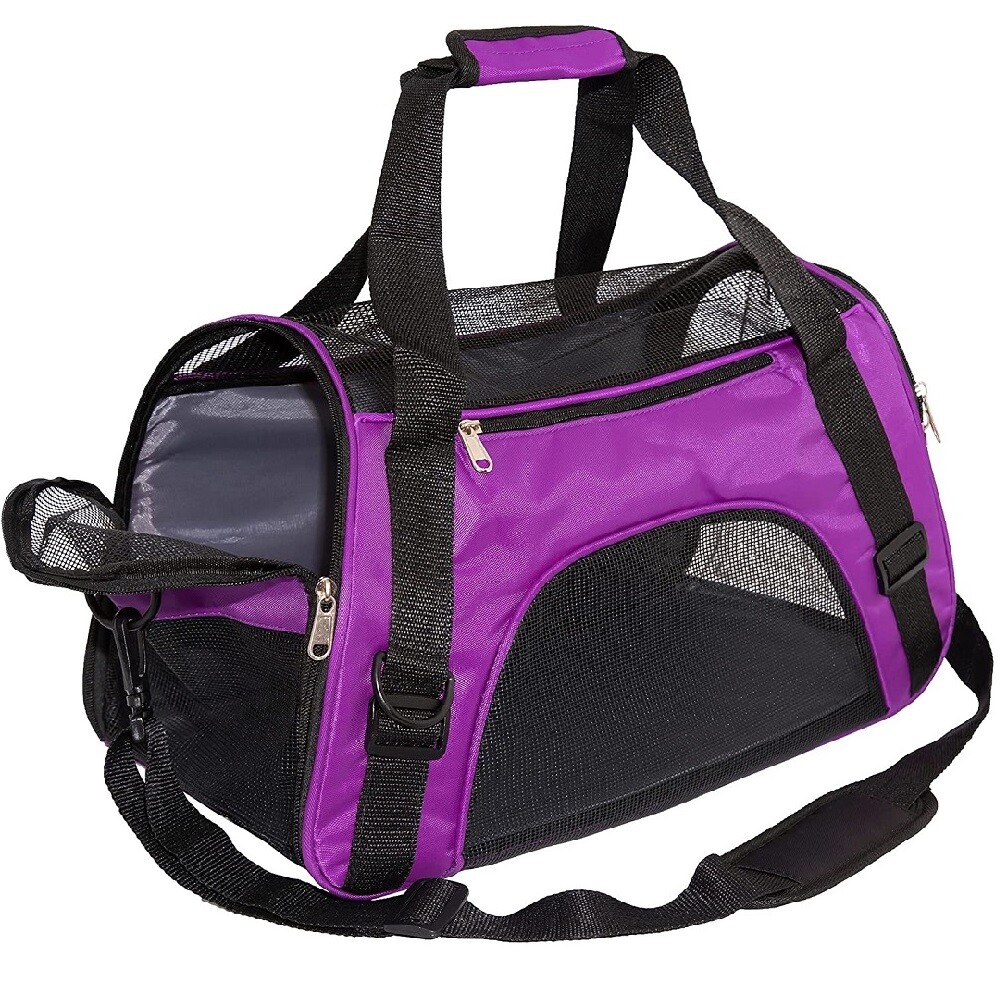 Soft-Sided Airline Approved Pet Cat Carrier Bag, Comfort Case, Sizes M & L$18.79Last checked Nov 18, 2026View on eBay
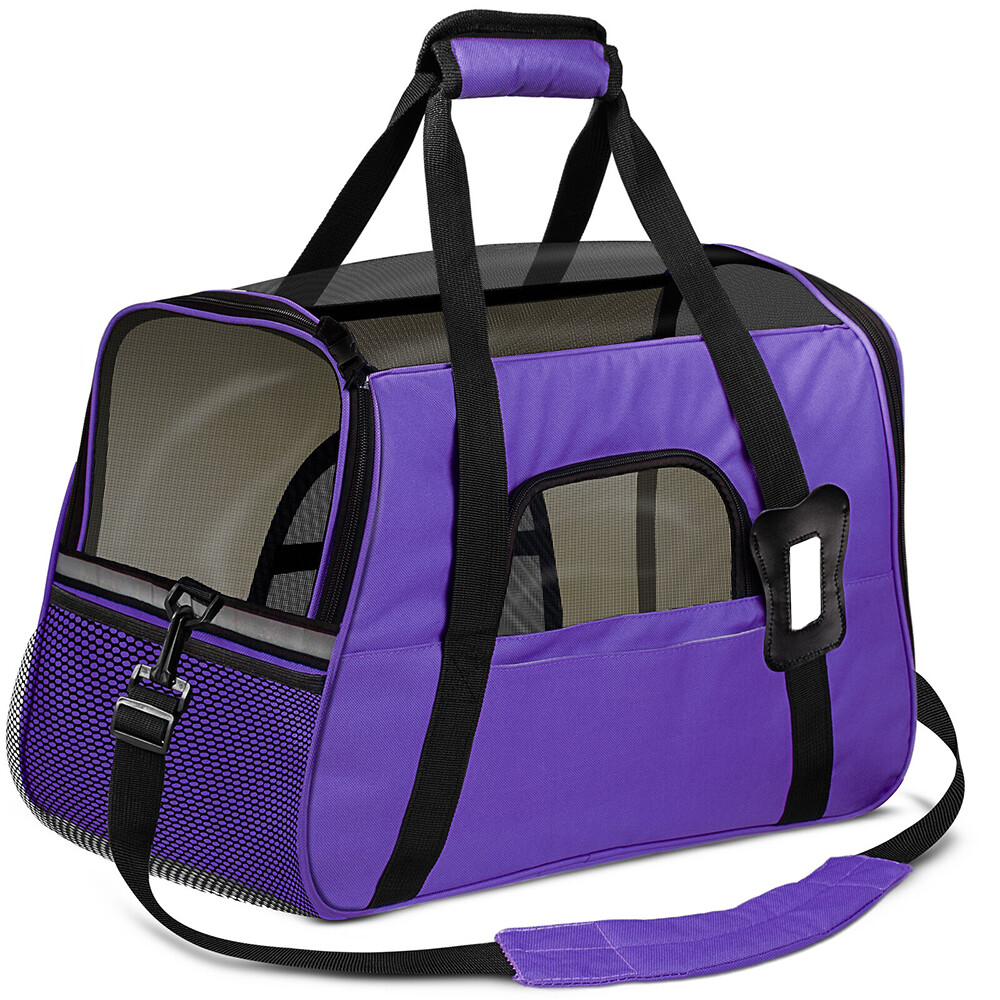 Pet Dog /Small Cat Carrier Soft Sided Comfort Bag Travel Case Airline Approved$20.66Last checked Nov 18, 2026View on eBay
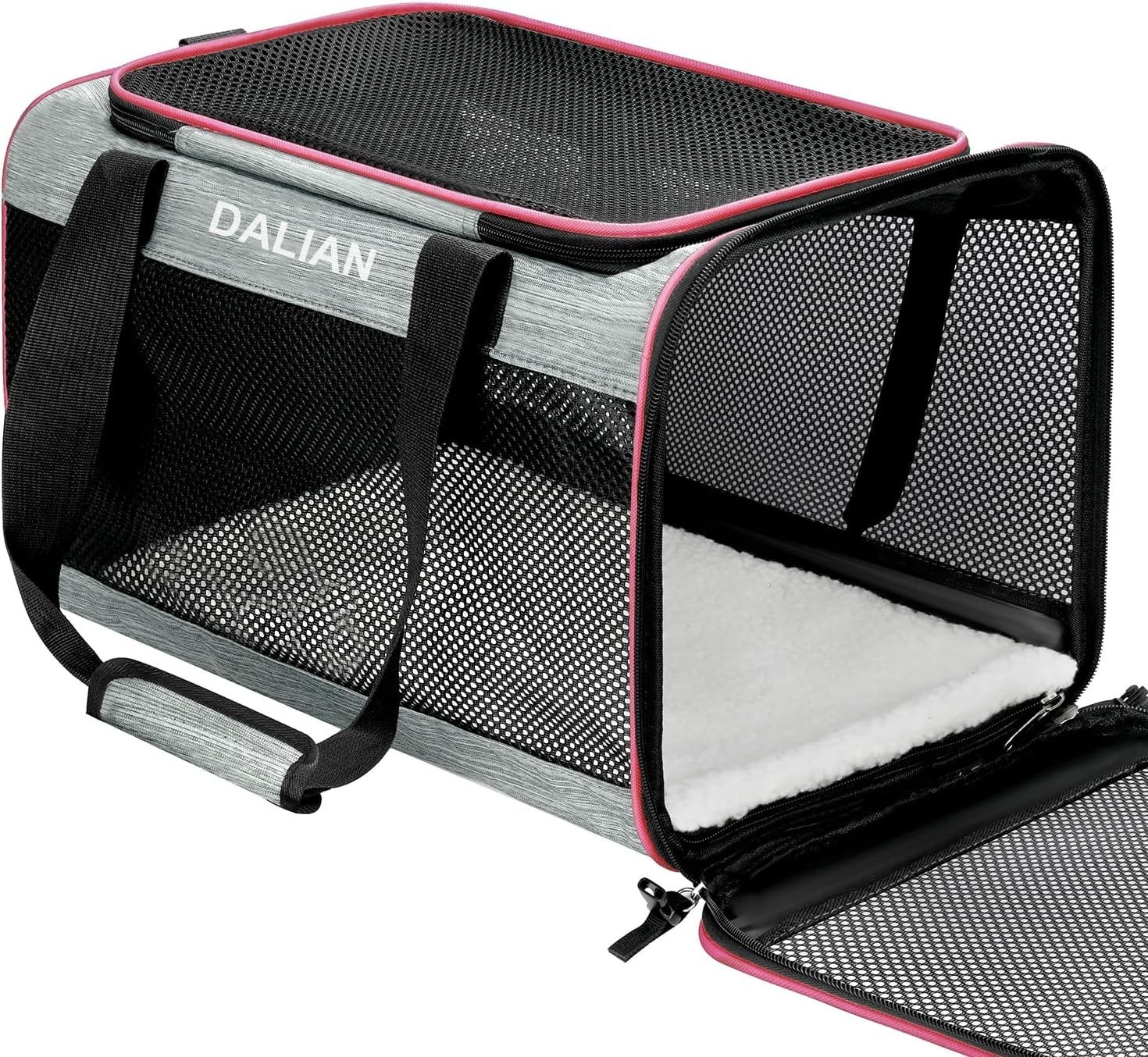 Dog Soft-Sided Carriers Cat Carrier Airline Approved Pet Carrier$21.78Last checked Nov 18, 2026View on eBay
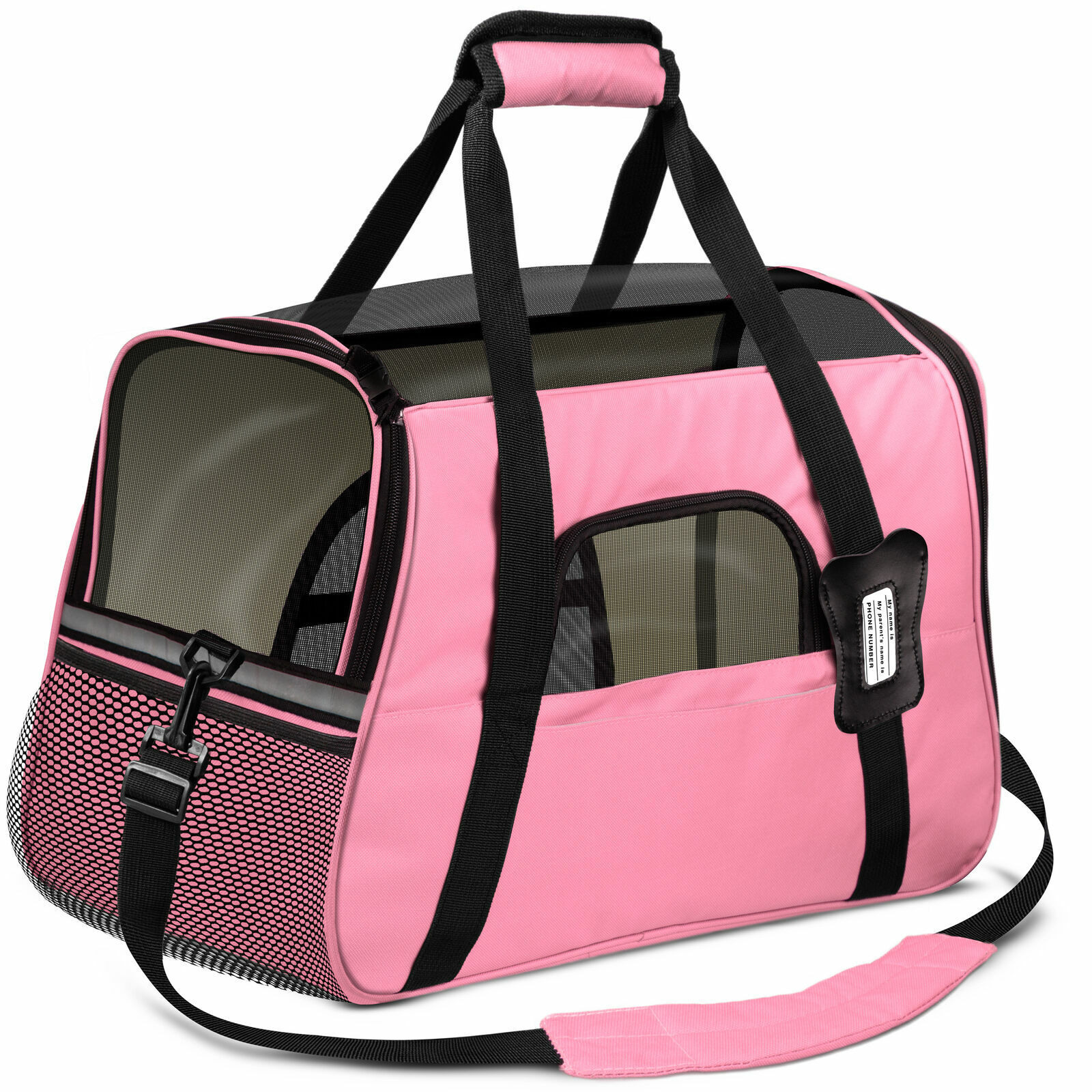 Pet Carrier Cat Travel Bag Portable Soft Sided Comfort Case Airline Approved Dog$22.75Last checked Nov 18, 2026View on eBay
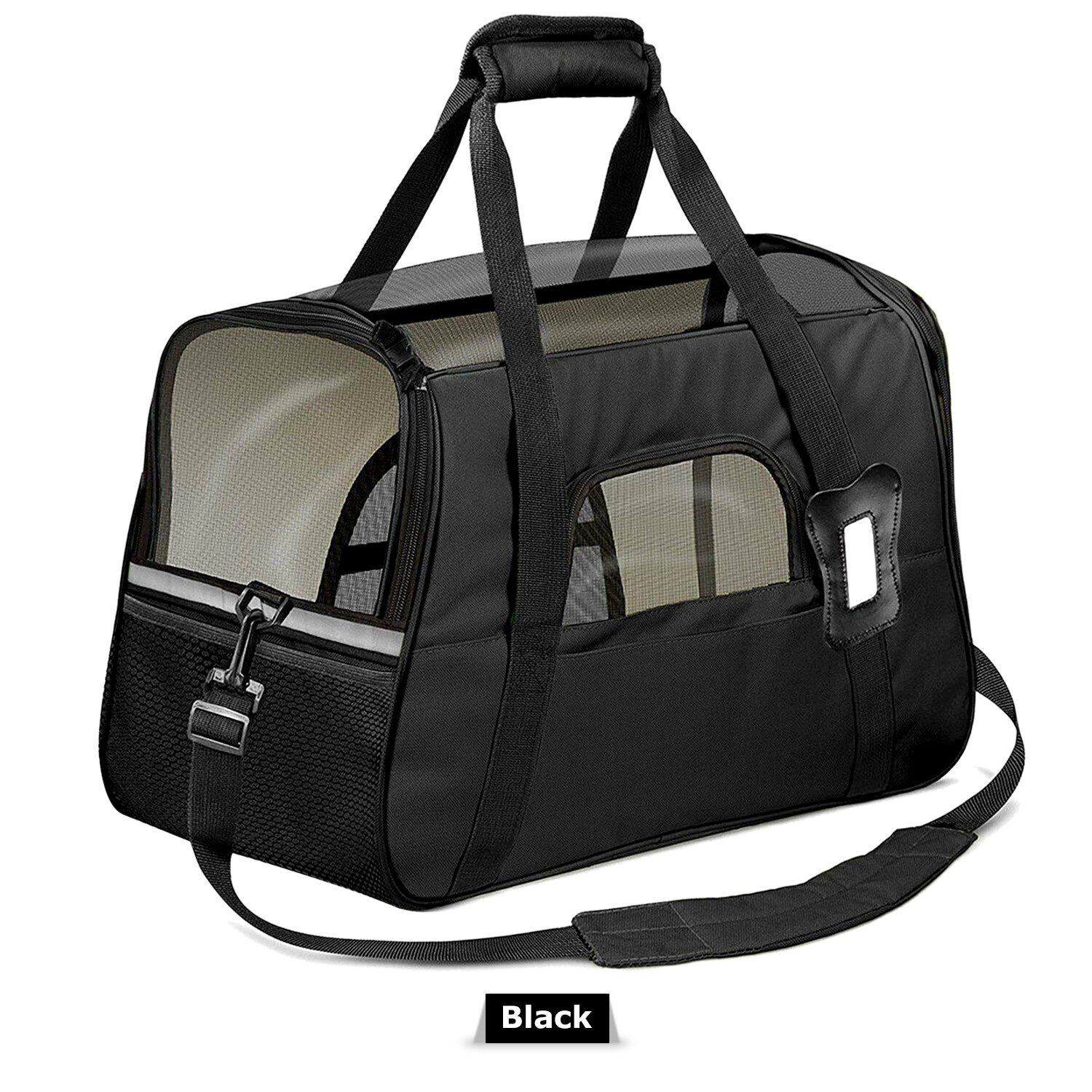 Pet Dog /Small Cat Carrier Soft Sided Comfort Bag Travel Case Airline Approved$22.77Last checked Nov 18, 2026View on eBay
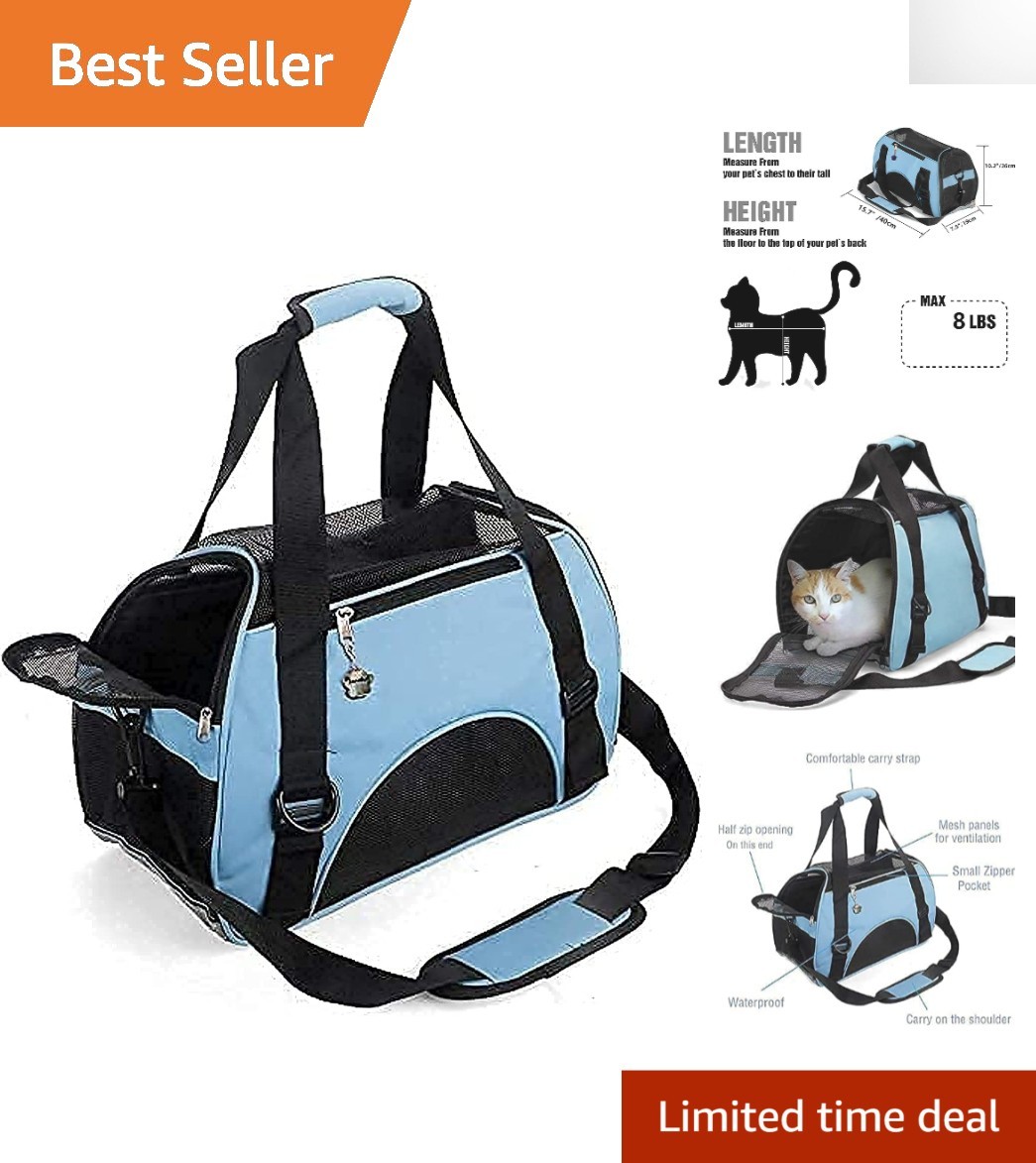 Airline Approved Soft-Sided Cat & Dog Carrier - Portable Blue Pet Bag 15.7"L$23.99Last checked Nov 26, 2026View on eBay
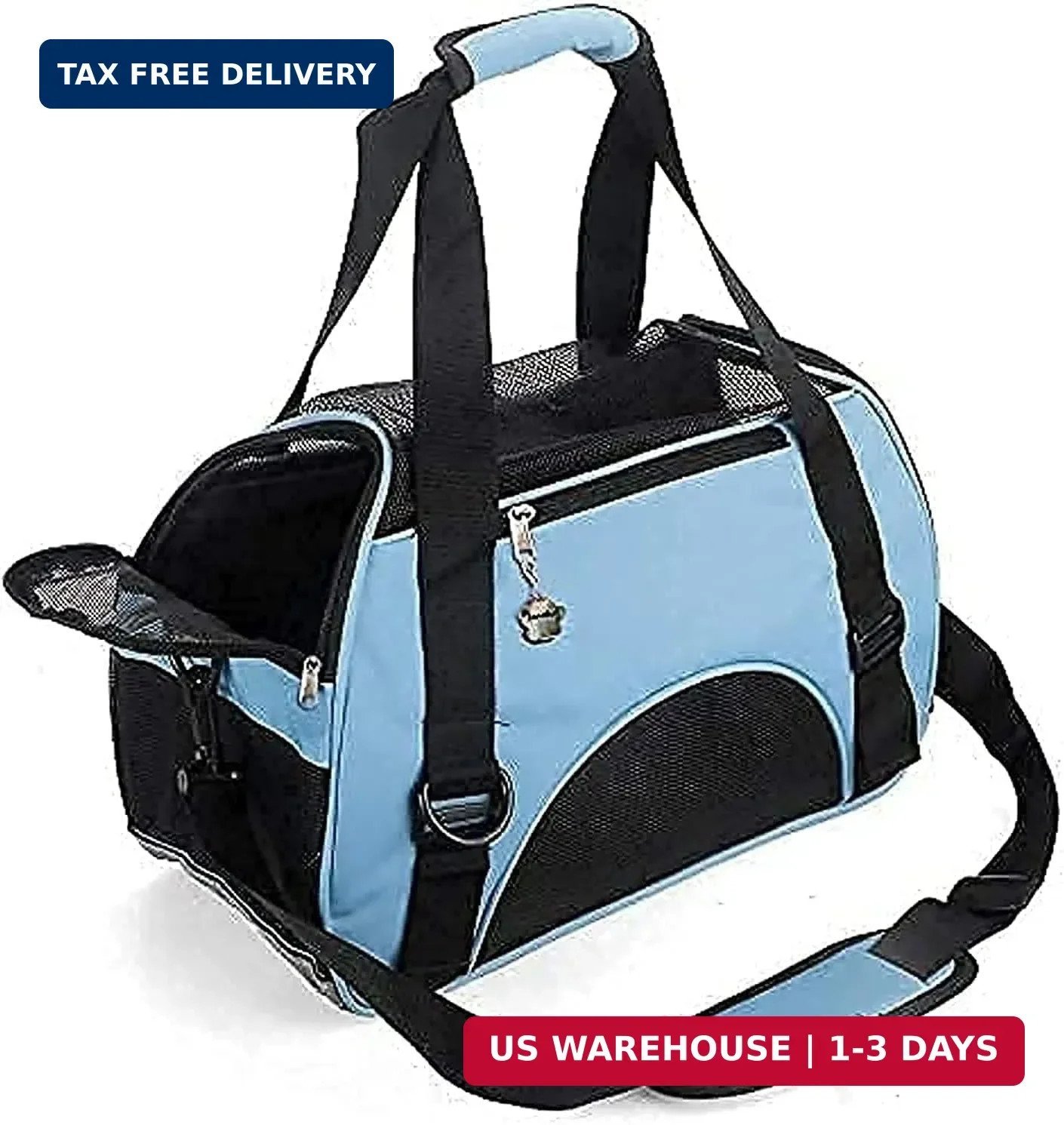 Soft-Sided Pet Carrier for Cats and Small Dogs Airline Approved Portable Foldabl$26.23View on eBay
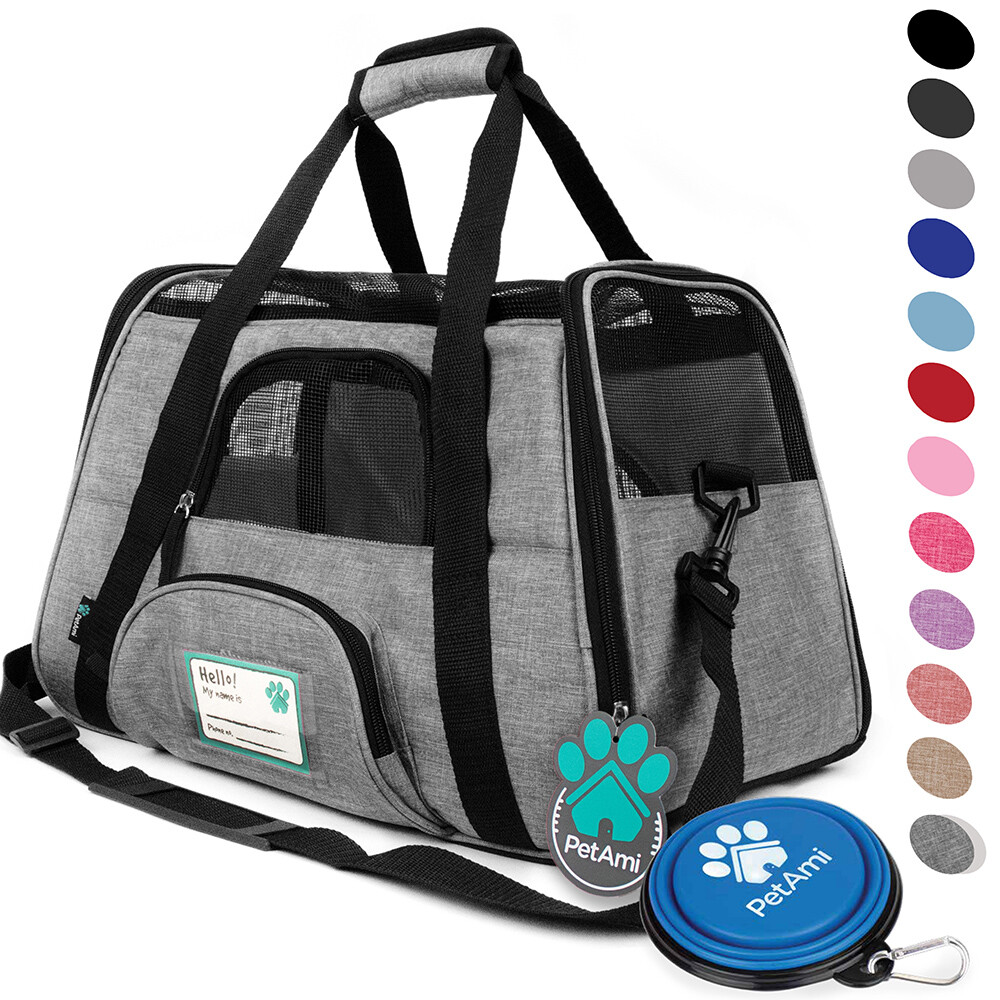 Cat Dog Pet Carrier Bag Travel Comfort Bag Case Airline Approved Soft Sided Mesh$31.99Last checked Nov 18, 2026View on eBay
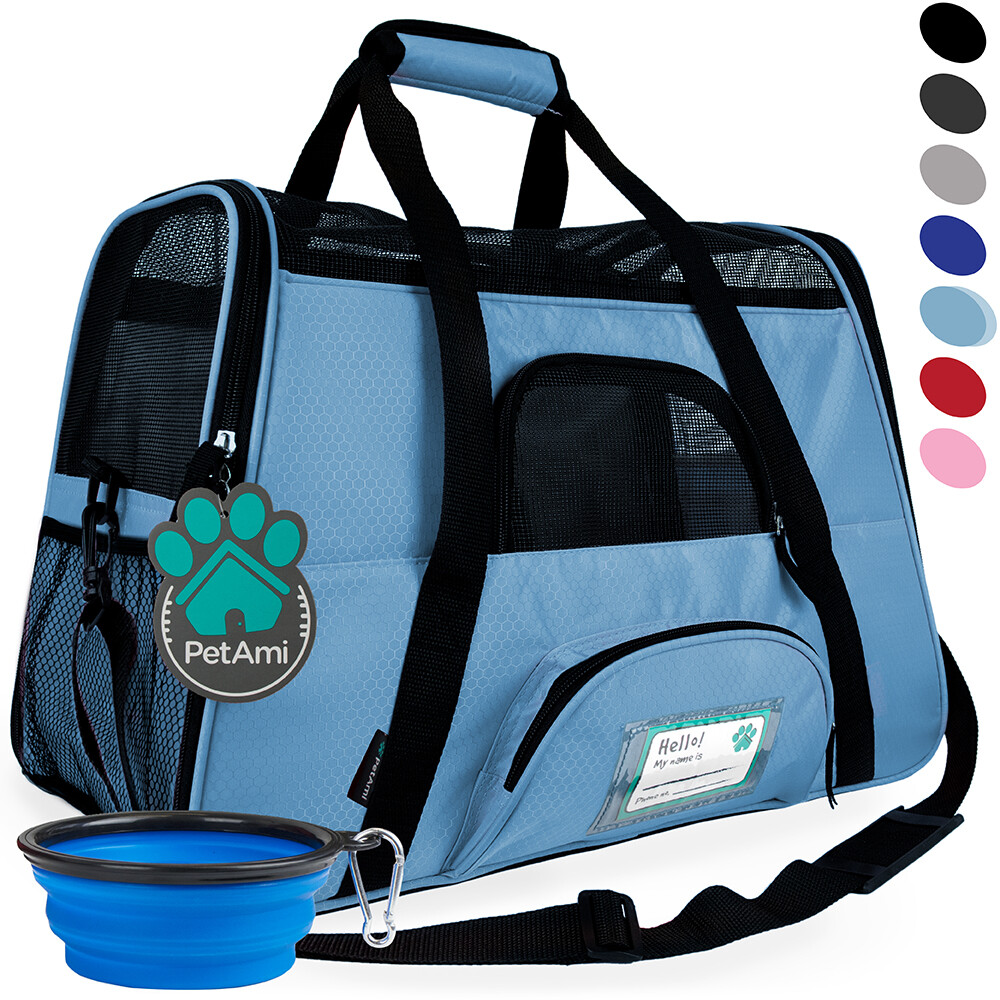 Pet Carrier Bag Soft Sided Puppy Kitten Cat Dog Tote Bag Travel Airline Approved$34.99Last checked Nov 25, 2026View on eBay
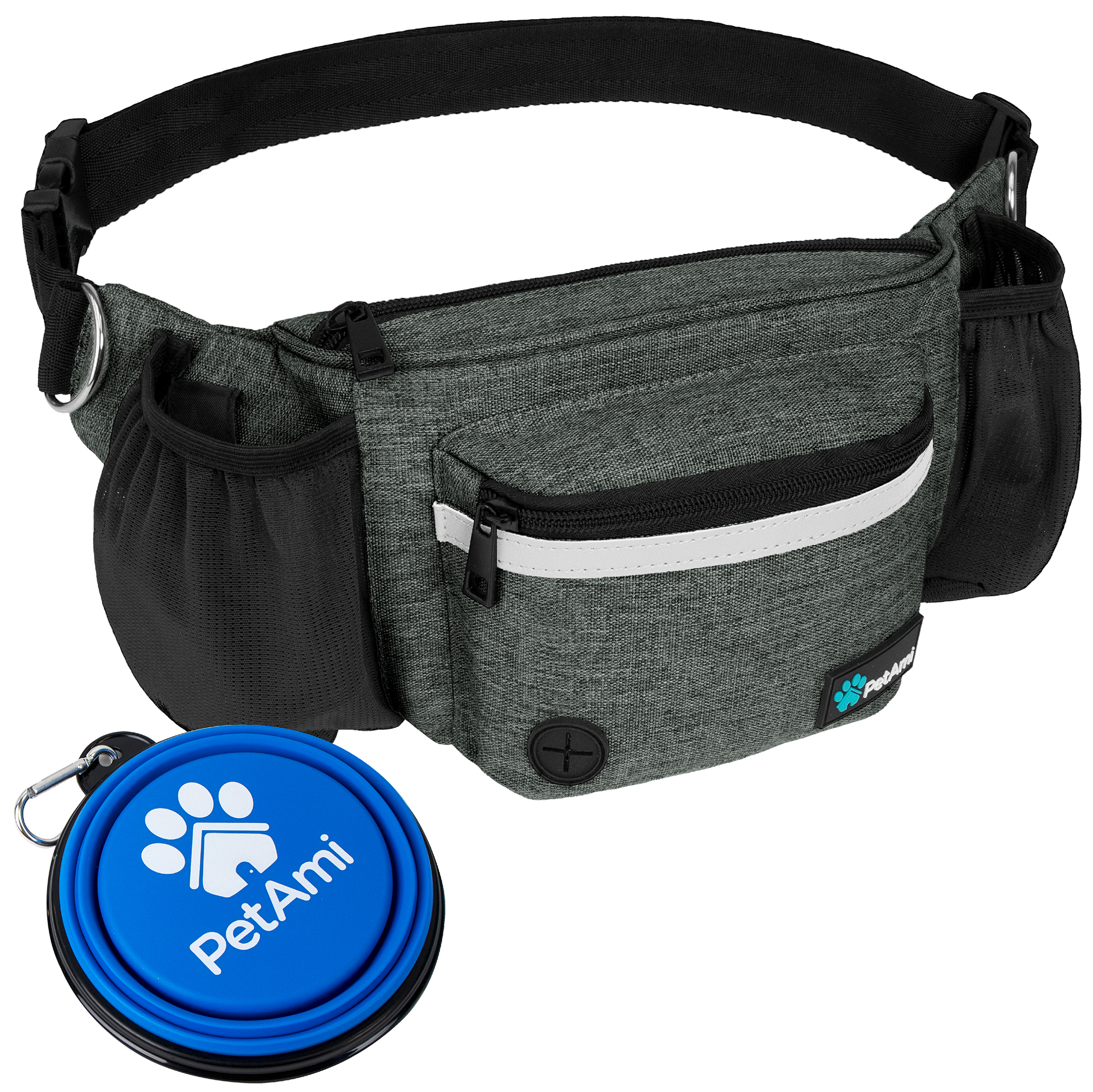 Pet Carrier Cat Travel Bag Portable Soft Sided Comfort Case Airline Approved Dog$34.99Last checked Nov 23, 2026View on eBay
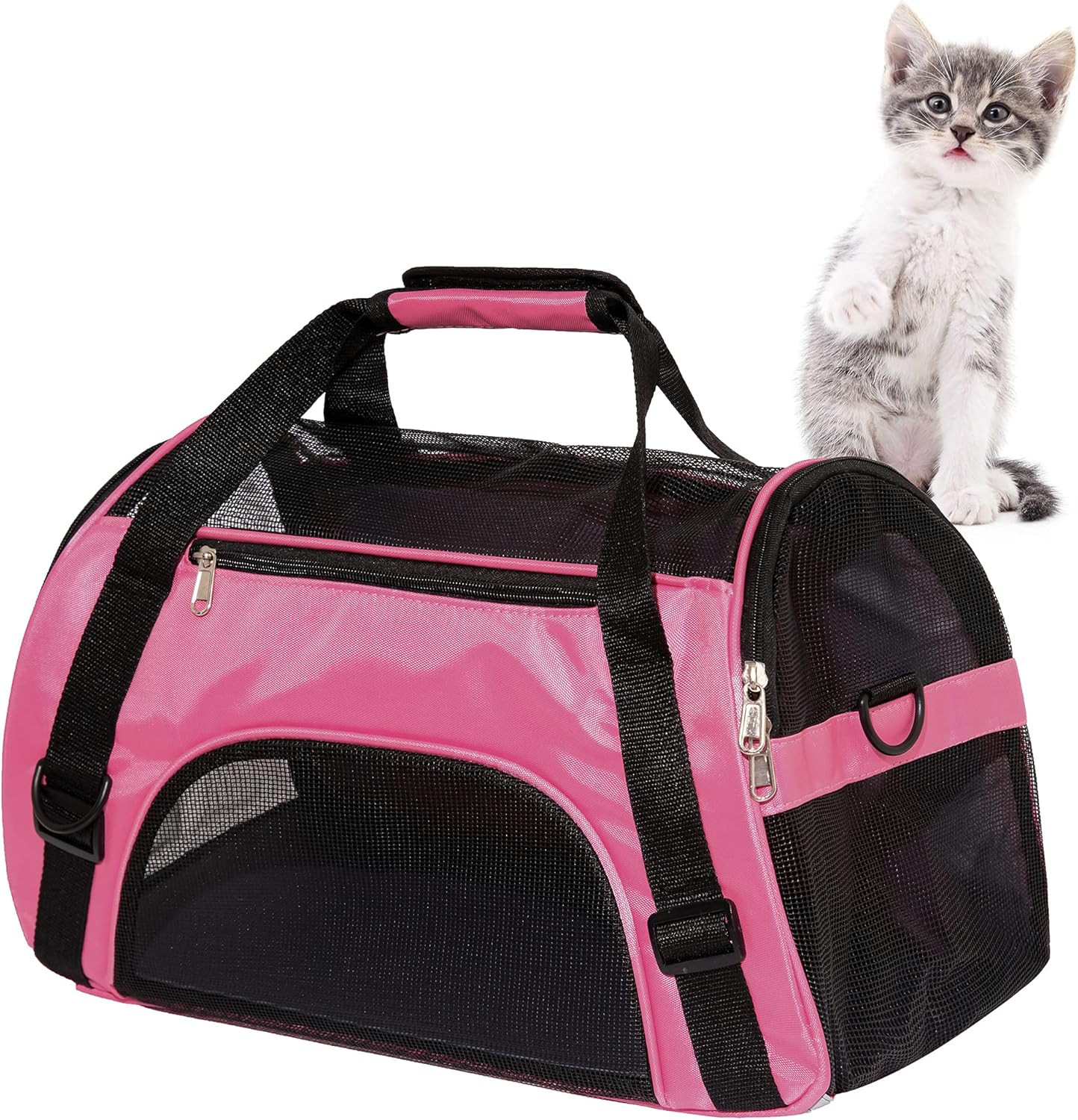 Soft-Sided Pet Carrier Cat Dog Travel Bag Airline Friendly Mesh Tote Shoulder$35.99Last checked Nov 25, 2026View on eBay
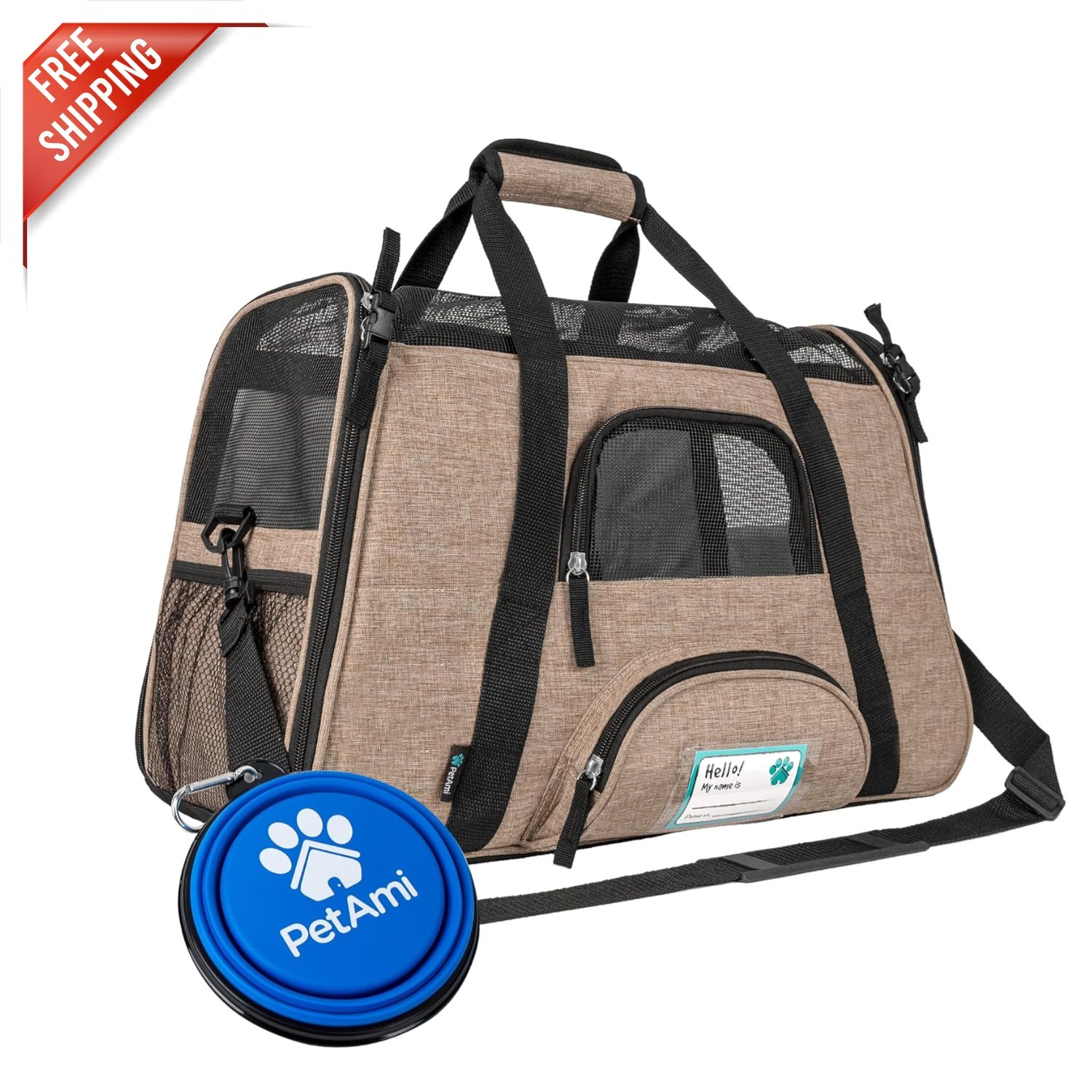 Lightweight Airline Approved Pet Carrier with Removable Sherpa Bed - 18 lbs Max$62.67Last checked Nov 23, 2026View on eBay
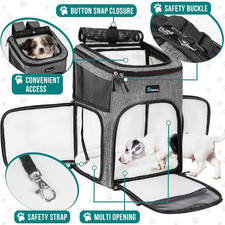 Pet Backpack Carrier Airline Approved 4-Way Entry 18lb Ventilated Sherpa Hiking$66.49Last checked Nov 24, 2026View on eBay
Highlights
- Soft-sided carriers typically use 600D Oxford polyester with mesh ventilation panels; higher denier (900D-1200D) resists claw tears and sagging better than thin 300D nylon.
- A PE (polyethylene) board or reinforced base plate is what keeps the carrier from collapsing on your pet; foam-only bottoms sag and lose under-seat clearance.
- Airline cabin fit is governed by exterior dimensions, not weight: most major US carriers cap under-seat space near 18 x 11 x 11 in, so carriers around 17-18 in L x 10-11 in W x 10-11 in H are the practical ceiling.
- Mesh must be fine-gauge and stitched, not glued; large open-weave mesh on cheap carriers lets claws through and tears at seams within a few trips.
Best use cases
- Best fit: cabin travel with a cat or small dog under ~15 lb — pick a soft-sided 600D Oxford carrier with PE base, top and side mesh, and exterior dimensions at or under your airline's under-seat limit.
- Best fit: car and vet trips only — a hard-shell carrier gives better crash rigidity and cleanup, but skip it for cabin use unless it is specifically rated to the airline sizer.
- Wrong fit: brachycephalic (flat-faced) breeds or pets over ~18 lb — most under-seat carriers are too short for them; choose a larger soft carrier only if the airline allows it, otherwise plan cargo or pet-sitter alternatives.
- Wrong fit: chewers and scratch-heavy pets — thin nylon and glued mesh fail fast; choose 900D+ fabric with metal zipper pulls and reinforced seams, or a hard-shell.
Buying tips
- Measure your airline's under-seat space (commonly ~18 L x 11 W x 11 H in) and buy a carrier whose exterior, including wheels and handles folded, stays under it.
- Match carrier length to your pet: pet length nose-to-tail-base plus 2-3 in, and height standing plus 2 in, or the pet cannot turn around and the carrier will bulge out of the sizer.
- Prefer 600D Oxford or higher with stitched (not glued) mesh, a removable PE or rigid base board, and lockable zippers; these are the four durability points that fail first.
- Verify airline acceptance by carrier exterior dimensions and soft-sided compressibility, not by 'airline approved' wording — most carriers that fit the sizer pass, and rigid oversize carriers do not.
Specs
| Carrier Type | Soft-sided vs hard-shell |
|---|---|
| Shell Material | 600D-1200D Oxford / mesh / PE base |
| Cabin Size Limit | ~18 x 11 x 11 in exterior |
| Ventilation | Mesh on 2-3 sides, stitched |
Related searches
What to check before buying
- Measure your airline's under-seat clearance (length, width, height) and confirm the carrier's exterior dimensions including any wheels or folded handles.
- Measure your pet's standing height and nose-to-tail length; the carrier interior must clear both with 2 in of headroom and turning room.
- Check your airline's pet weight limit and whether it counts toward your carry-on allowance; soft-sided carriers usually count as the personal item.
- Confirm your pet's temperament and claw strength: choose 900D+ fabric and metal zippers for scratchers, hard-shell for chewers, and mesh panels on at least two sides for ventilation.
FAQ
Data sources: eBay / Amazon listings and product attribute feeds. Updated Nov 26, 2026.
Some links on this page are affiliate links. If you buy after clicking one, we may earn a commission at no extra cost to you. This does not change which products appear here or their order. Affiliate disclosure.