
Photos from current listings. Actual item, color, and included accessories may vary.
Airline Approved Pet Carrier Buying Guide
An airline-approved pet carrier is a soft-sided or hard-sided enclosure sized to fit under a passenger seat (in-cabin) or meet cargo hold IATA specifications. The core trade-off is between structural rigidity (framed panels, PE board base, reinforced stitching) and collapsibility/ventilation—carriers that trade mesh coverage for hard walls fail airline sizing gates, while flimsy mesh-only bags collapse under cabin pressure changes. The decisive rule: in-cabin carriers must match the strictest major-airline underseat dimensions (typically 18"L x 11"W x 11"H) with a rigid base and top, while cargo carriers require IATA-compliant steel or heavy-duty plastic doors, metal hardware, and 4-sided ventilation.
Median $25.11
Key takeaways
- Soft-sided carriers use 600D Oxford polyester with PVC or PE board reinforcement—600D is the durability floor; 300D or single-layer mesh deforms and tears at zippers under load.
- In-cabin sizing is airline-specific: most major US carriers cap underseat space at 18 x 11 x 11 inches, but regional jets and budget carriers shrink to 17 x 10 x 9 inches—always buy to the smallest aircraft you will fly.
- Cargo (checked) carriers must meet IATA Live Animals Regulations: rigid frame, metal door fasteners (no plastic snap latches), ventilation on at least 3 sides (4 for international), and a water/food dish accessible from outside.
At a glance
- Category
- Pet Travel & Safety
- Last updated
- Nov 26, 2026
Current offers
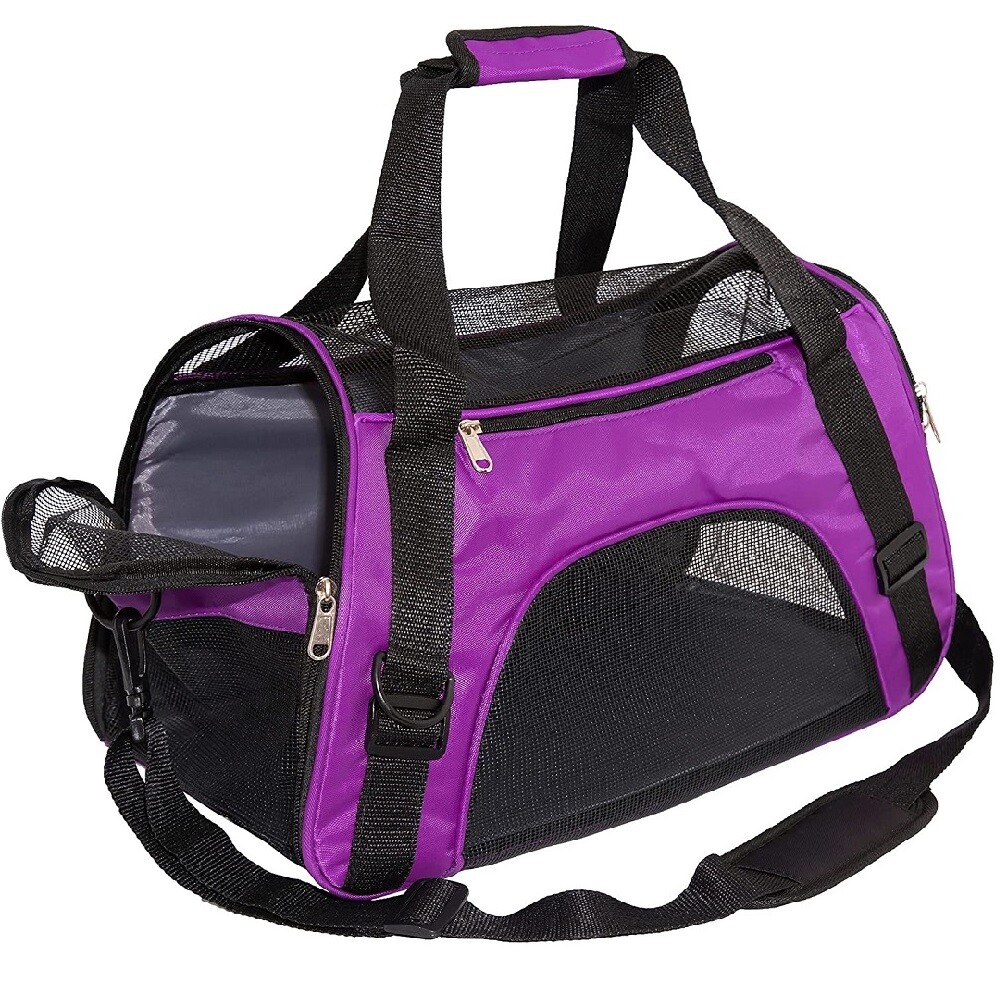 Soft-Sided Airline Approved Pet Cat Carrier Bag, Comfort Case, Sizes M & L$18.79Last checked Nov 18, 2026View on eBay
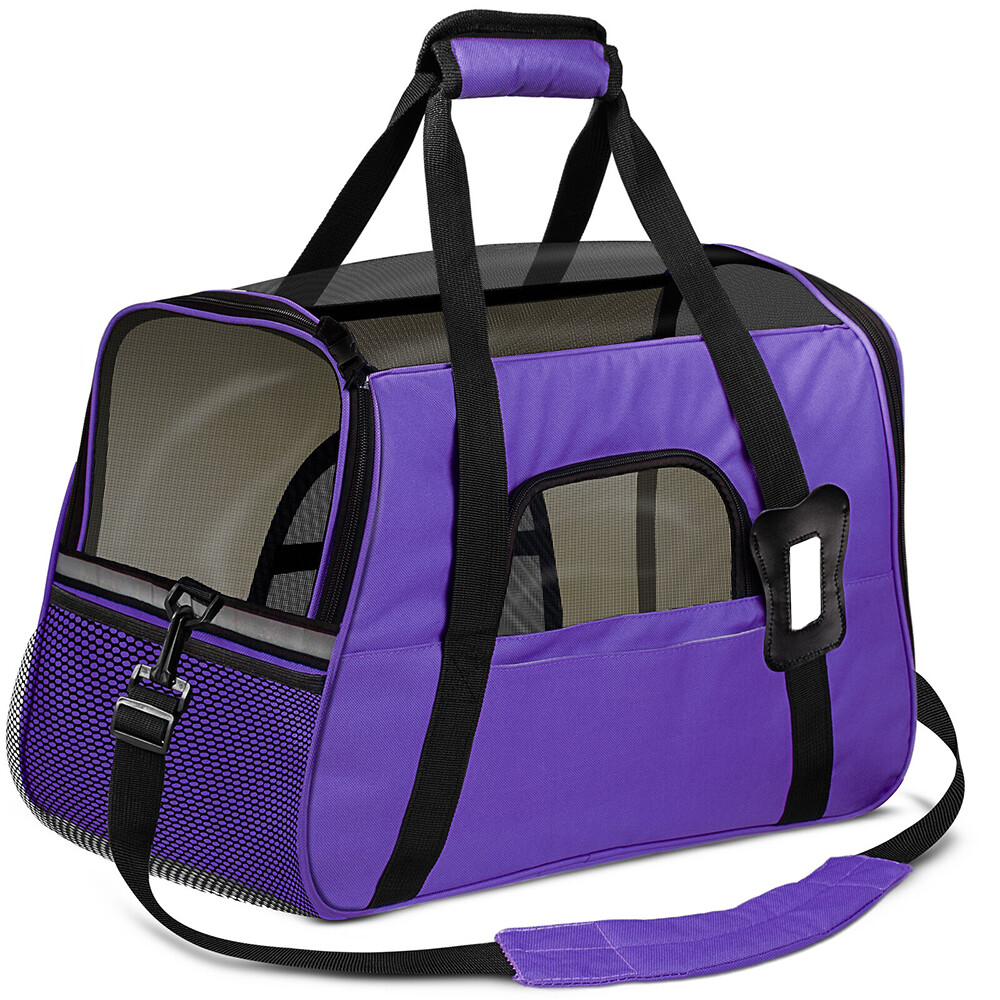 Pet Dog /Small Cat Carrier Soft Sided Comfort Bag Travel Case Airline Approved$20.66Last checked Nov 18, 2026View on eBay
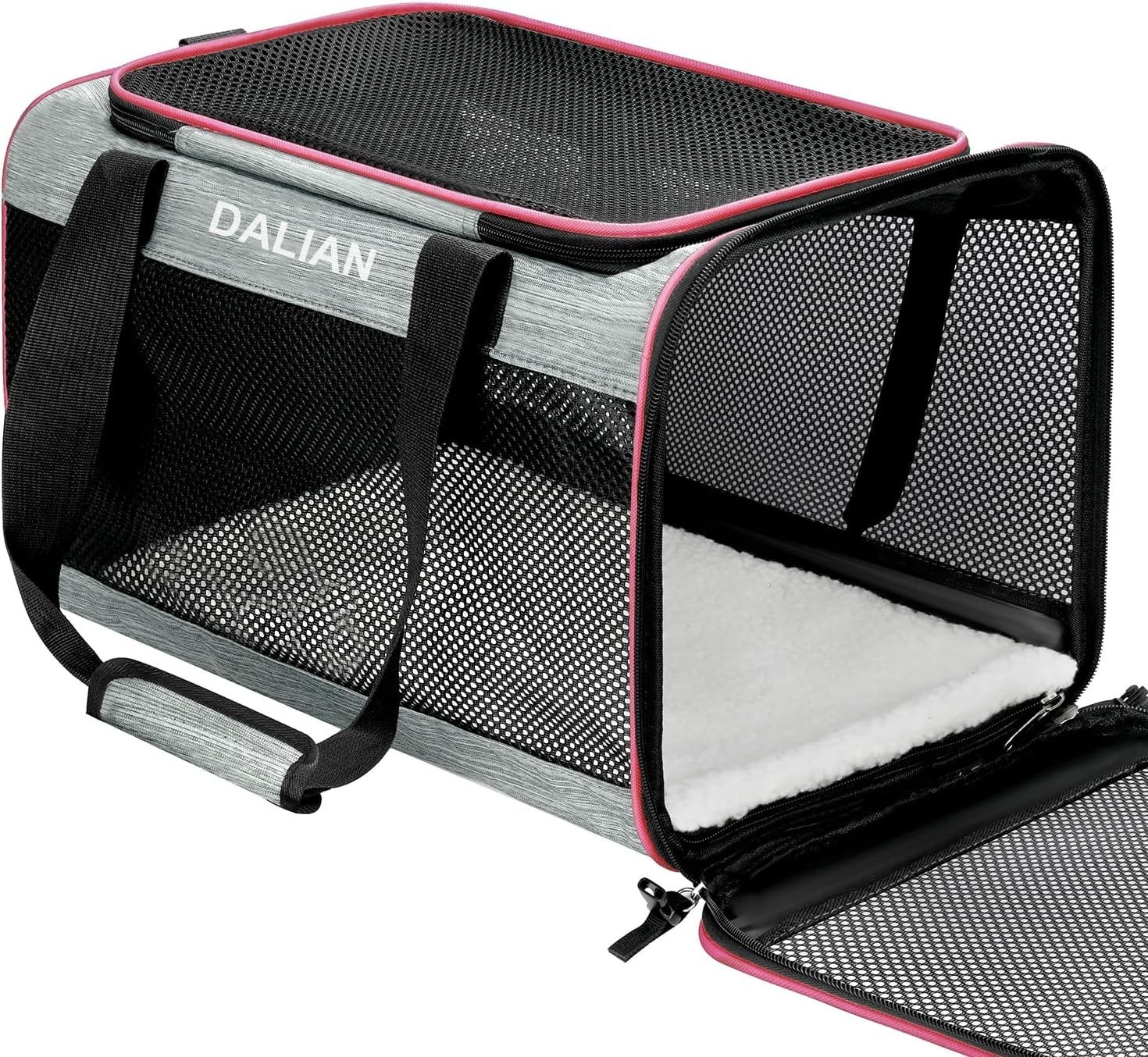 Dog Soft-Sided Carriers Cat Carrier Airline Approved Pet Carrier$21.78Last checked Nov 18, 2026View on eBay
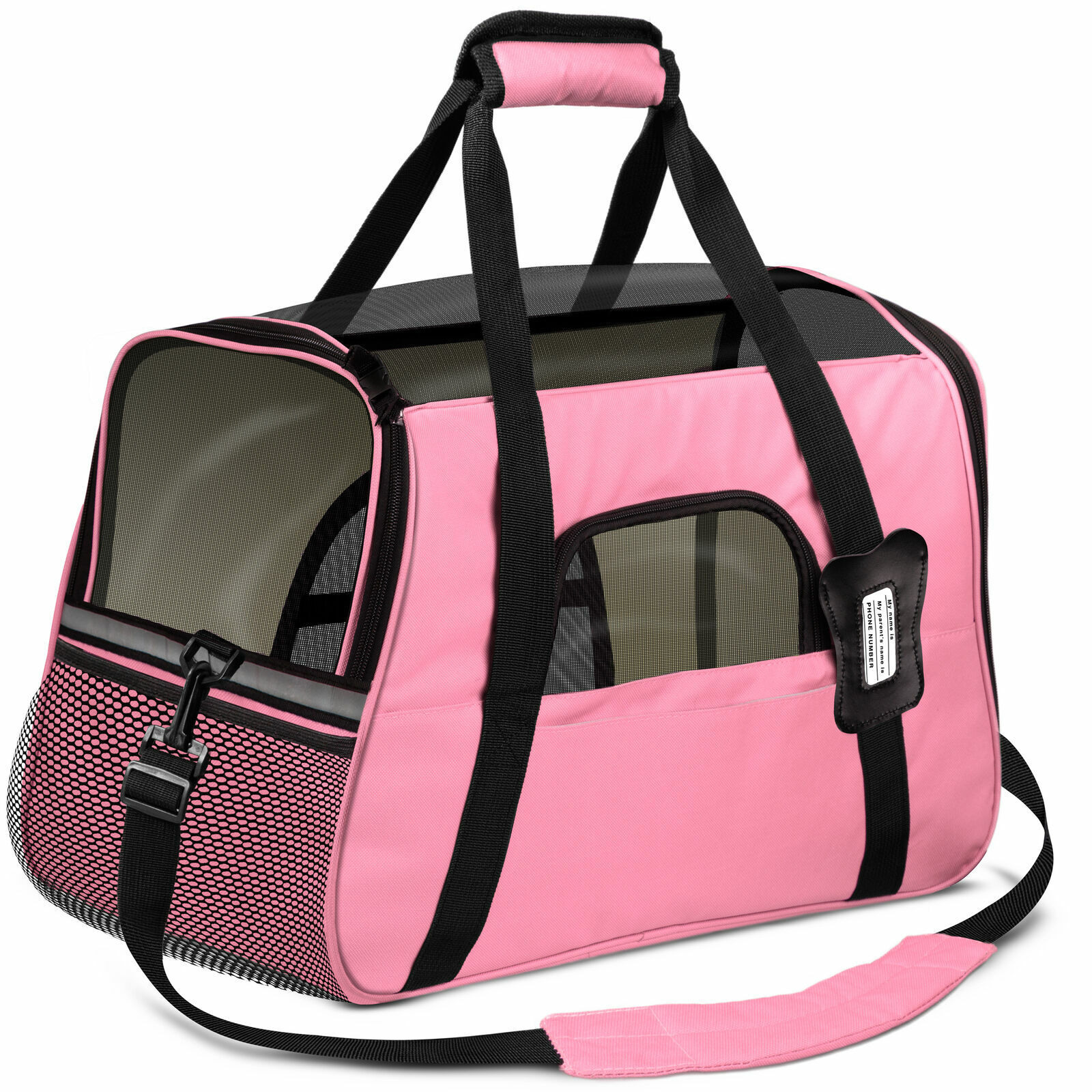 Pet Carrier Cat Travel Bag Portable Soft Sided Comfort Case Airline Approved Dog$22.75Last checked Nov 18, 2026View on eBay
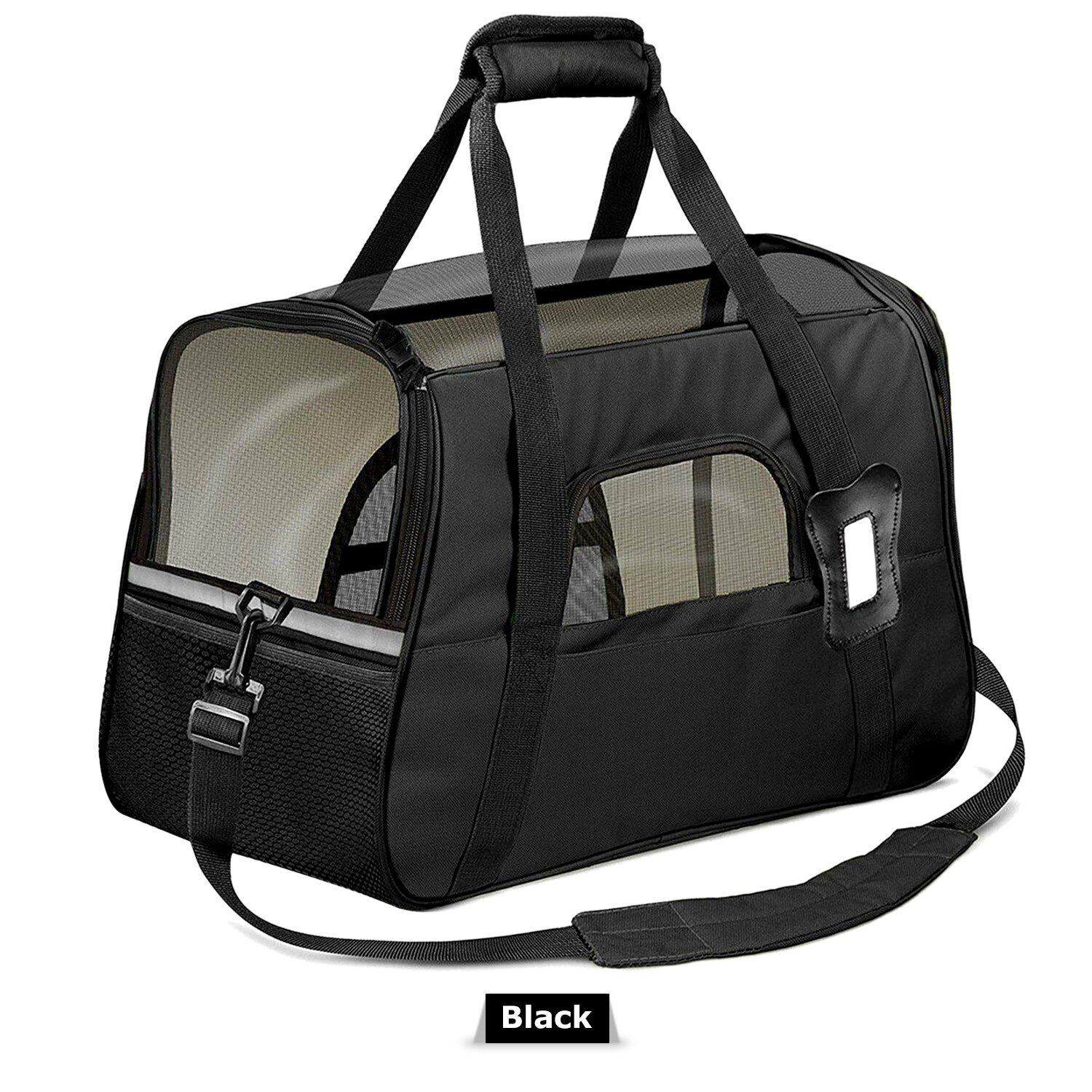 Pet Dog /Small Cat Carrier Soft Sided Comfort Bag Travel Case Airline Approved$22.77Last checked Nov 18, 2026View on eBay
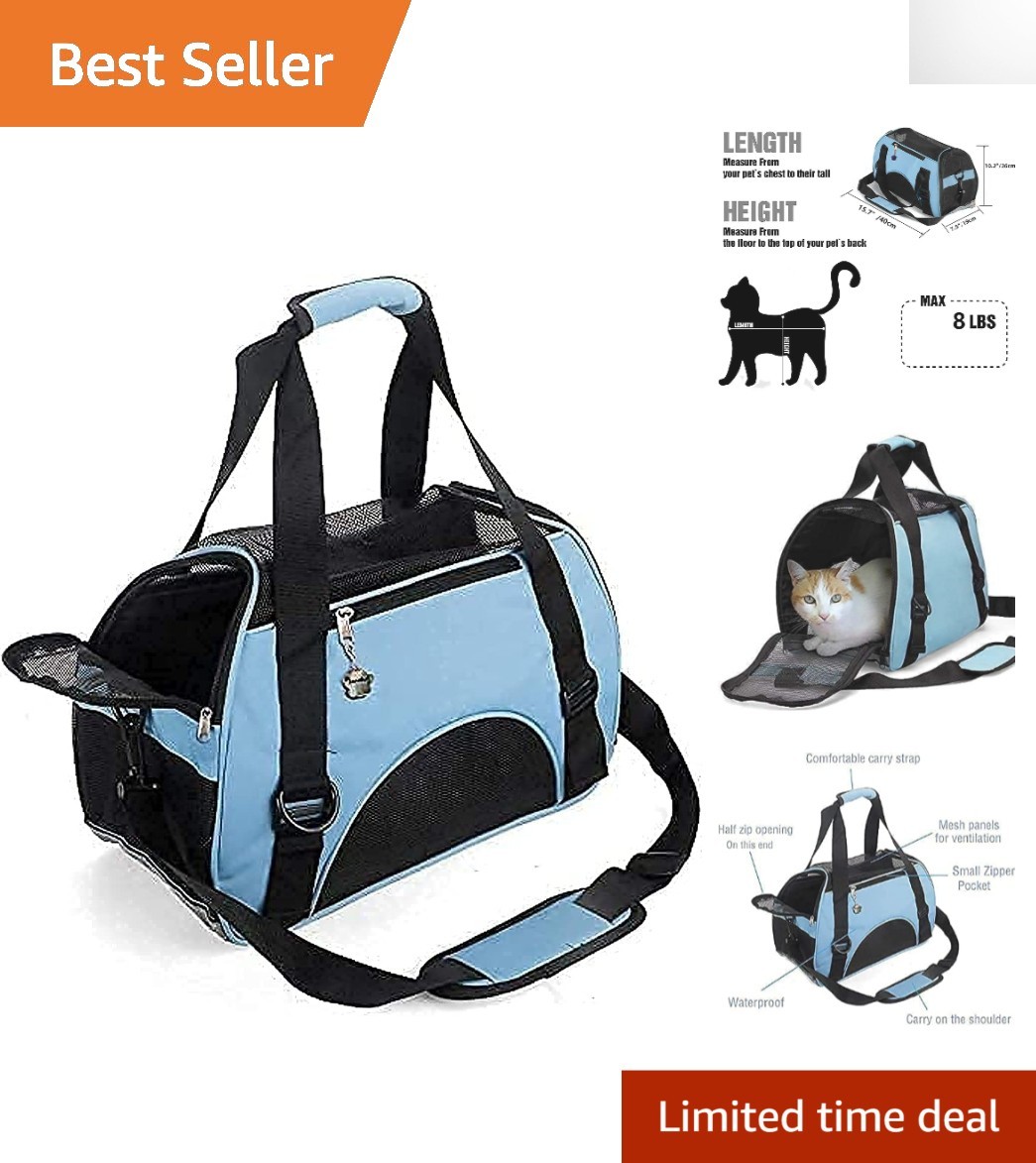 Airline Approved Soft-Sided Cat & Dog Carrier - Portable Blue Pet Bag 15.7"L$23.99Last checked Nov 26, 2026View on eBay
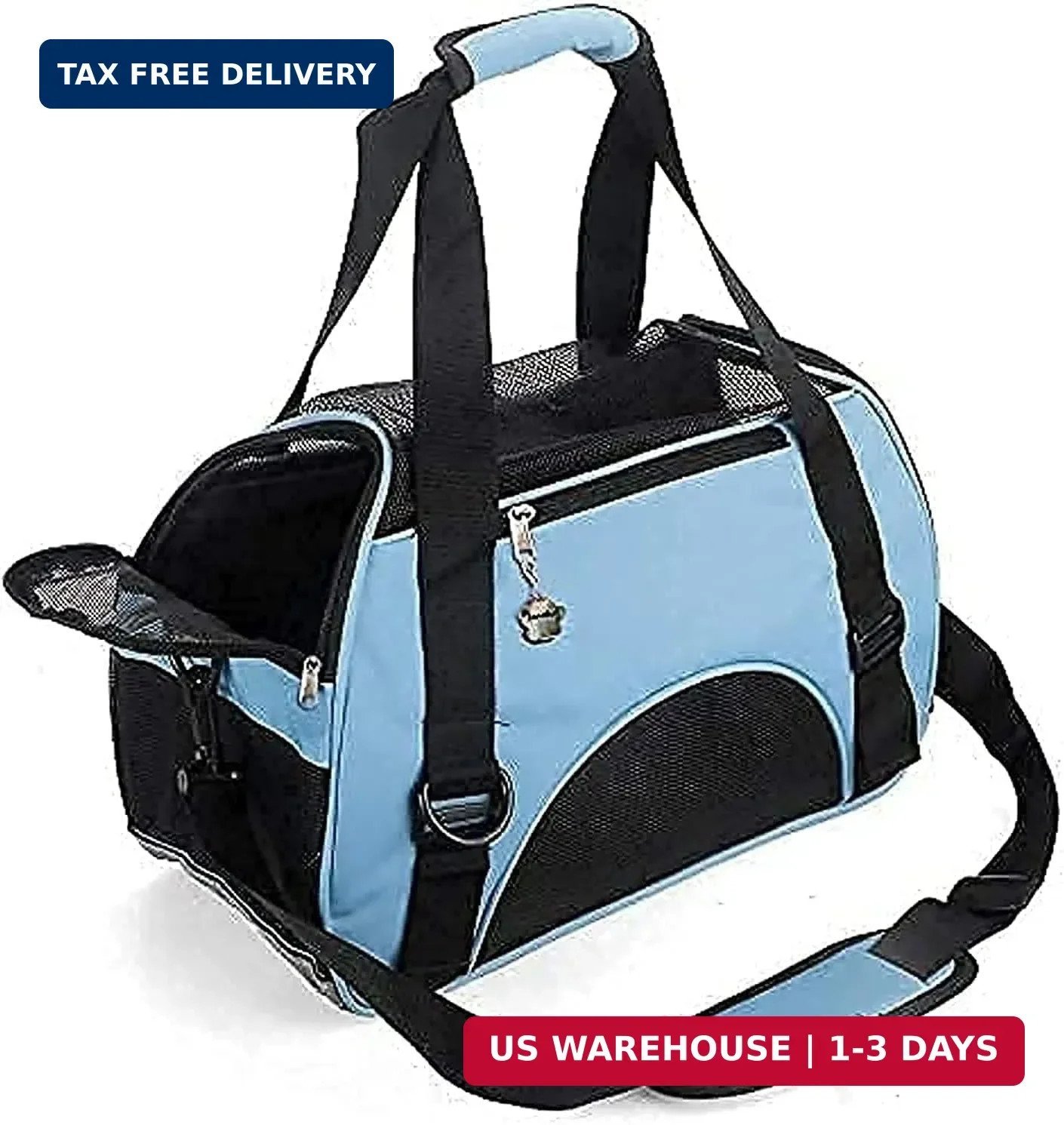 Soft-Sided Pet Carrier for Cats and Small Dogs Airline Approved Portable Foldabl$26.23View on eBay
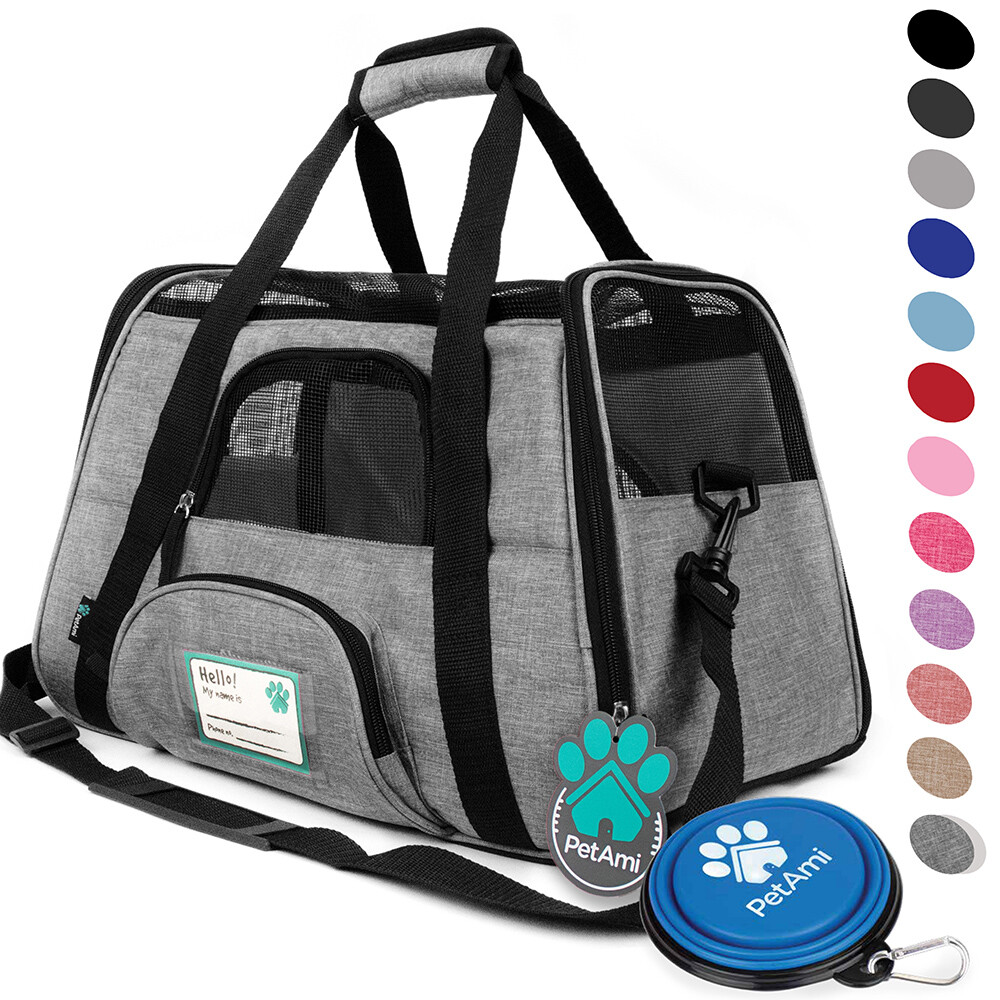 Cat Dog Pet Carrier Bag Travel Comfort Bag Case Airline Approved Soft Sided Mesh$31.99Last checked Nov 18, 2026View on eBay
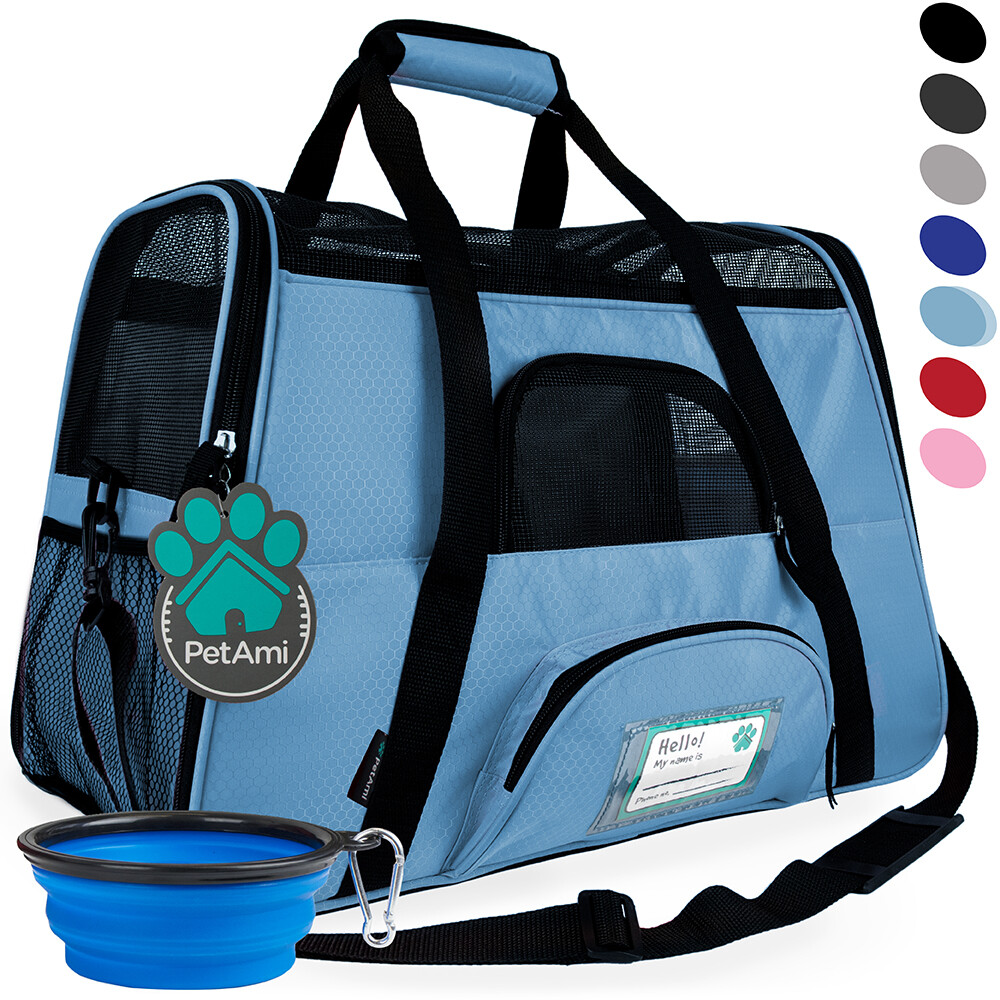 Pet Carrier Bag Soft Sided Puppy Kitten Cat Dog Tote Bag Travel Airline Approved$34.99Last checked Nov 25, 2026View on eBay
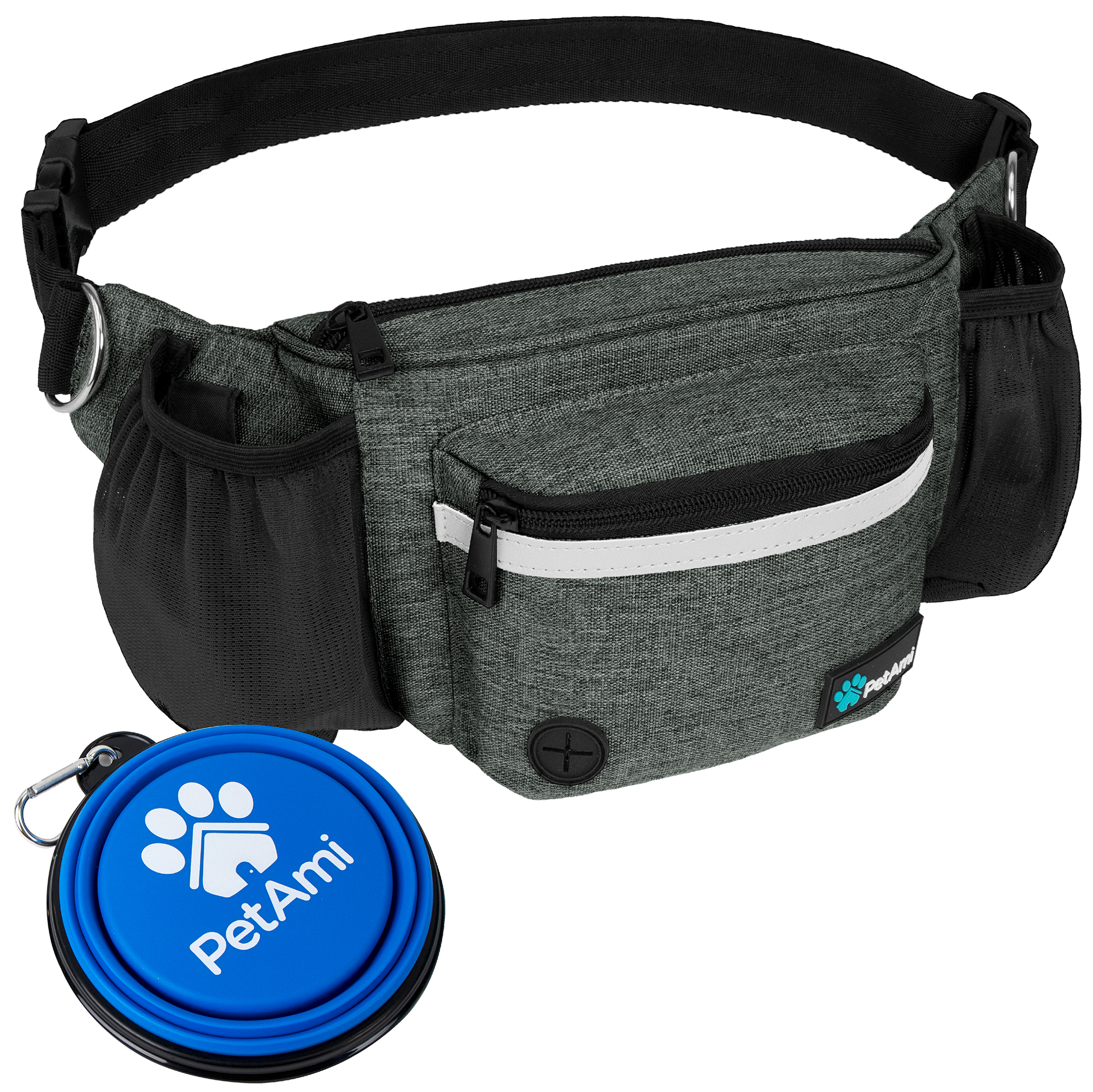 Pet Carrier Cat Travel Bag Portable Soft Sided Comfort Case Airline Approved Dog$34.99Last checked Nov 23, 2026View on eBay
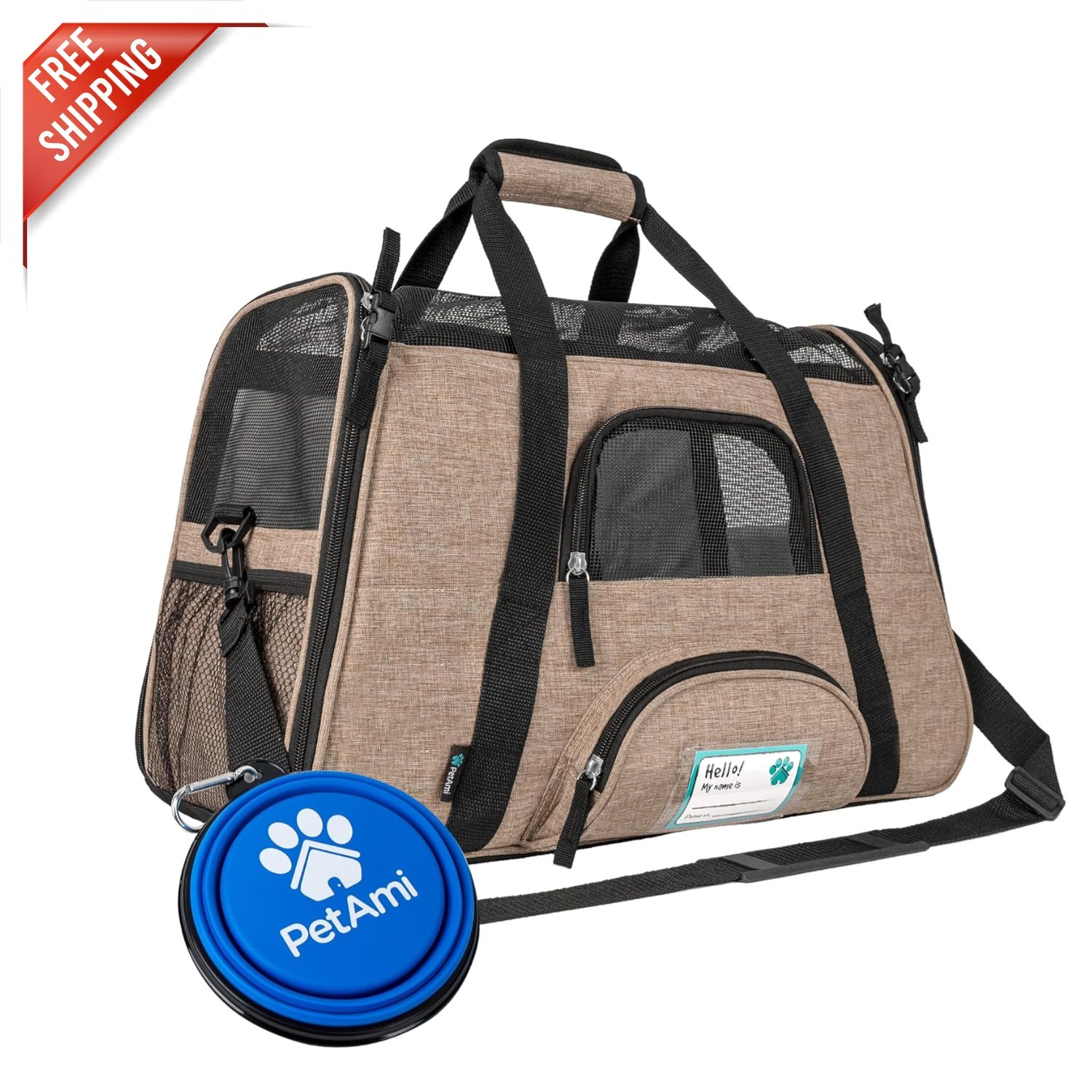 Lightweight Airline Approved Pet Carrier with Removable Sherpa Bed - 18 lbs Max$62.67Last checked Nov 23, 2026View on eBay
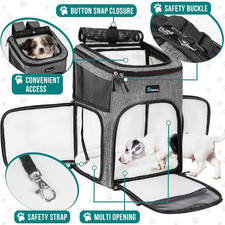 Pet Backpack Carrier Airline Approved 4-Way Entry 18lb Ventilated Sherpa Hiking$66.49Last checked Nov 24, 2026View on eBay
Highlights
- Soft-sided carriers use 600D Oxford polyester with PVC or PE board reinforcement—600D is the durability floor; 300D or single-layer mesh deforms and tears at zippers under load.
- In-cabin sizing is airline-specific: most major US carriers cap underseat space at 18 x 11 x 11 inches, but regional jets and budget carriers shrink to 17 x 10 x 9 inches—always buy to the smallest aircraft you will fly.
- Cargo (checked) carriers must meet IATA Live Animals Regulations: rigid frame, metal door fasteners (no plastic snap latches), ventilation on at least 3 sides (4 for international), and a water/food dish accessible from outside.
- Weight capacity claims require matching the animal's standing height: the pet must stand without crouching and turn around—a 15.7"L x 7.9"W x 11.8"H carrier suits pets up to roughly 8-10 lbs, not the 18 lbs some listings claim.
Best use cases
- Best-fit in-cabin: choose a soft-sided 600D Oxford carrier with PE board base, top and side mesh, and dimensions at or under 18 x 11 x 11 in for mainline jets—skip wheeled or framed carriers that exceed underseat clearance.
- Best-fit cargo/checked: choose an IATA-compliant hard-shell or reinforced soft crate with steel door, metal bolts, 4-side ventilation, and external water dish—skip soft fashion bags with plastic zippers, which fail cargo handling.
- Wrong-fit: buying a carrier labeled 'airline approved' without checking the specific aircraft—regional jets (CRJ, Embraer) and basic-economy seats often have 17 x 10 x 9 in or smaller underseat space; verify the carrier collapses to that footprint or choose a different flight.
- Wrong-fit: using an in-cabin soft carrier for cargo—cargo holds require rigid construction and IATA ventilation; soft-sided bags are not accepted as checked pet containers by most airlines.
Buying tips
- Measure underseat space on your exact aircraft: mainline Boeing/Airbus typically 18 x 11 x 11 in; regional jets and some budget carriers 17 x 10 x 9 in. Buy the carrier that fits the smallest case, and confirm it is soft-sided enough to compress 1-2 inches.
- Match pet weight AND height: carrier interior height must let the pet stand erect (typically 10-11 in for cats/small dogs), and length must allow lying down fully—use interior dimensions, not exterior, and subtract 1-2 in for mesh bulge.
- For cargo, require IATA-style hardware: metal door hinges and bolts, no plastic snap latches; ventilation openings on at least three sides (four for international) with total vent area ≥ 16% of floor area; external food/water dish brackets.
- Prefer 600D Oxford or heavier with reinforced stitching at handles and zippers; PE board or rigid bottom panel prevents sag; lockable zippers (metal sliders) deter escape—avoid single-stitch seams and plastic D-rings.
Specs
| Carrier Type | Soft-sided in-cabin / Hard cargo |
|---|---|
| Underseat Fit | ≤18x11x11 in (mainline); ≤17x10x9 regional |
| Shell Material | 600D Oxford + PE board / IATA rigid |
| Cargo Hardware | Metal door bolts / 3-4 side vents |
Related searches
What to check before buying
- Confirm your airline's underseat dimensions for the specific aircraft type (not just 'airline approved')—carrier exterior must be ≤ those dims, and soft-sided models should compress another 1-2 in.
- Measure your pet standing height and lying length; carrier interior height should be at least pet height + 1 in, interior length at least pet length + 2 in.
- For cargo: verify IATA compliance—rigid frame, metal door hardware, 3-4 side ventilation, external water dish, and 'Live Animals' labeling area; check airline embargoes on snub-nosed breeds and temperature limits.
- Check carrier weight and handle attachment: loaded carrier must be carryable one-handed; reinforced stitching and metal hardware at handle and shoulder strap are mandatory for in-cabin use.
FAQ
Data sources: eBay / Amazon listings and product attribute feeds. Updated Nov 26, 2026.
Some links on this page are affiliate links. If you buy after clicking one, we may earn a commission at no extra cost to you. This does not change which products appear here or their order. Affiliate disclosure.