
Photos from current listings. Actual item, color, and included accessories may vary.
Toy Aggressive Chewer Buying Guide
Aggressive-chewer toys are high-durometer rubber, ETPU, or nylon constructs engineered to resist puncture and tear from powerful jaws. The core trade-off is material hardness versus elasticity: harder nylon lasts longer but risks enamel wear, while softer natural rubber flexes and survives without damage. The decision rule is simple: match the material tier to your dog's bite style and always size up so the toy cannot be swallowed.
Median $44.99
Key takeaways
- Natural rubber toys typically rate 40-60 Shore A, flexing under jaw pressure instead of cracking like rigid plastic.
- ETPU (expanded thermoplastic polyurethane) resists punctures better than EVA foam and floats for fetch.
- Nylon chews rate 80+ Shore D and suit power chewers but must be retired once gouged to protect enamel.
At a glance
- Category
- Pet Toys
- Last updated
- Nov 27, 2026
Current offers
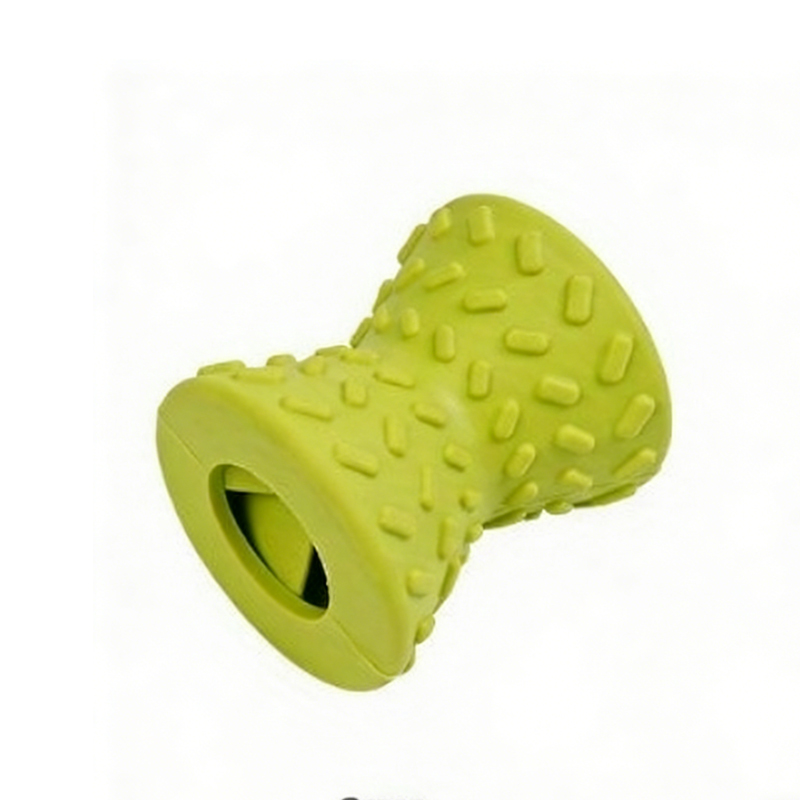 Natural Rubber Chew Toys,Dog Toys For Aggressive Chewers, Dog For Medium Large Dogs, For Traning$17.99View on Mallflare
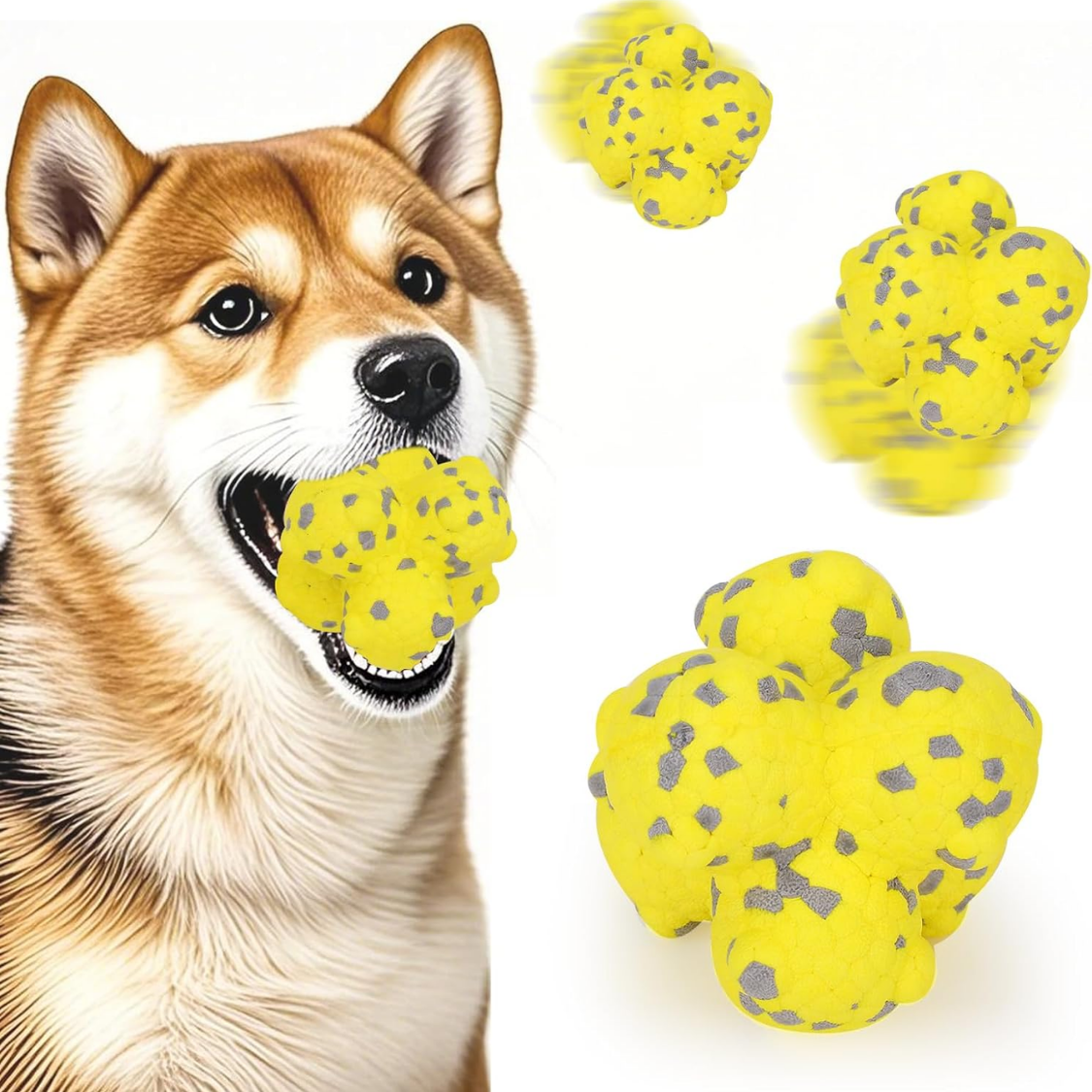 Dog Spike Ball Toy Tough ETPU Interactive Chew For Aggressive Chewers Floating Fetch Teeth Cleaning Puppy & Dog Toy Compatible With Launcher$40.99View on Mallflare
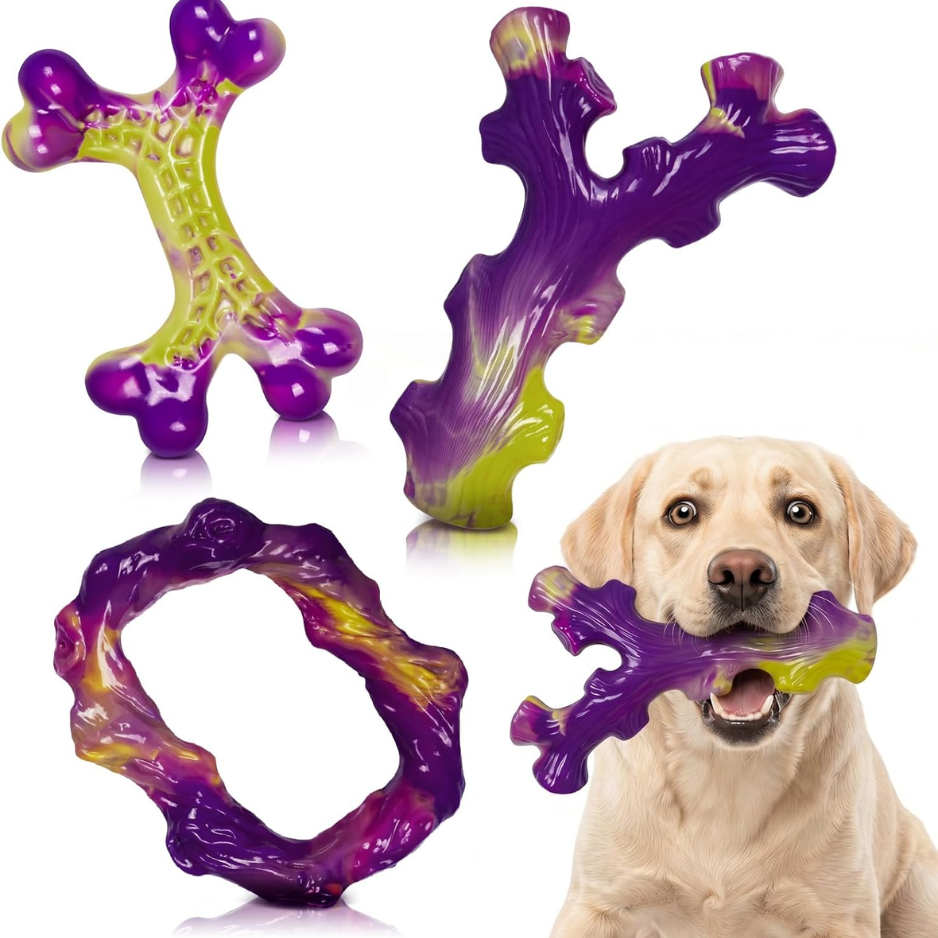 Tough Dog Toys For Aggressive Chewers 3 Pack, Indestructible Dog For Large Dogs, Dog Chew To Keep Them Busy$44.99View on Mallflare
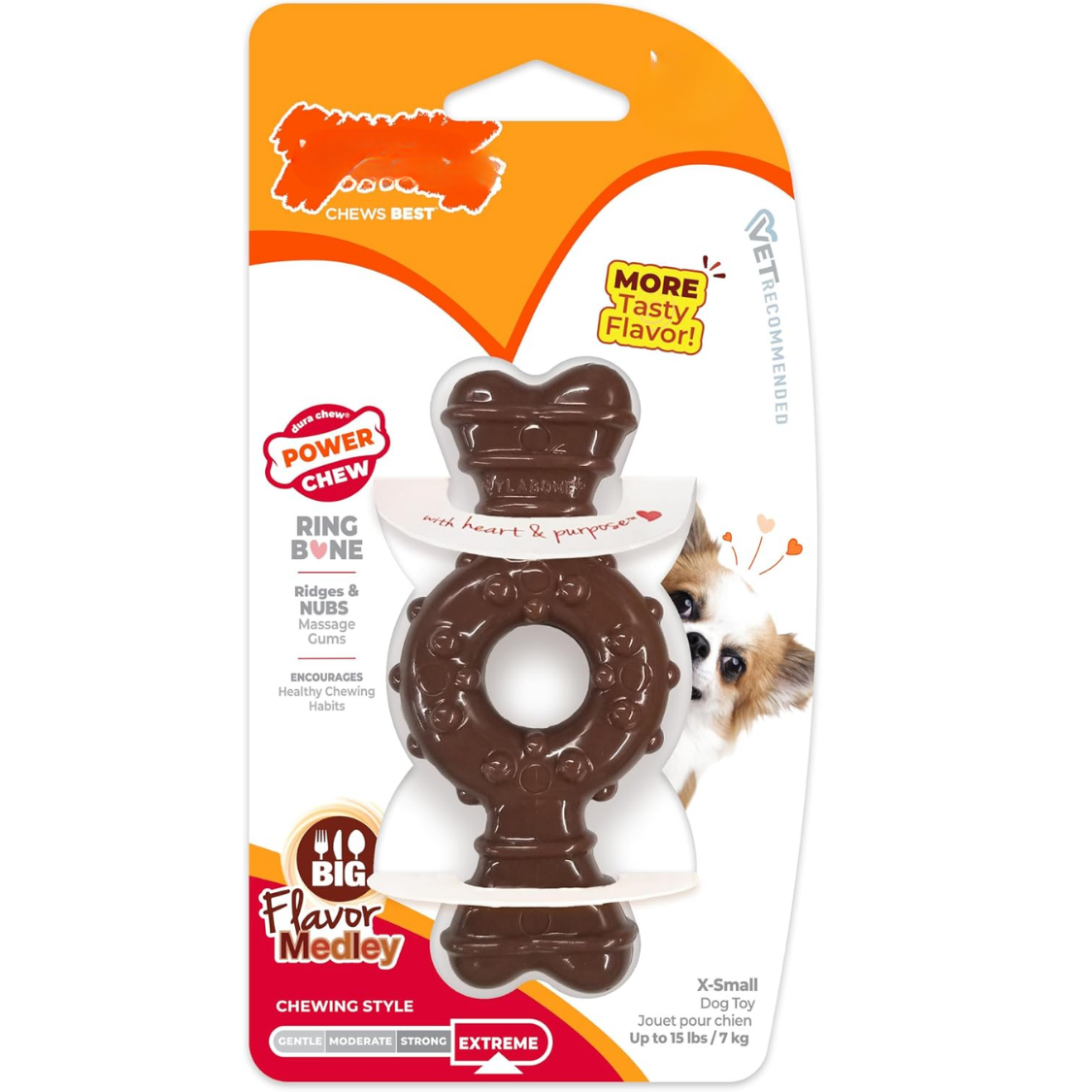 Power Chew Ring Bone Dog Toy Flavor Medley, XSmall Durable Toy For Aggressive Chewers$54.99View on Mallflare
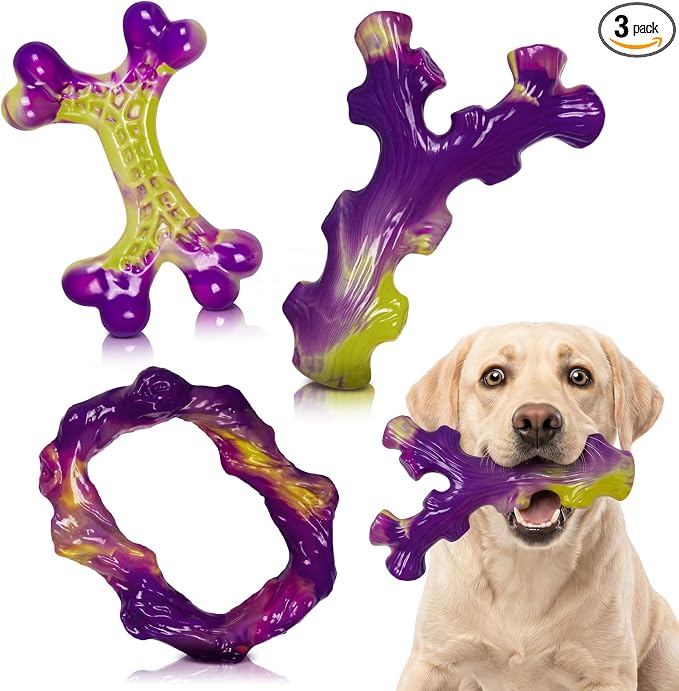 3-Pack Tough Dog Chew Toys For Aggressive Chewers Durable Interactive For Medium Large Dogs$63.99View on Mallflare
Highlights
- Natural rubber toys typically rate 40-60 Shore A, flexing under jaw pressure instead of cracking like rigid plastic.
- ETPU (expanded thermoplastic polyurethane) resists punctures better than EVA foam and floats for fetch.
- Nylon chews rate 80+ Shore D and suit power chewers but must be retired once gouged to protect enamel.
- Solid one-piece molding eliminates glued seams—the first failure point on cheap two-piece toys.
Best use cases
- Power chewers (Labradors, Shepherds, Pit Bulls): pick solid natural rubber or ETPU in Large/X-Large; skip thin plastic or plush squeakers.
- Fetch-and-float dogs: choose ETPU spike balls or rubber rings that float; skip weighted nylon bones that sink.
- Teething puppies and seniors: use softer rubber with textured surfaces; skip 80+ Shore D nylon that damages developing or worn teeth.
Buying tips
- Size up: the toy should be too large to fit fully behind the molars—a 3-inch ball suits medium jaws, 4-inch for large.
- Choose solid molded construction over glued two-piece toys; seams split first under sustained chewing.
- Match hardness to bite: 40-60 Shore A rubber for moderate chewers, 80+ Shore D nylon only for confirmed power chewers.
- Skip 'indestructible' claims—no toy is; buy multi-packs so you can rotate and retire damaged pieces early.
Specs
| Material Grade | Natural rubber / ETPU / Nylon |
|---|---|
| Hardness Range | 40-60 Shore A vs 80+ Shore D |
| Construction | Solid one-piece molded vs glued |
| Size Tier | Medium 3 in / Large 4 in+ |
Related searches
What to check before buying
- Measure your dog's muzzle width and current chews; pick a toy at least 1 inch wider than the widest chew they've destroyed.
- Confirm the toy floats if you need water fetch, and that it fits your existing launcher if you use one.
- Check for a hollow cavity or treat pocket—these weaken walls; solid-core toys last longer for aggressive chewers.
- Verify material is pet-safe, non-toxic, and free of glued seams or small removable parts before first use.
FAQ
Data sources: eBay / Amazon listings and product attribute feeds. Updated Nov 27, 2026.
Some links on this page are affiliate links. If you buy after clicking one, we may earn a commission at no extra cost to you. This does not change which products appear here or their order. Affiliate disclosure.