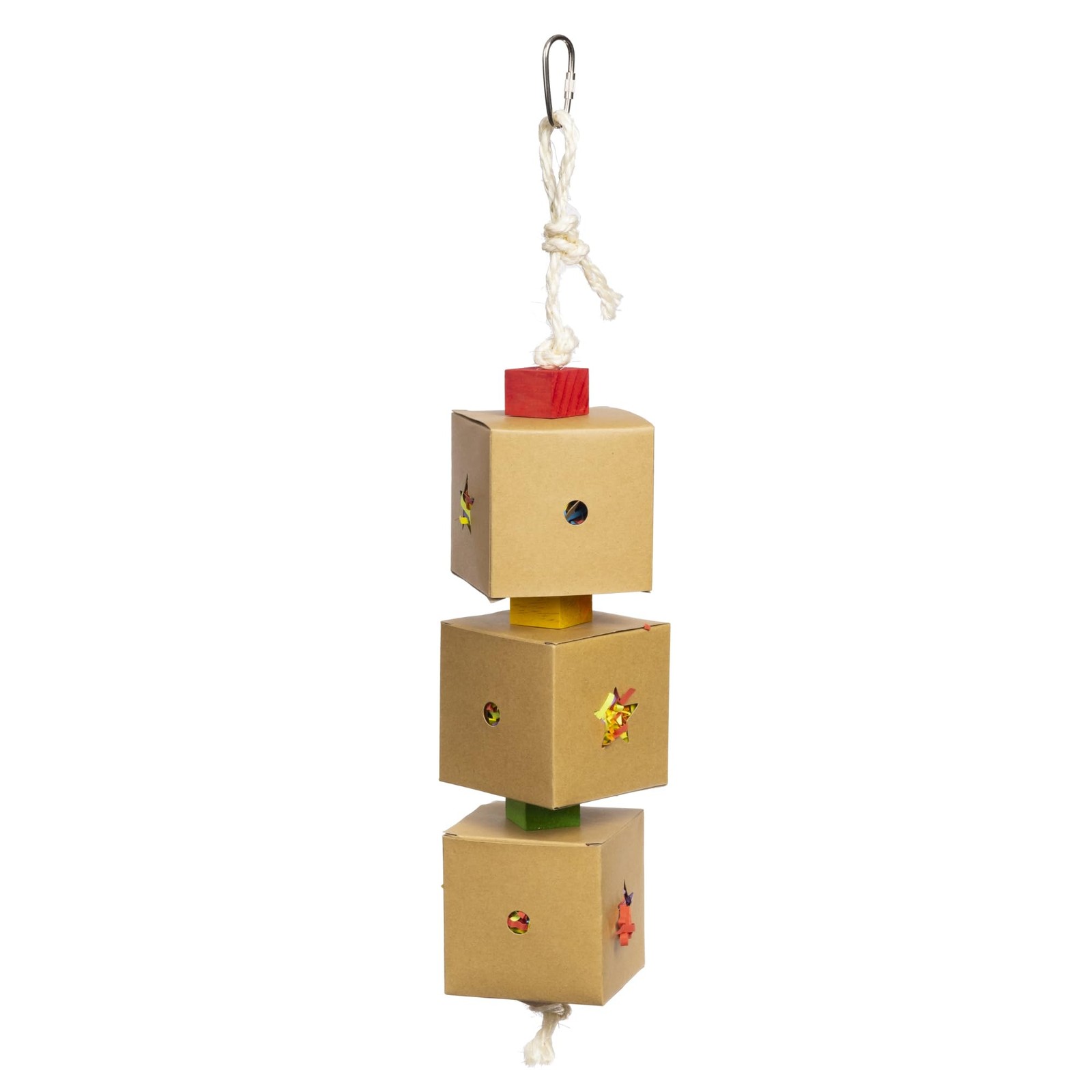

Photos from current listings. Actual item, color, and included accessories may vary.
Parrot Toy Buying Guide
Parrot toys are enrichment devices that must match beak strength, bird size, and chewing drive—not just color or novelty. The core trade-off is between soft, destructible materials that satisfy natural shredding and hard, durable parts that resist destruction but can frustrate a bird. The decision rule: choose material hardness and toy size by species beak class and body length, and always pair destructible toys with a hang-safe, beak-rated hardware system.
Median $26.14
Key takeaways
- Beak class dictates material: small birds (budgie, cockatiel) need soft balsa, paper, and 2–3 mm sisal; large macaws need 20–30 mm hardwood or 3–5 mm stainless chain.
- Unsafe metals (zinc, lead, or unknown alloys) cause heavy-metal poisoning; use only stainless steel or nickel-plated quick-links and avoid split rings that can catch beaks.
- Wood density matters: soft pine (≈400 kg/m³) suits medium parrots; hard oak or beech (≈700+ kg/m³) is required for large cockatoos and macaws.
At a glance
- Category
- Pet Toys
- Last updated
- Nov 27, 2026
Current offers
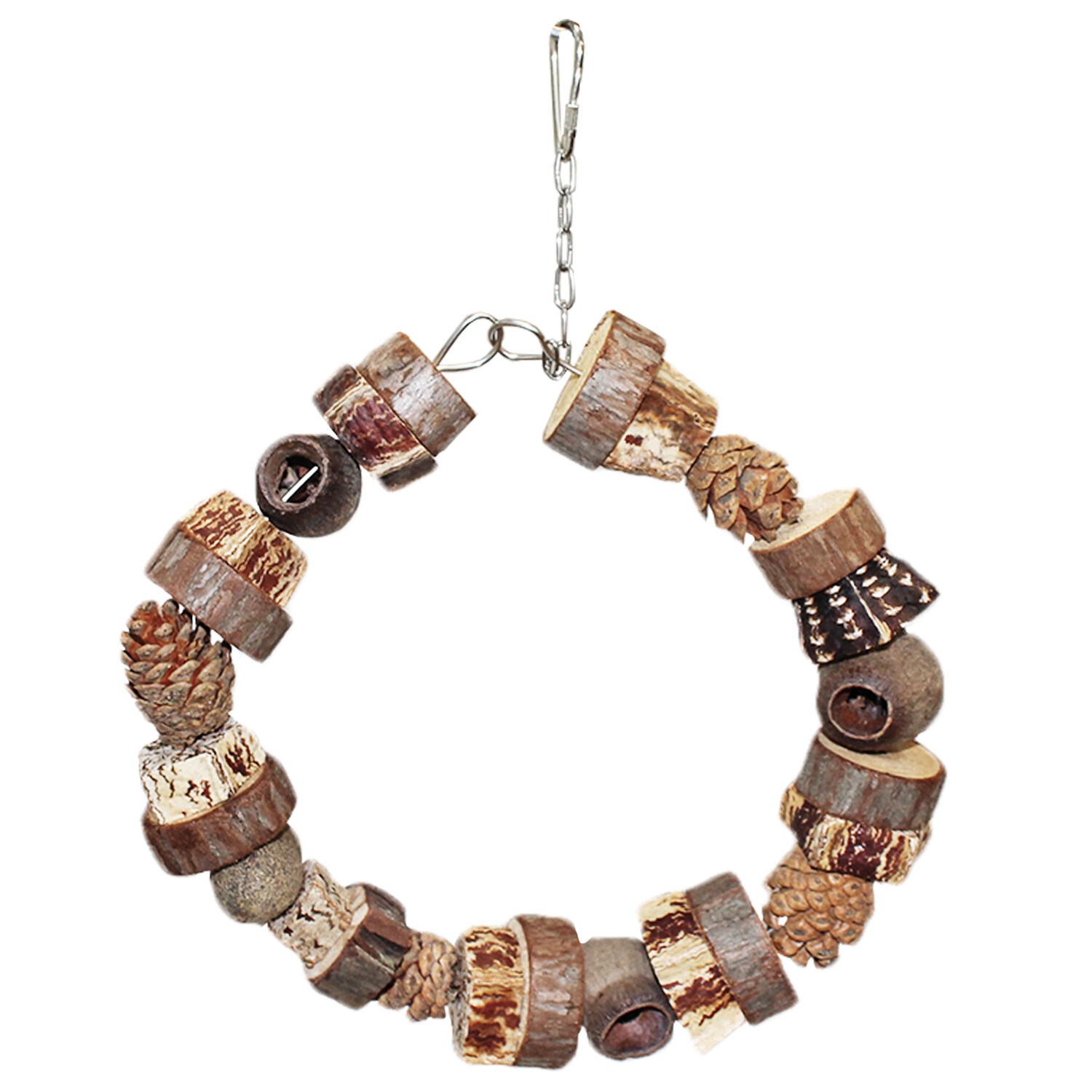
Highlights
- Beak class dictates material: small birds (budgie, cockatiel) need soft balsa, paper, and 2–3 mm sisal; large macaws need 20–30 mm hardwood or 3–5 mm stainless chain.
- Unsafe metals (zinc, lead, or unknown alloys) cause heavy-metal poisoning; use only stainless steel or nickel-plated quick-links and avoid split rings that can catch beaks.
- Wood density matters: soft pine (≈400 kg/m³) suits medium parrots; hard oak or beech (≈700+ kg/m³) is required for large cockatoos and macaws.
- Foraging toys with hidden compartments (e.g., box-stuffing designs) increase engagement time by 3–5× versus open toys, reducing feather-damaging behavior.
Best use cases
- Best fit: large macaws and cockatoos—pick 30–50 cm hardwood blocks on 4 mm stainless chain with no small gaps; skip small-bird toys that shatter in minutes.
- Best fit: African greys and Amazons—choose medium-density pine or leather foraging boxes with 3 mm quick-links; skip fabric toys that fray into ingestible threads.
- Best fit: budgies, cockatiels, and conures—select soft balsa, crinkle paper, and 2 mm vegetable-tanned leather; skip heavy hardwood toys they cannot dent.
- Wrong fit: any toy with split rings, lead weights, or tiny bell clappers—these cause entrapment or toxicity regardless of bird size; skip entirely.
Buying tips
- Match toy length to body length: a toy should be roughly 1/3 to 1/2 the bird’s length (e.g., 15–20 cm toy for a 35 cm cockatiel) to allow full stretch and chew access.
- Use this hardware rule: small birds = 2 mm stainless quick-link; medium = 3 mm; large = 4–5 mm—never use zinc-plated or brass hardware that flakes.
- For destructive chewers, buy 3–4 toys per month per bird; rotate toys every 2–3 days to prevent boredom and over-destruction of a single item.
- Prefer toys with replaceable parts (refillable foraging boxes, replaceable wood blocks) over glued assemblies—glue can be ingested and shortens toy life.
Specs
| Beak Class | Small / Medium / Large |
|---|---|
| Wood Hardness | Soft balsa to hardwood (>700 kg/m³) |
| Hardware Grade | Stainless steel quick-links 2–5 mm |
| Toy Length | 15–50 cm by species |
Related searches
What to check before buying
- Measure cage bar spacing and mounting points: toys need at least 8–10 cm of clear hang space and a secure 2–5 mm quick-link attachment point.
- Confirm bird weight and beak class (e.g., under 100 g vs over 500 g) so the toy’s material hardness matches chewing force.
- Check room humidity and cleaning routine: untreated wood and paper toys degrade faster in high humidity—choose sealed or replaceable components.
- Verify toy diameter vs bird’s foot size: perches and hoops must be 2–3 cm for small birds, 4–6 cm for large parrots to prevent foot sores.
FAQ
Data sources: eBay / Amazon listings and product attribute feeds. Updated Nov 27, 2026.
Some links on this page are affiliate links. If you buy after clicking one, we may earn a commission at no extra cost to you. This does not change which products appear here or their order. Affiliate disclosure.