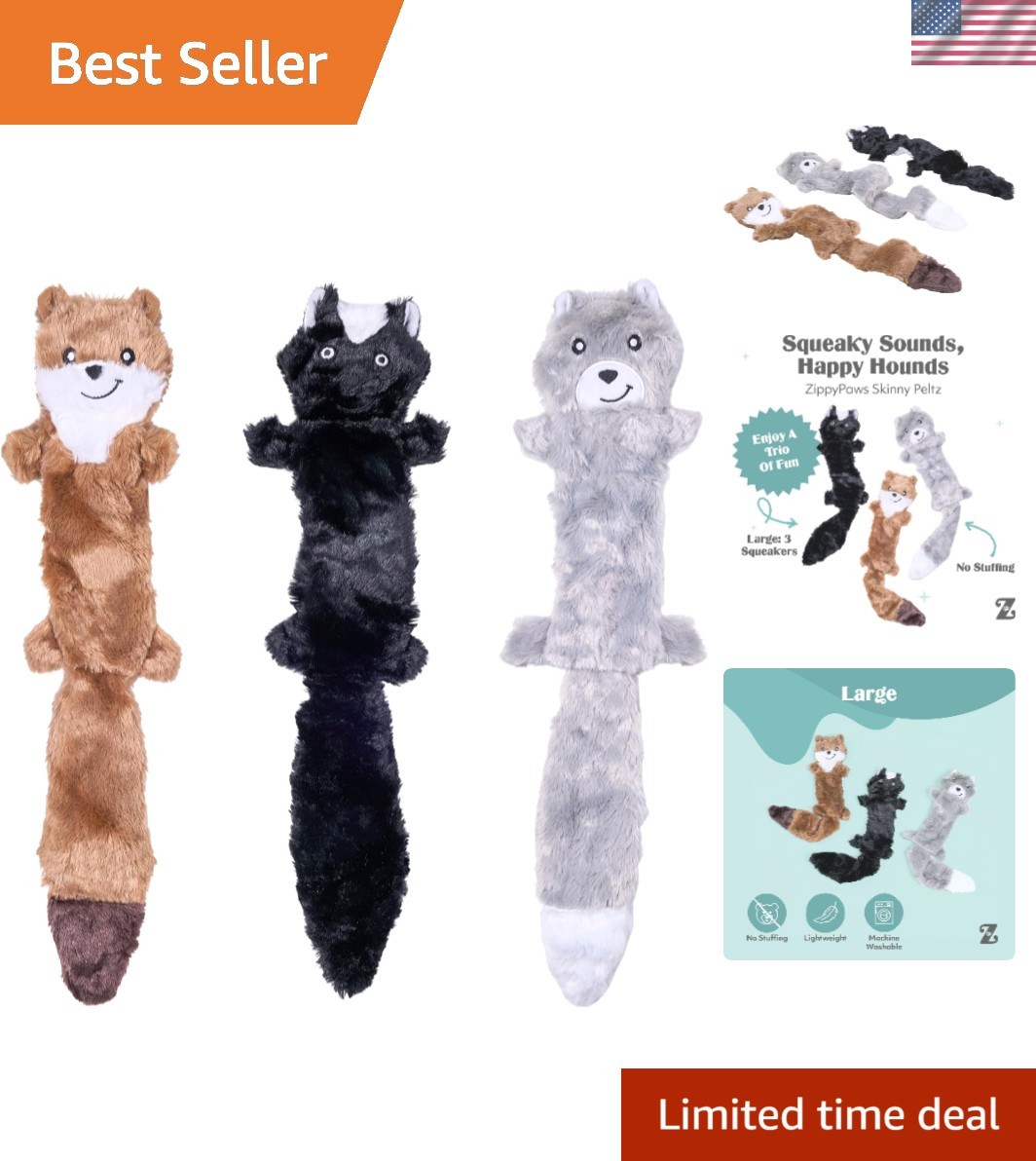

Photos from current listings. Actual item, color, and included accessories may vary.
Dog Toy With No Stuffing Buying Guide
Stuffing-free dog toys replace loose polyester fill with a hollow, flat-sewn, or reinforced-core construction, trading plush softness for intactness under chewing. The core trade-off is between a light, flat toy that survives tugging without scattering fill and a durable stitched shell that resists seam failure. Choose a no-stuffing toy when your dog disembowels plush toys; skip it for heavy power-chewers who need rubber or nylon instead.
Key takeaways
- No-stuffing toys are typically flat-sewn with double-stitched seams or a single-layer reinforced plush shell, so there is no loose fill to ingest or scatter.
- Squeaker placement matters: a squeaker sewn into a protected pocket or wrapped in fabric lasts longer than one loose in the cavity, which is the first failure point.
- Fabric GSM and seam construction determine durability more than the 'no stuffing' label; heavier denier plush and bound seams resist tearing at tug points.
At a glance
- Category
- Pet Toys
- Last updated
- Nov 27, 2026
Current offers
Highlights
- No-stuffing toys are typically flat-sewn with double-stitched seams or a single-layer reinforced plush shell, so there is no loose fill to ingest or scatter.
- Squeaker placement matters: a squeaker sewn into a protected pocket or wrapped in fabric lasts longer than one loose in the cavity, which is the first failure point.
- Fabric GSM and seam construction determine durability more than the 'no stuffing' label; heavier denier plush and bound seams resist tearing at tug points.
- Sizing tiers usually run Small (under 10 in), Medium (10-16 in), and Large (16-24 in); a toy shorter than the dog's muzzle length is a choking-risk compromise.
Best use cases
- Best fit: dogs that rip stuffing out of plush toys—pick a flat-sewn no-stuffing toy with bound seams and a protected squeaker pocket.
- Best fit: tug and fetch play with small-to-medium dogs—choose a long, narrow no-stuffing shape that gives two hands and a jaw a clear grip.
- Wrong fit: strong power-chewers who destroy fabric in minutes—skip plush no-stuffing toys and move to rubber or nylon chew toys.
- Wrong fit: dogs that ingest fabric—avoid plush shells entirely and choose solid rubber or rope instead.
Buying tips
- Match toy length to your dog's muzzle-to-chest length: a toy shorter than the muzzle invites choking; choose 1.5-2x muzzle length for tug toys.
- Look for double-stitched or bound seams and a squeaker enclosed in a fabric pocket; exposed squeakers in an open cavity fail first.
- Prefer heavier denier plush or reinforced woven shells over thin single-layer fleece; thin shells tear at seams within minutes of tugging.
- For multi-dog homes, choose a longer no-stuffing toy so two dogs can grip simultaneously without fighting over a short end.
Specs
| Construction | Flat-sewn / hollow / reinforced core |
|---|---|
| Squeaker | Protected pocket vs loose cavity |
| Seam Type | Double-stitched / bound vs single |
| Size Tiers | S <10 in / M 10-16 in / L 16-24 in |
Related searches
What to check before buying
- Measure your dog's muzzle length and chest girth; pick a toy length at least equal to muzzle length, ideally 1.5x for tug play.
- Check the seam type in photos: bound or double-stitched edges outlast single-stitched flat seams.
- Confirm the squeaker is enclosed in a protected pocket, not loose in the cavity, before buying.
- Inspect for small plastic eyes or tags that can be chewed off; prefer embroidered or printed features on no-stuffing toys.
FAQ
Data sources: eBay / Amazon listings and product attribute feeds. Updated Nov 27, 2026.
Some links on this page are affiliate links. If you buy after clicking one, we may earn a commission at no extra cost to you. This does not change which products appear here or their order. Affiliate disclosure.