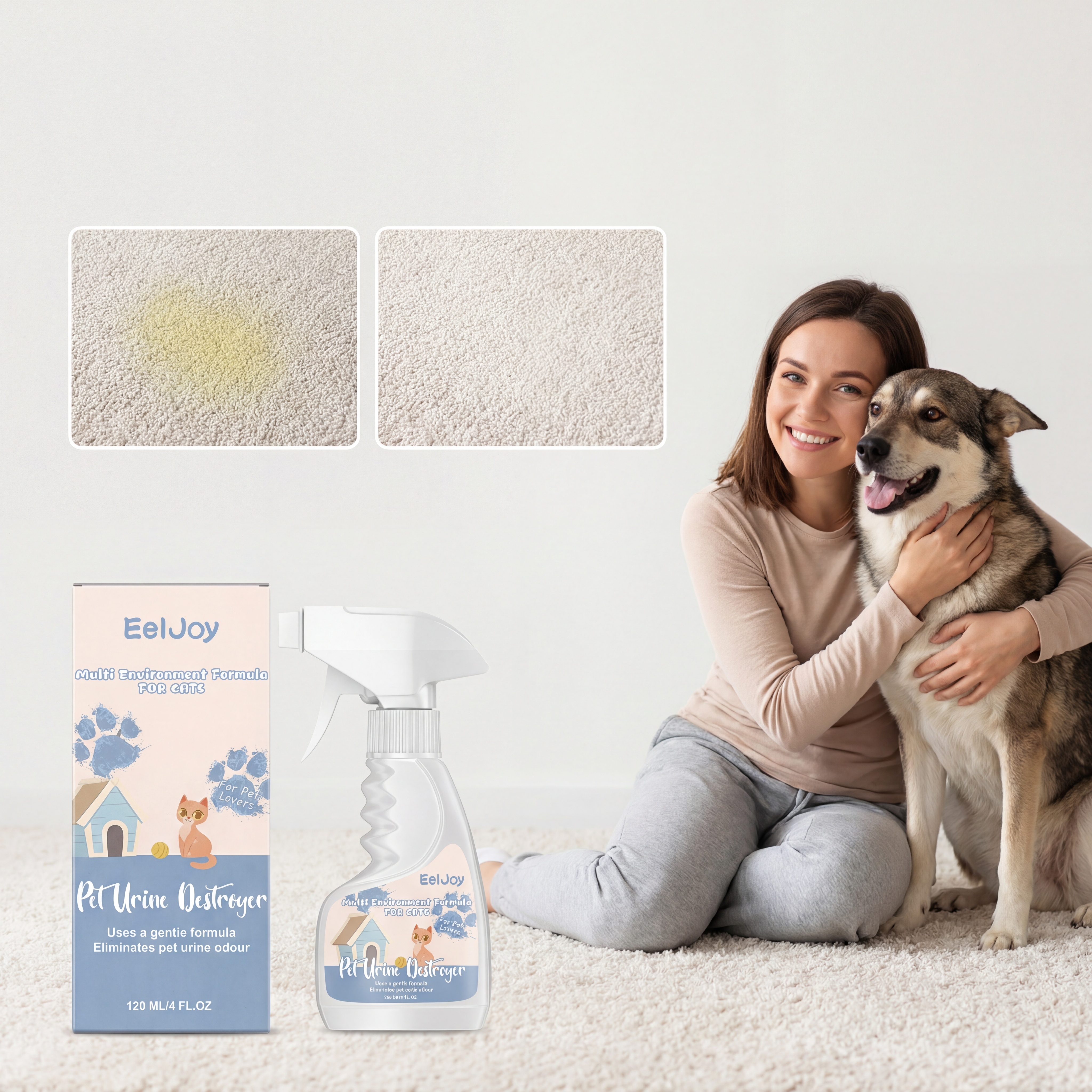

Photos from current listings. Actual item, color, and included accessories may vary.
Urine Remover Buying Guide
Urine removers are enzymatic or oxidizer-based cleaners engineered to break down uric acid crystals that cause lingering odor, not just mask them. The core trade-off is between true enzymatic digestion (slow, surface-safe, requires dwell time) and chemical oxidizers like hydrogen peroxide (fast, but can bleach or damage delicate fibers). Buy enzymatic formulas for carpets, upholstery, and porous surfaces where odor returns; choose oxidizers only for hard, colorfast surfaces and washable synthetics.
Key takeaways
- Enzymatic cleaners use protease, urease, and amylase cultures that consume uric acid salts; they need 10–15 minutes wet dwell time to work.
- Oxidizer formulas rely on 3–6% hydrogen peroxide plus surfactants; they lift stain fast but can fade wool, silk, and solution-dyed nylons.
- Odor-neutralizing capacity is measured by uric acid crystal breakdown, not fragrance load; heavy perfume signals a masking product, not a remover.
At a glance
- Category
- Pet Grooming & Cleaning
- Last updated
- Nov 28, 2026
Current offers
Highlights
- Enzymatic cleaners use protease, urease, and amylase cultures that consume uric acid salts; they need 10–15 minutes wet dwell time to work.
- Oxidizer formulas rely on 3–6% hydrogen peroxide plus surfactants; they lift stain fast but can fade wool, silk, and solution-dyed nylons.
- Odor-neutralizing capacity is measured by uric acid crystal breakdown, not fragrance load; heavy perfume signals a masking product, not a remover.
- Carpet-safe formulas are pH-neutral (6–8) and non-ionic; high-alkaline or cationic detergents leave sticky residue that re-attracts soil.
Best use cases
- Best fit: multi-pet households with repeated accidents on carpet or rugs — pick a pH-neutral enzymatic concentrate with urease and apply to saturation, then blot and air-dry.
- Best fit: washable pet bedding and synthetic upholstery — use an oxidizer or enzyme spray, but pre-test colorfastness on an hidden seam before full application.
- Wrong fit: wool, silk, or leather surfaces — skip peroxide oxidizers and high-alkaline cleaners; use only pH-neutral enzyme formulas labeled for delicate fibers.
- Wrong fit: hard floors and tile grout — oxidizers work, but avoid enzyme products that leave protein residue in porous grout; rinse thoroughly after dwell.
Buying tips
- Match the chemistry to the surface: enzyme for carpet, upholstery, and grout; peroxide oxidizer only for colorfast synthetics and hard non-porous floors.
- Check the dilution ratio on concentrates — typical carpet presoak is 1:4 to 1:10 with water; ready-to-use sprays are convenient but cost more per treated area.
- Prioritize formulas listing urease or uricase enzymes; these specifically target the uric acid crystals that cause re-soiling and odor rebound.
- Avoid products with added fragrance as the primary odor-control claim; heavy perfume masks but does not eliminate uric acid residue.
Specs
| Chemistry | Enzyme vs Peroxide oxidizer |
|---|---|
| pH Level | Neutral 6–8 for carpets |
| Dwell Time | 10–15 min wet contact |
| Form | Concentrate vs Ready-to-use spray |
Related searches
What to check before buying
- Measure the soiled area and note fiber type (wool, nylon, polyester, olefin) before choosing enzyme vs oxidizer chemistry.
- Confirm the product is pH-neutral and non-ionic if treating stain-resistant carpet warranties, which often exclude high-alkaline cleaners.
- Check that the formula is safe for the pet's age and species — avoid essential oils like citrus or tea tree, which are toxic to cats.
- For cushions or absorbent pads, verify the cover is removable and machine-washable; otherwise use a spray-and-blot method only.
FAQ
Data sources: eBay / Amazon listings and product attribute feeds. Updated Nov 28, 2026.
Some links on this page are affiliate links. If you buy after clicking one, we may earn a commission at no extra cost to you. This does not change which products appear here or their order. Affiliate disclosure.