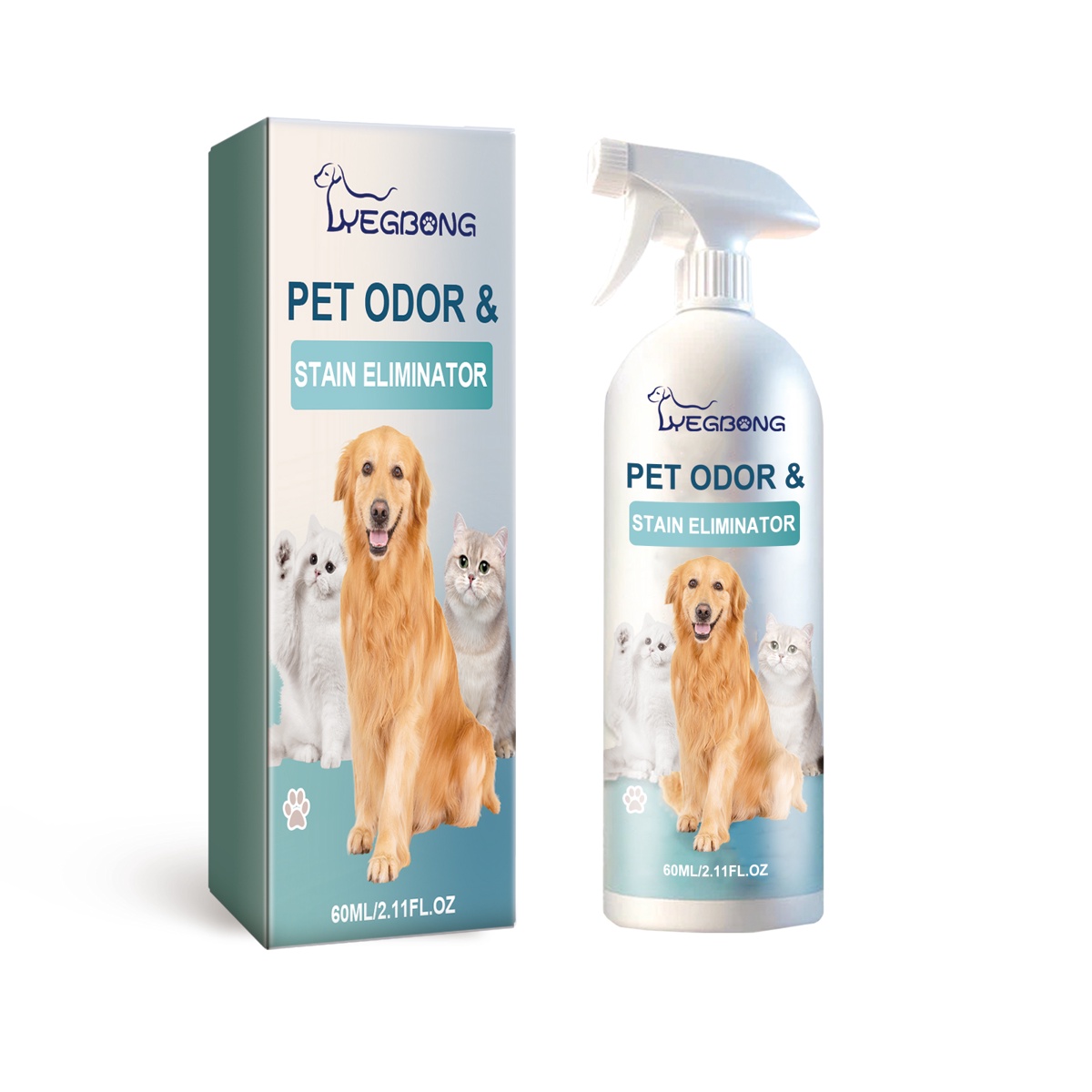

Photos from current listings. Actual item, color, and included accessories may vary.
Odor Eliminator Buying Guide
Odor eliminators for pet messes fall into two functional classes: enzymatic/bacterial cleaners that digest uric acid and organic residue at the source, and surface sprays or adsorbent pads that neutralize volatile compounds short-term. The core trade-off is dwell time and substrate compatibility—enzymes need 10–15 minutes of wet contact to break the uric acid crystal that causes re-wicking, while instant sprays mask or oxidize surface odor without reaching the pad or subfloor. The decision rule: buy an enzymatic or bacterial cleaner for urine-soaked carpets, mattresses, and grout; buy an oxidizer or adsorbent product only for hard, non-porous surfaces and ambient air.
Median $22.99
Key takeaways
- Enzymatic formulas use protease, amylase, and urease to break uric acid crystals; without urease activity, urine odor returns with humidity.
- Bacterial cleaners (bacillus spores) continue digesting residue for days after application, outperforming one-shot enzyme sprays on porous carpet and upholstery.
- Oxidizer sprays (hydrogen peroxide or peracetic acid) neutralize odor in seconds but can bleach wool, silk, and solution-dyed nylons—test on hidden seams first.
At a glance
- Category
- Pet Grooming & Cleaning
- Last updated
- Nov 27, 2026
Current offers
Highlights
- Enzymatic formulas use protease, amylase, and urease to break uric acid crystals; without urease activity, urine odor returns with humidity.
- Bacterial cleaners (bacillus spores) continue digesting residue for days after application, outperforming one-shot enzyme sprays on porous carpet and upholstery.
- Oxidizer sprays (hydrogen peroxide or peracetic acid) neutralize odor in seconds but can bleach wool, silk, and solution-dyed nylons—test on hidden seams first.
- Adsorbent pads and charcoal cushions rely on physical capture with no residue, but saturate quickly and must be replaced; they suit enclosed spaces, not soaked subfloor.
Best use cases
- Best fit: dog urine soaked into carpet, rugs, or mattress—choose a bacterial-enzyme liquid concentrate diluted per label and applied to saturation, then covered for 10–15 minutes.
- Best fit: daily cat litter box or hard-surface wipe-downs—choose a ready-to-use enzymatic spray; skip adsorbent pads, which do not neutralize ammonia at the source.
- Wrong fit: fresh urine on hardwood or tile—skip enzymatic liquids that can wick into seams; use an oxidizer spray or adsorbent pad and dry immediately.
- Wrong fit: skunk spray or vomit on fabric—skip enzyme-only products; use an oxidizer (hydrogen peroxide + baking soda) first, then an enzyme follow-up.
Buying tips
- Match product volume to saturation math: one gallon of mixed enzymatic solution covers roughly 100–150 sq ft of carpet at full saturation; buy concentrate, not ready-to-use, for whole-room treatment.
- Check the enzyme listing for 'urease' or 'uric acid' claims—products that only say 'enzyme' may lack the urease needed for cat and dog urine.
- For porous substrates, choose a bacterial spore product labeled for 'continued action' over a one-shot enzyme; spores remain viable for days in damp carpet.
- Avoid oxidizer sprays on wool, silk, leather, and solution-dyed nylon—peroxide-based products can strip dye; use enzyme or adsorbent alternatives on those materials.
Specs
| Active Chemistry | Enzyme / Bacterial / Oxidizer |
|---|---|
| Uric Acid Target | Urease-labeled vs surface-only |
| Format | Concentrate / RTU spray / Pad |
| Safe Substrates | Carpet, upholstery, hard surface |
Related searches
What to check before buying
- Measure the soaked area and substrate depth: carpet pad and subfloor may need injection or sub-surface application, not just a top spray.
- Identify fiber content on upholstery and rugs—wool and silk require pH-neutral enzyme, never oxidizer or high-alkaline cleaner.
- Confirm the product format matches application: concentrate for carpets and large areas; ready-to-use spray for litter boxes and hard surfaces; pad for enclosed ambient odor.
- Check ventilation and drying capability—bacterial and enzyme products need airflow and 24–48 hours of drying to prevent mildew.
FAQ
Data sources: eBay / Amazon listings and product attribute feeds. Updated Nov 27, 2026.
Some links on this page are affiliate links. If you buy after clicking one, we may earn a commission at no extra cost to you. This does not change which products appear here or their order. Affiliate disclosure.