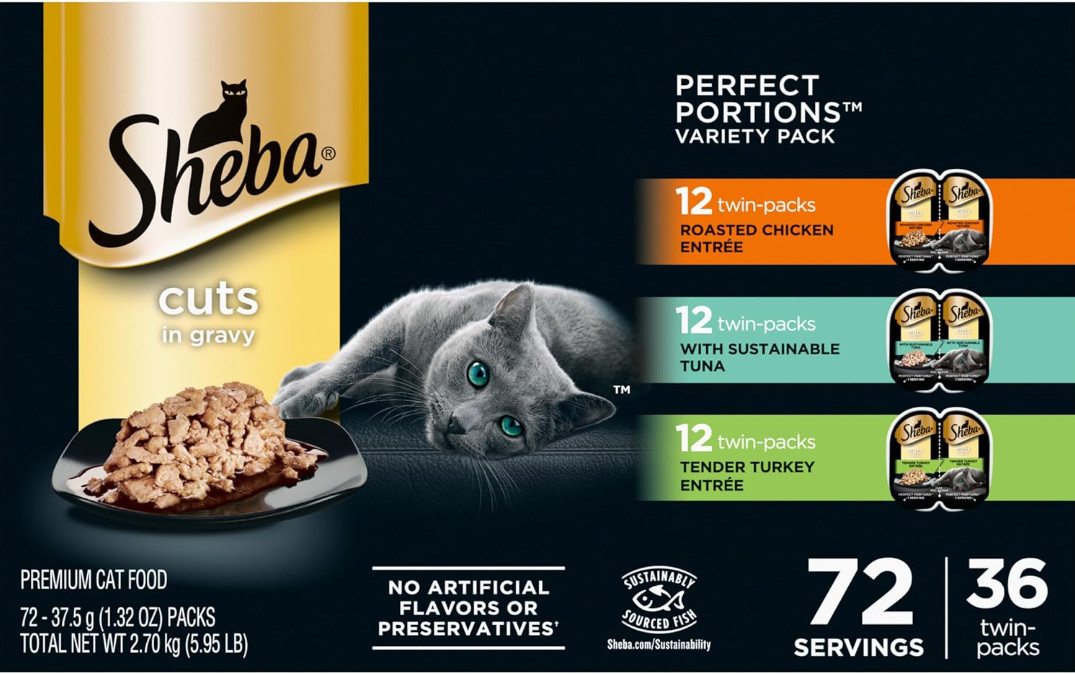

Photos from current listings. Actual item, color, and included accessories may vary.
Wet Food Buying Guide
Wet food is a moisture-rich pet diet, typically 75-85% water, sealed in cans, cups, or pouches to deliver hydration and high meat inclusion. The core trade-off is between complete-and-balanced nutrition with named muscle meat and regulated AAFCO profiles versus lower-cost 'topper' or complementary products built on by-products, added gums, and vague labeling. The decision rule: a product labeled 'complete and balanced' for your pet's life stage is a sole diet; anything labeled 'topper', 'complement', or lacking a nutritional adequacy statement is a mix-in only.
Key takeaways
- Complete-and-balanced wet foods carry an AAFCO Nutritional Adequacy Statement naming the life stage (growth, adult maintenance, or all life stages); toppers and complements legally omit it.
- Pate textures are typically the most calorie- and meat-dense per ounce, while cuts-in-gravy and shreds trade meat density for water and starch-based gravy, so cost-per-calorie differs sharply.
- Standard can sizes are 3 oz (single cat meal), 5.5 oz (large cat or two-cat meal), 12.5-13 oz (multi-cat or large-dog meal), and 2.6-3.5 oz cups; unit pricing only compares fairly within the same can size.
At a glance
- Category
- Pet Food, Treats & Litter
- Last updated
- Nov 28, 2026
Current offers
Highlights
- Complete-and-balanced wet foods carry an AAFCO Nutritional Adequacy Statement naming the life stage (growth, adult maintenance, or all life stages); toppers and complements legally omit it.
- Pate textures are typically the most calorie- and meat-dense per ounce, while cuts-in-gravy and shreds trade meat density for water and starch-based gravy, so cost-per-calorie differs sharply.
- Standard can sizes are 3 oz (single cat meal), 5.5 oz (large cat or two-cat meal), 12.5-13 oz (multi-cat or large-dog meal), and 2.6-3.5 oz cups; unit pricing only compares fairly within the same can size.
- Named muscle meat first (chicken, turkey, beef, salmon) with a named organ second signals higher protein quality than 'meat by-products' or 'animal digest' at the top of the ingredient list.
Best use cases
- Best fit: adult cats needing hydration and urinary support — choose 3 oz complete-and-balanced pate cans in 12- or 24-count packs; skip 2.6 oz 'topper' cups, which are not a sole diet.
- Best fit: multi-cat households — buy 5.5 oz cans or 12.5 oz cans to cut per-meal packaging and cost; skip 3 oz singles unless portion control per cat is the priority.
- Best fit: dogs needing meal moisture or senior palatability — pick 12.5-13 oz complete-and-balanced cans; skip 'gravy variety' pouches labeled topper, which under-deliver calories as a meal.
- Wrong fit: pets with diagnosed kidney, urinary, or allergy conditions — therapeutic wet diets are prescription-only and OTC 'urinary' or 'sensitive' labels are not equivalent.
Buying tips
- Match can size to daily intake: a typical 10 lb adult cat eats roughly 5-6 oz of pate daily, so 3 oz cans mean two feedings and 5.5 oz cans mean one-plus; buy the size that avoids half-can waste.
- Buy variety packs by texture family (all pate, all gravy, all shreds) rather than mixed textures, because cats and dogs often reject a texture change mid-pack and you waste the remainder.
- Prefer cans with a 'complete and balanced' statement for the correct life stage over 'all life stages' only when feeding a single diet long-term; all-life-stages formulas are calorie-dense for adults.
- Check the ingredient panel order: named meat and named organs in the first three ingredients indicate higher animal-protein inclusion than formulas leading with broth, water, or grains.
Specs
| Pack Format | 12, 24, or 36 count cases |
|---|---|
| Can Size | 3 oz, 5.5 oz, 12.5-13 oz, 2.6-3.5 oz cups |
| Texture | Pate / minced / shreds / cuts in gravy |
| Nutrition Label | Complete & balanced vs topper |
Related searches
What to check before buying
- Confirm your pet's daily ounce requirement against the can size and pack count so a case lasts a predictable number of days without refrigeration leftovers.
- Check whether the formula is labeled complete-and-balanced or topper/complement, and whether the life-stage statement matches your pet (kitten/puppy, adult, senior).
- Verify can or cup dimensions fit your storage and that the pack format (12, 24, 36 count) matches your cabinet or pantry space.
- For dogs, confirm the can size matches breed size: small breeds need 3-5.5 oz portions, large breeds 12.5-13 oz, to avoid refrigerating open cans.
FAQ
Data sources: eBay / Amazon listings and product attribute feeds. Updated Nov 28, 2026.
Some links on this page are affiliate links. If you buy after clicking one, we may earn a commission at no extra cost to you. This does not change which products appear here or their order. Affiliate disclosure.