
Photos from current listings. Actual item, color, and included accessories may vary.
Small Litter Box With Lid Buying Guide
A small litter box with lid is an enclosed or hooded litter pan sized for tight spaces, kittens, or single-cat households. The key trade-off is between odor/ scatter containment and interior volume: too small an enclosure traps smells and forces cats to soil the walls, while flimsy lids crack and leak. Choose a box where the cat can turn around fully (at least 1.5× body length) and the lid latches with a high-sided base; skip open pans or low-profile hoods if odor and tracking are your main problems.
Median $80.99
Key takeaways
- Enclosure geometry matters more than exterior footprint: interior floor should be at least 1.5× the cat's nose-to-tail length, with 4–6 in of litter depth clearance under the hood.
- Stainless steel bases resist odor absorption and scratches far better than plastic, which develops micro-scratches that harbor bacteria after a few months.
- Lid retention and vent design separate durable hoods from compromises: snap-lock side latches and carbon or charcoal filter slots control odor; friction-fit lids pop off when cats jump out.
At a glance
- Category
- Pet Food, Treats & Litter
- Last updated
- Nov 27, 2026
Current offers
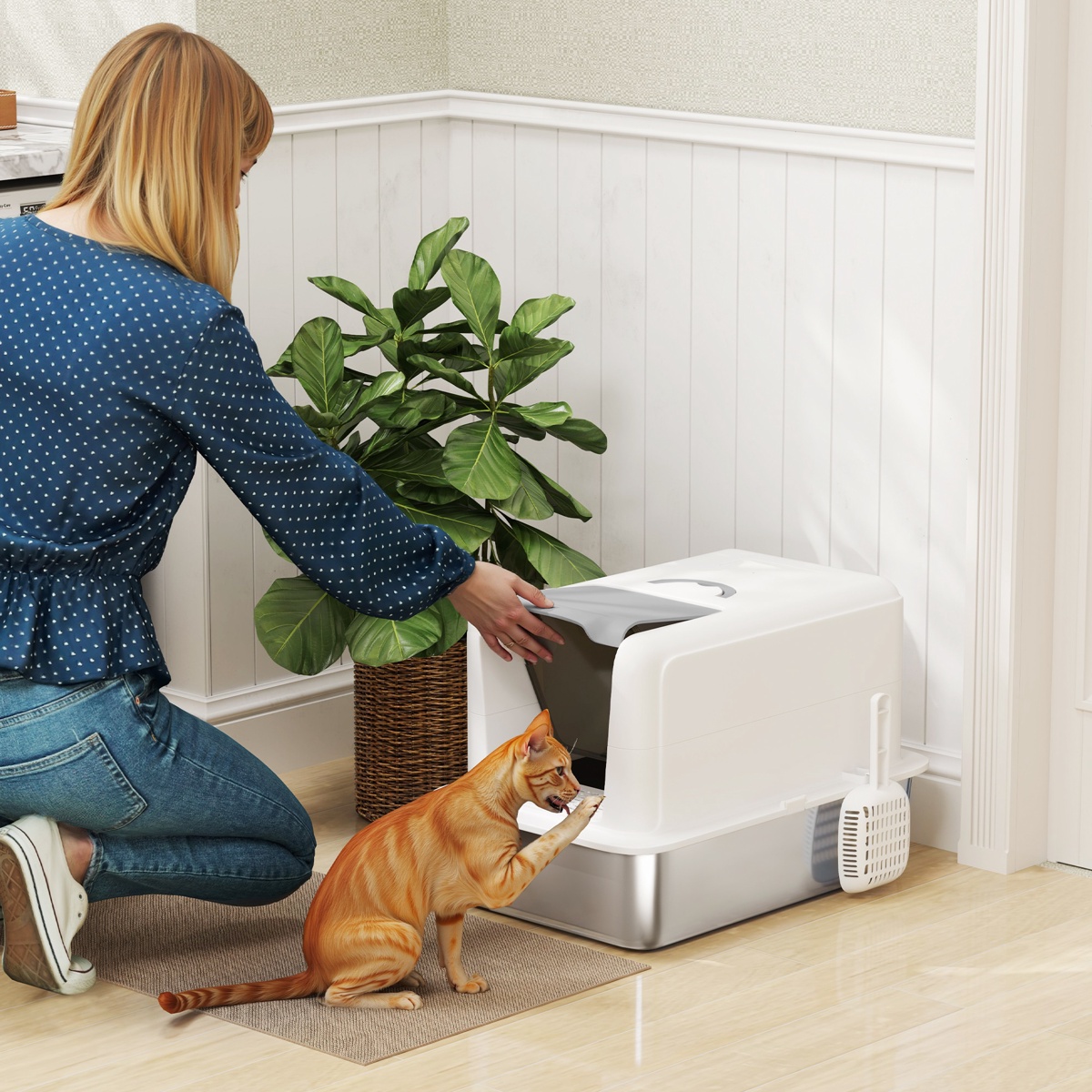 2 in 1 Stainless Steel Cat Litter Box with Removable Lid, Scoop, Filter Bags, for Small to Large Cats, White$80.99View on Mallflare
 2 in 1 Stainless Steel Cat Litter Box with Removable Lid, Scoop, Filter Bags, for Small to Large Cats, Gray$80.99View on Mallflare
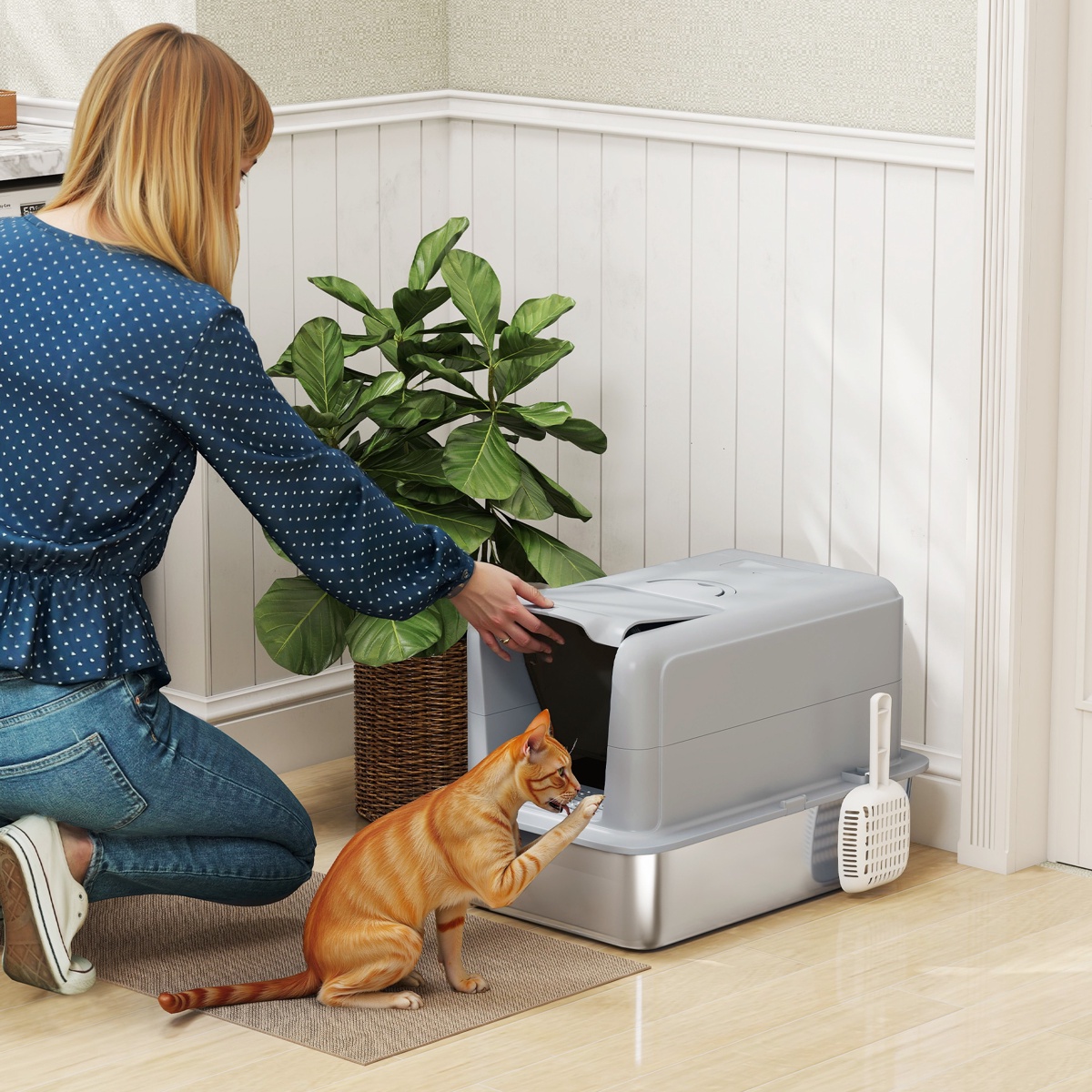 2-in-1 Gray Cat Litter Box, Removable Lid, for Small to Large Cats$160.99View on Mallflare
Highlights
- Enclosure geometry matters more than exterior footprint: interior floor should be at least 1.5× the cat's nose-to-tail length, with 4–6 in of litter depth clearance under the hood.
- Stainless steel bases resist odor absorption and scratches far better than plastic, which develops micro-scratches that harbor bacteria after a few months.
- Lid retention and vent design separate durable hoods from compromises: snap-lock side latches and carbon or charcoal filter slots control odor; friction-fit lids pop off when cats jump out.
- High-sided base (6–8 in) with a top or front entry is the standard for scatter control; low-entry hoods under 5 in allow litter to be kicked out through the opening.
Best use cases
- Best fit: a single adult cat or two kittens in an apartment or bathroom corner—pick a hooded box with 6–8 in base walls, a snap-lock lid, and a filter slot; skip large 24 in+ pans that waste floor space.
- Best fit: odor-sensitive households—choose stainless steel base + hood with charcoal filter compartment over all-plastic hoods; plastic scratches and holds smell even after washing.
- Wrong fit: a large 15 lb+ cat or multi-cat home—a small hooded box forces the cat to crouch and soil the walls; size up to an extra-large hooded or top-entry box instead.
- Wrong fit: a senior or arthritic cat—high-entry hoods and deep bases are hard to step into; pick a low-entry hooded box (under 4 in lip) or an open low-sided pan.
Buying tips
- Measure your cat from nose to tail base: the interior floor length should be at least 1.5× that number; a typical 18 in cat needs a 27 in interior, so 'small' hooded boxes fit only cats under ~12 in body length.
- Choose a base depth of 6–8 in with a hood that adds at least 12 in of headroom; less than that and cats will urinate over the seam, leaking between base and lid.
- Prefer stainless steel or thick polypropylene (≥2 mm wall) over thin ABS; thin hoods crack at the hinge and latch points within months, especially if the lid is removed for cleaning.
- Confirm the lid has side latches plus a top or front filter slot; friction-fit lids without latches are the most common failure point on small hooded boxes.
Specs
| Base Material | Stainless steel vs polypropylene |
|---|---|
| Interior Length | 18–24 in (small hooded) |
| Entry Lip Height | 4–8 in (low-entry vs high-sided) |
| Lid Retention | Snap latches vs friction-fit |
Related searches
What to check before buying
- Measure the floor space where the box will sit and add 4 in clearance on all sides so the cat can enter and exit without scraping the hood against a wall.
- Verify the entry height fits your cat: kittens and seniors need a lip under 4 in; healthy adults can use 5–7 in, but anything over 8 in needs a step or ramp.
- Check litter compatibility: clumping clay needs 3–4 in depth and a high-sided base; pellet or paper litter works in shallower pans but tracks more through hood openings.
- Confirm whether the hood is removable for cleaning and whether replacement filters are a standard size (many hoods use proprietary carbon pads that are hard to source).
FAQ
Data sources: eBay / Amazon listings and product attribute feeds. Updated Nov 27, 2026.
Some links on this page are affiliate links. If you buy after clicking one, we may earn a commission at no extra cost to you. This does not change which products appear here or their order. Affiliate disclosure.