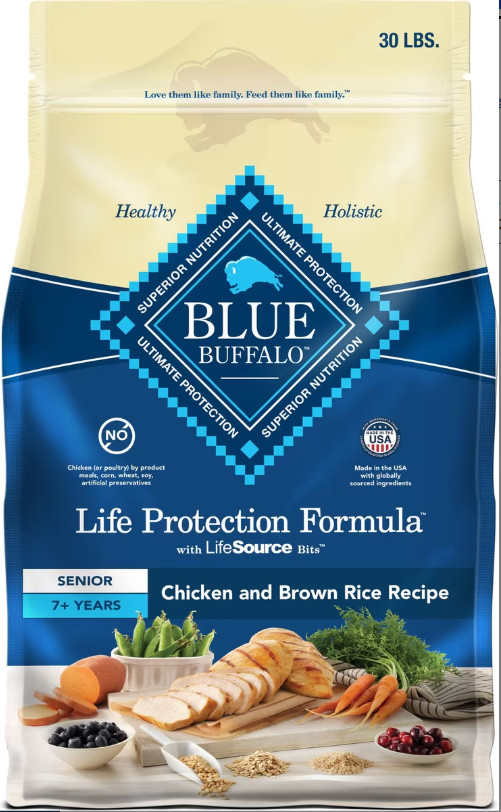

Photos from current listings. Actual item, color, and included accessories may vary.
Senior Dog Food Buying Guide
Senior dog food is a life-stage formula engineered for dogs roughly seven years and older, defined by moderating calories, boosting joint and cognitive support, and improving protein digestibility. The core trade-off is between cost-driven grain-heavy formulas with rendered by-products and premium formulas that lead with named meat meals, added glucosamine/chondroitin, and controlled phosphorus for kidney health. Choose a formula that names a specific animal protein first and states guaranteed joint-support levels; skip any bag that lists 'meat and bone meal' as the primary protein or hides AAFCO feeding trials.
Key takeaways
- AAFCO 'Adult Maintenance' vs 'All Life Stages' statements matter: senior formulas should carry an Adult Maintenance claim with a life-stage feeding trial, not just a formulation statement.
- Glucosamine (typically 300-600 mg/kg) and chondroitin (100-300 mg/kg) are the standard joint-support guarantees; below 250 mg/kg glucosamine is essentially decorative for arthritic seniors.
- Crude protein of 22-28% with named meat meal first (chicken meal, salmon meal) beats 18-20% grain-first formulas for preserving muscle mass in aging dogs.
At a glance
- Category
- Pet Food, Treats & Litter
- Last updated
- Nov 28, 2026
Current offers
Highlights
- AAFCO 'Adult Maintenance' vs 'All Life Stages' statements matter: senior formulas should carry an Adult Maintenance claim with a life-stage feeding trial, not just a formulation statement.
- Glucosamine (typically 300-600 mg/kg) and chondroitin (100-300 mg/kg) are the standard joint-support guarantees; below 250 mg/kg glucosamine is essentially decorative for arthritic seniors.
- Crude protein of 22-28% with named meat meal first (chicken meal, salmon meal) beats 18-20% grain-first formulas for preserving muscle mass in aging dogs.
- Calorie density of roughly 320-380 kcal/cup and reduced phosphorus (0.5-0.8%) support weight control and kidney function; large-breed seniors need the lower end of both ranges.
Best use cases
- Best fit: a 7-9 year old medium-breed dog with early stiffness — pick a chicken-meal-first formula at 24-26% protein with 400+ mg/kg glucosamine and 340-360 kcal/cup.
- Best fit: a large-breed (50+ lb) senior with confirmed joint issues — choose a large-breed senior formula with lower calcium (0.6-1.0%) and 350 kcal/cup or less to protect hips and weight.
- Wrong fit: a healthy 6-year-old active dog — adult maintenance food at higher protein and calories is more appropriate; senior formulas can under-fuel younger dogs.
- Skip: 'senior' bags whose first ingredient is whole grain or corn and that list no guaranteed glucosamine — you are paying a life-stage premium for a maintenance-grade kibble.
Buying tips
- Read the guaranteed analysis panel, not the front of the bag: require named meat meal in the first three ingredients and a stated glucosamine number.
- Match kibble size to the dog: senior small breeds need 8-10 mm kibble; large-breed seniors need 12-15 mm so they slow down and chew rather than gulp.
- Transition over 7-10 days mixing 25/75, 50/50, 75/25 old-to-new to avoid GI upset, especially since senior dogs have slower gut motility.
- For a 30 lb bag feeding a 50 lb dog at 2.5 cups/day, expect roughly 30-35 days of food — buy the size that matches your storage space and turnover, not the biggest bag.
Specs
| Life Stage | Senior (7+ yrs; 5-6 for large breeds) |
|---|---|
| Protein Source | Named meat meal first (chicken, salmon) |
| Joint Support | Glucosamine 300+ mg/kg + chondroitin |
| Calorie Density | 320-380 kcal/cup; lower for large breeds |
Related searches
What to check before buying
- Weigh your dog and confirm body condition score (4-5/9 ideal); senior feeding amounts run 10-20% below adult labels for the same weight.
- Measure your storage bin: a 30 lb bag of kibble needs roughly 20 x 14 x 10 inches of airtight space to stay fresh for a month.
- Confirm your dog has no diagnosed kidney disease — if creatinine or SDMA is elevated, a therapeutic renal diet (not a grocery senior formula) is required.
- Check that the formula's kibble size suits your breed's jaw; toy-breed seniors can choke on large-breed kibble and vice versa.
FAQ
Data sources: eBay / Amazon listings and product attribute feeds. Updated Nov 28, 2026.
Some links on this page are affiliate links. If you buy after clicking one, we may earn a commission at no extra cost to you. This does not change which products appear here or their order. Affiliate disclosure.