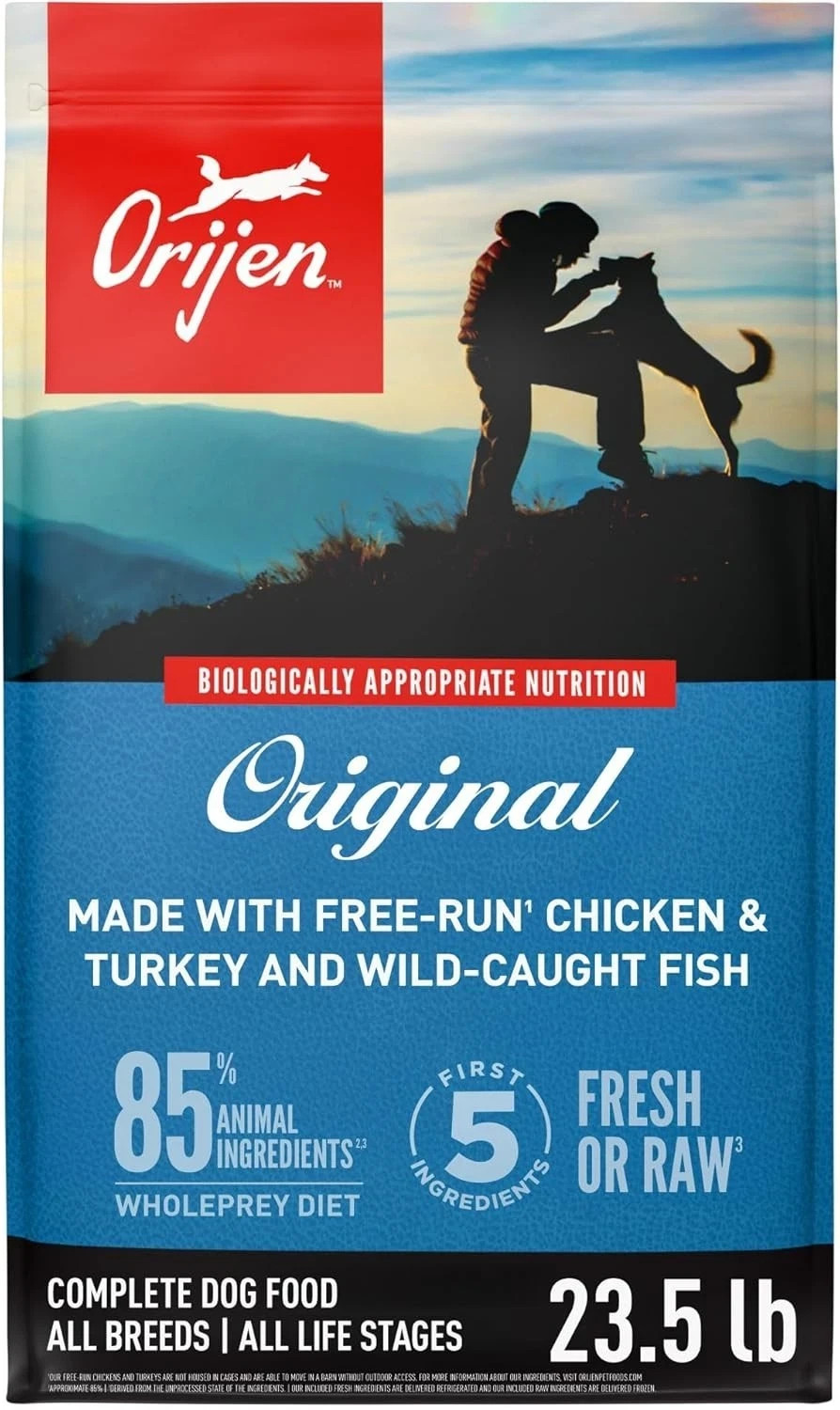

Photos from current listings. Actual item, color, and included accessories may vary.
Grain Free Dog Food Buying Guide
Grain-free dog food replaces cereal grains with legumes, tubers, or pulses as carbohydrate sources, and the key trade-off is between high-protein, meat-rich formulas and lower-cost plant-heavy blends. Durable, nutritionally complete options are AAFCO-fixed and name a specific animal protein first; avoid formulas that rely on pea protein isolate or unnamed meat meals as the primary protein.
Median $72.49
Key takeaways
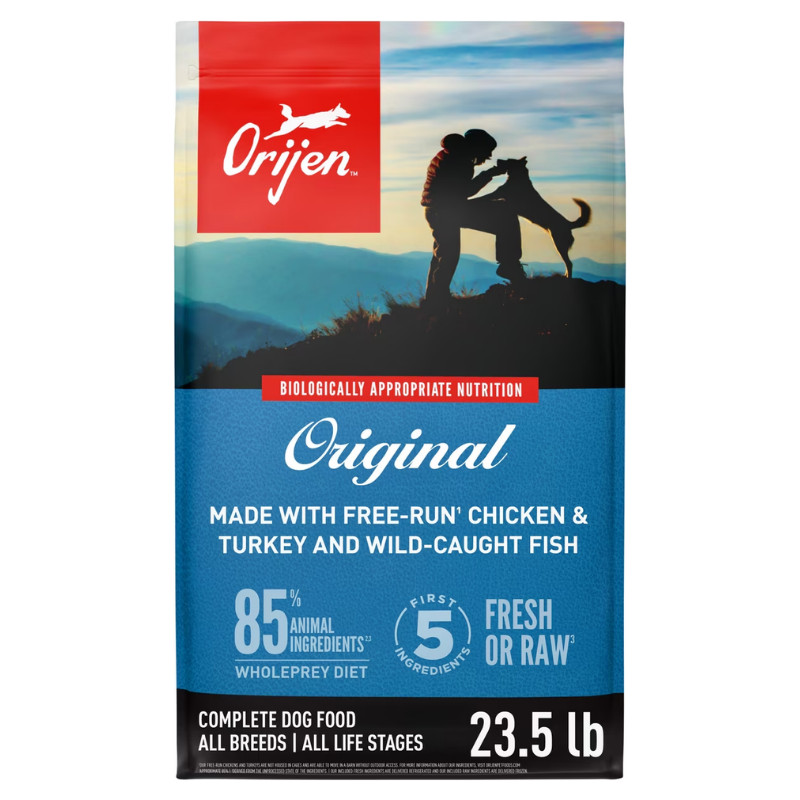
- ORIJEN Original uses 85% poultry/fish ingredients and 15% vegetables/fruits, with no legume-heavy fillers like pea starch or potato protein.
- Whole-prey ratios (meat, organ, bone) in ORIJEN deliver naturally occurring calcium and phosphorus without synthetic mineral premixes.
- AAFCO 'complete and balanced' statement must specify life stage (growth, maintenance, all life stages) to confirm nutritional adequacy.
At a glance
- Category
- Pet Food, Treats & Litter
- Last updated
- Nov 28, 2026
Current offers
Highlights
- ORIJEN Original uses 85% poultry/fish ingredients and 15% vegetables/fruits, with no legume-heavy fillers like pea starch or potato protein.
- Whole-prey ratios (meat, organ, bone) in ORIJEN deliver naturally occurring calcium and phosphorus without synthetic mineral premixes.
- AAFCO 'complete and balanced' statement must specify life stage (growth, maintenance, all life stages) to confirm nutritional adequacy.
- Legume-heavy grain-free formulas (peas, lentils, chickpeas) are under FDA scrutiny for canine dilated cardiomyopathy (DCM) risk in predisposed breeds.
Best use cases
- Best fit: active adult dogs with high protein needs (working, sporting, or large-breed) — choose a formula with named meat first and 30%+ protein.
- Best fit: dogs with confirmed grain allergies (rare) — pick a grain-free formula with a single novel protein and no cross-contaminated legumes.
- Wrong fit: dogs with heart disease or DCM predisposition (Doberman, Boxer, Great Dane) — skip legume-rich grain-free and choose a grain-inclusive formula.
- Wrong fit: budget-limited households feeding multiple large dogs — skip premium 85%-meat formulas and choose a mid-tier grain-free with named meat meal.
Buying tips
- Scan the first five ingredients: named meat (chicken, beef, fish) should appear first, followed by a named meat meal — not pea protein or potato starch.
- Check the guaranteed analysis: adult maintenance formulas need 22%+ protein and 8%+ fat; growth formulas need 25%+ protein and 15%+ fat.
- Match kibble size to dog weight: small breed (<20 lb) needs 8-10 mm kibble; large breed (>50 lb) needs 12-15 mm to slow eating.
- Look for a 'complete and balanced' AAFCO statement with a specific life stage; treat 'all life stages' as suitable only if the dog is not a large-breed puppy.
Specs
| Protein Source | Named meat first vs meat meal |
|---|---|
| Grain-Free Carb Base | Legumes, potato, tapioca |
| AAFCO Statement | Growth / Maintenance / All Life Stages |
| Kibble Size | 8-10 mm small / 12-15 mm large |
Related searches
What to check before buying
- Measure your dog's current weight and body condition score (1-9 scale); use the bag's feeding chart as a starting point, not a fixed rule.
- Verify your dog has no history of DCM, heart murmur, or taurine deficiency before switching to a legume-heavy grain-free formula.
- Confirm the formula's calorie content (kcal/kg or kcal/cup) and adjust portion size to avoid overfeeding — grain-free formulas are often calorie-dense.
- Check the bag's lot number and best-by date; high-meat kibble has a shorter shelf life (12-18 months) than grain-heavy kibble.
FAQ
Data sources: eBay / Amazon listings and product attribute feeds. Updated Nov 28, 2026.
Some links on this page are affiliate links. If you buy after clicking one, we may earn a commission at no extra cost to you. This does not change which products appear here or their order. Affiliate disclosure.