
Photos from current listings. Actual item, color, and included accessories may vary.
Tactical Dog Harness Buying Guide
A tactical dog harness is a load-bearing vest built from abrasion-resistant nylon webbing with metal or reinforced polymer hardware, designed to distribute pulling force across the chest rather than the throat. The core trade-off is between MOLLE-style modularity and padded bulk: true field-grade harnesses use 1000D nylon, welded D-rings, and a separate grab handle, while budget 'tactical-look' vests use thin 600D fabric and plastic buckles that fail under load. The decision rule is simple: buy a harness with a metal V-ring or welded D-ring at the leash attachment, a padded chest plate, and four-point adjustability — skip any model where the leash ring is stitched fabric or the buckles are unbranded plastic.
Key takeaways
- 1000D nylon Cordura vs 600D polyester is the primary durability split: 1000D resists abrasion from brush and concrete, while 600D pills and tears at stitch lines within months of daily field use.
- Leash attachment hardware decides load safety: welded stainless D-rings or aluminum V-rings hold 300+ lb pull ratings, whereas stitched nylon loops and plastic D-rings are the first failure point on strong pullers.
- Control handles differ by architecture: top-mounted grab handles distribute lift across the shoulders for med-large dogs, while small-dog tactical vests use shorter handles that must clear the dog's back without pressing the spine.
At a glance
- Category
- Pet Collars, Harnesses & Leashes
- Last updated
- Nov 28, 2026
Current offers
Highlights
- 1000D nylon Cordura vs 600D polyester is the primary durability split: 1000D resists abrasion from brush and concrete, while 600D pills and tears at stitch lines within months of daily field use.
- Leash attachment hardware decides load safety: welded stainless D-rings or aluminum V-rings hold 300+ lb pull ratings, whereas stitched nylon loops and plastic D-rings are the first failure point on strong pullers.
- Control handles differ by architecture: top-mounted grab handles distribute lift across the shoulders for med-large dogs, while small-dog tactical vests use shorter handles that must clear the dog's back without pressing the spine.
- MOLLE webbing rows (typically 3–5 rows) determine pouch compatibility; a harness without standardized 1-inch MOLLE spacing cannot mount standard tactical pouches or poop-bag holders securely.
Best use cases
- Best fit: reactive or strong-pulling dogs over 30 lb — choose a Y-front harness with a metal V-ring and front + back leash points; skip step-in or strap-only harnesses that concentrate force on the trachea.
- Best fit: small breeds (under 20 lb) needing training control — pick a small tactical vest with a short grab handle and adjustable neck opening; skip large-dog MOLLE vests whose chest plates overhang the ribcage and restrict leg movement.
- Best fit: hiking, camping, and field training — choose 1000D nylon with reflective trim and a padded belly panel; skip fashion 'military-style' vests with decorative buckles and no load-rated attachment point.
- Wrong fit: flat-faced breeds (pugs, bulldogs) — standard tactical chest plates ride up the throat; instead pick a harness with a low-profile H-back or strap harness designed for broad chests.
Buying tips
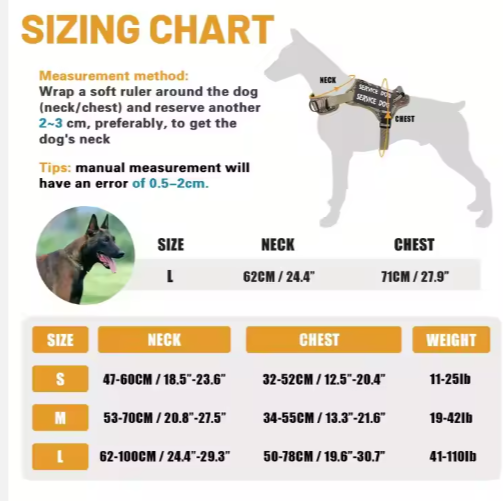
- Measure girth at the widest rib point and add 2 inches; a tactical harness should sit snug with room for two fingers under each strap — sizing up to the next tier causes chafing and escape risk.
- Match hardware to dog weight: under 25 lb can use reinforced plastic buckles, but dogs over 40 lb need metal side-release buckles or aluminum D-rings rated for their pull force.
- Check adjustability points: four-point adjustment (neck, chest, two girth straps) is the minimum for a secure fit; two-point harnesses slip on narrow-chested dogs.
- For modular use, confirm 1-inch MOLLE webbing rows on both sides and a loop panel for patches; non-standard webbing spacing makes aftermarket pouches wobble or detach.
Specs
| Shell Material | 1000D nylon vs 600D polyester |
|---|---|
| Leash Hardware | Welded D-ring / aluminum V-ring |
| Buckle Type | Metal side-release vs plastic |
| MOLLE Rows | 3–5 rows, 1-inch webbing spacing |
Related searches
What to check before buying
- Measure chest girth and neck circumference with a soft tape; compare against the harness size chart's adjustment range, not the breed label.
- Verify the leash attachment is a welded metal D-ring or V-ring, not a stitched fabric loop — inspect the product's hardware photo before buying.
- Confirm buckle type: metal side-release or aluminum cobra-style buckles for dogs over 40 lb; plastic buckles only for small, calm dogs.
- Check reflective trim placement on chest and back for low-light visibility, and confirm the grab handle clears the dog's spine without pressure.
FAQ
Data sources: eBay / Amazon listings and product attribute feeds. Updated Nov 28, 2026.
Some links on this page are affiliate links. If you buy after clicking one, we may earn a commission at no extra cost to you. This does not change which products appear here or their order. Affiliate disclosure.