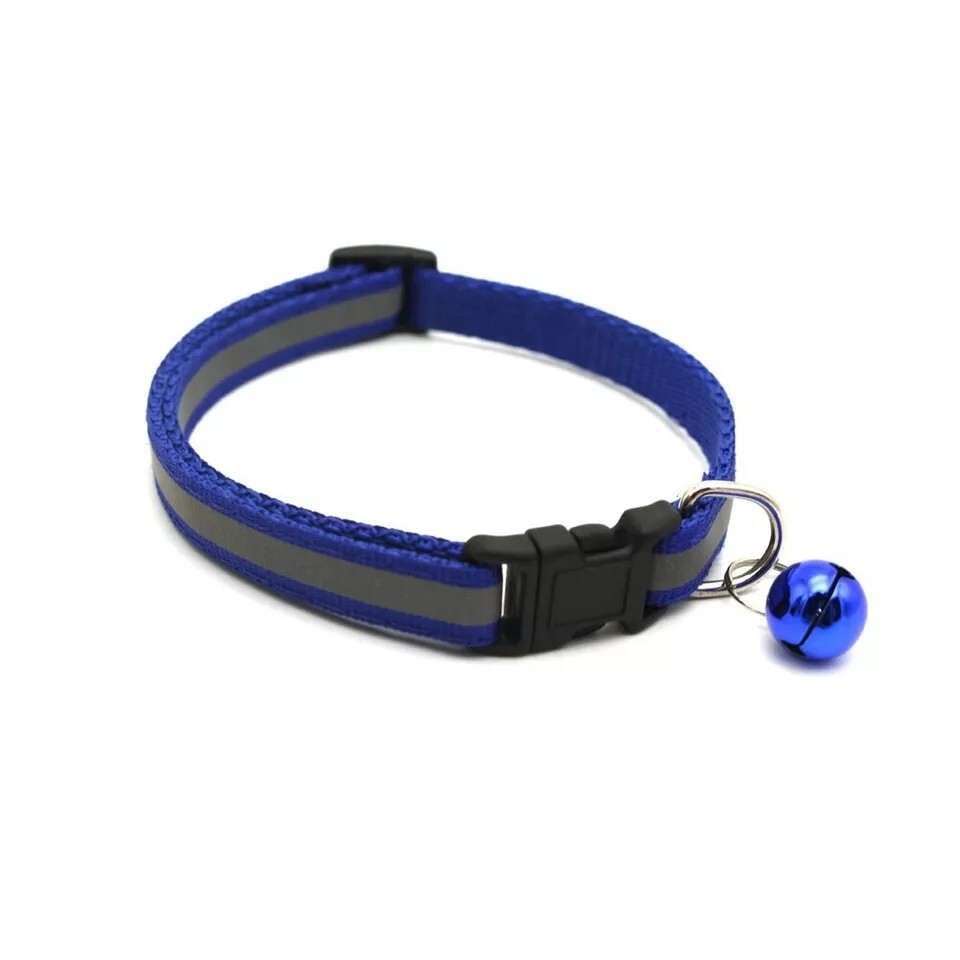

Photos from current listings. Actual item, color, and included accessories may vary.
Nylon Pet Collar Buying Guide
A nylon pet collar is a webbing-based restraint system whose performance hinges on webbing denier, hardware metal grade, and buckle mechanism—not on color or novelty add-ons. The core trade-off is between thin, fray-prone 1-inch webbing with plated zinc buckles and denser 600–1200D webbing with welded steel or acetal hardware that resists pull-out. The decision rule: match webbing thickness and buckle tensile rating to your pet's weight class, and skip any collar with a plastic side-release buckle on a dog over 30 lb.
Key takeaways
- Webbing denier separates tiers: 600D nylon stretches and fuzzes under load, while 1200D or ballistic-weave nylon holds shape and resists abrasion at the D-ring anchor.
- Buckle architecture dictates failure mode: molded acetal side-release buckles are lighter but crack in cold, whereas welded steel or aluminum buckles with riveted webbing survive high-pull dogs.
- D-ring attachment method matters more than D-ring size—box-X stitching through a separate webbing loop spreads load, while single-bar tack stitching concentrates stress at one point.
At a glance
- Category
- Pet Collars, Harnesses & Leashes
- Last updated
- Nov 28, 2026
Current offers
Highlights
- Webbing denier separates tiers: 600D nylon stretches and fuzzes under load, while 1200D or ballistic-weave nylon holds shape and resists abrasion at the D-ring anchor.
- Buckle architecture dictates failure mode: molded acetal side-release buckles are lighter but crack in cold, whereas welded steel or aluminum buckles with riveted webbing survive high-pull dogs.
- D-ring attachment method matters more than D-ring size—box-X stitching through a separate webbing loop spreads load, while single-bar tack stitching concentrates stress at one point.
- Reflective collars use either woven reflective yarn (durable through wash cycles) or bonded reflective tape (cracks and peels); bonded tape is the lower-durability construction.
Best use cases
- Best fit: everyday walking for dogs 10–30 lb—choose 3/4-inch 600D webbing with an acetal side-release buckle and a welded steel D-ring; skip 1-inch reflective tape collars that add bulk without tensile gain.
- Best fit: strong pullers and dogs over 50 lb—pick 1-inch 1200D webbing, a riveted steel buckle or martingale-style limited-slip design, and a D-ring anchored through box-X stitching; skip any plastic quick-release buckle.
- Best fit: cats and toy breeds under 10 lb—use 3/8-inch or 1/2-inch lightweight webbing with a breakaway buckle and a small bell; skip 1-inch collars with heavy metal hardware that weigh down the neck.
- Wrong fit: tie-out or tethering—nylon collars are walking/ID restraints, not anchor points; a dog left tethered in a nylon collar risks buckle failure and tracheal injury, so use a harness for stationary restraint.
Buying tips
- Measure neck circumference and add two fingers of slack—a collar should sit snug but allow two fingers between webbing and neck; size ranges overlap, so pick the range whose midpoint is nearest your measurement.
- Match webbing width to weight: 3/8–1/2 inch for cats and toy breeds, 3/4 inch for 10–30 lb dogs, 1 inch for 30–70 lb, and 1.5 inch for dogs over 70 lb or thick-necked breeds.
- Inspect the buckle material callout—acetal (POM) is acceptable for dogs under 30 lb, but welded steel or aluminum buckles are the durable choice for pullers and large breeds.
- Choose woven reflective yarn over bonded reflective tape if the collar will see daily wear and washing; bonded tape delaminates at flex points within months.
Specs
| Webbing Denier | 600D vs 1200D nylon |
|---|---|
| Buckle Type | Acetal / Steel / Breakaway |
| Collar Width | 3/8 in to 1.5 in by weight |
| Reflective Build | Woven yarn vs bonded tape |
Related searches
What to check before buying
- Neck measurement taken at the base of the neck with two-finger slack—confirm the chosen size range brackets that number, not just the minimum.
- Pet weight and pull strength known—select buckle and webbing denier tier before color or pattern, since hardware grade is the failure point.
- ID tag ring compatibility—confirm the D-ring gauge accepts your tag split ring without opening under load, and that the bell or tag doesn't sit on the buckle.
- Climate check—acetal buckles become brittle below freezing; choose steel or aluminum hardware if the collar will be worn in winter or wet conditions.
FAQ
Data sources: eBay / Amazon listings and product attribute feeds. Updated Nov 28, 2026.
Some links on this page are affiliate links. If you buy after clicking one, we may earn a commission at no extra cost to you. This does not change which products appear here or their order. Affiliate disclosure.