
Photos from current listings. Actual item, color, and included accessories may vary.
Dog Leash Running Buying Guide
A running dog leash is a hands-free waist-belt system that absorbs forward pull, keeps your hands available, and maintains control at jogging pace. The core trade-off is bungee elasticity versus control hardware: stretchy shock absorption protects joints but can feel vague, while rigid leashes give feedback but jolt both dog and runner. Choose a bungee waist leash with a load-rated metal clip and a second traffic handle; skip retractable or plain 6-foot leads for running.
Median $52.99
Key takeaways
- Bungee core absorbs sudden lunges; stretch ranges of roughly 12–24 inches reduce peak jerk on your lower back.
- Waist belts with 2–4 inch padded panels and metal D-rings distribute pull across the hips, not the lumbar spine.
- Dual padded handles let you shorten the leash to heel distance at crossings without unclipping the waist belt.
At a glance
- Category
- Pet Collars, Harnesses & Leashes
- Last updated
- Nov 27, 2026
Current offers
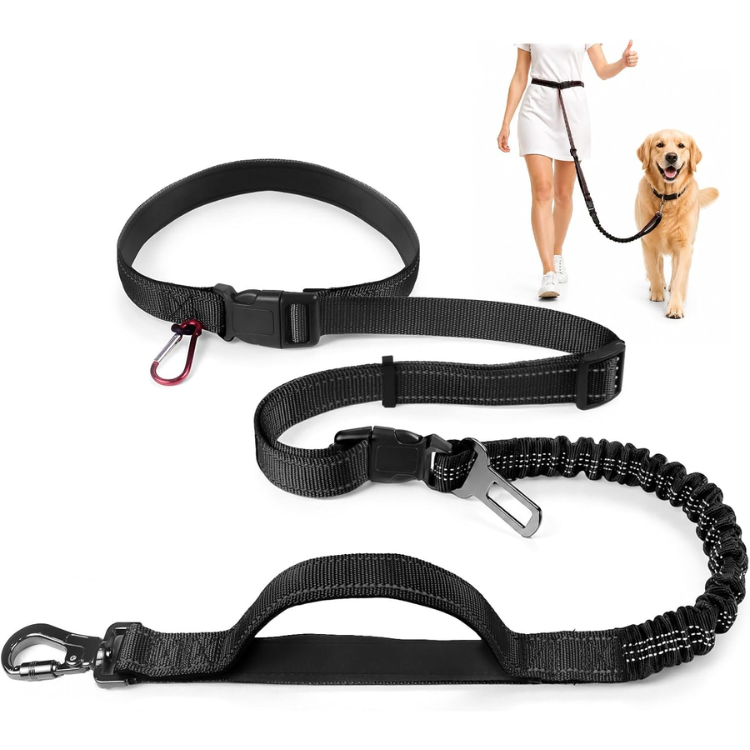 4 In 1 Hands Free Dog Leash With Car Seatbelt Buckle, Shock Absorbing Bungee Dog Waist Belt For Running Walking Hiking, Dual Handles & Reflective, Adjustable For Small Medium Large Dogs$49.99View on Mallflare
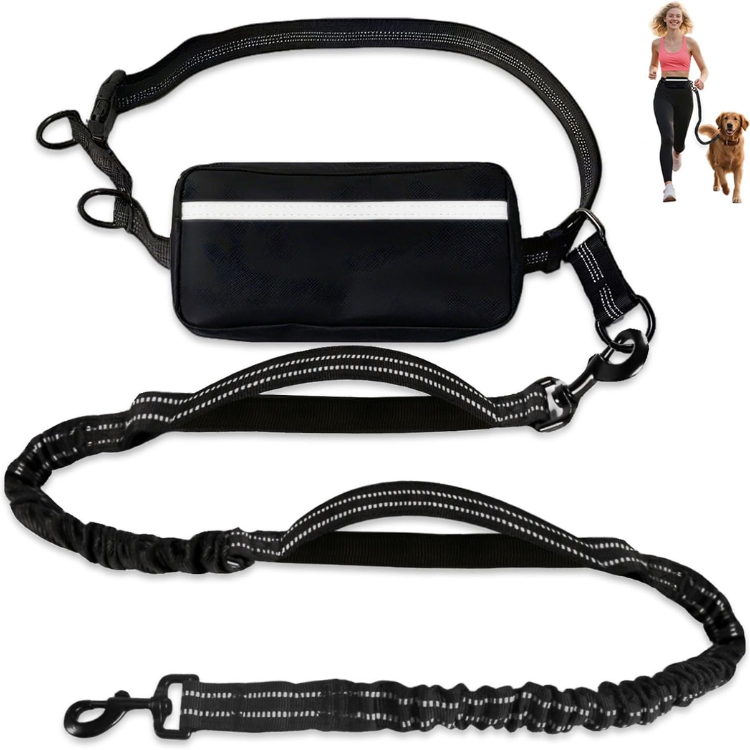 Hands Free Dog Leash With Waist Belt Large Pouch, For Dog Walking, Running, Hiking Jogging, Reflective Dual Padded Handles, Ideal For Medium Dogs 30-120lbs$52.99View on Mallflare
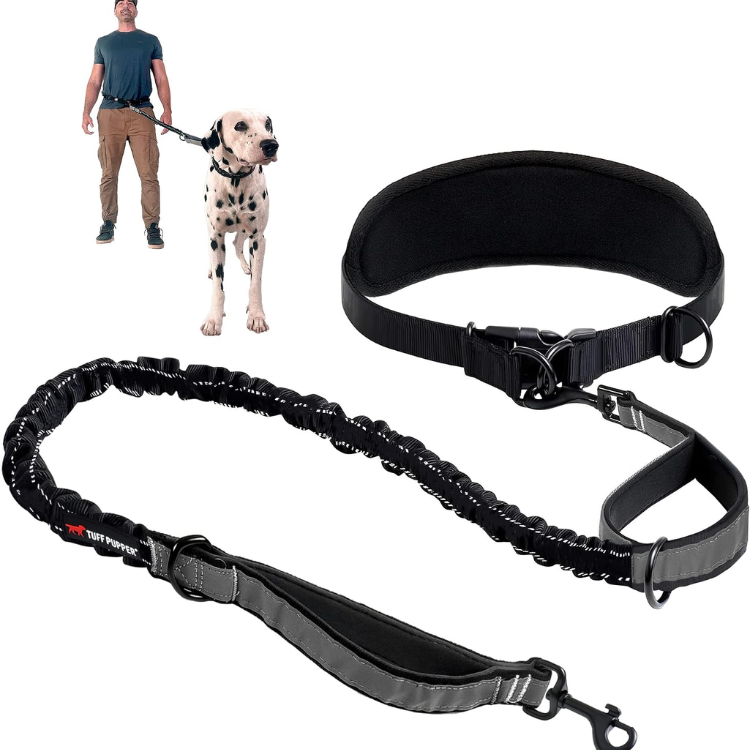 Tuff Pupper Hands Free Bungee Dog Leash, Waist Belt For Running & Walking$80.99View on Mallflare
Highlights
- Bungee core absorbs sudden lunges; stretch ranges of roughly 12–24 inches reduce peak jerk on your lower back.
- Waist belts with 2–4 inch padded panels and metal D-rings distribute pull across the hips, not the lumbar spine.
- Dual padded handles let you shorten the leash to heel distance at crossings without unclipping the waist belt.
- Reflective stitching and a car-seatbelt buckle convert the same leash to walking and quick car restraint duty.
Best use cases
- Best fit: pick a bungee waist leash with dual handles for 5K–10K road or trail runs with a dog 30–120 lbs; skip flat nylon leads that yank your shoulder.
- Best fit: choose a shock-absorbing hands-free belt with a traffic handle for urban running with frequent curb and pedestrian stops; skip long-line or retractable leads.
- Wrong fit: for a strong puller over 80 lbs or a dog in training, use a front-clip harness plus a fixed-length leash, not a bungee, until loose-leash skills are solid.
Buying tips
- Match bungee stretch to dog weight: 12–18 inch stretch for dogs under 50 lbs, 18–24 inch for 50–120 lbs, to avoid over-extension at full lunge.
- Require a metal (not plastic) D-ring and clip rated for at least 2x your dog's weight, with a locking or screw-gate carabiner on the belt.
- Pick a belt with 2–4 inches of padding and an adjustable range covering 26–48 inches so it sits on hips, not waist or ribs.
- Measure your dog's girth and neck with a soft tape before ordering; harness sizing is not interchangeable with collar sizing.
Specs
| Leash Type | Hands-free waist bungee |
|---|---|
| Bungee Stretch | 12–24 in (weight-tiered) |
| Handle Config | Dual padded + traffic handle |
| Hardware | Metal clip + locking carabiner |
Related searches
What to check before buying
- Confirm waist belt adjustment covers your hip circumference over running layers, typically 26–48 inches.
- Check the leash clip fits your harness D-ring diameter; a 1-inch ring needs a clip opening over 0.4 inch.
- Verify reflective elements face outward and the belt has a second attachment point for a poop-bag pouch or light.
- Ensure the dog's harness is front- or back-clip rated for running and does not restrict shoulder extension.
FAQ
Data sources: eBay / Amazon listings and product attribute feeds. Updated Nov 27, 2026.
Some links on this page are affiliate links. If you buy after clicking one, we may earn a commission at no extra cost to you. This does not change which products appear here or their order. Affiliate disclosure.