
Photos from current listings. Actual item, color, and included accessories may vary.
Dog Leash Pulling Buying Guide
A dog leash for pulling is a management system—front-clip harness, head halter, or slip lead—that redirects or discourages forward pull without damaging the trachea. The core trade-off is control versus comfort: front-clip harnesses offer the best balance for most owners, while head halters give maximum leverage for strong pullers at the cost of acclimation time. The clear rule: choose a front-clip or head-halter design rated for your dog's weight, skip plain back-clip harnesses and fixed-length flat leashes as anti-pull solutions.
Median $54.99
Key takeaways
- Front-clip harnesses redirect pull sideways, turning the dog's momentum against itself; back-clip harnesses actually encourage pulling because opposition reflex makes dogs push into pressure.
- Head halters (Halti, Gentle Leader) control the head, giving the strongest leverage for dogs over 50 lb, but require a 1–2 week positive-reinforcement acclimation period.
- No-pull harnesses must match your dog's girth (chest circumference behind front legs), not just weight—a too-loose harness slips and chafes, a too-tight one restricts shoulder movement.
At a glance
- Category
- Pet Collars, Harnesses & Leashes
- Last updated
- Nov 27, 2026
Current offers
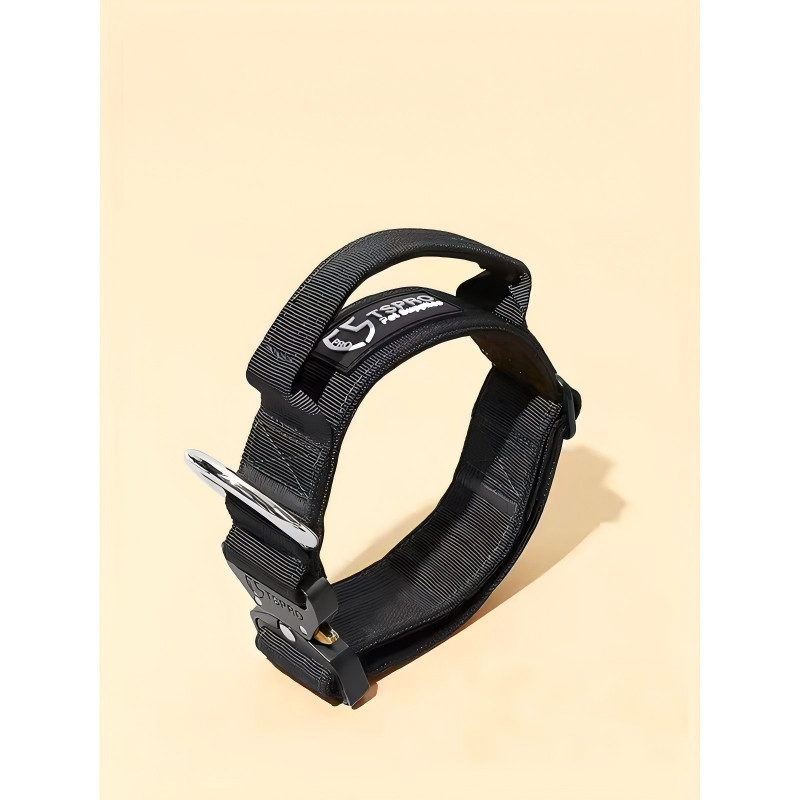 Dog Collar Leash Set No Pull Walking Neck Collar Adjustable Anti-Choke Pet Train$48.99View on eBay
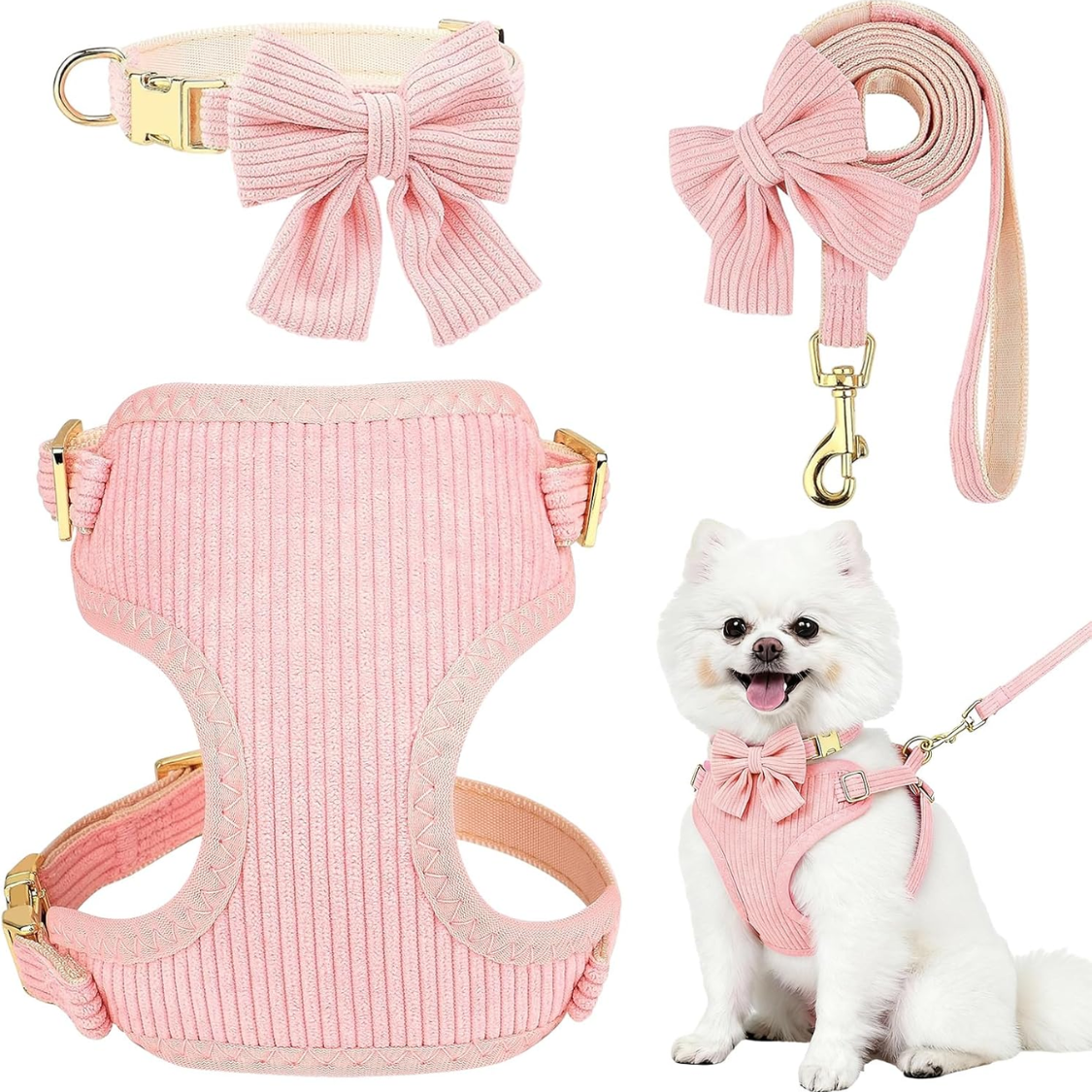 Small Dog Collar Harness And Leash Set, Dog No Pull With Bowtie, Breathable Cotton Adjustable Pet Puppy$54.99View on Mallflare
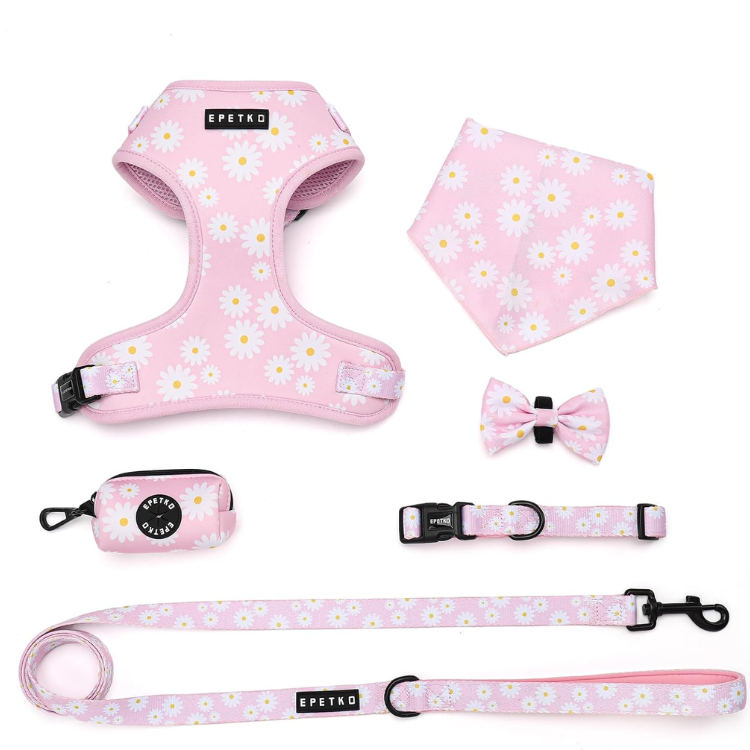 Small Dog Harness And Leash Set Of 6, No Pull Soft Lightweight Mesh Puppy Adjustable Cute Floral Pattern Pet For Medium Dogs$68.99View on Mallflare
Highlights
- Front-clip harnesses redirect pull sideways, turning the dog's momentum against itself; back-clip harnesses actually encourage pulling because opposition reflex makes dogs push into pressure.
- Head halters (Halti, Gentle Leader) control the head, giving the strongest leverage for dogs over 50 lb, but require a 1–2 week positive-reinforcement acclimation period.
- No-pull harnesses must match your dog's girth (chest circumference behind front legs), not just weight—a too-loose harness slips and chafes, a too-tight one restricts shoulder movement.
- Slip leads and martingale collars are training tools for head-shy dogs, not daily walking solutions; they tighten under load and can cause tracheal pressure if used as primary restraint.
Best use cases
- Best fit: medium-to-large strong pullers over 40 lb—pick a front-clip harness with metal D-ring and padded chest plate; skip back-clip and plain nylon strap harnesses.
- Best fit: small breeds and puppies under 20 lb—choose a lightweight mesh front-clip harness with adjustable neck and chest straps; skip heavy-duty harnesses that restrict gait.
- Best fit: reactive or lunging dogs—use a head halter paired with a backup collar and double-ended leash; skip retractable leashes entirely for pulling dogs.
- Best fit: casual flat-walkers with mild pulling—a martingale collar plus 5–6 ft fixed leash works; skip no-pull harnesses if your dog already walks loose-leash.
Buying tips
- Measure girth behind the front legs and add 2 inches; harness sizing charts use girth, not weight, and a 2-finger gap under straps is the fit standard.
- Choose metal D-rings and welded hardware over plastic buckles for dogs over 30 lb; plastic side-release buckles fail under sudden load.
- Front-clip attachment point must sit on the chest, not the throat; check that the leash ring is positioned between the shoulder blades or lower.
- For head halters, pick a model with a padded noseband and a safety strap connecting to a collar; never use a head halter with a retractable leash.
Specs
| Harness Type | Front-clip / Back-clip / Head halter |
|---|---|
| Attachment Point | Chest D-ring vs back D-ring |
| Hardware Grade | Welded metal vs plastic buckles |
| Leash Length | 5–6 ft fixed (avoid retractable) |
Related searches
What to check before buying
- Girth measurement behind front legs: harness should allow two fingers under straps and not rub armpits.
- Weight rating: confirm harness is rated for your dog's full adult weight, not just current puppy weight.
- Leash compatibility: front-clip harnesses need a 5–6 ft fixed leash with a swivel snap; retractable leashes defeat the anti-pull mechanism.
- Climate and coat: short-haired dogs need padded straps to prevent chafing; double-coated breeds need harnesses that don't mat fur at the chest.
FAQ
Data sources: eBay / Amazon listings and product attribute feeds. Updated Nov 27, 2026.
Some links on this page are affiliate links. If you buy after clicking one, we may earn a commission at no extra cost to you. This does not change which products appear here or their order. Affiliate disclosure.