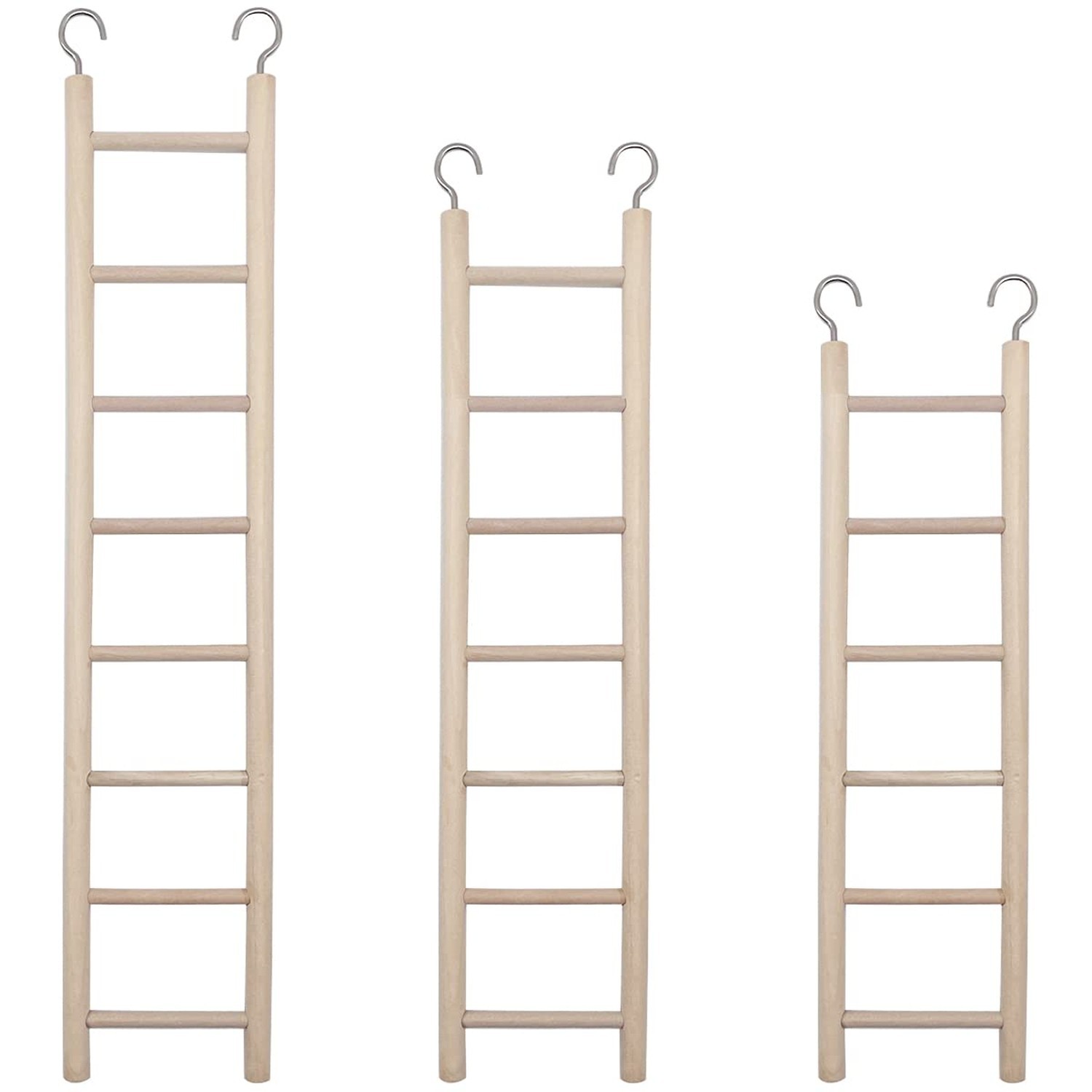

Photos from current listings. Actual item, color, and included accessories may vary.
Wooden Bird Perch Buying Guide
A wooden bird perch is a natural or dowel wood roost that gives companion birds a secure, grip-friendly standing surface; the core trade-off is between soft, bark-covered natural hardwood that wears with chewing and kiln-dried dowel or plywood perches that resist wear but offer less foothold variety. The clear decision rule: buy natural hardwood branch perches sized to the bird's foot span, and skip smooth uniform dowels as the only perch in the cage.
Key takeaways
- Natural branch perches in apple, willow, or manzanita provide irregular diameters that exercise foot muscles and reduce pressure-point sores better than uniform dowels.
- Dowel diameter should match foot span so toes wrap roughly two-thirds around the perch; too-thin dowels cause cramping and too-thick dowels prevent a secure grip.
- Kiln-dried hardwood resists warping and mite infestation; unstripped bark perches must be pesticide-free and baked or frozen before use.
At a glance
- Category
- Bird & Small Animal Supplies
- Last updated
- Nov 27, 2026
Current offers
Highlights
- Natural branch perches in apple, willow, or manzanita provide irregular diameters that exercise foot muscles and reduce pressure-point sores better than uniform dowels.
- Dowel diameter should match foot span so toes wrap roughly two-thirds around the perch; too-thin dowels cause cramping and too-thick dowels prevent a secure grip.
- Kiln-dried hardwood resists warping and mite infestation; unstripped bark perches must be pesticide-free and baked or frozen before use.
- Mounting hardware matters: zinc-plated wing nuts and washers secure perches to cage bars, while plain screws or glue-only mounts loosen under chewing and humidity.
Best use cases
- Best fit: a single natural hardwood branch perch with a metal wing-nut mount for parrots and conures—skip smooth dowels as the sole roost because they limit grip variety.
- Best fit: a multi-perch aviary or flight cage setup with 3–4 staggered perches at different heights for budgies and cockatiels—skip one oversized perch that crowds flight space.
- Best fit: a tabletop play stand with a toy hook and ladder for out-of-cage time—skip floor-standing aviaries for small apartments where footprint and droppings management matter.
- Wrong fit: soft pine dowels for heavy chewers like macaws and cockatoos—choose denser hardwood or replaceable branch perches instead.
Buying tips
- Measure your bird's foot span: small birds (budgie, finch) need 1/2–3/4 inch diameter, medium (cockatiel, conure) 3/4–1 inch, large (macaw, cockatoo) 1–1.5 inches.
- Pick natural branch perches with bark for grip and chewing enrichment; reserve smooth dowels for travel carriers or as a secondary perch.
- Check mount type: wing nut and bolt through cage bars is the most secure; clamp-on mounts suit temporary setups but loosen over time.
- For aviaries, verify perch length spans at least 60% of cage width so the bird can move between perches without crowding.
Specs
| Wood Type | Natural hardwood vs kiln-dried dowel |
|---|---|
| Perch Diameter | 1/2–1.5 in by bird size |
| Mount Style | Wing-nut bolt vs clamp-on |
| Bark Surface | Natural bark vs smooth sanded |
Related searches
What to check before buying
- Measure cage bar spacing and interior width to confirm perch length and mount fit before ordering.
- Confirm perch diameter matches your species' foot size—under- or oversized perches cause foot problems.
- Check wood species and finish: pesticide-free, kiln-dried, unstained hardwood; avoid painted or varnished surfaces birds can chew.
- For outdoor aviaries, verify the wood is weather-resistant (cedar or treated hardwood) and hardware is rust-resistant.
FAQ
Data sources: eBay / Amazon listings and product attribute feeds. Updated Nov 27, 2026.
Some links on this page are affiliate links. If you buy after clicking one, we may earn a commission at no extra cost to you. This does not change which products appear here or their order. Affiliate disclosure.