
Photos from current listings. Actual item, color, and included accessories may vary.
Type Hummingbird Feeder Buying Guide
A hummingbird feeder is a nectar dispenser designed to attract hummingbirds while resisting spoilage, ants, and bees, and the core trade-off is between easy cleaning/durability and leak-proof, bee-resistant construction. Saucer-style feeders with fewer parts and wide-mouth openings clean fastest and resist mold, while bottle-and-base feeders demand tighter seals and more frequent disassembly. The decision rule: choose a feeder you can fully disassemble and scrub in under two minutes, with bee guards and an ant moat, or skip it—because dirty nectar kills hummingbirds faster than any design flaw.
Median $36.99
Key takeaways
- Saucer or dish feeders with a removable lid and few internal seams are the easiest to clean and least likely to leak, making them the top pick for humid climates and beginners.
- Bottle-style feeders with a vacuum seal and horizontal feeding ports deter bees better than open-port designs, but only if the base seals tightly and the bottle is glass, not thin plastic.
- Bee guards, ant moats, and nectar guard tips are functional necessities in warm climates; feeders without them will attract insects that contaminate nectar and drive hummingbirds away.
At a glance
- Category
- Bird & Small Animal Supplies
- Last updated
- Nov 27, 2026
Current offers
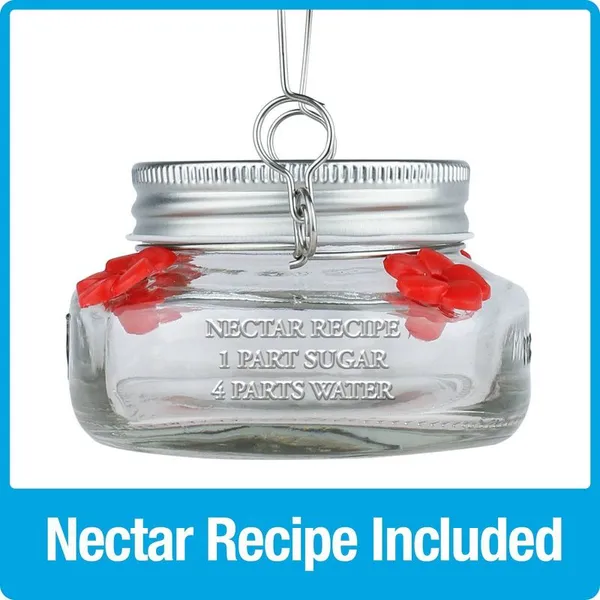 6oz Mason Jar Hummingbird Glass Feeder 2.5"$19.99View on Mallflare
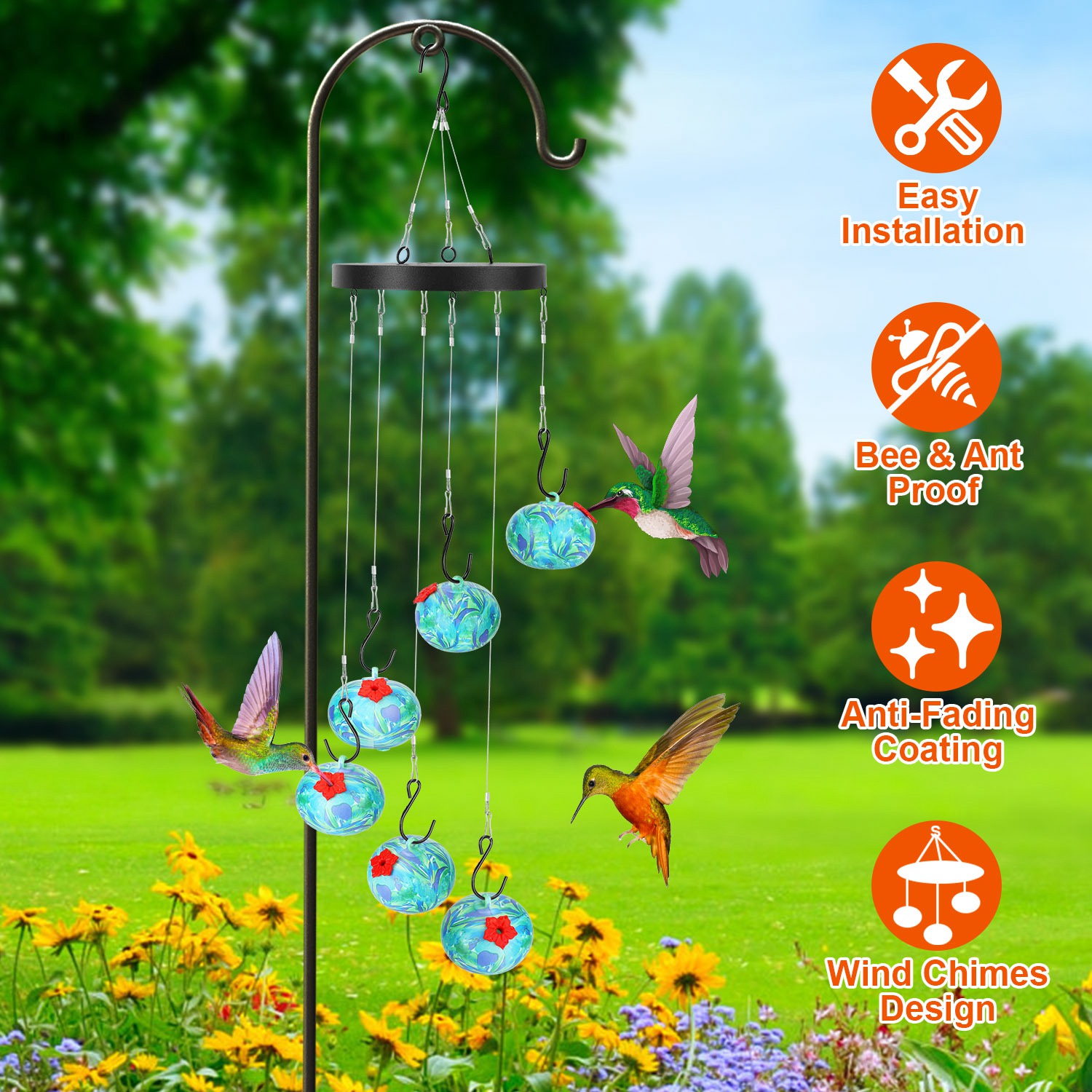 1Pc Wind Chimes Humming Bird Feeder Ant And Bee Proof Outdoor Hanging Hummingbird For Viewing Decoration For Garden Patio Yard Balcony$30.99View on Mallflare
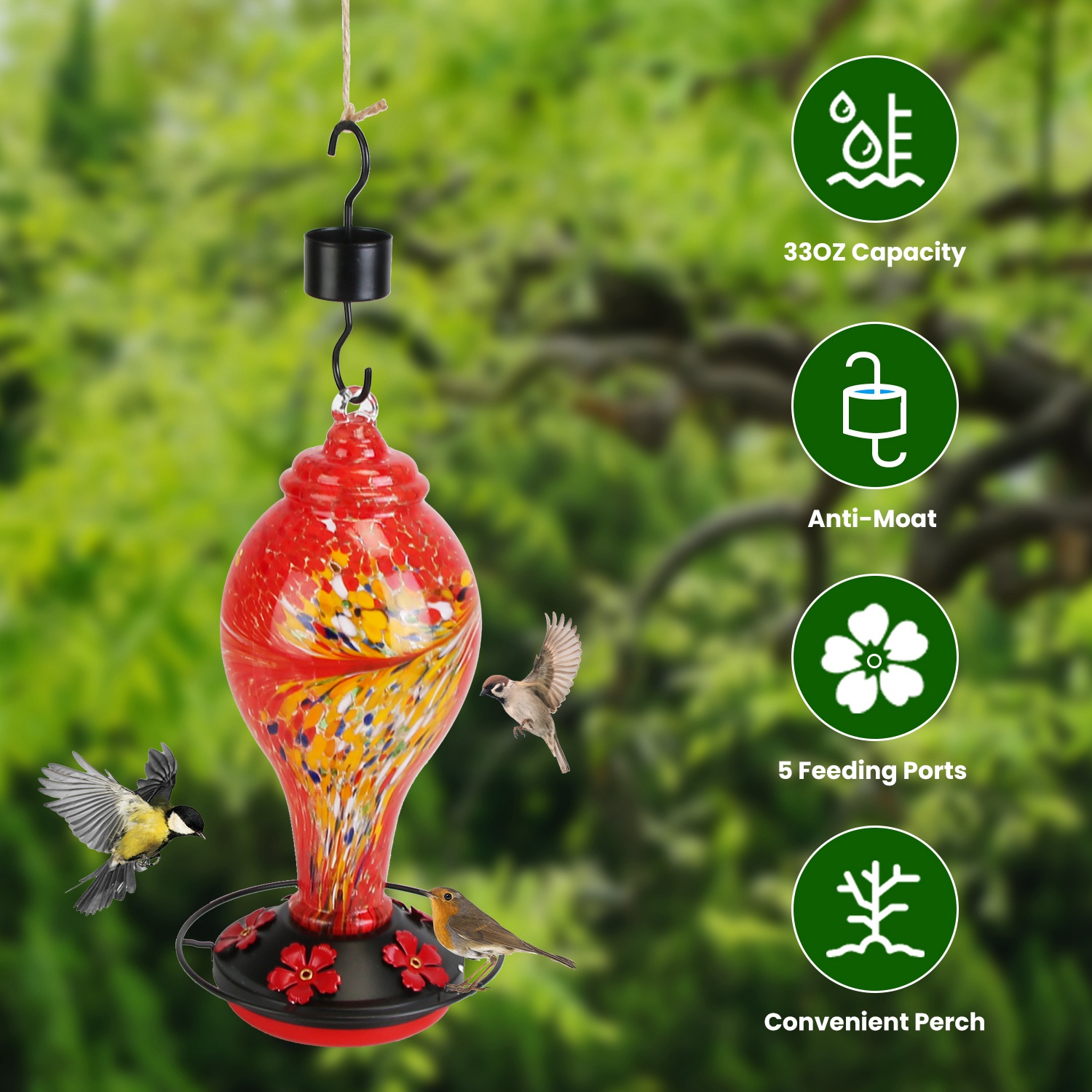 1Pc Glass Hummingbird Feeder 33OZ Hand Blown With 5 Flower Feeding Port Perch Ant Moat Hanging Hook S Hemp Rope Cleaning Brush For Garden Decor$36.99View on Mallflare
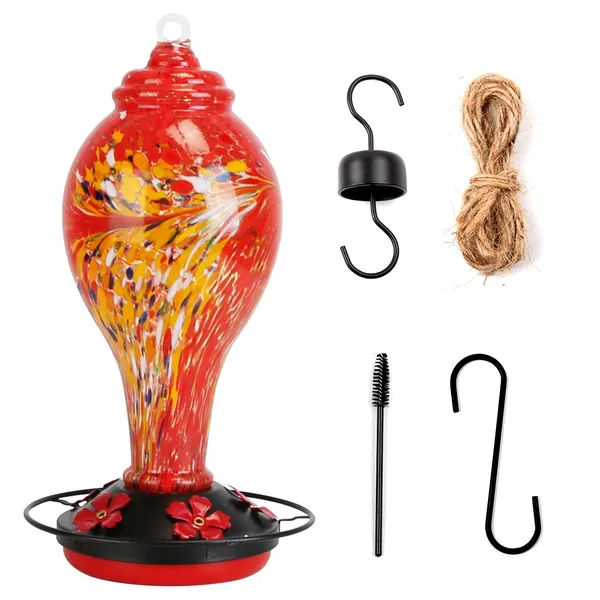 Glass Hummingbird Feeder 33OZ Hand Blown With 5 Flower Feeding Port Perch Ant Moat Hanging Hook S Hemp Rope Cleaning Brush For Garden Backyard Decor$49.99View on Mallflare
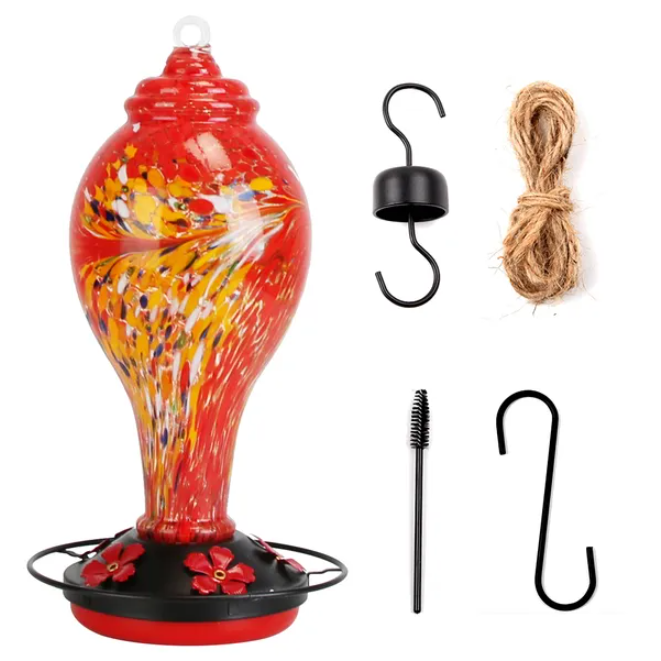 Glass Hummingbird Feeder With 5 Flower Feeding$49.99View on Mallflare
Highlights
- Saucer or dish feeders with a removable lid and few internal seams are the easiest to clean and least likely to leak, making them the top pick for humid climates and beginners.
- Bottle-style feeders with a vacuum seal and horizontal feeding ports deter bees better than open-port designs, but only if the base seals tightly and the bottle is glass, not thin plastic.
- Bee guards, ant moats, and nectar guard tips are functional necessities in warm climates; feeders without them will attract insects that contaminate nectar and drive hummingbirds away.
- Feeders with red-dyed nectar or red plastic bodies are unnecessary and potentially harmful—clear nectar in a feeder with red accents is the safe standard, and any feeder with deep narrow ports is harder to clean.
Best use cases
- Best fit: a 16–32 oz saucer feeder with a wide removable lid and bee guards for backyard patios in hot, humid regions where daily cleaning is required.
- Wrong fit: decorative bottle feeders with narrow necks and painted interiors—skip these if you cannot reach every surface with a bottle brush, because mold in the reservoir is inevitable.
- Best fit: a window-mount feeder with a strong suction cup or bracket and an ant moat for apartment dwellers or small yards with no hanging space.
- Wrong fit: large-capacity 48 oz+ feeders in cool climates or low-traffic yards—skip them because nectar ferments in 2–3 days, and you will waste sugar and attract wasps.
Buying tips
- Match capacity to climate: use 8–16 oz feeders in hot weather (nectar spoils in 1–2 days) and up to 32 oz only in cool, shaded locations with heavy hummingbird traffic.
- Choose feeders with a 4:1 water-to-white-sugar nectar ratio and never use honey, artificial dye, or commercial 'nectar' with preservatives—plain white sugar is the only safe formula.
- Prioritize wide-mouth bottle openings (at least 1.5 inches) or fully removable saucer lids so a standard bottle brush reaches every corner; narrow-neck bottles are a cleaning failure point.
- Verify bee resistance with physical guards or a nectar guard tip, not just 'bee-proof' marketing claims—horizontal ports with tight silicone seals and an ant moat above the feeder are the proven combination.
Specs
| Feeder Style | Saucer / Bottle / Window-mount |
|---|---|
| Nectar Capacity | 8–16 oz hot; up to 32 oz cool |
| Port Design | Bee-guard / Open / Nectar-guard tip |
| Cleaning Access | Removable lid / Wide-mouth bottle |
Related searches
What to check before buying
- Measure your hanging location: feeders need 12–18 inches of clearance from branches, walls, or windows to prevent cats and hawks from ambushing feeding birds.
- Confirm you have a shaded spot—direct afternoon sun ferments nectar in hours, so pick a location with dappled shade or use a baffle.
- Check your climate: in freezing winters, choose a feeder with a heater or bring it in nightly; in hot summers, plan for daily nectar changes and a 16 oz or smaller capacity.
- Ensure you can reach the feeder for cleaning without a ladder—daily maintenance means it must be at eye level or lower, and window mounts must fit your window frame thickness.
FAQ
Data sources: eBay / Amazon listings and product attribute feeds. Updated Nov 27, 2026.
Some links on this page are affiliate links. If you buy after clicking one, we may earn a commission at no extra cost to you. This does not change which products appear here or their order. Affiliate disclosure.