
Photos from current listings. Actual item, color, and included accessories may vary.
Parrot Cage Buying Guide
A parrot cage is a metal enclosure whose bar spacing, gauge, and footprint directly determine whether a bird stays safely contained and physically healthy. The core trade-off is between larger flight volume and sturdier wrought-iron construction versus lighter, smaller cages that save space but risk bar bending and escape. Choose by species wingspan and beak strength: small birds fit 1/2-inch spacing on 3-4mm wire, while medium and large parrots require 5/8- to 1-inch spacing on 4-6mm welded bar stock.
Median $92.49
Key takeaways
- Bar spacing is the safety metric: 1/2 inch for budgies, finches, and lovebirds; 5/8 to 3/4 inch for cockatiels and conures; 3/4 to 1 inch for macaws and cockatoos.
- Wire gauge of 3-4mm works for small species, but medium and large parrots need 4-6mm welded bar stock to resist beak pressure and prevent bending.
- Powder-coated wrought iron is the durability standard; avoid bare or painted wire that chips and exposes toxic zinc or lead to chewing birds.
At a glance
- Category
- Bird & Small Animal Supplies
- Last updated
- Nov 27, 2026
Current offers
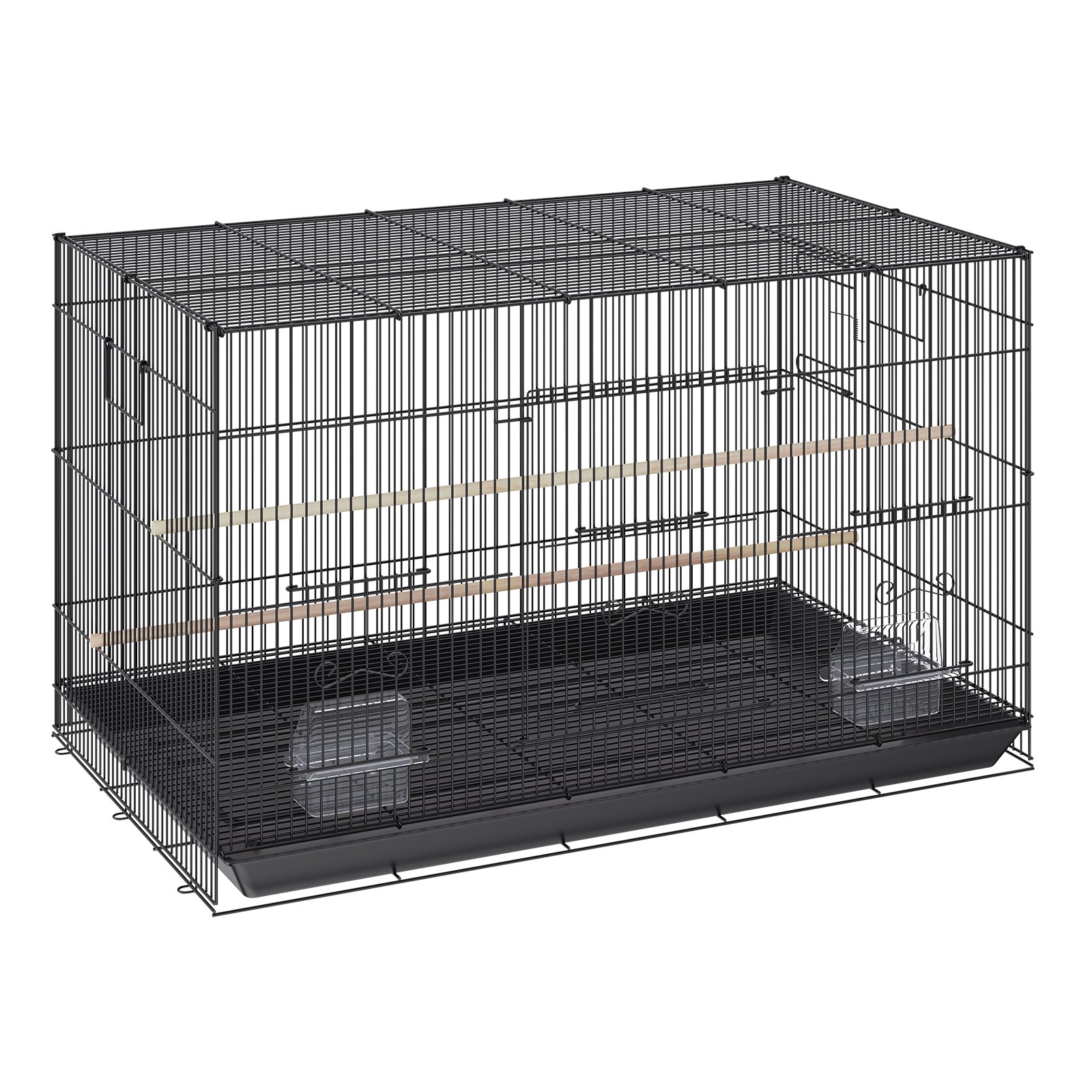 30 Inch Bird Cage, Metal Large Parakeet Cages For Cockatiels Small Parrot Budgies Lovebirds Canaries, Pet With Rolling Stand And Tray$51.99View on Mallflare
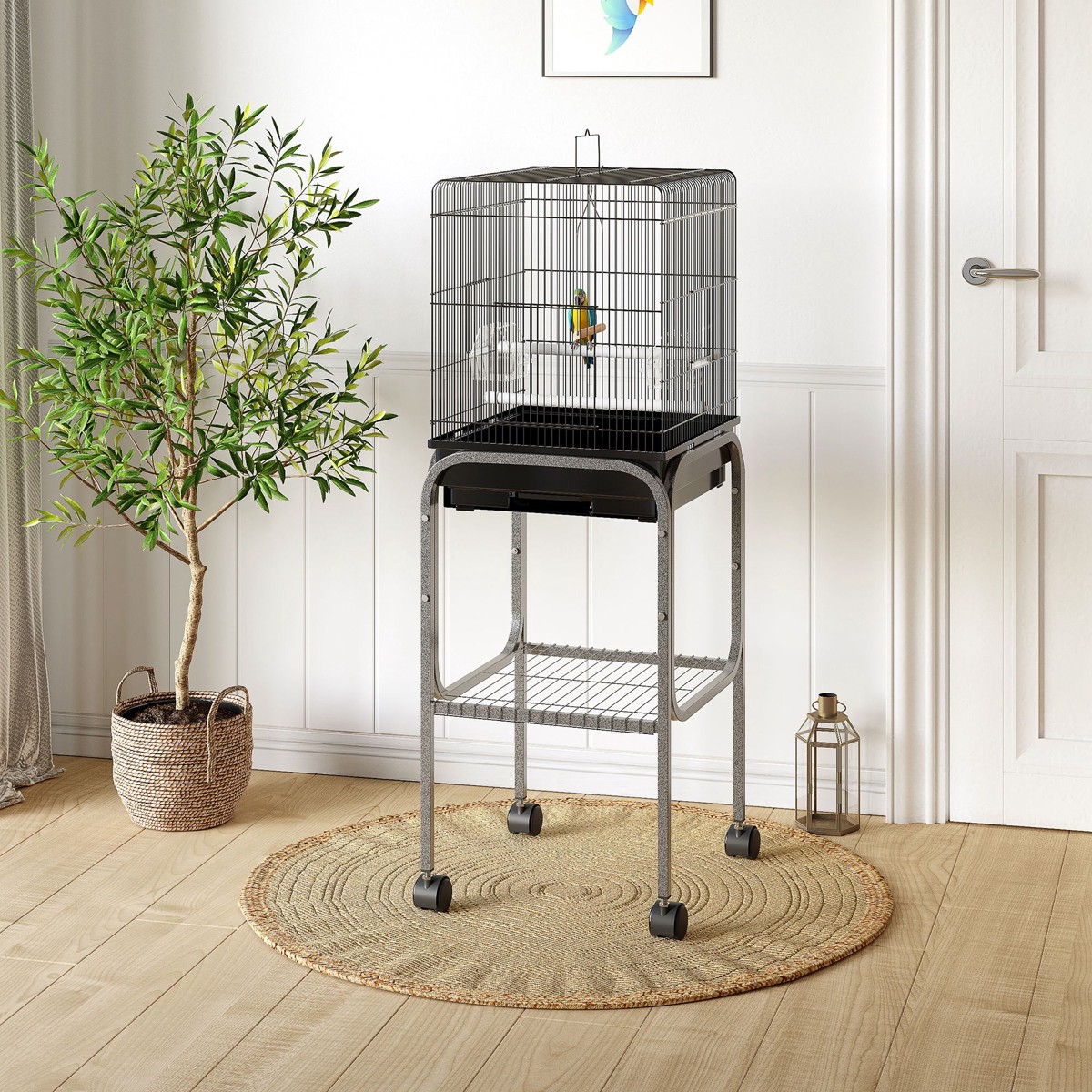 45-inch Metal Indoor Bird Cage, Parrot Aviary with Detachable Rolling Stand, Storage Basket, and Accessories - Black$78.99View on Mallflare
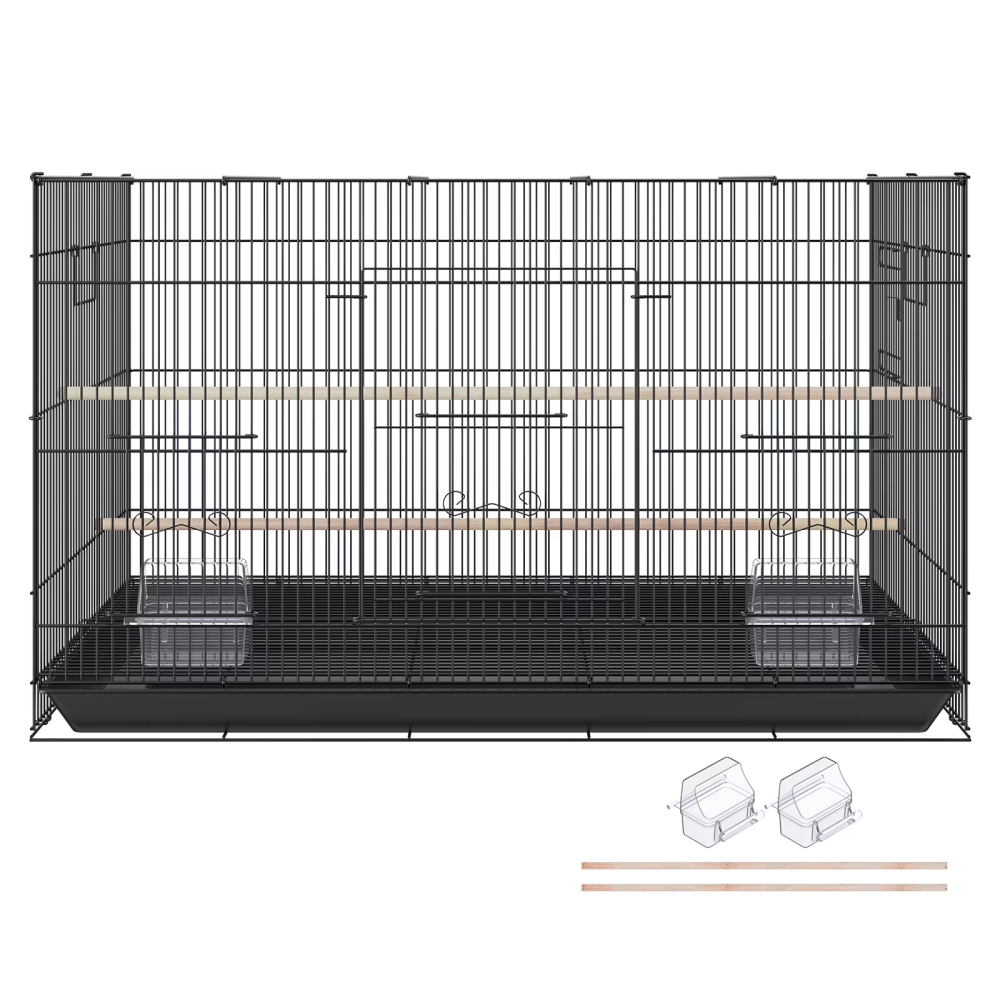 30" Bird Enclosure, Durable Metal Cage for Small Parrots, Budgies, Lovebirds, and Canaries, Includes Mobile Stand and Tray$105.99View on Mallflare
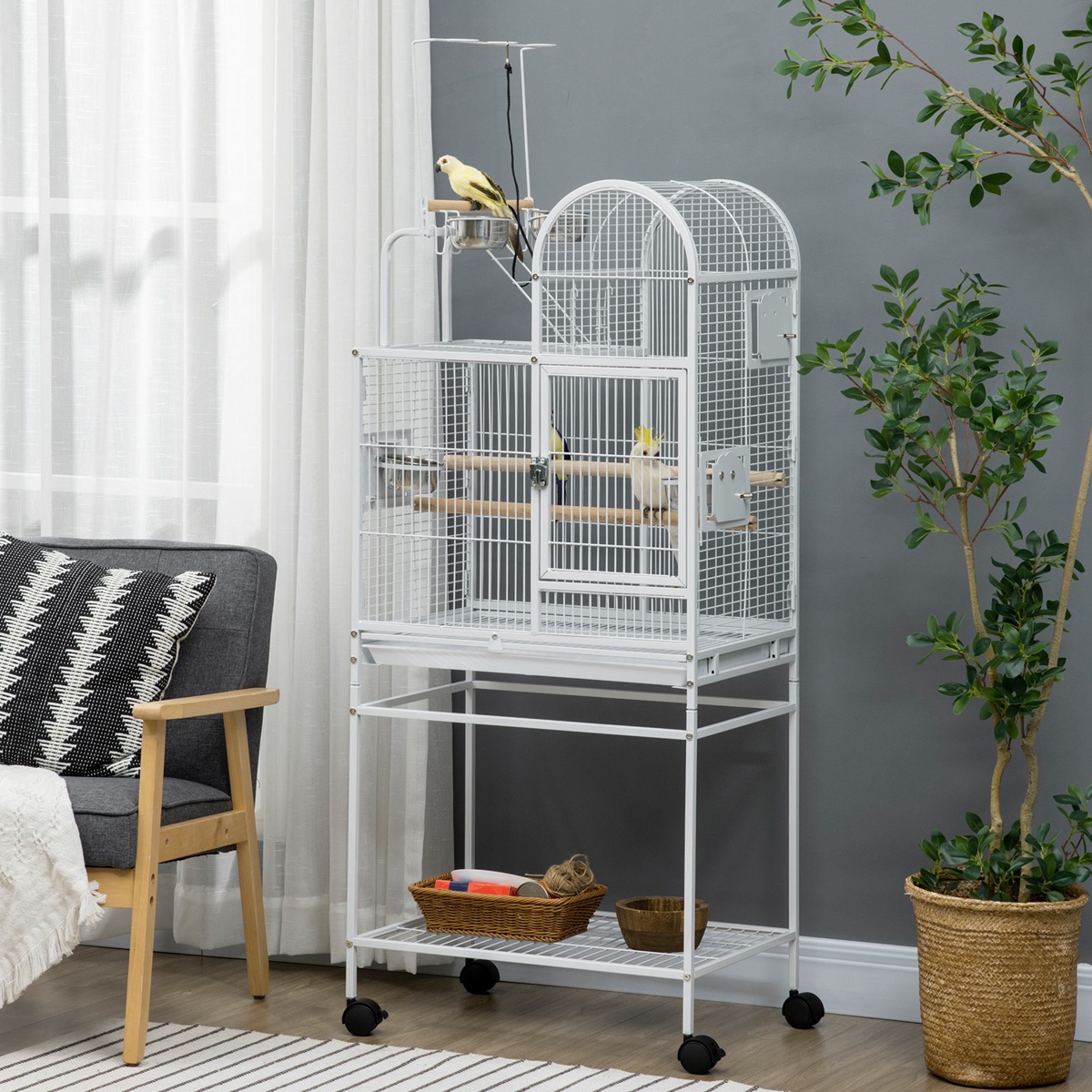 55" Large Parrot Cage with Toy Hooks Above Top Bird Perch, Tray, Food Cups, Rolling Stand, for Cockatiels, Parakeets, Lovebirds$119.99View on Mallflare
Highlights
- Bar spacing is the safety metric: 1/2 inch for budgies, finches, and lovebirds; 5/8 to 3/4 inch for cockatiels and conures; 3/4 to 1 inch for macaws and cockatoos.
- Wire gauge of 3-4mm works for small species, but medium and large parrots need 4-6mm welded bar stock to resist beak pressure and prevent bending.
- Powder-coated wrought iron is the durability standard; avoid bare or painted wire that chips and exposes toxic zinc or lead to chewing birds.
- Rolling stands with locking casters and slide-out trays are essential for weekly cleaning; fixed-base cages are far harder to sanitize thoroughly.
Best use cases
- Best fit: a 55-62 inch rolling flight cage with 1/2- to 5/8-inch spacing for cockatiels, conures, and parakeets that need room to hop and short flights.
- Wrong fit: a 30-inch tabletop cage for a macaw or cockatoo—too small, too light-gauge, and a serious escape and injury risk.
- Best fit: a 36-inch or larger play-house cage with 2 doors, 4 feeders, and 3/4- to 1-inch spacing for cockatoos or macaws needing beak-resistant bar stock.
- Wrong fit: finches and canaries in a tall narrow cage—they need horizontal flight length, so prioritize width over height and skip cages under 18 inches wide.
Buying tips
- Match bar spacing to species: 1/2 inch for budgies, finches, and lovebirds; 5/8 to 3/4 inch for cockatiels and conures; 3/4 to 1 inch for large macaws and cockatoos.
- Measure the bird's wingspan and add at least 1.5x in the longest horizontal dimension; a cage shorter than the wingspan prevents full wing extension.
- Check wire gauge: 3-4mm for small birds, 4-5mm for cockatiels and conures, and 5-6mm welded bar stock for macaws and cockatoos.
- Choose powder-coated wrought iron over painted or galvanized wire; chipped coatings expose zinc, which is toxic to parrots that chew on bars.
Specs
| Bar Spacing | 1/2 in small / 3/4 in medium / 1 in large |
|---|---|
| Wire Gauge | 3-4mm small / 4-5mm medium / 5-6mm large |
| Cage Height | 18-30 in small / 36-45 in medium / 53-62 in large |
| Coating | Powder-coated wrought iron (non-toxic) |
Related searches
What to check before buying
- Measure the room's doorways and the cage's widest dimension—large flight cages often exceed 30 inches wide and will not fit through standard interior doors fully assembled.
- Confirm the floor or stand clearance: rolling cages need at least 2 inches of clearance under furniture and a level floor for casters to lock safely.
- Check bar spacing against your bird's head width—if the bird can pass its head between bars, the spacing is unsafe regardless of cage size.
- Verify the cage includes a slide-out tray, secure door latches, and at least 2 perches; parrots need multiple perch diameters to exercise their feet.
FAQ
Data sources: eBay / Amazon listings and product attribute feeds. Updated Nov 27, 2026.
Some links on this page are affiliate links. If you buy after clicking one, we may earn a commission at no extra cost to you. This does not change which products appear here or their order. Affiliate disclosure.