
Photos from current listings. Actual item, color, and included accessories may vary.
Outdoor Bird House Buying Guide
Outdoor bird houses range from decorative metal feeders to functional wooden nest boxes and walk-in aviaries, each with distinct material and mounting trade-offs. The primary decision is material durability versus species suitability: metal resists predators and weather but overheats in sun, while wood insulates but requires maintenance. Buy wood nest boxes for breeding cavity birds and metal feeders for seed presentation; skip decorative metal houses as nesting sites.
Median $60.99
Key takeaways
- Metal houses conduct heat and can exceed 104°F in direct sun, making them unsuitable for nesting; use them for feeders or shade-mounted roosts only.
- Wood nest boxes should use 3/4-inch untreated cedar or pine for insulation; 1/2-inch plywood warps and fails within two seasons.
- Entry hole diameter determines species: 1-1/8 inch for chickadees, 1-1/2 inch for bluebirds, 1-3/4 inch for flickers; oversized holes invite starlings.
At a glance
- Category
- Bird & Small Animal Supplies
- Last updated
- Nov 27, 2026
Current offers
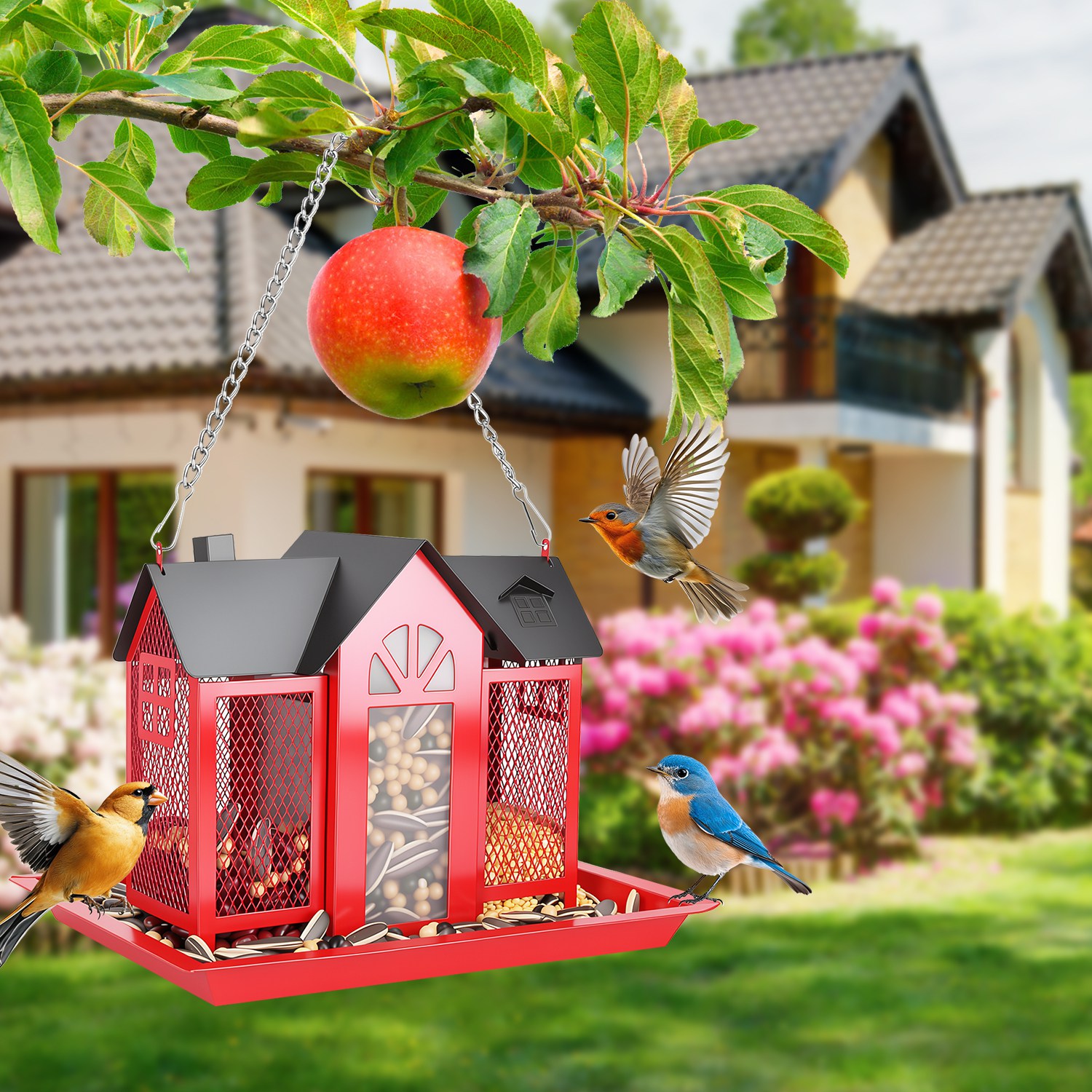 1Pc Metal Hanging Bird Feeder House Classic Barn Iron Outdoor With Visible Window And Lift Top Lid 15.75in Length Wild Birds Garden Yard$40.99View on Mallflare
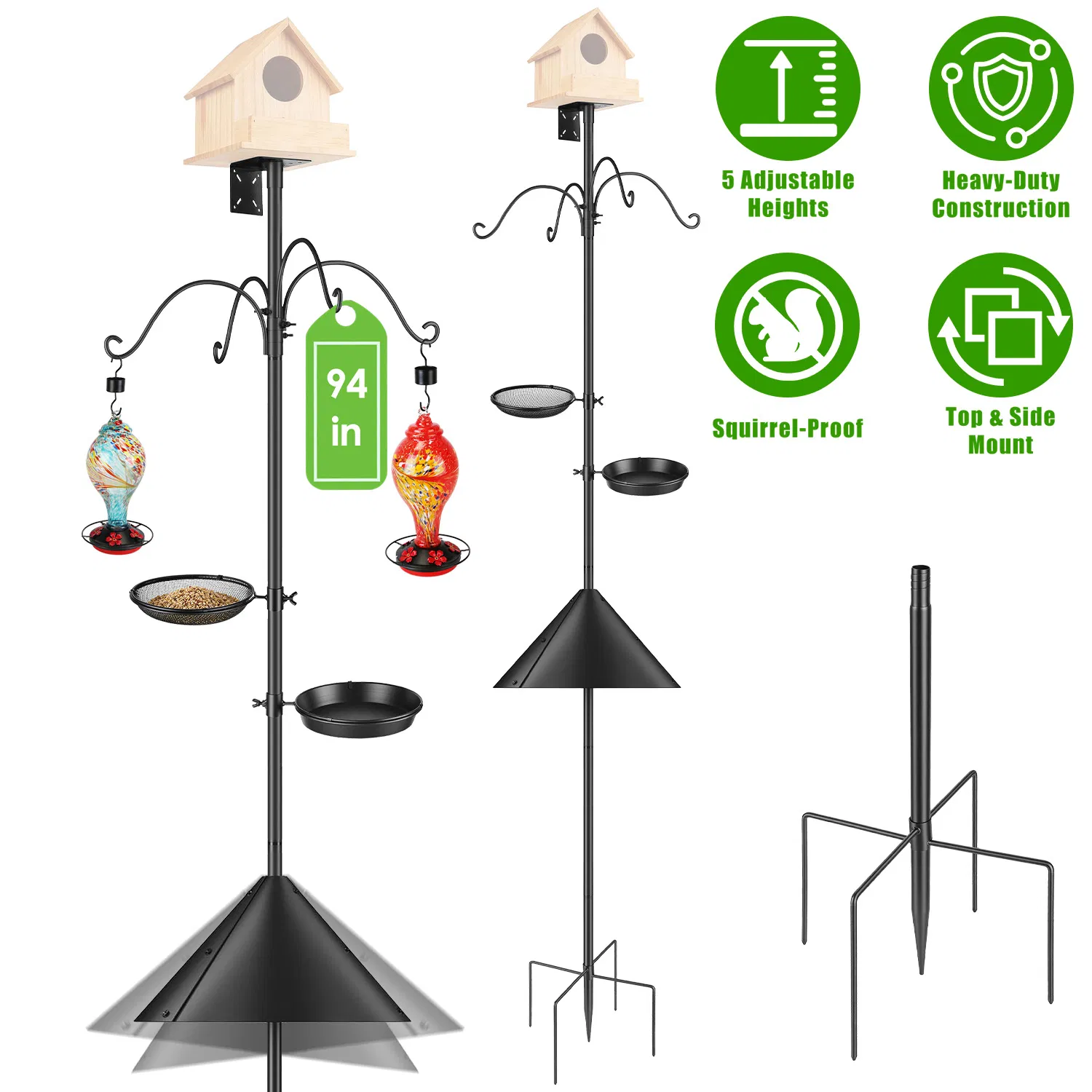 94Inch Squirrel Proof Bird Feeder Pole Heavy-Duty House Outdoor Feeding Station with 5 Adjustable Heights 4 Shepherd Hooks Top & Side Mount Brackets 5-Pronged Base$60.99View on Mallflare
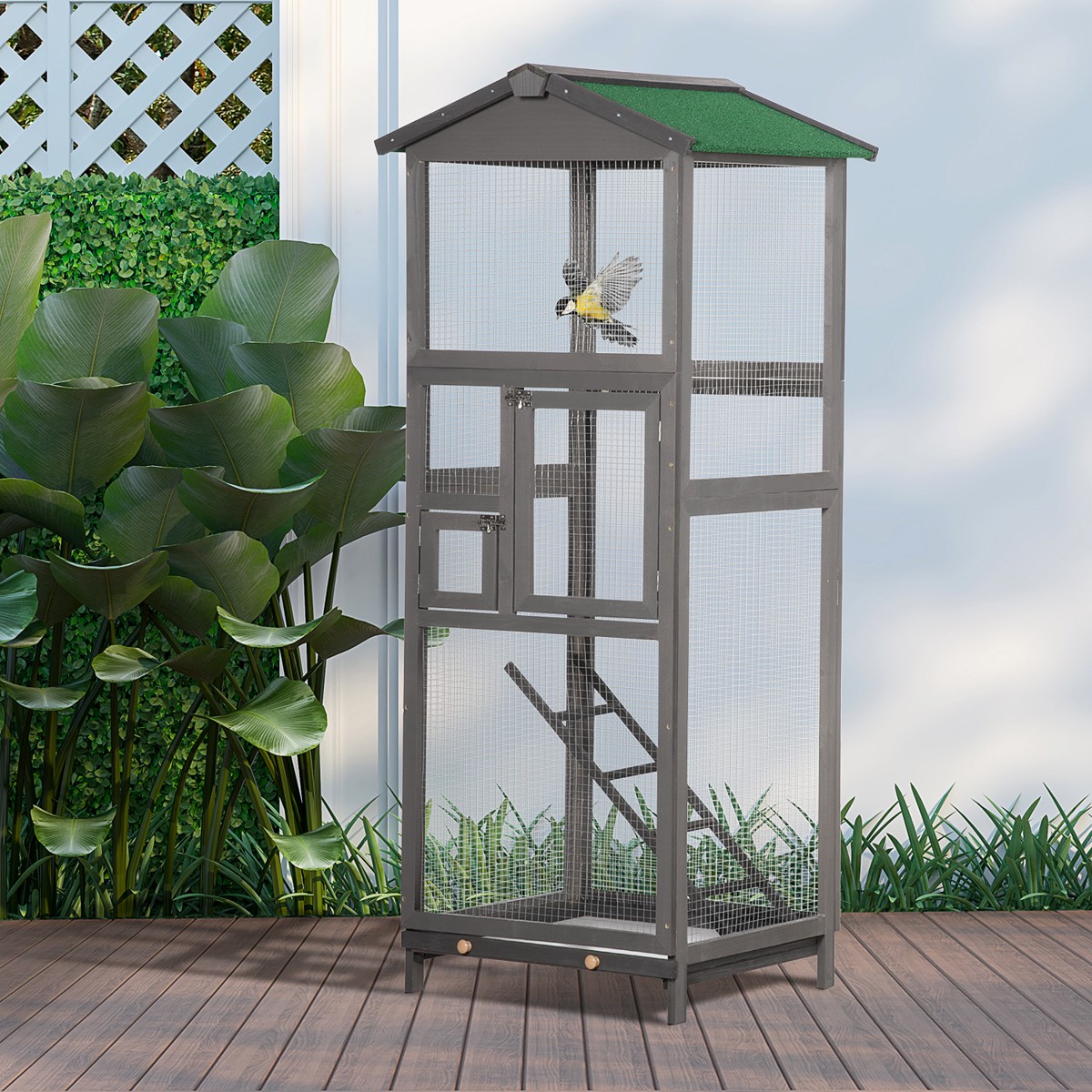 65" Wooden Bird Cage Outdoor Aviary House for Parrot, Parakeet, with Pull Out Tray and 2 Doors, Grey$135.99View on Mallflare
Highlights
- Metal houses conduct heat and can exceed 104°F in direct sun, making them unsuitable for nesting; use them for feeders or shade-mounted roosts only.
- Wood nest boxes should use 3/4-inch untreated cedar or pine for insulation; 1/2-inch plywood warps and fails within two seasons.
- Entry hole diameter determines species: 1-1/8 inch for chickadees, 1-1/2 inch for bluebirds, 1-3/4 inch for flickers; oversized holes invite starlings.
- Mounting poles with 5-pronged bases and adjustable shepherd hooks keep houses 5-6 feet high and 8-10 feet from branches to deter squirrels and predators.
Best use cases
- Best fit: Wooden nest box with 1-1/2-inch hole on a baffled pole for bluebird trails in open lawns; wrong fit: metal barn-style house in full sun for breeding.
- Best fit: Metal hanging feeder house with lift-top lid for black-oil sunflower seed in garden yards; wrong fit: using it as a nest box for cavity nesters.
- Best fit: Wooden aviary cage with pull-out tray for temporary outdoor housing of parrots or finches on a covered porch; wrong fit: leaving parakeets in an untreated wood aviary during freezing nights or heavy rain.
- Best fit: Squirrel-proof pole system with adjustable heights for mounting multiple feeders and houses; wrong fit: mounting a lightweight decorative house on a flimsy shepherd hook in high-wind areas.
Buying tips
- Choose untreated cedar or pine over pressure-treated wood; treated lumber can leach chemicals harmful to nestlings and is unnecessary for a dry nest box.
- Match hole size to target species: 1-1/8 inch excludes house sparrows, 1-1/2 inch welcomes bluebirds, and 1-3/4 inch suits larger woodpeckers.
- For metal feeder houses, verify lid fit and drainage; a lift-top lid must overlap the body by at least 1/2 inch to keep seed dry.
- Use a mounting pole with a predator baffle and place the box 5-6 feet above ground, 8-10 feet from nearest branch, and facing east or north to avoid afternoon sun.
Specs
| Material Type | Untreated wood vs powder-coated metal |
|---|---|
| Entry Hole | 1-1/8 in to 1-3/4 in by species |
| Mounting Height | 5-6 ft on baffled pole |
| Drainage & Ventilation | Floor vents + 1/2 in lid overhang |
Related searches
What to check before buying
- Measure your yard's open flyway: nest boxes need a clear approach path of at least 10 feet and should not face prevailing wind.
- Confirm pole or post compatibility: most houses require a backplate with two keyhole slots spaced 3/4 inch apart for a screw or lag bolt.
- Check climate: in hot climates (zone 8+), choose wood over metal and mount in shade; in cold climates, use 3/4-inch wood for insulation.
- For aviaries, ensure the cage floor is off the ground and the roof is solid; parrots need protection from rain and raccoons.
FAQ
Data sources: eBay / Amazon listings and product attribute feeds. Updated Nov 27, 2026.
Some links on this page are affiliate links. If you buy after clicking one, we may earn a commission at no extra cost to you. This does not change which products appear here or their order. Affiliate disclosure.