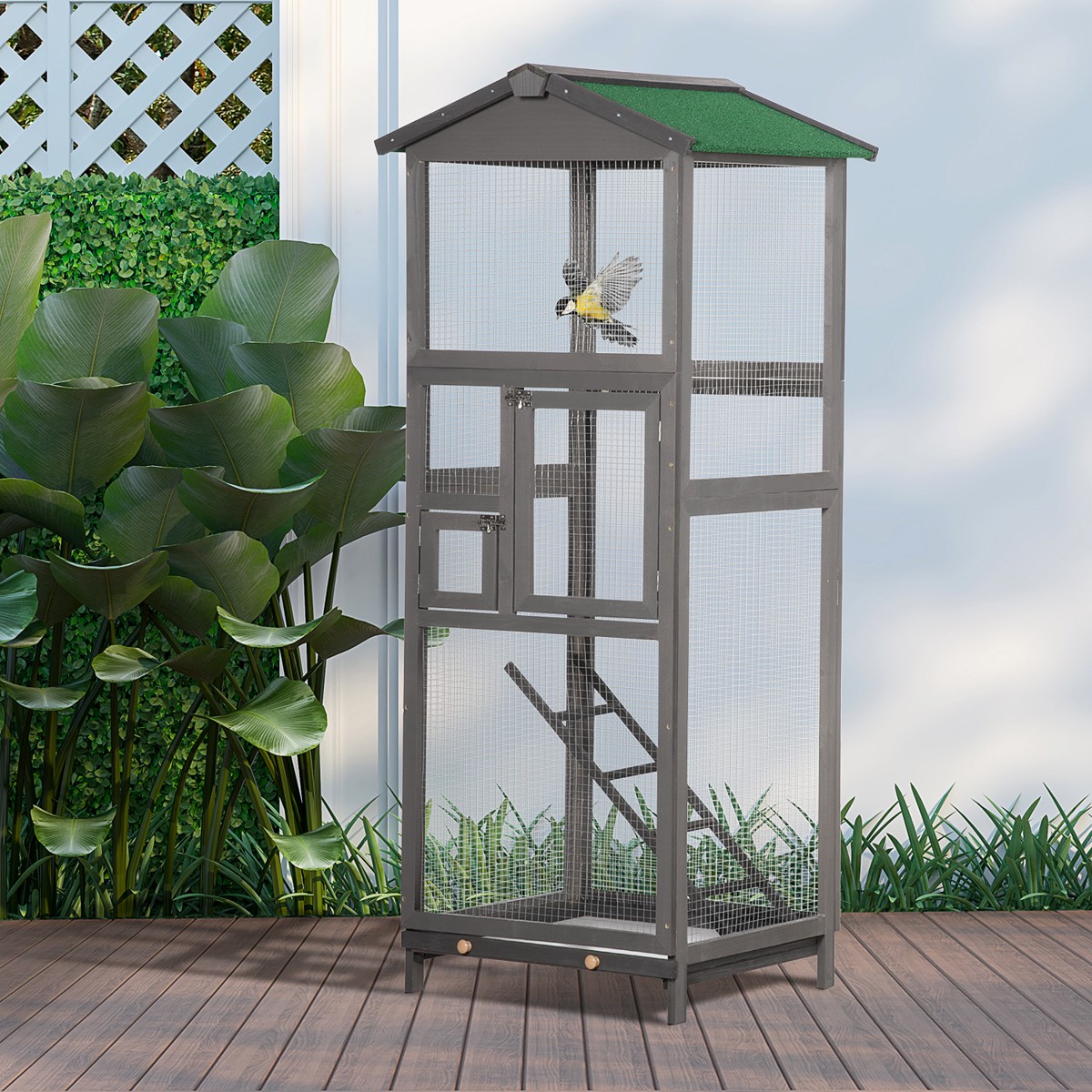

Photos from current listings. Actual item, color, and included accessories may vary.
Outdoor Bird Cage Buying Guide
An outdoor bird cage or aviary is a weather-exposed enclosure built from wood, metal, or composite framing with wire mesh, designed to give birds flight space while keeping predators out. The core trade-off is between softwood construction with thin galvanized mesh (cheap, short-lived, rust-prone) and hardwood or powder-coated steel frames with welded mesh (durable, predator-proof, decades of service). The decision rule: if the frame is softwood pine under 0.5 inch thick or the mesh is welded-wire under 16 gauge with no coating, treat it as a seasonal or supervised-use product, not a permanent outdoor home.
Key takeaways
- Frame material determines lifespan: kiln-dried fir or pine (common in budget aviaries) warps and rots within 2-3 seasons unless sealed annually; cedar, cypress, or powder-coated steel frames last 10+ years with minimal upkeep.
- Mesh gauge and coating are the predator barrier: 16-gauge or thicker welded wire with galvanized or PVC coating resists raccoon and hawk pressure; 18-20 gauge woven wire or uncoated mesh bends and rusts through in one season.
- Roof design separates weather-ready from fair-weather cages: a solid covered roof (asphalt felt, polycarbonate, or metal) sheds rain and snow and blocks direct sun; open-top or mesh-only roofs leave birds exposed to wind-driven rain and UV.
At a glance
- Category
- Bird & Small Animal Supplies
- Last updated
- Nov 27, 2026
Current offers
Highlights
- Frame material determines lifespan: kiln-dried fir or pine (common in budget aviaries) warps and rots within 2-3 seasons unless sealed annually; cedar, cypress, or powder-coated steel frames last 10+ years with minimal upkeep.
- Mesh gauge and coating are the predator barrier: 16-gauge or thicker welded wire with galvanized or PVC coating resists raccoon and hawk pressure; 18-20 gauge woven wire or uncoated mesh bends and rusts through in one season.
- Roof design separates weather-ready from fair-weather cages: a solid covered roof (asphalt felt, polycarbonate, or metal) sheds rain and snow and blocks direct sun; open-top or mesh-only roofs leave birds exposed to wind-driven rain and UV.
- Multi-package shipping is standard for aviaries over 60 inches wide — the frame, panels, and hardware arrive in 2-4 boxes, so assembly requires a second person and a flat, level surface; single-box cages are typically under 48 inches and lighter duty.
Best use cases
- Best fit: a permanent outdoor aviary for finches, budgies, or cockatiels in a mild climate — choose a cedar or powder-coated steel frame with 16-gauge welded mesh and a solid covered roof, anchored to a concrete pad or deck.
- Best fit: a seasonal or supervised outdoor flight cage for parrots in a temperate zone — a fir or pine frame with galvanized mesh works if brought under cover during storms and sealed yearly; skip uncoated mesh and open roofs.
- Wrong fit: keeping a bird outdoors year-round in freezing or monsoon climates — softwood aviaries and thin mesh fail under snow load and driving rain; use an insulated indoor-outdoor coop or a heated enclosure instead.
- Wrong fit: housing large parrots (macaws, cockatoos) in a wooden aviary — beaks destroy softwood bars and thin mesh; only welded steel or heavy-gauge powder-coated frames with locking latches are appropriate.
Buying tips
- Measure the footprint first: a flight cage needs at least 2 square feet per small bird (finch, budgie) and 6-8 square feet per medium bird (cockatiel, conure); a 69-inch hexagonal aviary yields roughly 20-25 square feet of floor area.
- Match mesh to predator pressure: 0.5-inch by 1-inch or 1-inch by 1-inch openings at 16 gauge or thicker prevent raccoon reach-in; openings over 1 inch or wire thinner than 18 gauge let predators grab birds through the mesh.
- Choose the roof for your climate: solid covered roof with overlap and slope for rain/snow shedding; in hot climates add a shade panel or orient the solid roof to block afternoon sun while leaving one side open for airflow.
- Plan the base and anchoring: set the aviary on a level concrete slab, paver pad, or pressure-treated lumber frame; stake or bolt the corners against wind uplift, and bury or skirt the bottom mesh 6-12 inches to stop digging predators.
Specs
| Frame Material | Cedar / Fir / Powder-coated steel |
|---|---|
| Mesh Gauge | 16-20 gauge welded wire |
| Roof Type | Solid covered / Mesh-only |
| Footprint | 20-25 sq ft (69-in hex aviary) |
Related searches
What to check before buying
- Measure your available outdoor footprint (length x width) and confirm clearance for the roof overhang and door swing; hexagonal aviaries need a circular or square pad sized to the widest diagonal.
- Confirm your climate zone: freeze/thaw cycles require a rot-resistant frame and snow-load-rated roof; coastal salt air requires powder-coated or stainless hardware over galvanized.
- Verify the mesh specification before buying: gauge (16 or thicker), opening size (1 inch or smaller), and coating (galvanized plus PVC or powder coat) — these are the predator and rust barriers.
- Check assembly requirements: multi-package aviaries need two people, a drill, and 2-4 hours; confirm the door latch type (slide bolt or lock) and whether perches, nest box, and pull-out tray are included.
FAQ
Data sources: eBay / Amazon listings and product attribute feeds. Updated Nov 27, 2026.
Some links on this page are affiliate links. If you buy after clicking one, we may earn a commission at no extra cost to you. This does not change which products appear here or their order. Affiliate disclosure.