
Photos from current listings. Actual item, color, and included accessories may vary.
Large Parrot Cage Buying Guide
A large parrot cage is a powder-coated metal enclosure with bar spacing, gauge, and footprint sized for cockatoos, macaws, and large conures. The primary trade-off is between thin wire and wide bar spacing that saves cost but risks escape and injury versus thicker gauge, welded joints, and species-correct spacing. The decision rule: match bar spacing and gauge to your bird's beak strength and body size before considering height, wheels, or accessories.
Median $85.99
Key takeaways
- Bar spacing is the escape-risk spec: 3/4–1 in for cockatiels and small conures, 1–1.25 in for African greys and amazons, 1.25–1.5 in for macaws and cockatoos.
- Wire gauge determines beak resistance: 2–3 mm wire suits budgies and cockatiels, 3.5–4 mm suits greys and amazons, 4.5–5 mm or welded 6-gauge panels are required for macaws.
- Powder-coated steel or wrought iron resists rust and zinc toxicity; bare galvanized mesh can leach zinc if chewed and should be avoided for parrots.
At a glance
- Category
- Bird & Small Animal Supplies
- Last updated
- Nov 27, 2026
Current offers
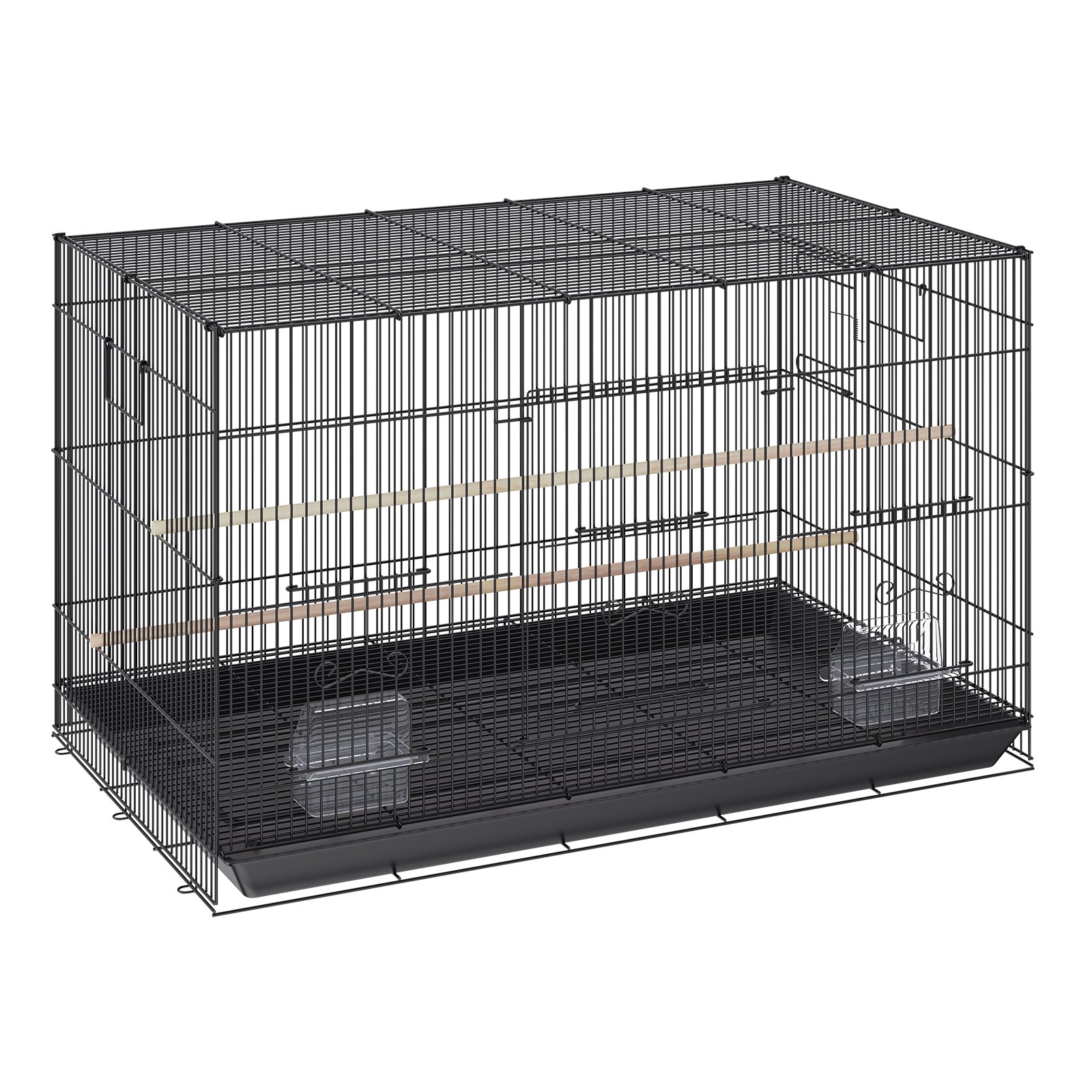 30 Inch Bird Cage, Metal Large Parakeet Cages For Cockatiels Small Parrot Budgies Lovebirds Canaries, Pet With Rolling Stand And Tray$51.99View on Mallflare
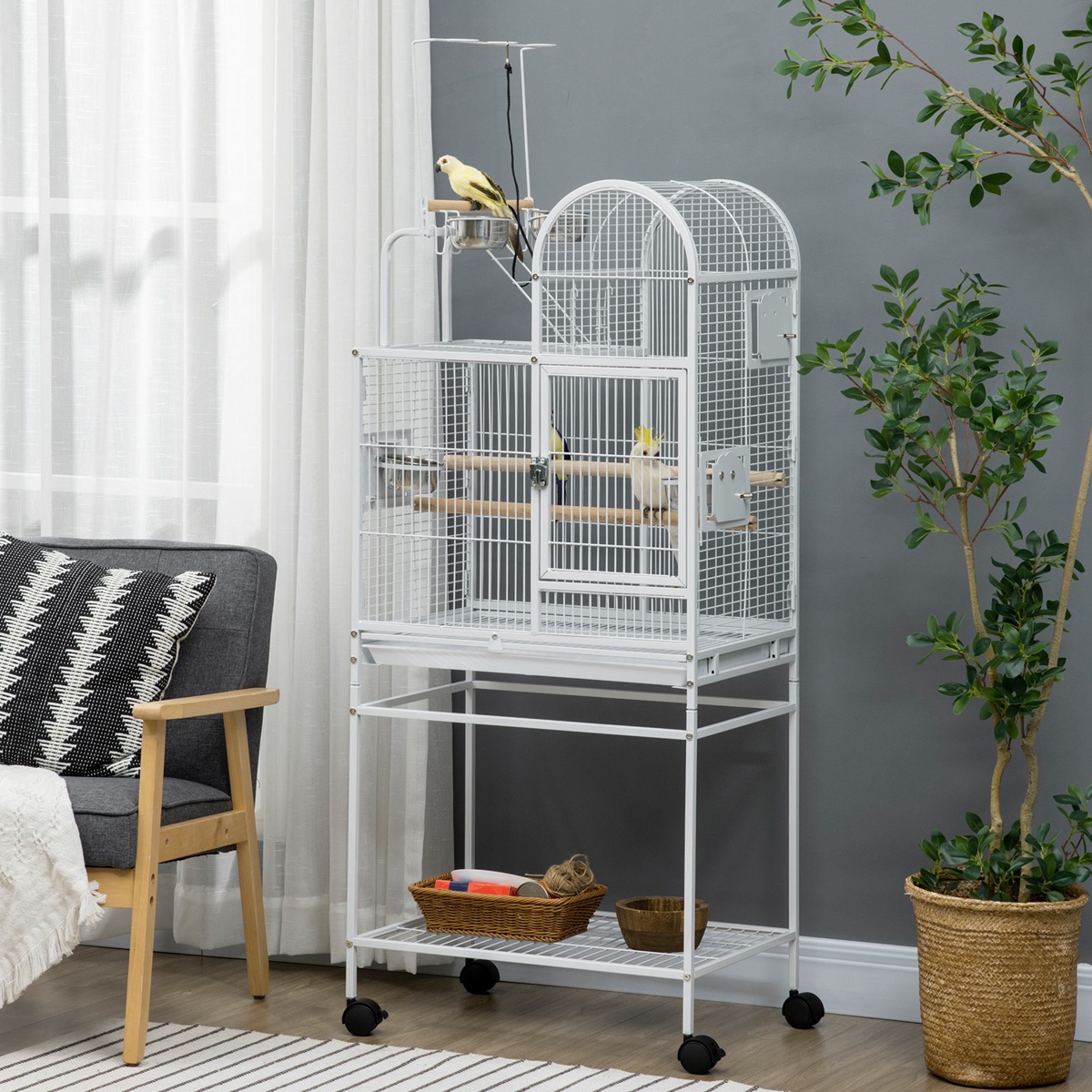 55" Large Parrot Cage with Toy Hooks Above Top Bird Perch, Tray, Food Cups, Rolling Stand, for Cockatiels, Parakeets, Lovebirds$119.99View on Mallflare
Highlights
- Bar spacing is the escape-risk spec: 3/4–1 in for cockatiels and small conures, 1–1.25 in for African greys and amazons, 1.25–1.5 in for macaws and cockatoos.
- Wire gauge determines beak resistance: 2–3 mm wire suits budgies and cockatiels, 3.5–4 mm suits greys and amazons, 4.5–5 mm or welded 6-gauge panels are required for macaws.
- Powder-coated steel or wrought iron resists rust and zinc toxicity; bare galvanized mesh can leach zinc if chewed and should be avoided for parrots.
- Rolling stands with locking casters and slide-out trays are convenience tiers; welded frame cages with full-height doors and feeder doors outlast snap-together flat-pack cages.
Best use cases
- Best fit: cockatoos, macaws, and large amazons need a cage at least 36 in wide x 24 in deep with 1.25–1.5 in bar spacing and 4.5 mm+ wire; skip 53–55 in tall cages with 0.5 in spacing marketed for parakeets.
- Best fit: African greys and amazons need 32–36 in width, 1–1.25 in spacing, and a full-height door with secure latch; skip cages under 30 in wide regardless of height.
- Best fit: cockatiels, lovebirds, and small conures use 24–30 in wide cages with 0.5–0.75 in spacing; skip extra-large macaw cages with 1.5 in spacing where small heads can slip through.
- Wrong fit: outdoor or porch placement without a rust-proof powder coat and UV-stable finish; skip any cage with exposed zinc hardware or untreated wood perches for chewers.
Buying tips
- Measure bar spacing with calipers before purchase: a gap wider than your bird's head width is an escape and strangulation hazard, so buy to the smallest species you keep.
- Size the footprint by wingspan: cage width should be at least 1.5x the bird's wingspan, and depth at least 1x, so a macaw needs 36+ in width, not just tall height.
- Check wire gauge and joint construction: welded 4–5 mm wire with reinforced corners survives macaw beaks, while 2 mm snap-together panels deform within months.
- Confirm powder-coated finish and stainless or nickel-plated hardware; zinc-plated screws, clips, and quick-links are a heavy-metal risk for parrots that chew metal.
Specs
| Bar Spacing | 0.5–1.5 in (species-matched) |
|---|---|
| Wire Gauge | 2–5 mm / 6-gauge welded |
| Frame Finish | Powder-coated steel / wrought iron |
| Mobility | Locking casters / rolling stand |
Related searches
What to check before buying
- Measure your bird's head width and wingspan, then select bar spacing smaller than head width and cage width at least 1.5x wingspan.
- Verify door opening and latch type: full-height doors with a parrot-proof lock or carabiner are required for greys, cockatoos, and macaws.
- Check floor clearance and doorway width for rolling casters, and confirm locking casters if the cage sits on hardwood or tile.
- Confirm perch diameter and feeder material: natural wood perches 1–1.5 in diameter for large parrots, stainless bowls, and replace any zinc hardware before use.
FAQ
Data sources: eBay / Amazon listings and product attribute feeds. Updated Nov 27, 2026.
Some links on this page are affiliate links. If you buy after clicking one, we may earn a commission at no extra cost to you. This does not change which products appear here or their order. Affiliate disclosure.